


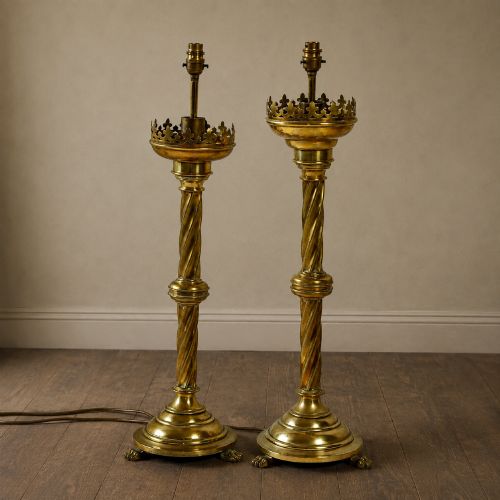


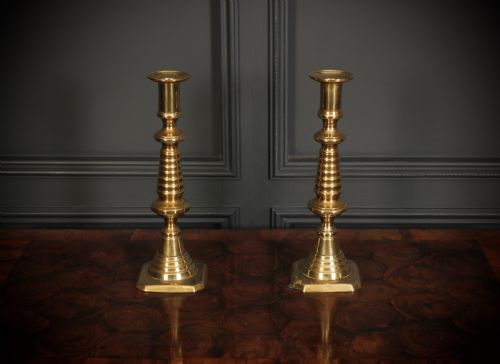

Brass Altar Sticks
Brass altar sticks are ecclesiastical candlesticks brought into domestic and church interiors, prized for their weight and architectural presence.
Brass Altar Sticks
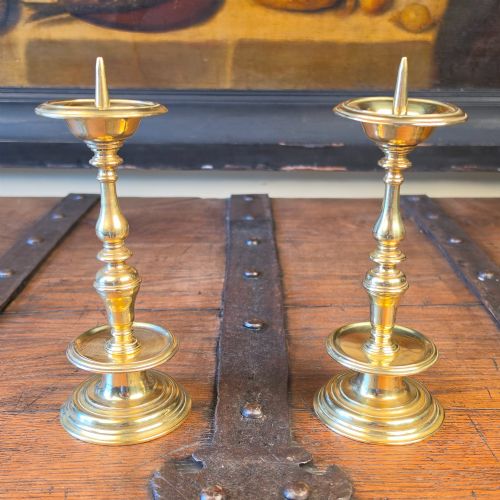
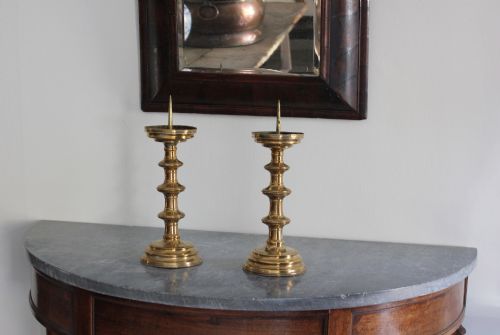
Brass altar sticks are sturdy candleholders designed for ecclesiastical settings, appearing in forms such as candlesticks, pricket candlesticks, candelabra, and table lamps. When you search for brass altar sticks, you encounter pairs shaped for church use, spanning centuries from early continental examples to later revival pieces.
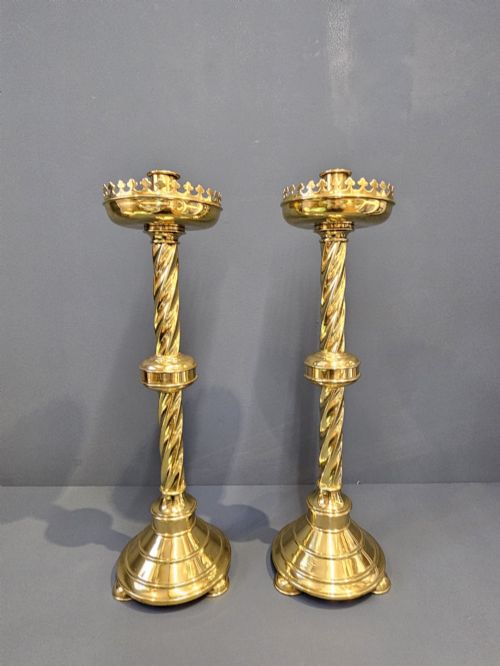
The selection ranges widely across periods, including pieces from the sixteenth century, seventeenth century, and eighteenth century, alongside robust nineteenth century Gothic Revival creations. Forms often follow strict liturgical designs, featuring weighted bases and tall stems intended to hold candles securely during services.
Makers and workshops produced these items in various sizes, from small domestic pairs to large church candlesticks standing several feet tall. Later adaptations also convert these ecclesiastical fittings into functional table lamps while retaining their original heavy metal frames.
How they were made
Makers utilised cast brass and bronze to construct the heavy framework of these ecclesiastical pieces, ensuring stability for tall candles. Molten metal was poured into moulds to create intricate nodes, drip pans, and stepped bases.
Surface details often include applied gilt metal, while some surviving examples incorporate period elements such as fabric, silk fringe, damask fabric, and glass beads added during later adaptations or restorations.
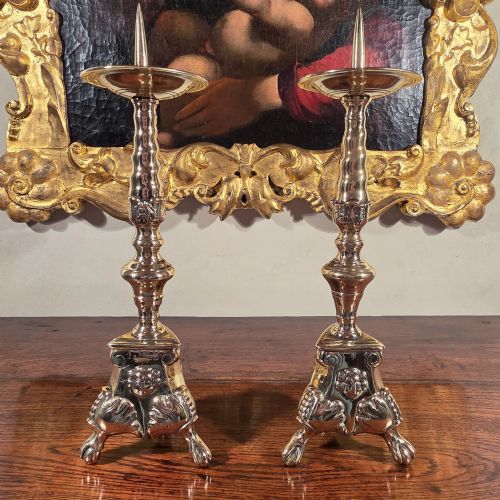
Design styles on this page range from seventeenth-century Baroque and Flemish work to Victorian Gothic Revival interpretations.
What varies in quality
The quality of a pair rests in the crispness of the casting and the thickness of the brass used in the stem and base. Earlier examples demonstrate sharper details in the mould work and heavier proportions compared to lighter mass-produced items.
Proportion and original patination also distinguish superior pieces, where wear shows naturally through handling rather than artificial ageing. The integrity of the structure, particularly the joinery between the socket, shaft, and base, determines the overall solidity.
T Thomason And Co
The Brass Altar Sticks Glossary
- Pricket candlestick
- A candleholder featuring a sharp metal spike at the top designed to impale the base of a wax candle. This form predates socket candlesticks and remains common on church altars.
- Gothic Revival
- An architectural and decorative style popular during the nineteenth century that revived medieval forms, pointed arches, and heavy ecclesiastical ornamentation. Pieces in this style often incorporate quatrefoils and clustered shafts.
- Flemish Baroque
- A seventeenth-century style originating in the Southern Netherlands, characterised by exuberant curves, bold turned sections, and robust proportions in metalwork. Candlesticks from this origin display distinctive multi-tier bases.
- Cast brass
- An alloy of copper and zinc melted and poured into a mould to form solid, complex shapes. This technique provides the substantial weight necessary for tall altar lighting.
Brass Altar Sticks: Frequently Asked Questions
What is an altar stick?
An altar stick is a heavy candlestick or pricket stand originally utilised on church altars during religious services. They are built with substantial bases to support large wax candles safely.
Over time, many of these ecclesiastical items found their way into domestic interiors as decorative objects or practical lighting fixtures.
How do I date a brass candlestick?
Dating involves examining the manufacturing technique, assembly methods, and stylistic cues such as turning patterns and base shapes. Earlier seventeenth-century examples typically feature multi-component construction with distinct lathe marks.
Later nineteenth-century Gothic Revival pieces often display heavier, more rigid casting with overt medieval ornamentation. Comparing the wear patterns on the base and socket also helps establish the age.
Were these always used in churches?
Most of these pieces were manufactured specifically for liturgical use in chapels, cathedrals, and parish churches. Their design directly reflects the functional requirements of ecclesiastical ceremonies.
However, many examples have since transitioned into secular homes, where collectors value their architectural silhouette and patinated metal surfaces.
Can I use altar sticks as table lamps?
Some period altar sticks are adapted into table lamps by running electrical wiring through the central shaft. This conversion allows historical metalwork to function safely with modern lighting.
Buyers often find pairs that retain their original candlestick form alongside converted examples fitted with shades and fabric elements.