

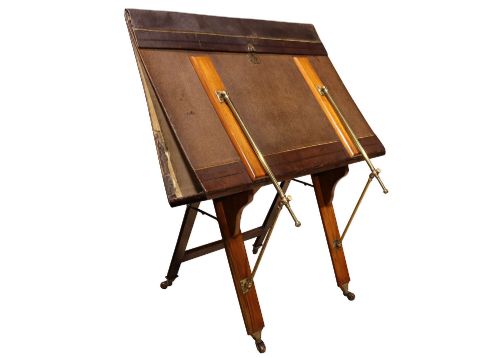
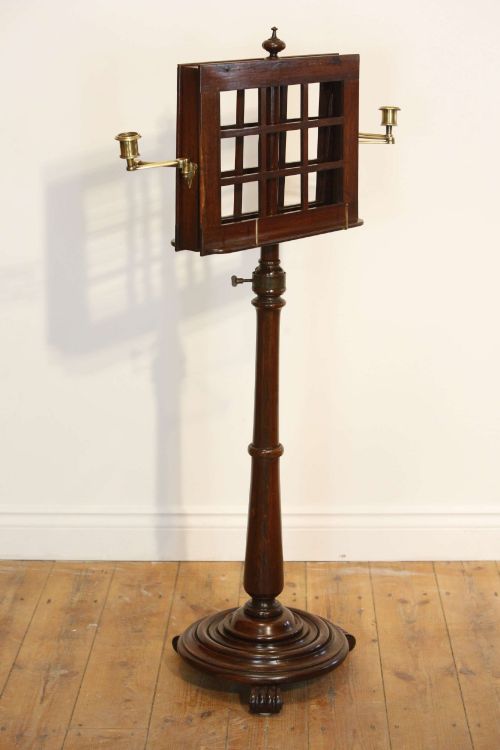
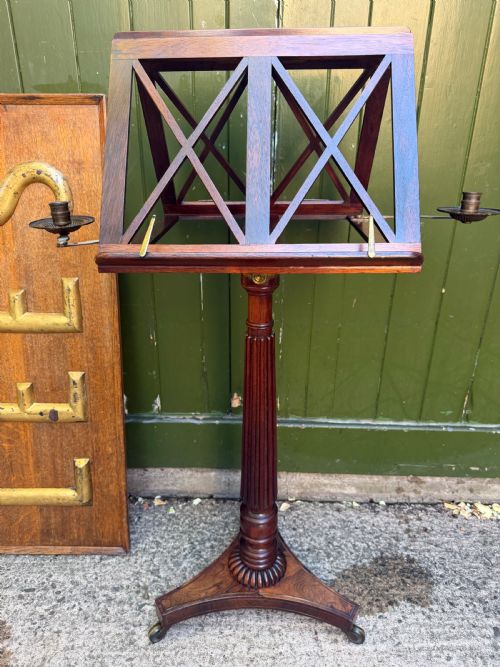
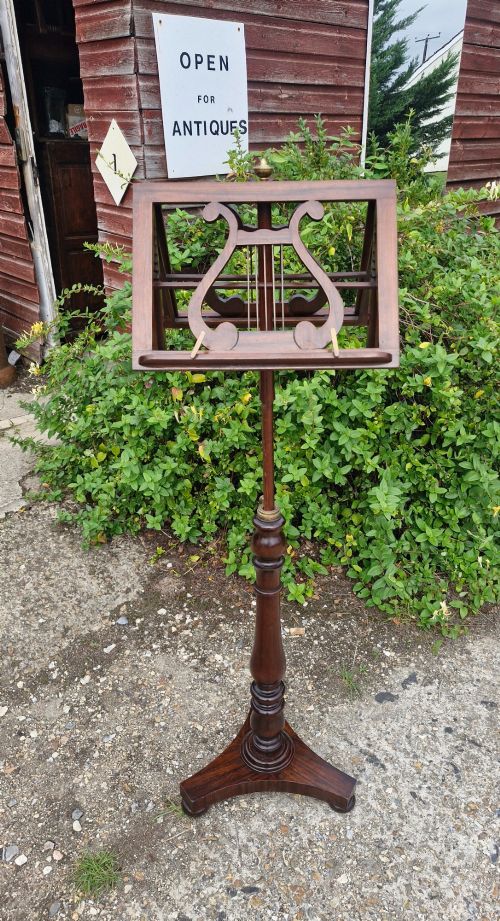



Brass Adjustable Music Stand
A brass adjustable music stand brings mechanical ingenuity and rich cabinet timbers together to hold scores or folios at the exact height you need.
Brass Adjustable Music Stand
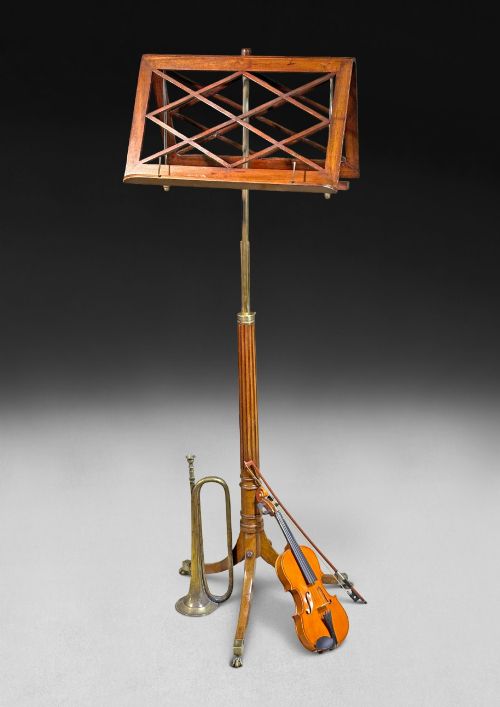
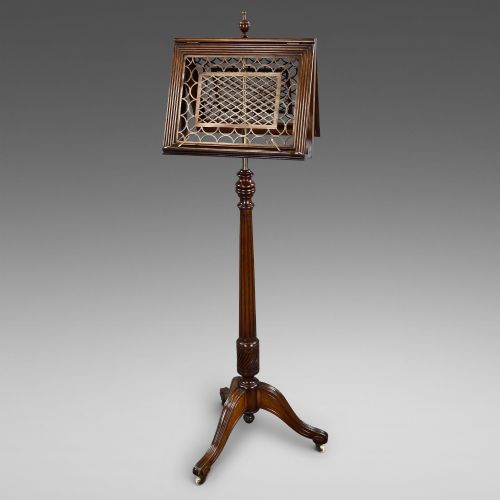
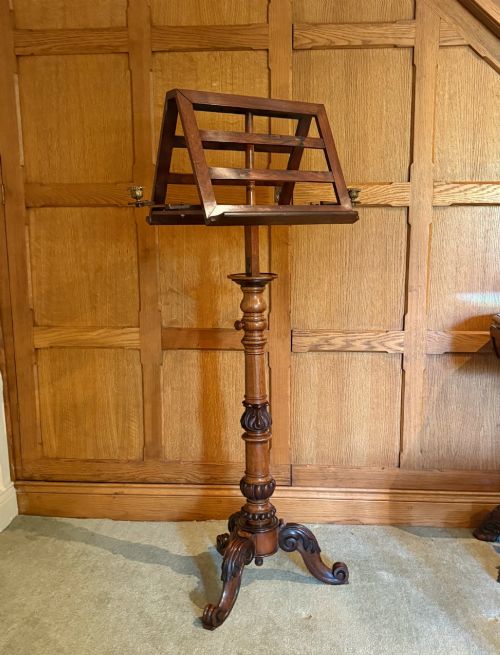
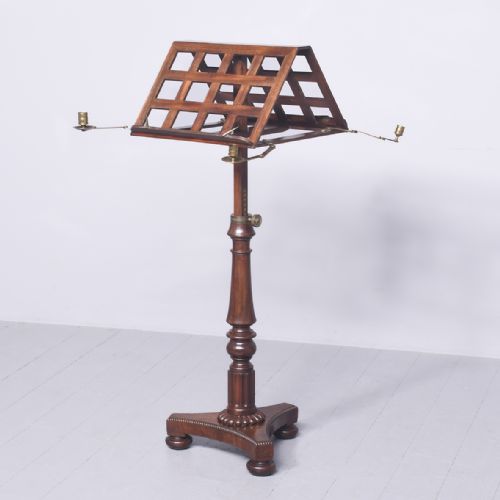
A brass adjustable music stand serves musicians and readers by elevating books or folios on pivoting desks raised by sliding columns. The examples gathered here span the Regency, Victorian, and later periods, presenting forms designed for solo performers or duets.
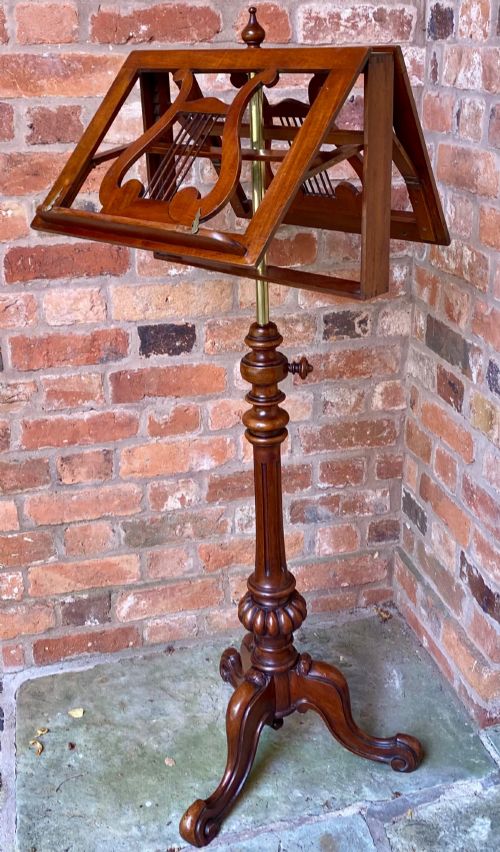
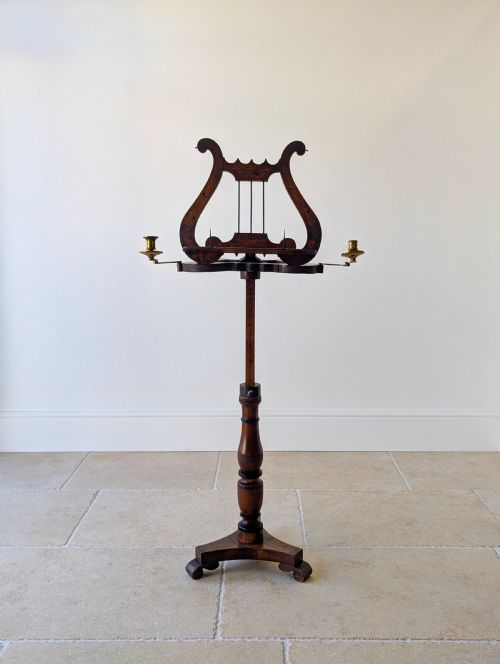
Most pieces pair polished brass mechanisms with dense secondary timbers such as mahogany, rosewood, and walnut, frequently incorporating lyre-shaped fretwork or occasional table bases. These stands function equally well beside a piano, in a study, or as display lecterns within a living room.
Buyers encounter single reading stands alongside wider duet versions capable of holding two scores simultaneously. The survival of these pieces demonstrates how nineteenth-century craft united sturdy iron or brass column engineering with domestic cabinetmaking.
Materials and construction methods
Cabinetmakers constructed the main shafts and reading desks from heavy hardwoods including mahogany, rosewood, and walnut, sometimes adding satinwood inlay or ebonised finishes. These timbers were turned, carved, or fret-cut into forms such as the characteristic open lyre.
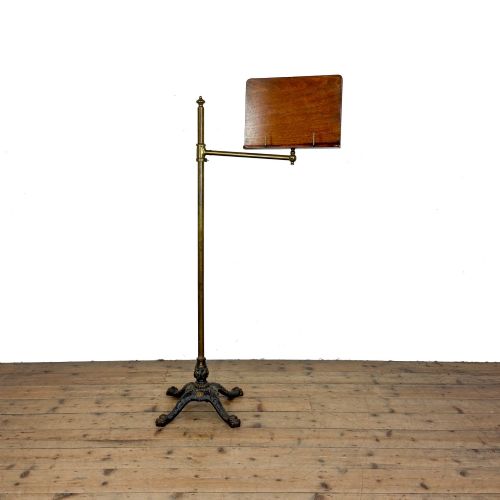
Makers integrated cast brass screws, ratchets, and sliding brass tubes to permit height adjustment and desk tilting. Cast iron sometimes added weight and stability to the base, ensuring the stand remained upright when fully extended with heavy folios.
Brass Adjustable Music Stand Retail Price Guide 2026
Typical asking prices for brass adjustable music stand among the pieces listed under this phrase on Sellingantiques today, from the lower quarter to the upper quarter. They describe what is for sale here now, not the wider market.
Object forms range from simple reading tables and lecterns to elaborate duet stands with folding desks.
Distinctions in quality and execution
Quality rests in the precision of the brass mechanisms and the weight of the timber used for the desk and column. Superior stands feature fluid, binding-free height adjustment and substantial cast brass fittings rather than thin, pressed sheet metal.
The refinement of the carving on the lyre or the choice of figured rosewood and mahogany distinguishes standard workshop production from notable cabinetmakers. Well-executed joints and stable, heavy bases separate robust daily-use pieces from lighter decorative alternatives.
GILLOWS DUET MUSIC STAND·1930s Harrods Reading or Music Stand
The Brass Adjustable Music Stand Glossary
- Lyre-form
- A desk or column shaped like the ancient musical instrument, frequently pierced with symmetrical curves. This motif appeared widely across Regency and William IV furniture.
- Duet stand
- A wider music stand designed to accommodate two musicians reading side by side. These models often feature double-sided desks or broader reading ledges.
- Lectern
- A heavy reading stand designed for holding large books or folios at a standing height. They share similar adjustable mechanisms with music stands.
- Fretwork
- Openwork ornamentation carved or pierced through thin timber panels. It lightened the visual weight of large music desks.
- Ratchet
- A mechanical adjustment device using a notched bar and catch to hold the reading desk at various angles. It allows the user to alter the viewing angle swiftly.
Brass Adjustable Music Stand: Frequently Asked Questions
Can I use these for modern sheet music?
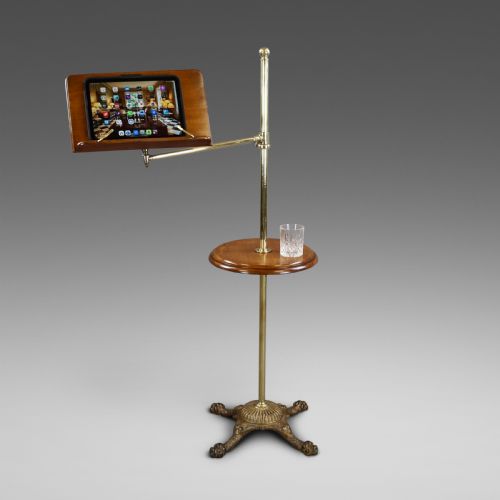
These stands easily accommodate modern scores, books, and tablets on their deep wooden ledges. The adjustable angle allows you to flatten heavier folios or tilt lighter sheets toward you.
Duet models offer extra width for multiple scores, while standard reading stands suit single books or manuscripts. Their sturdy timber and brass construction handles regular daily use without issue.
How do I date a music stand?
Dating relies on timber choice, base design, and the style of the brass fittings. Regency and William IV pieces often feature rosewood, mahogany, and lyre motifs, whereas later Victorian examples might incorporate cast iron bases or ebonised finishes.
Turned columns and inlay styles shift across the decades from Georgian simplicity through mid-nineteenth-century elaboration to interwar restraint. Examining the construction of the screw threads and joints provides further clues to the manufacturing era.
Where should I place it at home?
A music stand sits comfortably beside a piano, within a library, or as an open book display in a drawing room. Their compact footprints make them versatile for corners or beside armchairs.
Avoid placing antique timber and brass directly beside active heat sources or in harsh sunlight to protect the polish and prevent the wood from drying out.