



Boxed Tea Spoons
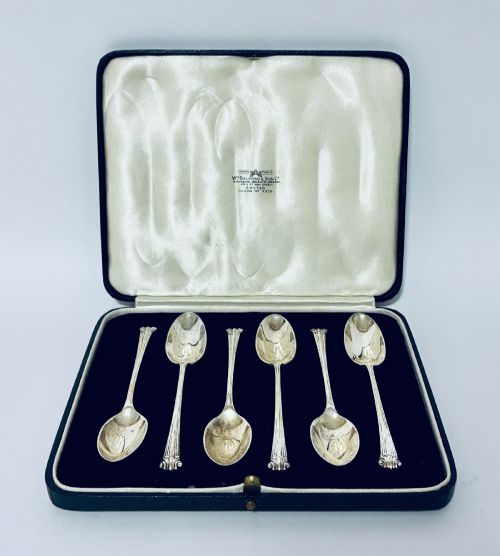
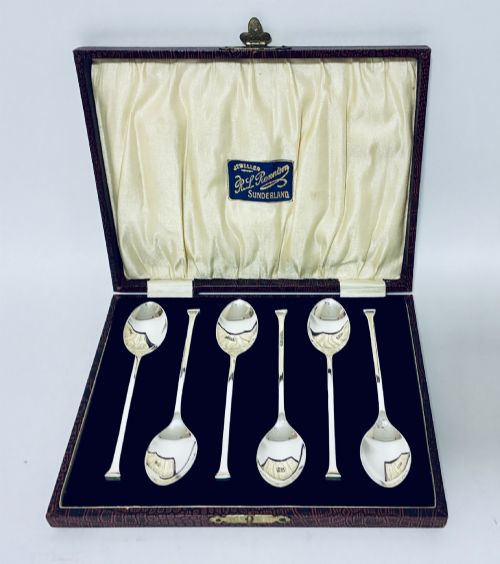
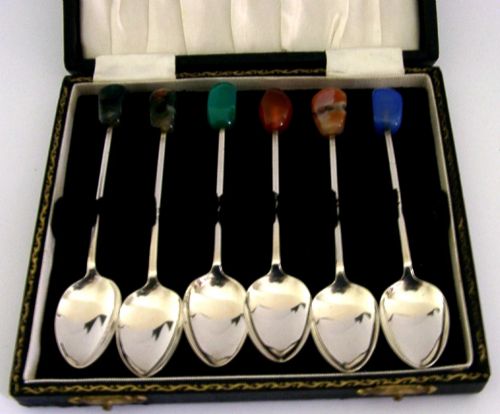
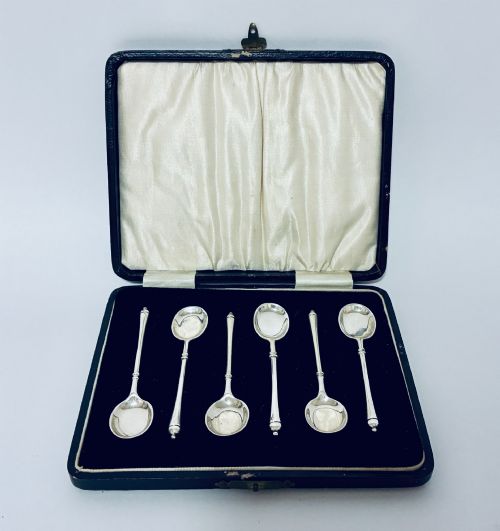
These boxed tea spoons bring together matched silver flatware and fitted presentation cases from the Georgian, Victorian, and twentieth-century periods.
Boxed Tea Spoons
When you search for boxed tea spoons, you encounter complete sets of matching silver flatware nestled inside fitted presentation cases, often accompanied by matching sugar tongs or nips. These sets span periods from the Georgian era through Victorian, Edwardian, and Art Deco designs up to the nineteen-forties.
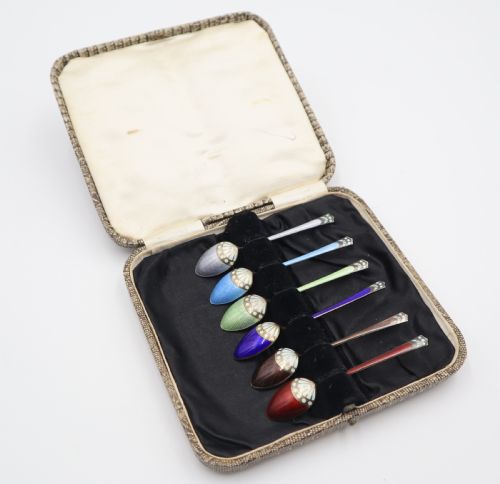
On this page, you are most likely to meet sets of six or twelve sterling silver teaspoons housed in original boxes lined with velvet, satin, or silk, sometimes featuring decorative enamel work or silver-gilt finishes. Many sets include matching sugar tongs designed to sit alongside the spoons in tailored recesses within the box.
How they were made
The flatware is formed from solid sterling silver or silver-gilt, shaped into teaspoons, coffee spoons, and apostle spoons using traditional smithing techniques, occasionally accented with vitreous enamel. Makers applied hallmarks to verify the silver standard and year of assay.
The presentation boxes are constructed from wood or sturdy card, covered externally in leather, leatherette, or tortoiseshell, and fitted internally with moulded beds lined in silk, satin, or velvet to protect the silver pieces.
Boxed Tea Spoons Retail Price Guide 2026
Typical asking prices for boxed tea spoons among the pieces listed under this phrase on Sellingantiques today, from the lower quarter to the upper quarter. They describe what is for sale here now, not the wider market.
Specialist golf-themed teaspoons from nineteen-thirty-three remind us that afternoon tea occasionally required a sporting twist.
What varies in quality
Quality rests in the weight and tactile balance of the spoons, the crispness of any chased or engraved decoration, and the preservation of the original fitted case. Complete sets retaining their matching sugar tongs and original interior silk or velvet linings command greater interest.
Finer examples show meticulous handwork in enamel detailing or parcel-gilt finishes, alongside robust hinges and undamaged exterior leather or tortoiseshell on the housing boxes.
P A W Bateman·Robert Stebbings·Amy Sandheim·Georg Jensen
The Boxed Tea Spoons Glossary
- Sterling silver
- A silver alloy containing 92.5 percent pure silver and 7.5 percent other metals, usually copper, ensuring durability for tableware. Most British pieces carry hallmarks certifying this standard.
- Silver-gilt
- Sterling silver that has been coated with a thin layer of gold, also known as vermeil. This technique adds a warm yellow tone and protects the underlying silver from tarnishing.
- Leatherette
- A synthetic material manufactured to imitate leather, commonly used to cover the exterior of presentation boxes from the late nineteenth and twentieth centuries.
- Hallmark
- An official stamp applied to precious metals indicating the maker, the assay office, and the year of testing. These marks provide definitive dating evidence for silver spoons.
- Sugar tongs
- Small spring-action utensils designed for lifting sugar lumps, frequently included in fitted teaspoon sets. They match the pattern and metal of the accompanying spoons.
Boxed Tea Spoons: Frequently Asked Questions
What is included in a set?
Most sets contain either six or twelve silver teaspoons nestled in a fitted presentation case, frequently accompanied by matching sugar tongs or nips.
Some specialist collections also incorporate coffee spoons, butter knives, or decorative enamel work within the same fitted box.
How do I date the silver?
Dating relies upon the hallmarks stamped directly onto the spoons, which indicate the assay office and the specific year of testing.
Stylistic indicators such as Art Deco geometric lines or Edwardian scrollwork also help assign sets to periods like the nineteen-twenties or Victorian era.
How were these sets used?
These cased sets were designed primarily for formal afternoon tea service, utilised by hosts when serving guests from porcelain teapots.
They also served frequently as wedding, anniversary, or Christmas gifts, preserved in their original boxes rather than kept in everyday cutlery drawers.
How do I care for cased silver?
Silver spoons should be cleaned gently with a specialist silver cloth to remove tarnish without damaging any delicate engraving or gilding.
The presentation boxes require dry storage away from direct sunlight to preserve the integrity of the leather, velvet, and silk linings.