



Boxed Silverware Set
A boxed silverware set brings order to the dining table, offering fitted cases lined in velvet or silk to house matched utensils.
Boxed Silverware Set
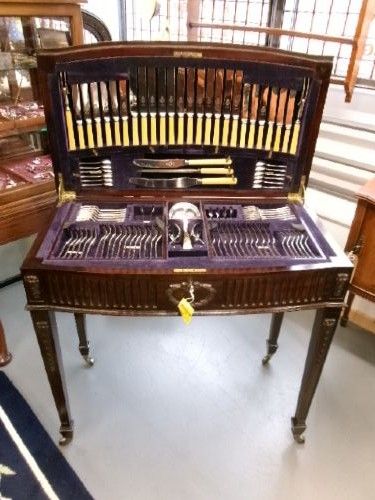
A boxed silverware set comprises matched or complementary utensils housed within a protective fitted case designed for dining or serving. When you search for a boxed silverware set, you encounter diverse forms ranging from extensive canteens to specialised cased sets for tea, coffee, or dessert.
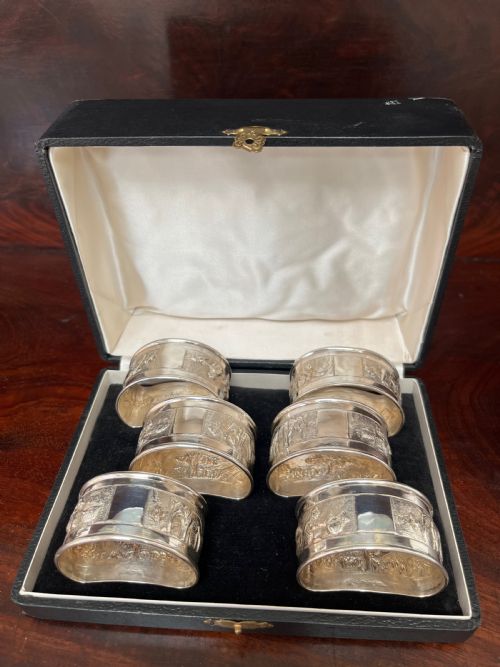
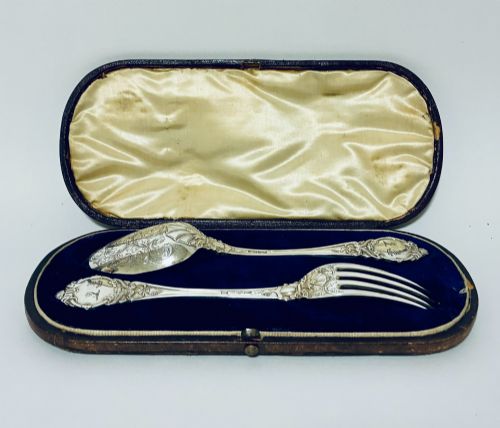
The selections span multiple eras, with Victorian examples appearing alongside Edwardian, Art Deco, and mid-century items. These encompass fiddle pattern canteens, Christening sets, napkin rings, butter knives, pepper pots, and strawberry sets.
Materials vary widely across the inventory, incorporating sterling silver, silver plate, and silver-gilt alongside functional steel elements. Cases are lined with velvet, felt, silk, or bound in leather to protect the metalwork within.
How they were made
Makers shaped sterling silver and silver plate through traditional techniques such as forging, casting, and hand-beating, often applying rich silver-gilt finishes to specific serving pieces. Fiddle pattern cutlery required careful shaping of the handles to achieve balanced weight and traditional silhouettes.
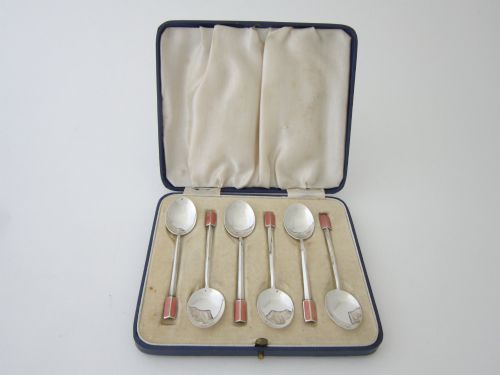
Decorative surface work included applied vitreous enamel on spoons, adding colour and intricate detail to the metal handles. Fitted cases were constructed from sturdy timber or card frames, then meticulously lined with velvet, silk, or felt to cradle each individual utensil securely.
Boxed Silverware Set Retail Price Guide 2026
Typical asking prices for boxed silverware set among the pieces listed under this phrase on Sellingantiques today, from the lower quarter to the upper quarter. They describe what is for sale here now, not the wider market.
Listings feature items spanning the Victorian era through the Edwardian period, 1900, 1910, 1920, 1930, 1950, and Art Deco styles.
What varies in quality
Quality depends on the completeness of the set and the integrity of the original case, where intact velvet or silk linings and working clasps elevate the piece. Sets featuring precious sterling silver rather than silver plate command greater consideration.
Artistic execution also dictates distinction, particularly in the precision of fiddle pattern shaping or the application of vitreous enamel. Maker attributions and matching components across a full canteen further distinguish superior examples from standard service items.
Waring & Gillows·Robert Stebbings
The Boxed Silverware Set Glossary
- Sterling silver
- An alloy comprising ninety-two point five percent silver and seven point five percent other metals, typically copper. This standard composition ensures durability while maintaining high purity.
- Silver-gilt
- Silver that has been coated with a thin layer of gold on its surface. This technique produces a rich, two-tone appearance frequently utilised on decorative spoons and tongs.
- Vitreous enamel
- Glass fused to metal through high-temperature firing. It provides vibrant, durable colour decoration on handles and surfaces.
- Fiddle pattern
- A traditional nineteenth-century cutlery handle design characterised by a narrow stem widening toward a squared, shoulders-notched terminal. It remains a staple of Victorian dining silver.
- Canteen
- A fitted box, chest, or case specifically designed to store a comprehensive set of cutlery. These containers keep service pieces organised and protected from tarnish.
Boxed Silverware Set: Frequently Asked Questions
What is included in a boxed silverware set?
These sets contain matched or complementary utensils housed in a fitted case. They range from large canteens of fiddle pattern cutlery to smaller cased groupings like coffee spoons, pepper pots, or strawberry sets.
The enclosures protect the metal from tarnish and damage while keeping related service pieces together for dining, serving, or Christening gifts.
How do I care for silver in fitted boxes?
Store the items in their original lined cases, as velvet, silk, and felt help absorb moisture and prevent tarnishing. Handle the pieces gently during cleaning to preserve delicate enamels or silver-gilt surfaces.
Regular, light polishing with appropriate cloths maintains the shine of sterling silver and silver plate without wearing down the underlying metal.
How can I tell the period of a set?
Dating relies on stylistic clues, such as the ornate detailing typical of Victorian fiddle pattern cutlery or the geometric lines characteristic of Art Deco enamel pieces. Materials like sterling silver or silver plate also provide context.
Matching the case style and any interior fabric linings helps confirm the era of manufacture, ranging from the Edwardian period to the mid-twentieth century.
Were these sets used daily?
Many sets served formal dining occasions or special rituals like afternoon tea and Christening ceremonies. Canteens were kept in dining rooms to provide orderly access to full sets of cutlery for guests.
Smaller cased sets were frequently given as presentation gifts, explaining their survival in dedicated velvet or silk-lined containers.