

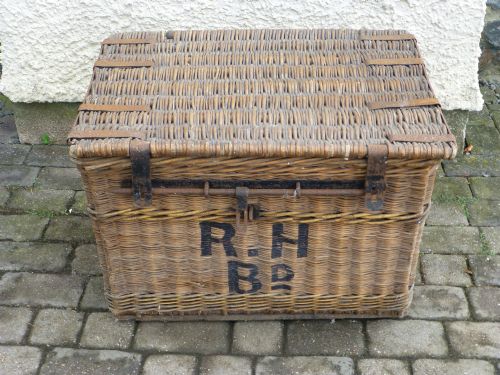
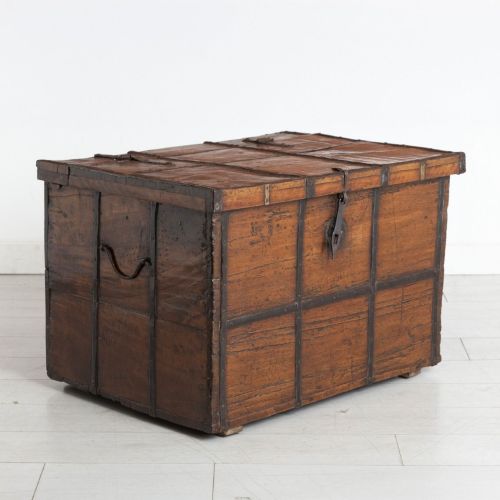
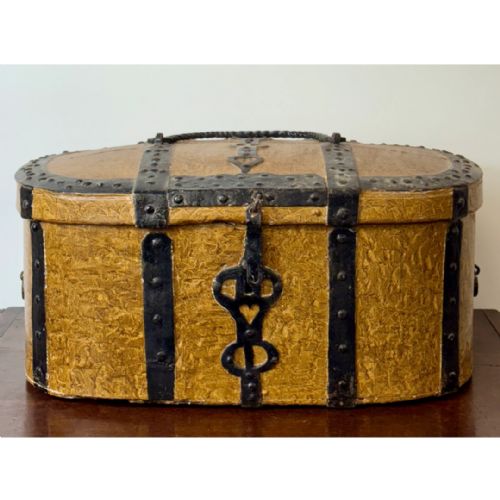
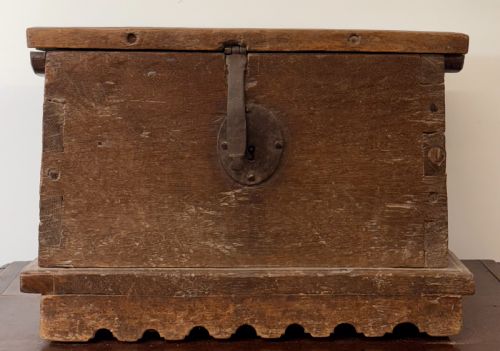
Boxed Iron
These boxed antique iron pieces are heavy timber or metal containers secured with forged hardware, built to travel or hold valuables securely.
Boxed Iron
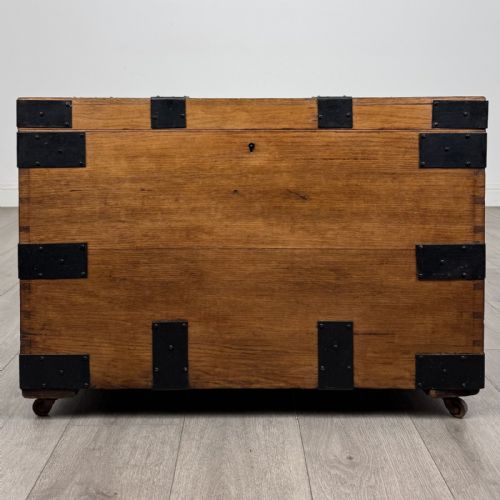
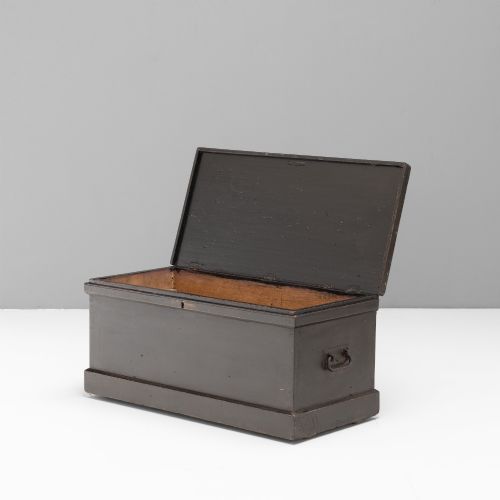
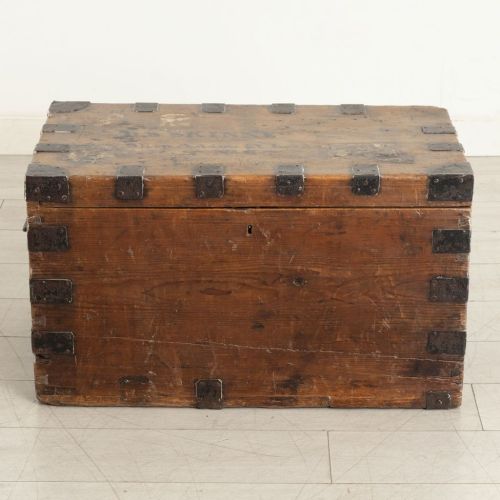
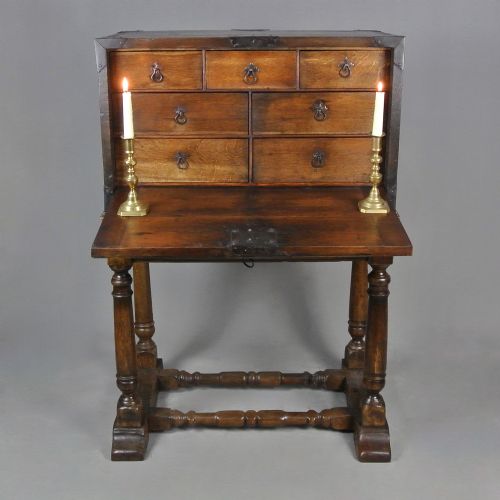
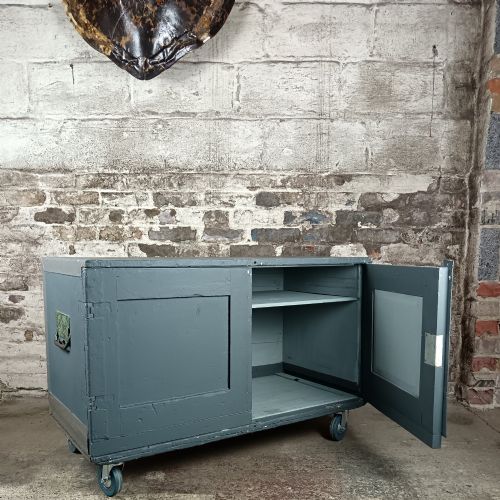
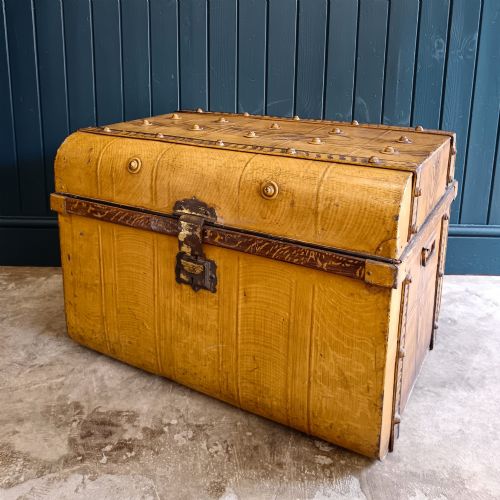
When searching for boxed antique iron, collectors encounter robust storage containers ranging from sixteenth-century oak strong boxes to nineteenth-century travel trunks and campaign chests. These objects combine wooden carcasses with functional metal elements.
Smaller items such as bible boxes, caskets, and money boxes also appear alongside larger industrial and military transport cases. These pieces serve contemporary interiors as storage tables or accent furniture.
Materials and Construction
Carpenters constructed the primary bodies from solid timbers including oak, pine, teak, and elm, often joining boards with dovetails or six-plank assemblies. These wooden structures provided the necessary rigidity for heavy storage use.
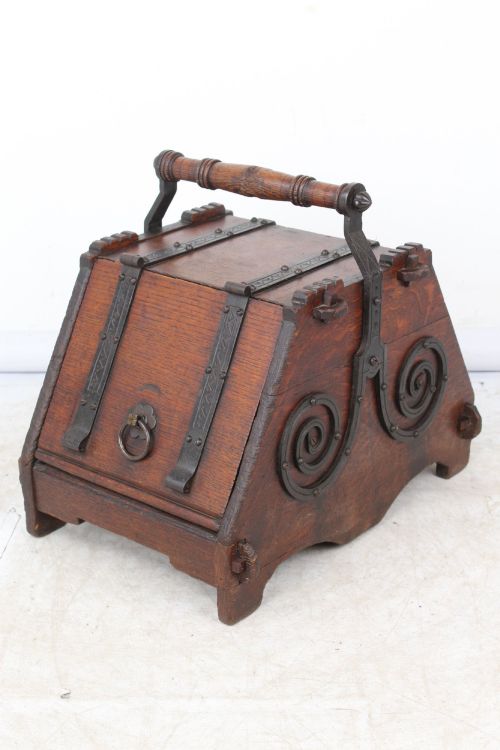
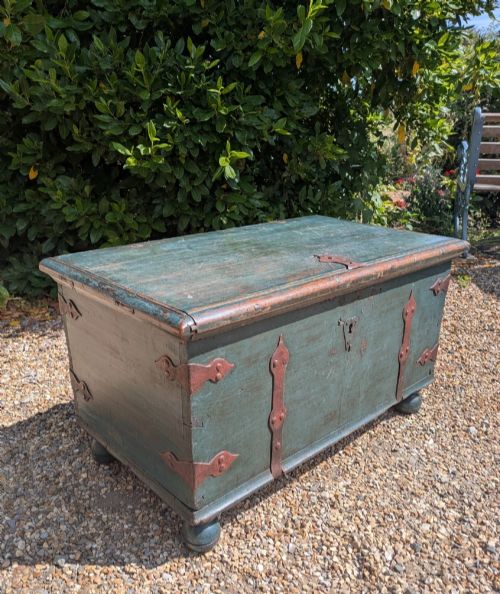
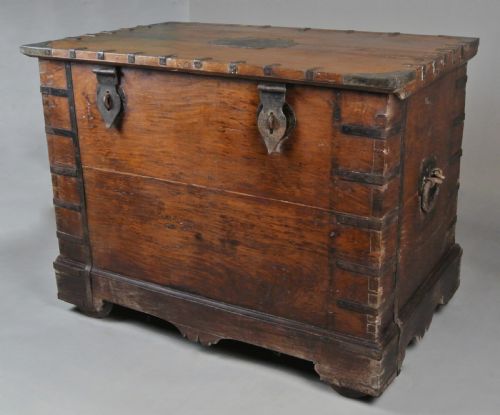
Blacksmiths produced the characteristic iron components by hand, forging strapwork, hinges, and carrying handles to reinforce corners and lids. Cast iron and wrought iron elements were secured with hand-driven nails or rivets.
Materials documented across the inventory comprise oak, pine, teak, elm, cast iron, wrought iron, brass, and leather.
Assessing Quality
Quality rests in the integrity of the original hardware and the skill of the timber construction. Hand-forged iron strapwork that retains its original fixings commands greater interest among collectors.
The survival of original surface treatments, such as early paint, leather coverings, or patinated wood grain, distinguishes superior examples from heavily restored pieces.
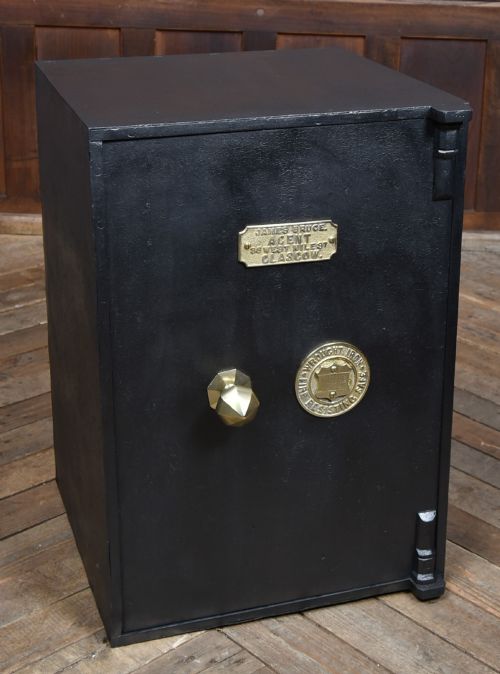
Christopher Dresser·James Bruce Glasgow·Coalbrookdale·F Whitfield And Co
The Boxed Iron Glossary
- Coffer
- A heavy wooden storage chest, typically constructed from oak or elm for domestic valuables. These early forms often feature plain board construction with iron locking mechanisms.
- Strong box
- A secure container reinforced with iron bands and complex locking systems designed to hold currency or documents. These heavy boxes date largely from the seventeenth and eighteenth centuries.
- Campaign chest
- A modular storage trunk designed for military officers on the move, featuring recessed brass or iron handles. They separate into distinct sections for ease of transport.
- Strapwork
- Flat strips of iron applied externally to wooden chests for structural reinforcement and decoration. Blacksmiths forged these bands by hand during the medieval and early modern periods.
- Nuremberg casket
- A portable iron strong box featuring intricate internal locking mechanisms beneath the lid. German workshops produced these spring-locked containers for European markets.
Boxed Iron: Frequently Asked Questions
How do I date an iron bound chest?
Dating relies on examining the construction methods of the wood, the style of the hinges, and the technique used to shape the iron. Hand-forged elements and early dovetailing generally indicate earlier centuries.
Later Victorian and Edwardian examples often display machine-rolled metal or standardised fixings alongside softer pine timbers.
Were these chests used for travel?
Many sturdy boxes and trunks served as transport containers for merchants, soldiers, and diplomats. Heavy iron handles and strapwork protected the contents during long journeys by sea or coach.
Other domestic forms remained stationary inside houses to store linens, silver, or documents.
How should I clean rusted iron hardware?
Active corrosion requires careful treatment with light oil and fine wire wool to preserve the underlying dark metal surface. Aggressive cleaning should be avoided to retain the historical patina.
Treating the wood involves mild wax application rather than modern synthetic varnishes.
What is the difference between a coffer and a trunk?
Coffers are traditionally heavy wooden chests made from thick planks, often associated with church or domestic storage from the seventeenth century and earlier. Trunks typically feature lighter frames covered in leather, canvas, or painted metal designed for frequent travel.
Both categories frequently share iron reinforcement to secure the lid and corners.