
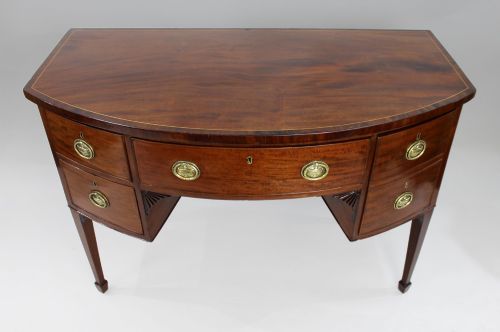
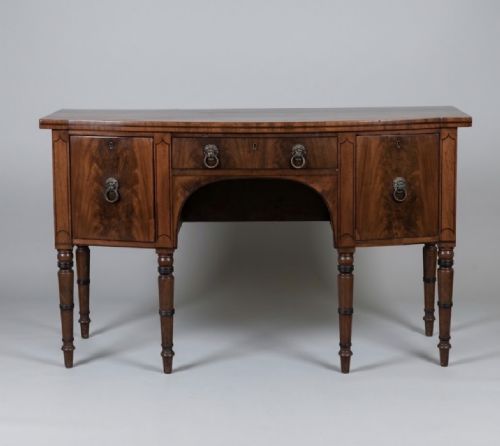
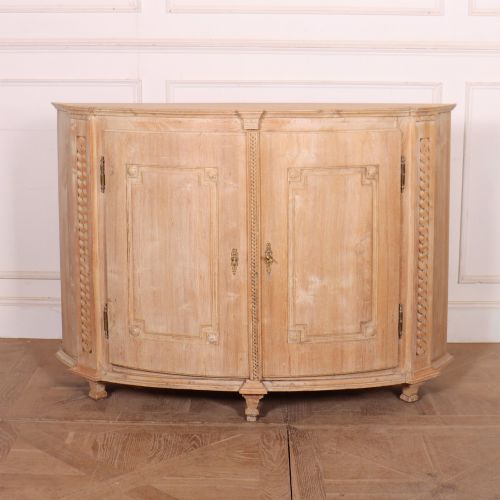
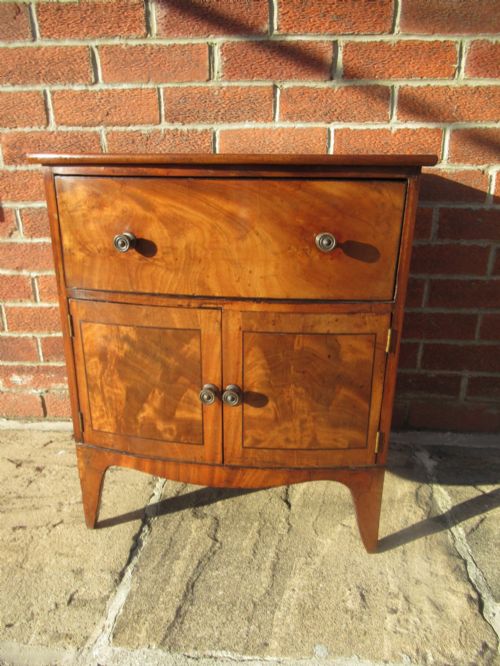
Bowfront Sideboard
A bowfront sideboard brings a curved, room-softening line to a dining space while offering deep storage behind matched timber doors.
Bowfront Sideboard
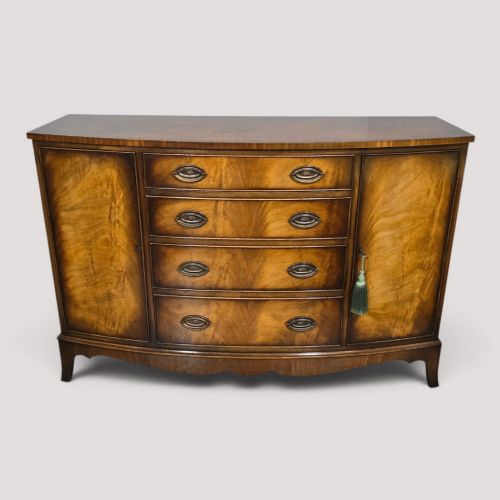
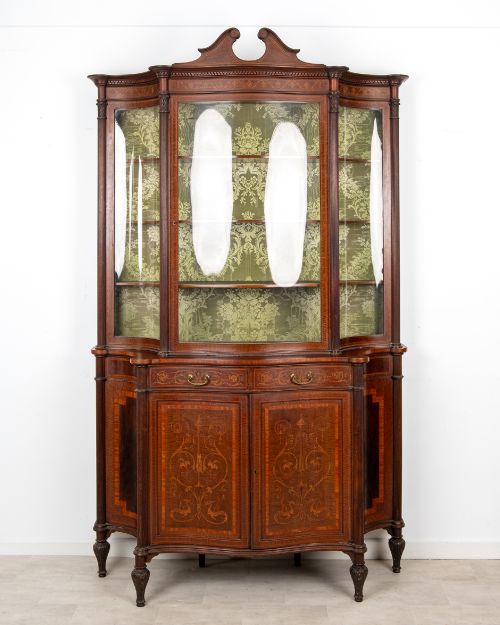
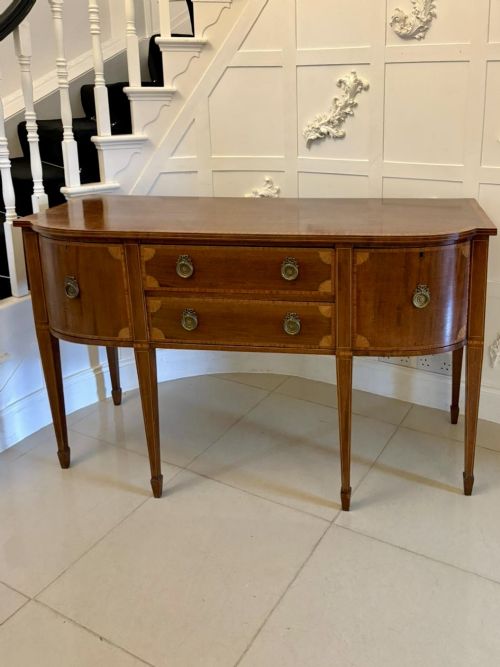
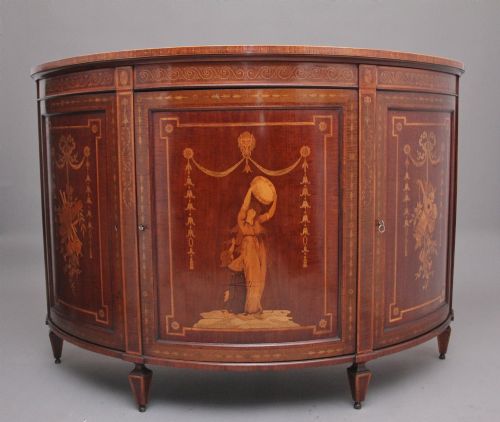
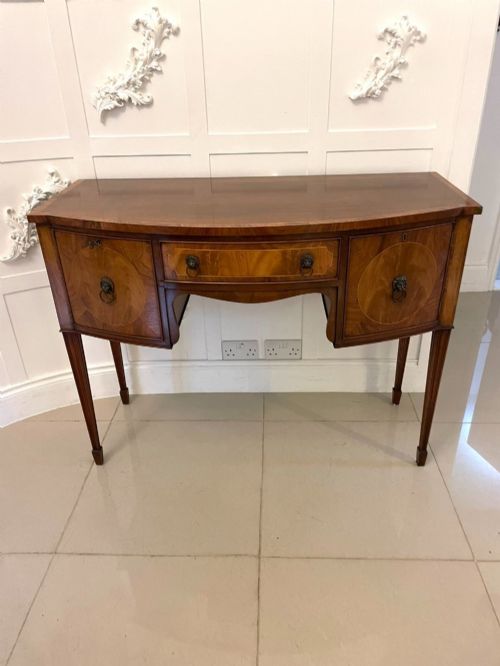
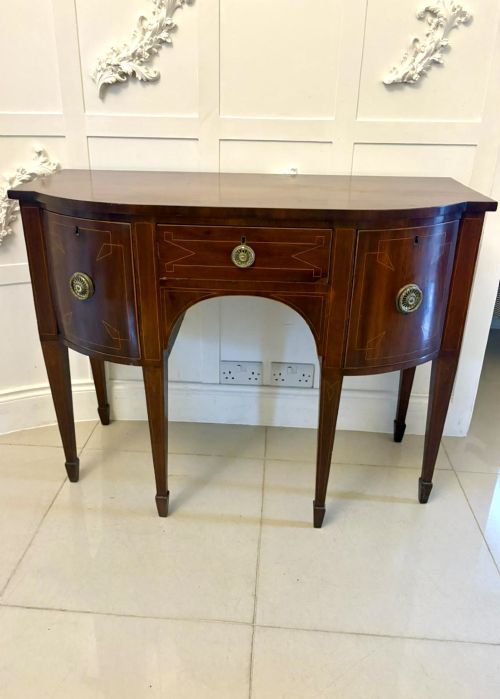
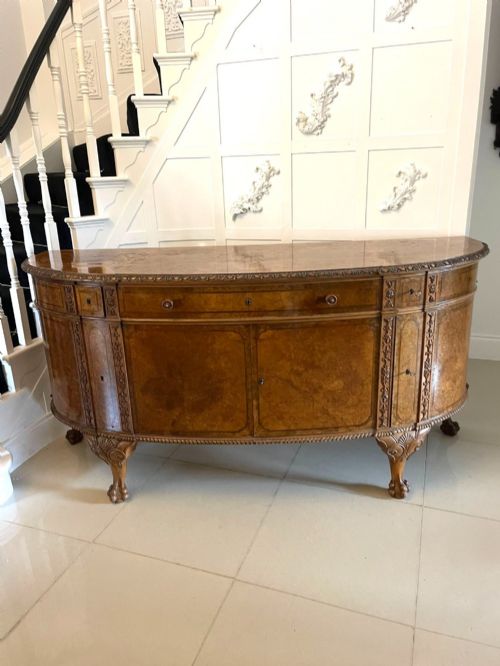
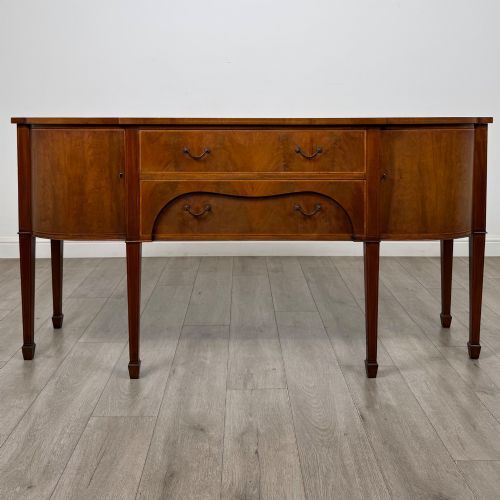
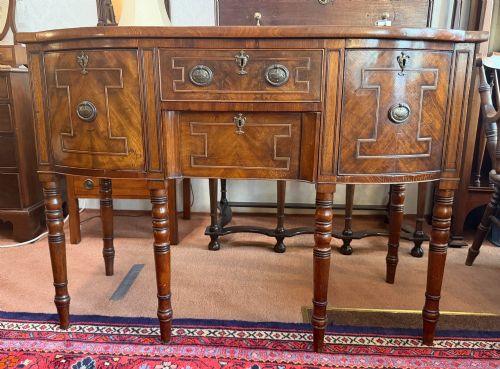
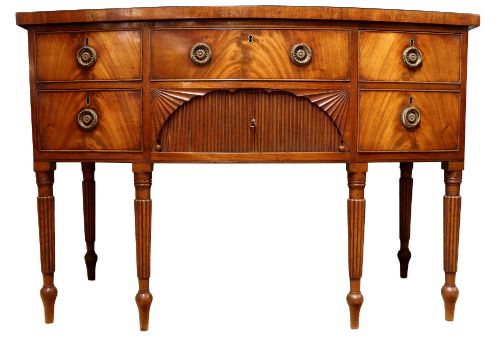
A bowfront sideboard presents a convex curved front that projects into the room, a form established during the Georgian and Regency periods and revisited extensively in Edwardian times. These dining room servers range from grand George III pedestal designs to compact Edwardian interpretations in satinwood and mahogany.
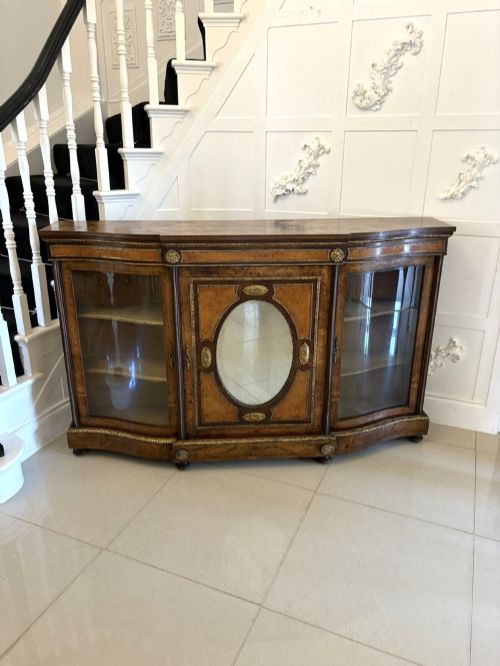
The pieces appearing here span the eighteenth, nineteenth, and early twentieth centuries, encompassing Georgian, Regency, Victorian, and Sheraton Revival styles. Mahogany forms the backbone of these selections, alongside lighter satinwood and burr walnut variations.
Materials and Construction
Cabinetmakers constructed these sideboards using solid mahogany frames faced with figured mahogany veneers and flame mahogany, often enriched by contrasting boxwood inlay, satinwood banding, and purpleheart details. Brass fittings, handles, and occasional ormolu mounts complete the structural hardware.
Makers shaped the convex fronts by careful timber selection and veneer application, following traditional joinery methods seen across George III, Regency, and later revival workshops.
An unusual Victorian oak bowfront dresser hides fierce green man carvings alongside polite cabriole legs.
Assessing Quality
Distinctions in quality rest upon timber choice, such as highly figured flame mahogany or finely figured burr walnut, paired with crispness in boxwood inlay and crossbanding. Finer examples display meticulous attention to proportion, balanced drawer arrangements, and original brass hardware.
Subtleties of hand-carved detailing and the seamless integration of curved drawer fronts differentiate exceptional workshop output from standard production pieces.
Maple and Co·George Hepplewhite
The Bowfront Sideboard Glossary
- Bowfront
- A convex curved cabinet front that swells outward from the corners, softening the rectangular geometry of a dining room.
- Crossbanding
- A narrow strip of veneer laid perpendicular to the grain of the surrounding wood, creating a neat decorative border along drawer edges.
- Satinwood
- A pale, lustrous exotic timber utilised in Sheraton Revival and Edwardian pieces for contrasting veneers and marquetry panels.
- Pedestal sideboard
- A substantial form featuring two distinct side pedestals flanking a central serving section, typical of the Regency period.
- Flame mahogany
- A veneer cut from timber fork where branches meet the trunk, yielding a distinctive feather-like ripple pattern.
Bowfront Sideboard: Frequently Asked Questions
Where should I place a bowfront sideboard?
Position the sideboard against a principal dining room wall where its curved projection has clearance from surrounding furniture. The shallow ends allow easy passage while the deeper centre provides substantial interior storage.
Ensure the room has balanced lighting so the polished mahogany or satinwood grain catches natural daylight without heavy glare.
How do I distinguish George III from Edwardian pieces?
Examine the secondary timbers and construction methods inside the drawers, as eighteenth-century makers employed different dovetailing techniques than twentieth-century revival workshops. George III pieces carry authentic period patination built up over generations of use.
Sheraton Revival and Edwardian examples often utilise brighter satinwood veneers and crisp machine-cut inlay, reflecting the decorative tastes of nineteen hundred.
What is the difference between a sideboard and a credenza?
A sideboard serves primarily as a dining room server for china, silver, and linens, featuring a combination of drawers and cupboards along a linear or curved front. A credenza often incorporates enclosed display cabinets or sliding doors, drawing influence from continental furniture forms.
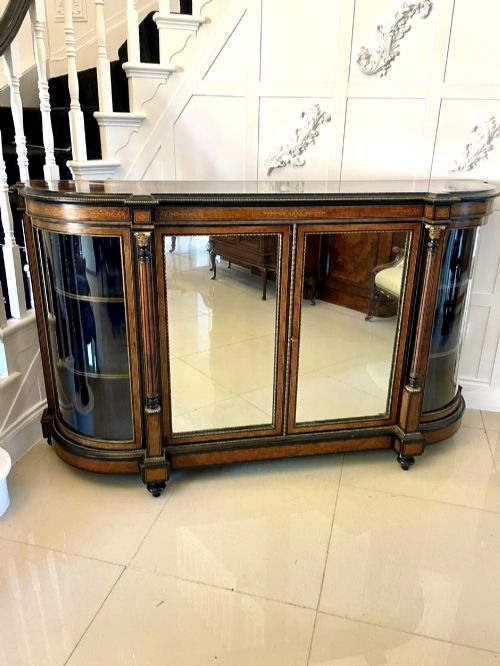
Victorian iterations sometimes blur these definitions, blending sideboard storage with credenza-style glass doors and ormolu mounts.
How do I care for antique mahogany veneer?
Maintain the polished timber by dusting gently with a dry, soft cloth and avoiding silicone-based polishes that build up over time. Keep the piece away from direct heat sources and strong sunlight to prevent the mahogany or satinwood from drying and fading.
Apply a traditional beeswax sparingly once or twice a year to nourish the grain and preserve the deep natural lustre.