

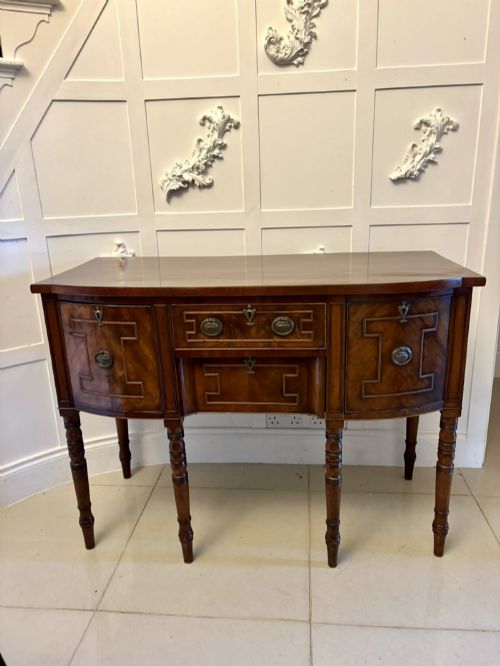
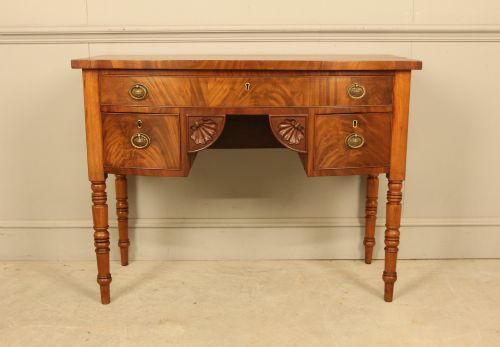
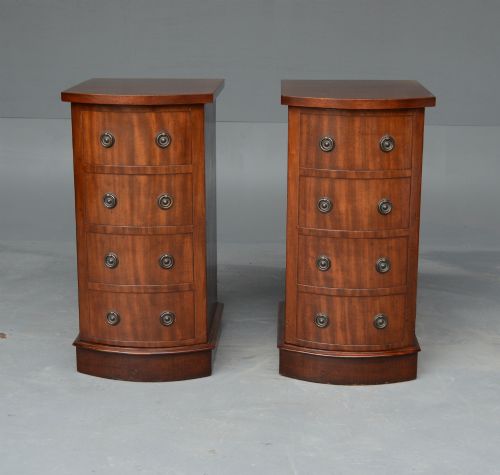
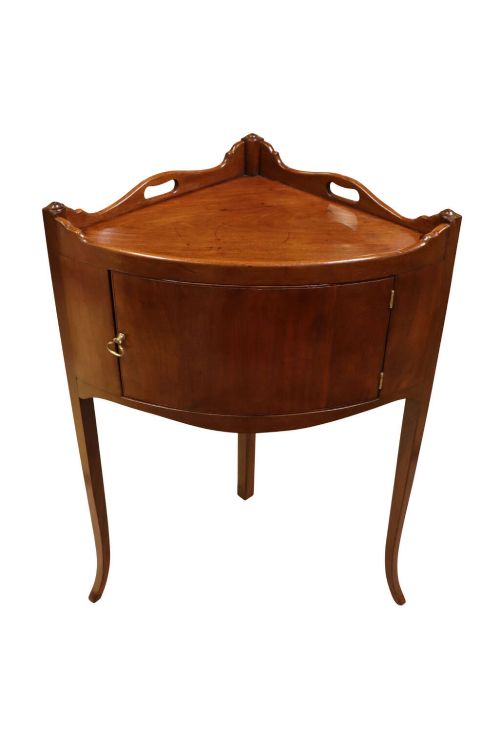
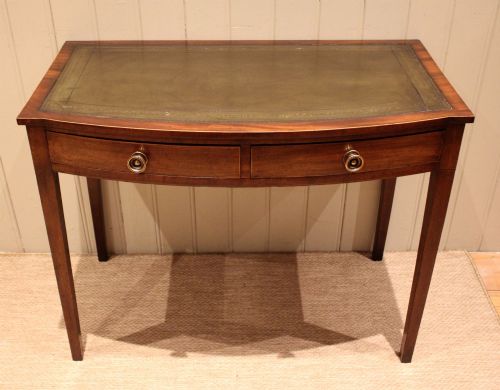
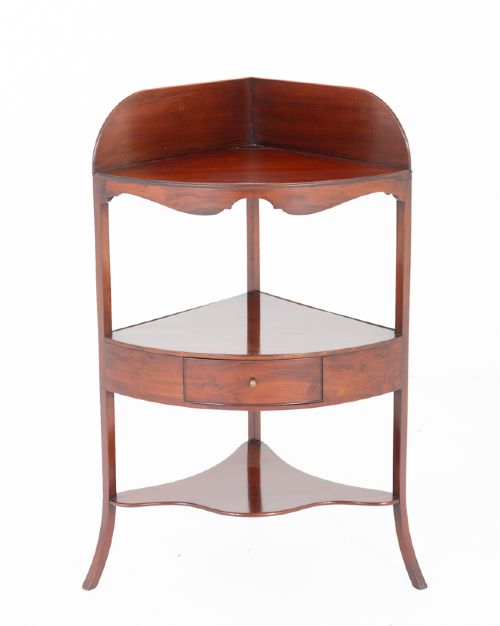
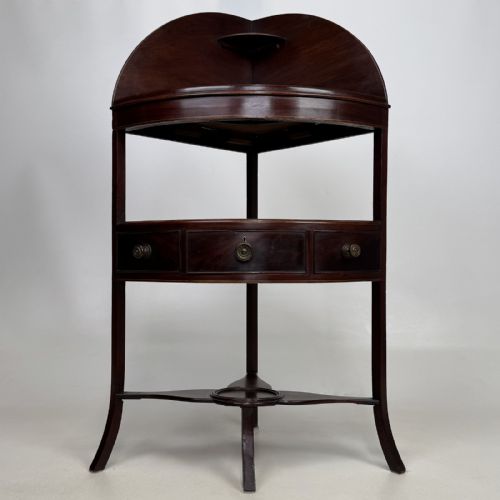
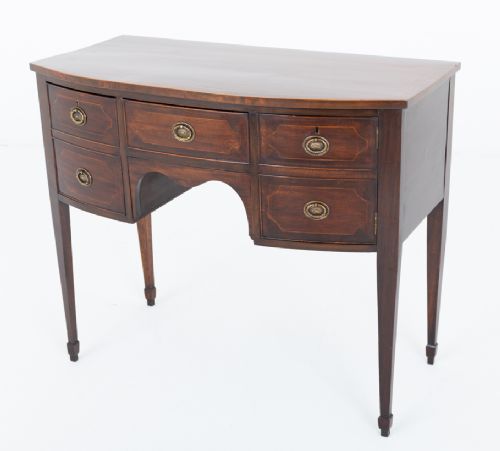
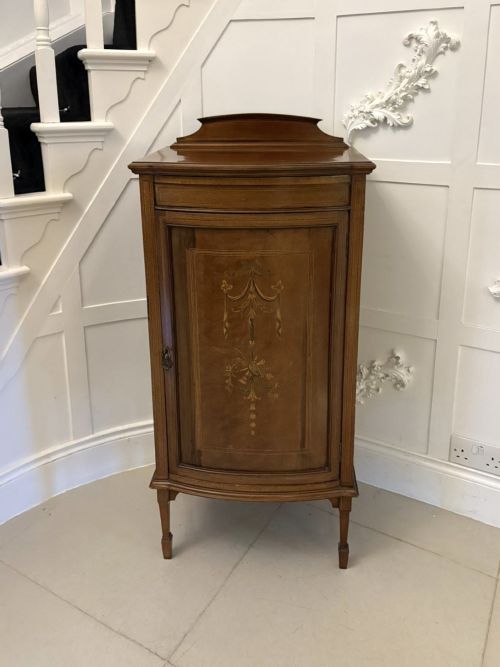
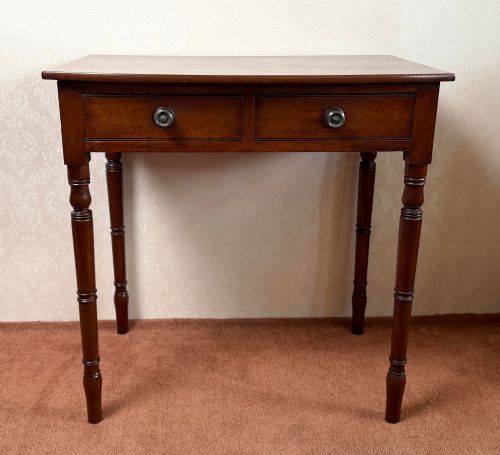
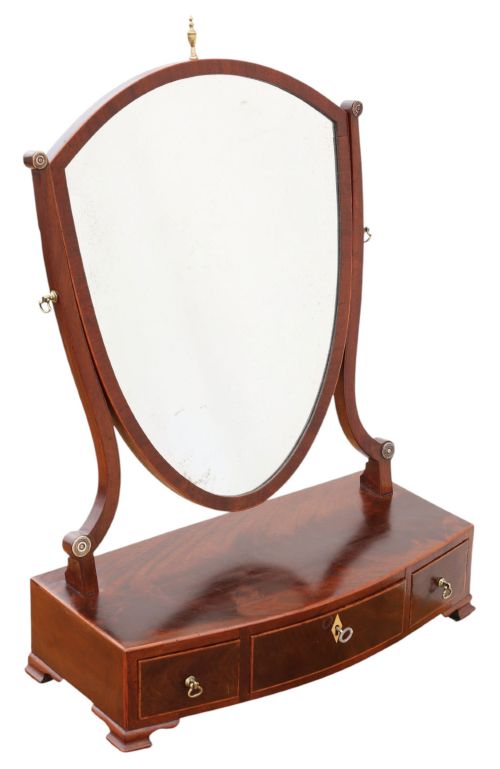
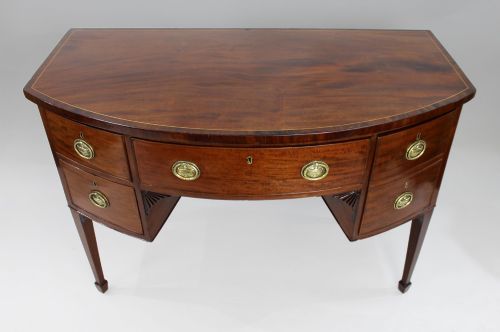
Bowed Mahogany Table
A bowed mahogany table brings a graceful curve to a room, offering practical storage and serving space built from rich timber.
Bowed Mahogany Table
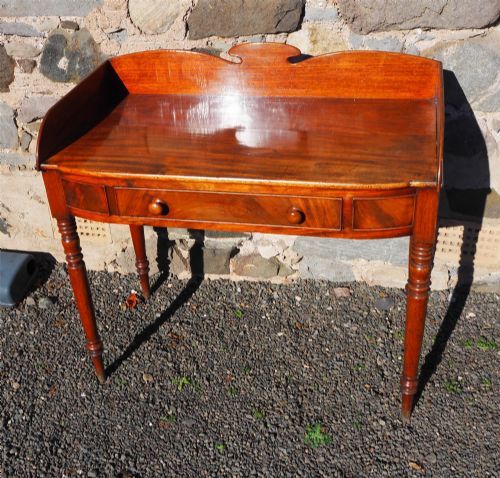
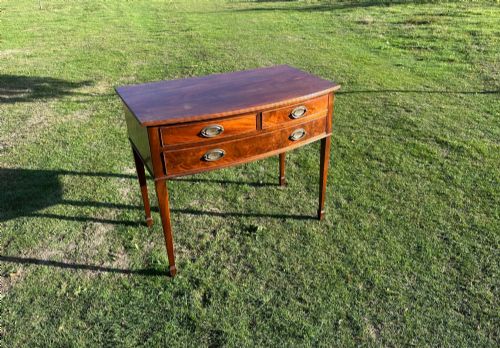
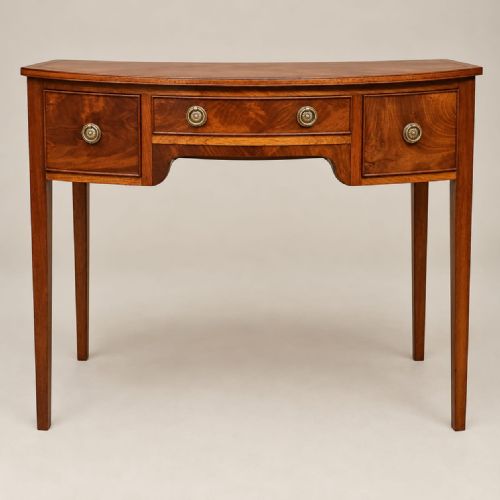
A bowed mahogany table encompasses a wide variety of furniture forms designed with a convex curved front, ranging from compact side tables and writing desks to substantial dining room sideboards and serving tables. These pieces predominantly date from the Georgian and Regency periods, stretching through the nineteenth century into Edwardian revivals.
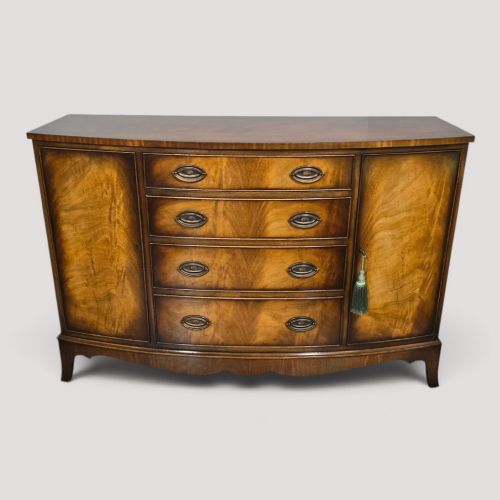
The sideboards and side tables dominate the selection, often featuring deep drawers or cabinets following the sweeping contour of the front. Buyers will also encounter specialised forms such as dressing tables, washstands, and bedside cabinets utilising the same distinctive curved silhouette.
Origins span English workshops of the eighteenth and nineteenth centuries, alongside later Edwardian interpretations and occasional continental pieces executed in the French style. The primary timber across all these forms remains mahogany, frequently enhanced by decorative veneers and contrasting stringing.
Materials and construction methods
Makers constructed these tables using solid mahogany for structural integrity, often applying figured flame mahogany veneer to the curved drawer fronts and cabinet doors to create striking visual movement. Secondary woods provided a stable carcase, while careful bending techniques allowed the solid timber or laminated veneers to hold the persistent convex curve.
Decorative detailing relied heavily on precise contrasting inlays, utilising boxwood and satinwood to form delicate lines, borders, and fan motifs around the drawer edges and borders. Selected pieces incorporated brass hardware, including ring pulls, handles, and occasional gallery rails, complementing the dark red tones of the polished wood.
Bowed Mahogany Table Retail Price Guide 2026
Typical asking prices for bowed mahogany table among the pieces listed under this phrase on Sellingantiques today, from the lower quarter to the upper quarter. They describe what is for sale here now, not the wider market.
Listings feature extensive examples of Georgian and Regency craftsmanship alongside later Edwardian interpretations, utilising solid mahogany, flame mahogany veneer, and brass fittings.
Distinctions in craftsmanship
Quality rests upon the selection of the timber and the execution of the curved front, where master cabinetmakers ensured the grain of the flame mahogany matched seamlessly across multiple drawers. The subtlety of the convex sweep and the precision of the boxwood or satinwood inlay determine the refinement of the piece.
Structural integrity of the drawer linings, the tightness of the dovetail joints, and the retention of original brass fittings separate standard utility furniture from exceptional cabinet work produced during the Georgian and Regency eras.
The Bowed Mahogany Table Glossary
- Bow front
- A convex curved cabinet front that projects outward in a smooth arc. This shape gained immense popularity during the Georgian and Regency periods for sideboards and side tables.
- Flame mahogany
- A veneer cut from the fork of the mahogany tree where the branch meets the trunk. It creates a distinctive rippled pattern resembling flickering flames.
- Stringing
- A narrow inlaid line of contrasting wood, such as boxwood or satinwood, embedded into the surface of the furniture to create decorative borders.
- Dovetail
- A joint used in drawer construction formed by interlocking wedge-shaped fingers. Hand-cut dovetails indicate earlier craftsmanship before machine production.
- Stage-back
- A raised tier or superstructure at the rear of a sideboard used for displaying serving dishes. This feature appears on larger Georgian dining room pieces.
Bowed Mahogany Table: Frequently Asked Questions
Where should I place a bowed mahogany table?
These tables suit hallways, dining rooms, and living spaces where their curved profile softens rigid architectural lines. Sideboards function effectively as serving surfaces or storage units against a dining room wall.
Smaller side tables and desks fit well in tighter reception spaces or bedrooms, providing a functional surface without occupying excessive floor area.
How do I date a mahogany piece?
Dating relies on observing construction techniques, hardware styles, and the specific characteristics of the mahogany timber. Pieces from the eighteenth century often display hand-cut dovetails and understated proportions.
Later nineteenth-century and Edwardian examples may show standardised machine methods or revival styling cues drawn from earlier Sheraton and Regency designs.
What is the difference between a sideboard and a side table?
A sideboard is typically a larger, heavier piece equipped with multiple deep drawers or cupboards designed specifically for dining room storage. They often include stage-backs or serving surfaces.
A side table is lighter and shallower, featuring one or two drawers at most, intended for general display and placement in reception rooms or hallways.
How do I care for antique mahogany furniture?
Maintain the wood by dusting regularly with a soft, dry cloth and avoiding placement near direct heat sources or strong sunlight. Excessive warmth causes timber to shrink and veneers to lift from the curved surfaces.
Apply traditional beeswax periodically to nourish the polished surface and preserve the deep reddish-brown tone of the mahogany.