
Bowed Mahogany Cupboards
These bowed mahogany cupboards bring curved lines and rich timber into a room, offering practical storage with Georgian and Edwardian character.
Bowed Mahogany Cupboards
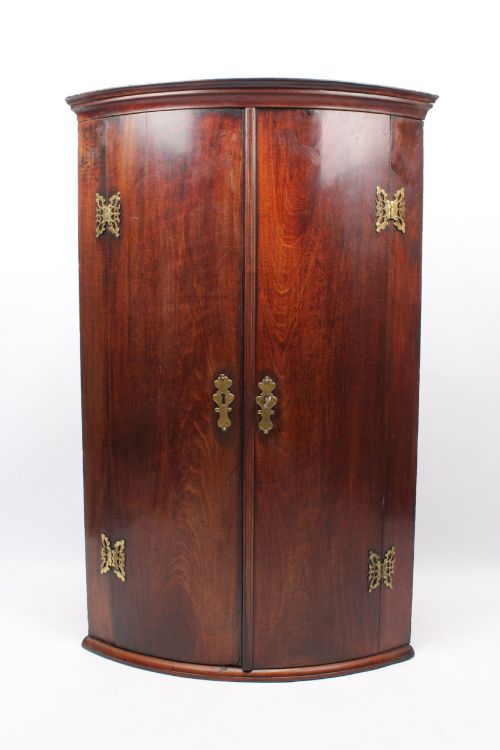
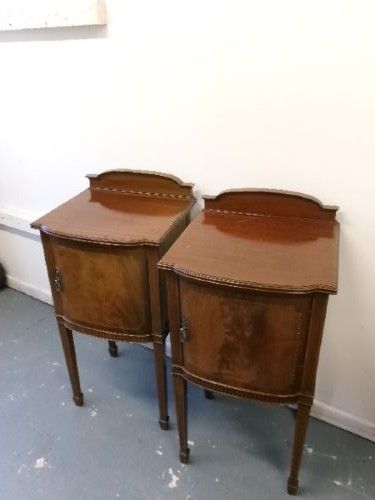
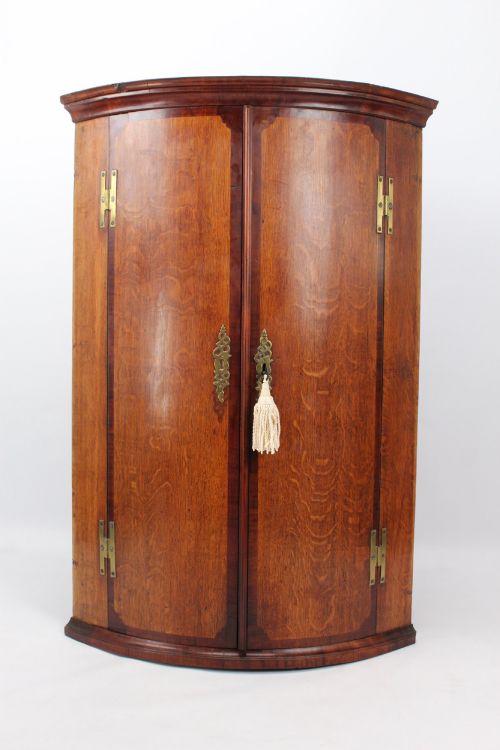
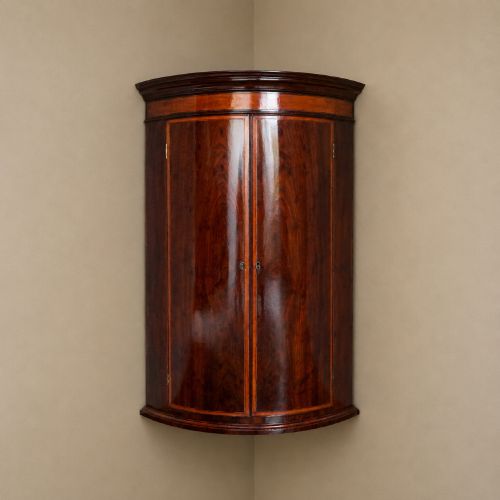
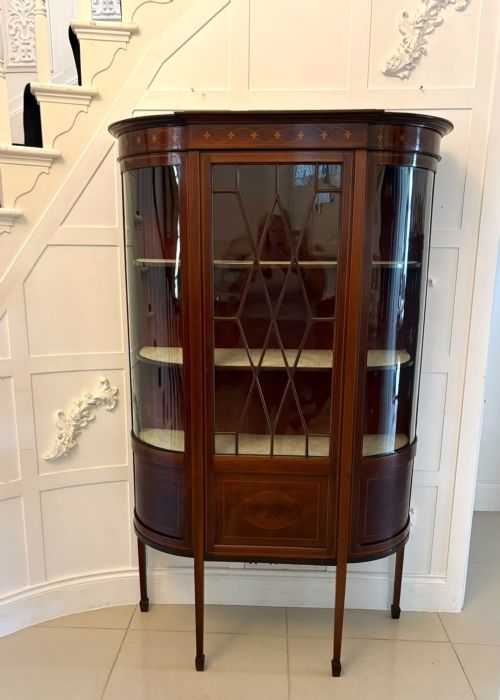
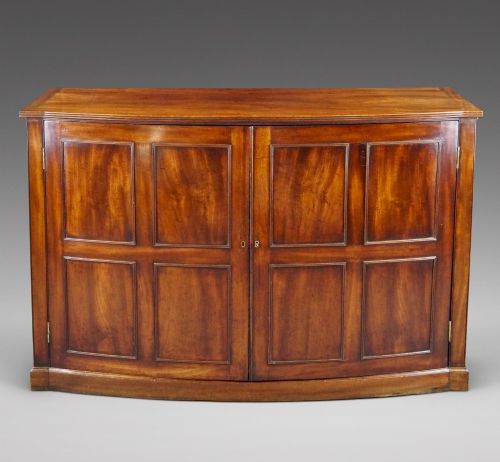
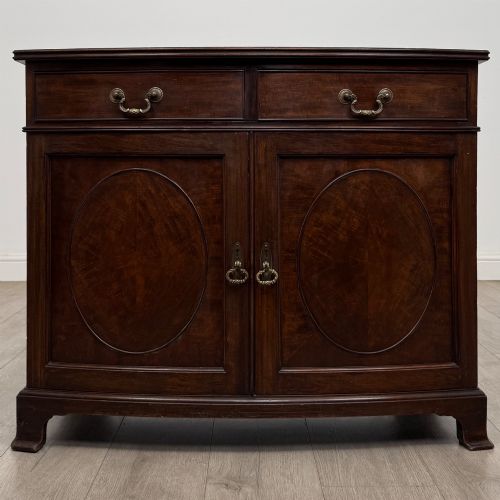
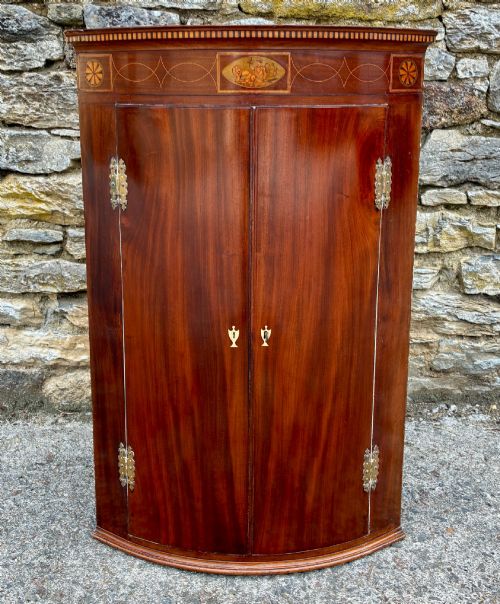
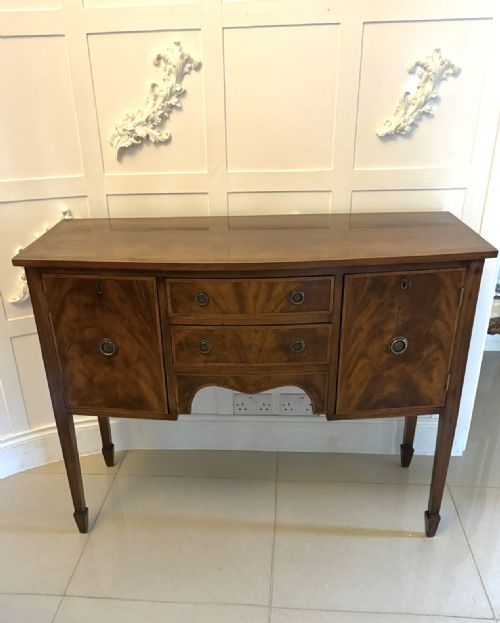
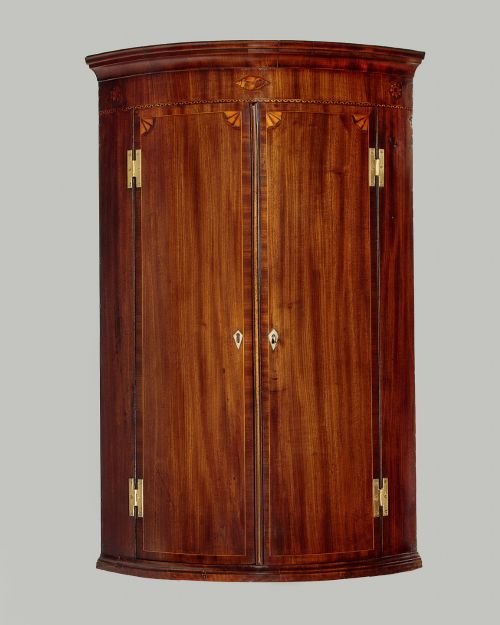
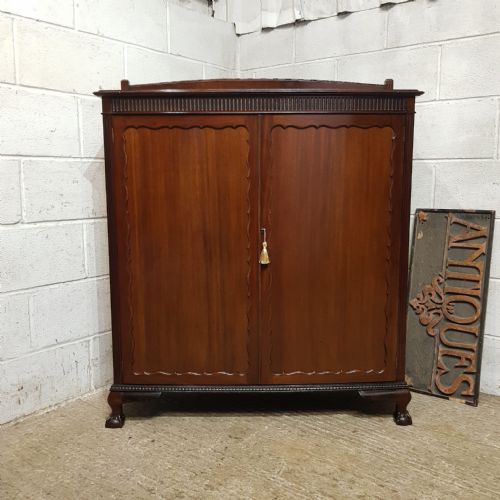
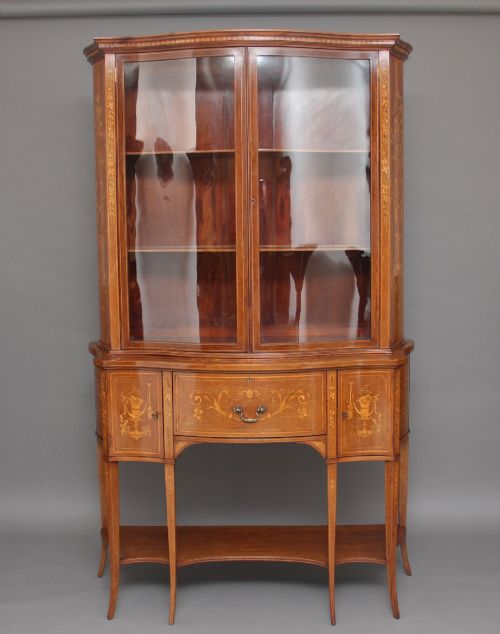
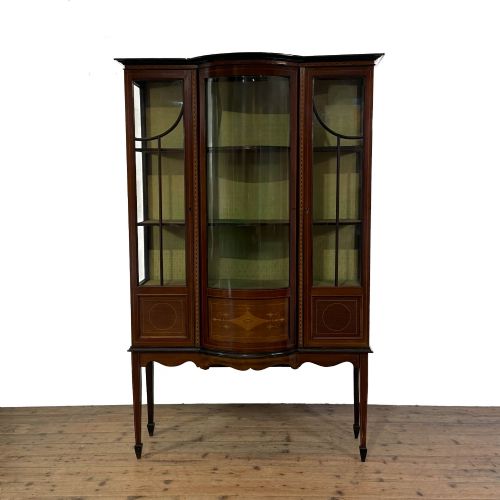
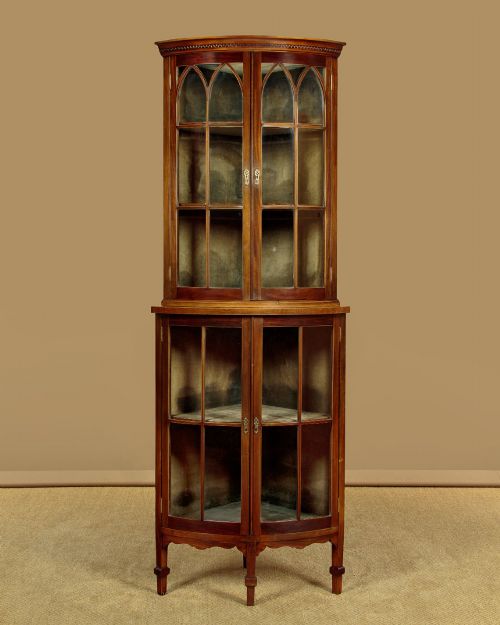
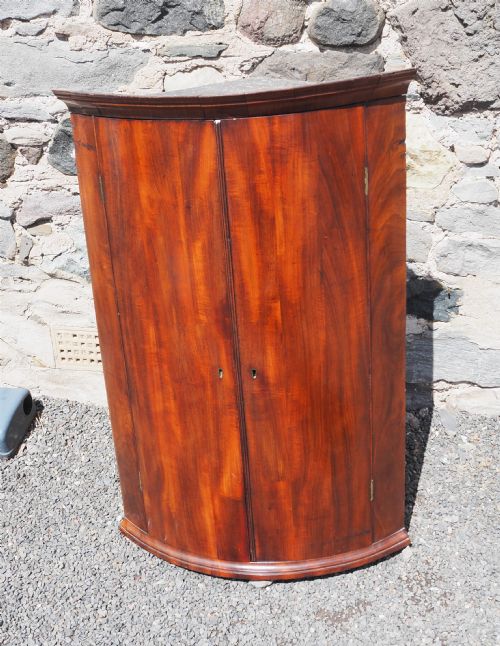
When searching for bowed mahogany cupboards, buyers encounter a diverse selection of storage forms rooted primarily in the Georgian and Edwardian eras. These pieces range from tall corner cabinets designed to utilise awkward spaces to bedside tables, sideboards, and larger display units.
Makers and craftsmen adapted the curved front across various furniture types, including linen presses and side cabinets. The prominent use of the bow front softens the room while providing deep interior capacity behind closed doors or glass panels.
Factors of Quality
Quality in these curved pieces rests upon the precision of the joinery and the selection of the timber veneers. Grain alignment across the curved bow front demands skilled woodworking to ensure the wood responds well to age without warping.
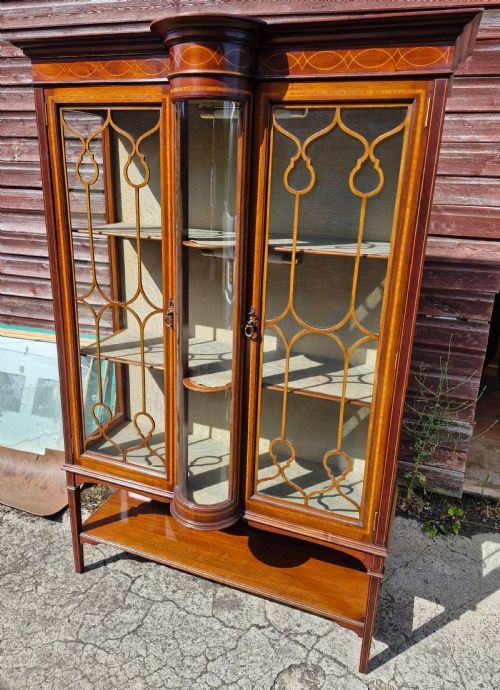
The refinement of the inlay work and the retention of original brass fittings distinguish superior examples from simpler utilitarian pieces. Finer cabinets display careful attention to interior shelving, drawer linings, and the clarity of any glazed panels.
Some corner cupboards are so shy they spend their entire lives hiding in corners.
Maple and Co
The Bowed Mahogany Cupboards Glossary
- Bow front
- A convex, curved front elevation that projects outward from the centre. This shape softens the corners of a room and adds visual depth to case furniture.
- Corner cabinet
- A specialist storage piece built with a triangular footprint to fit neatly into the ninety-degree angle of a room. Many examples feature curved bow doors to the front.
- Inlay
- A decorative technique where contrasting materials such as satinwood or boxwood are inserted into recesses carved into the primary mahogany surface.
- Linen press
- A tall cupboard featuring upper sliding trays or shelves for textiles, placed above a base section fitted with drawers. These pieces often utilise flame mahogany across the curved facade.
- Sheraton Revival
- A late nineteenth and early twentieth-century design movement inspired by the neoclassical furniture of George Sheraton. Pieces from this period frequently display delicate satinwood inlay and refined proportions.
Bowed Mahogany Cupboards: Frequently Asked Questions
Where should I place a corner cupboard?
These corner units fit directly into the unused angles of a room, making them ideal for dining spaces or hallways. They utilise vertical wall space efficiently without jutting into the main floor area.
Hanging versions mount securely to the wall at eye level, while floor-standing models anchor firmly into the corner angle. Their curved fronts draw the eye smoothly around the room boundary.
How do I care for mahogany furniture?
Keep mahogany away from direct heat sources and strong sunlight to prevent the timber from drying out or fading over time. Regular dusting with a soft, dry cloth preserves the polished surface.
Apply a traditional beeswax polish sparingly when the wood appears dry, buffing gently to maintain the natural sheen. Avoid silicone-based sprays, which can build up and dull the finish.
How do I distinguish Georgian from Edwardian pieces?
Georgian items generally date from the eighteenth and early nineteenth centuries, displaying heavier timber proportions and simpler structural lines. The construction methods reflect hand-cut joinery and period-specific brass hardware.
Edwardian pieces emerged around the turn of the twentieth century, often drawing on earlier designs through the Sheraton Revival style. They frequently incorporate brighter satinwood inlay, lighter framing, and specialised display functions.
What is the difference between a display cabinet and a sideboard?
Display cabinets feature glass panels or doors designed for showcasing glassware, ceramics, or collectibles. They prioritize visibility and protection against dust for decorative items.
Sideboards function primarily as storage and serving surfaces, usually combining cupboards with drawers. Their solid wooden doors conceal tableware and dining room accessories rather than exhibiting them.