
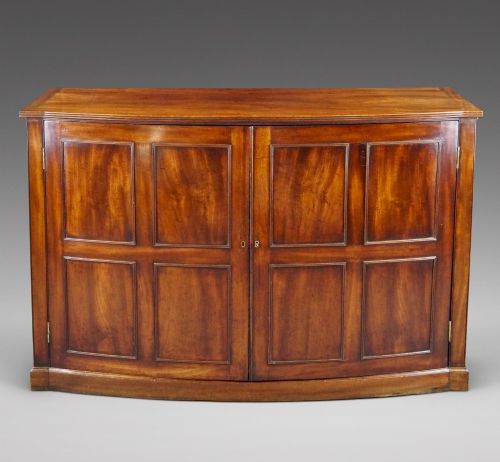
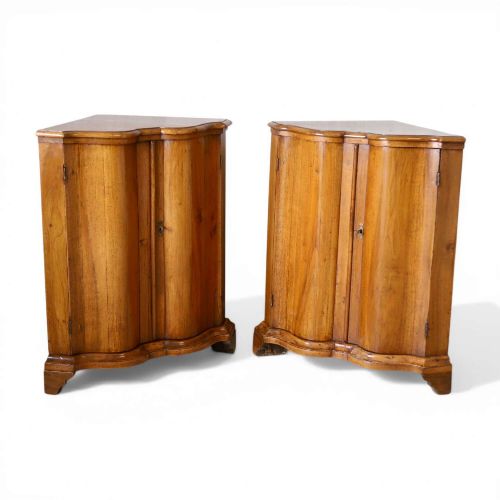
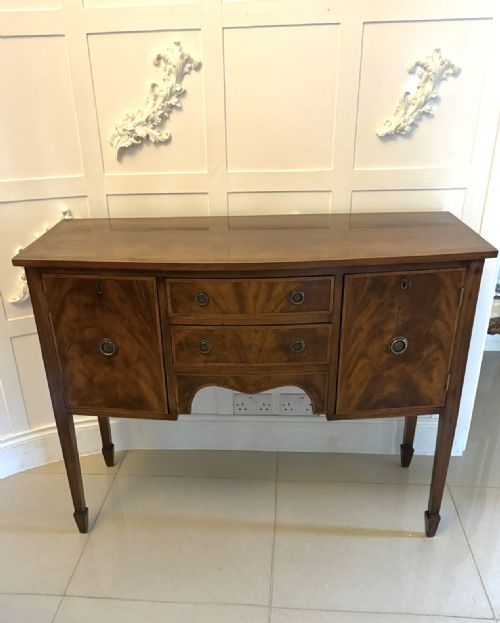
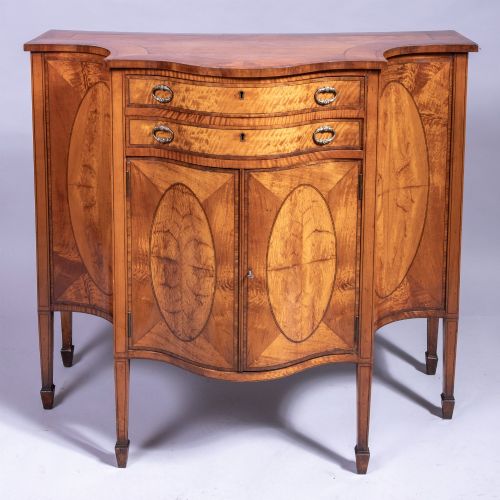
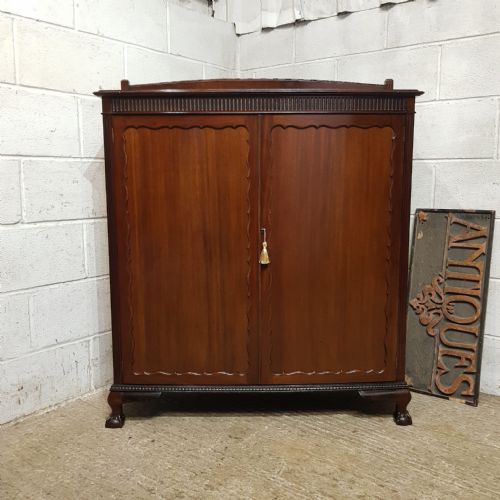
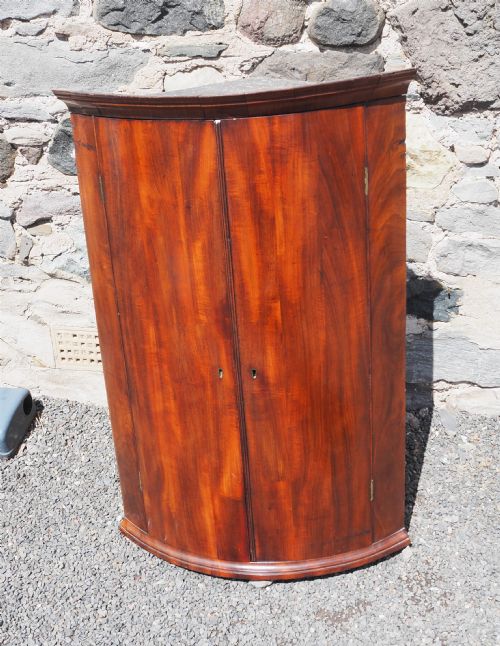


Bowed Front Storage Cabinet
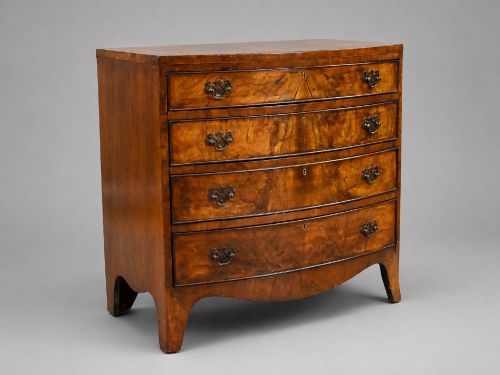
A bowed front storage cabinet brings curved lines and practical storage into a room, spanning corner cupboards, sideboards and chests.
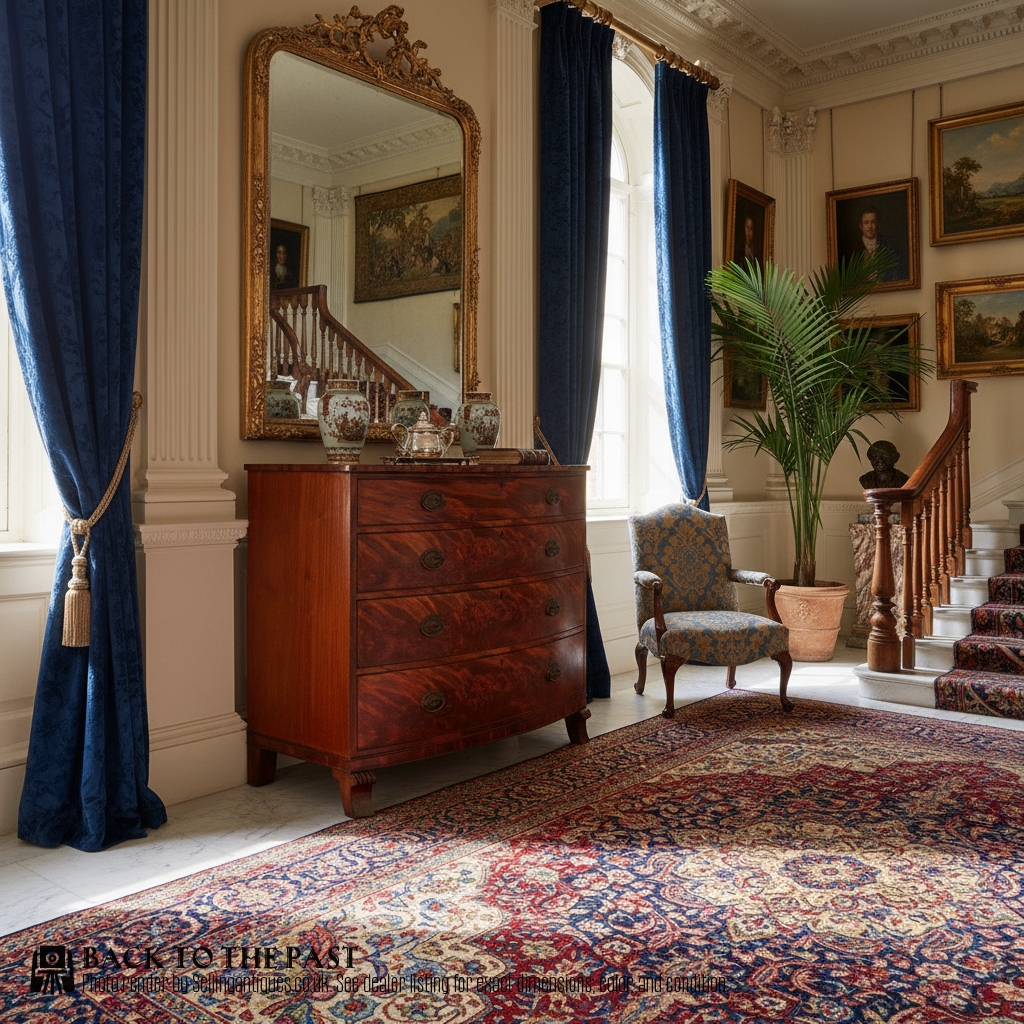
Bowed Front Storage Cabinet
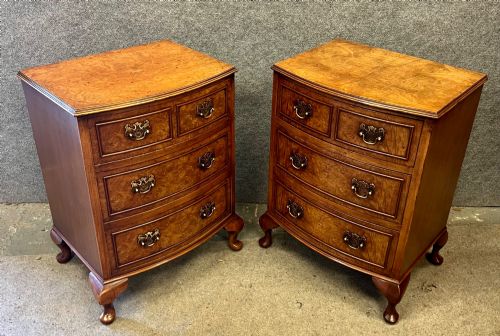
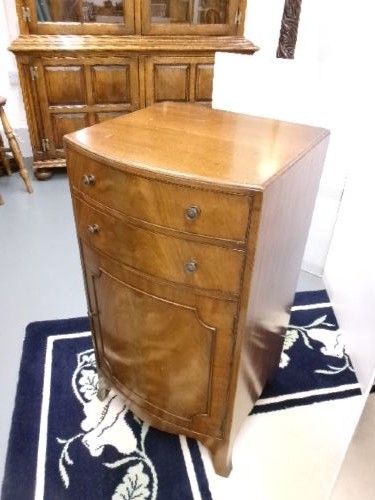
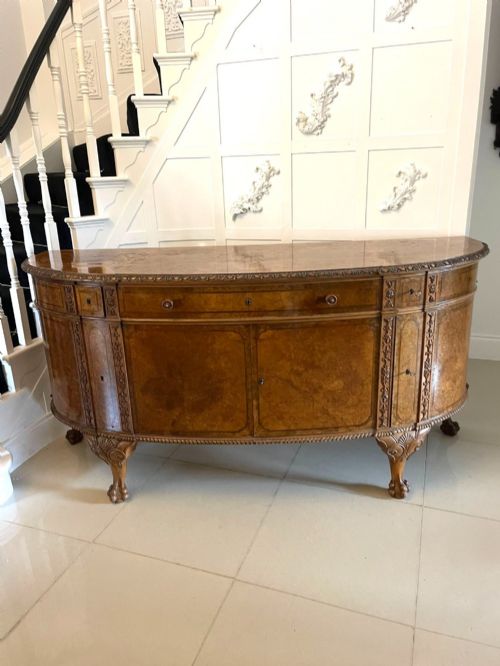
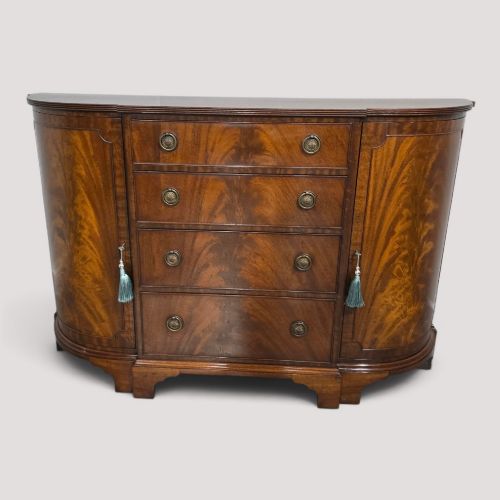
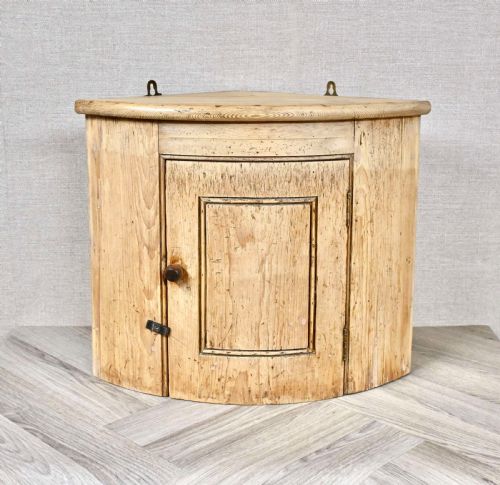
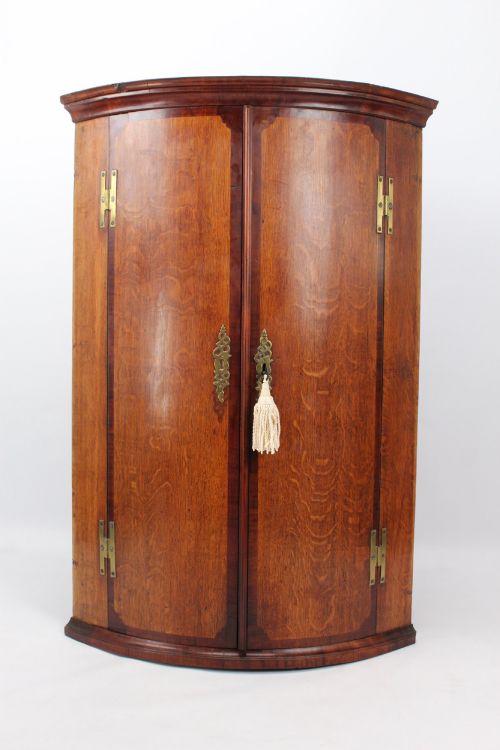
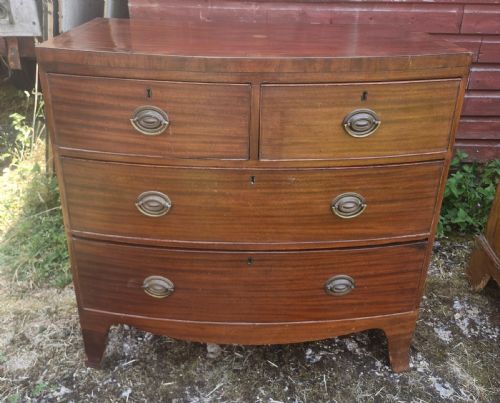
A bowed front storage cabinet takes several distinct forms across the periods represented here, appearing most frequently as chests of drawers, sideboards and corner cupboards. Buyers encounter pieces designed to fit flush against flat walls or tuck neatly into room angles, depending on whether the corpus is built for a corner or a straight run.
The profile curves outward in a gentle sweep, softening the rectangular geometry common in older furniture. These items range from compact hanging wall cupboards to substantial sideboards and chests standing directly on the floor.
Origins stretch across the eighteenth, nineteenth and early twentieth centuries, drawing on Georgian, Regency, Victorian and Edwardian design traditions. Mahogany forms the backbone of these selections, accompanied by oak, walnut, satinwood and pine.
Materials and construction
Cabinet makers built these curved carcasses using dense timbers such as mahogany, oak and walnut, frequently selecting figured veneers and flame mahogany to accentuate the convex sweep of the drawer fronts and doors. Boxwood and brass often provide linear stringing and hardware details.
Curved fronts required specialised joinery to shape solid wood or bend laminates and panels to maintain stability over decades of use. Craftsmen integrated brass handles, turned pulls and inlaid motifs to finish the exterior surfaces.
Pine corner cupboards hide behind plain exterior doors to reveal surprising rustic charm inside.
Distinctions in construction and finish
Quality rests on the selection of timber figure, such as flame mahogany or burr walnut, and how cleanly the grain matches across curved drawer fronts and doors. Superior examples display precise inlay work and well-fitted internal shelving or drawer dividers.
The integrity of the curved framing and the smooth operation of drawers and doors indicate the original standard of workshop execution. Maker attributions, such as pieces associated with firms like Maple & Co or Edwards and Roberts, distinguish specific pieces.
Maple & Co·Edwards and Roberts
The Bowed Front Storage Cabinet Glossary
- Bowfront
- A furniture front that curves outward in a convex arc. This shape softens the profile of chests and sideboards while increasing internal volume.
- Corner cupboard
- A storage piece built with a triangular or angled footprint designed to fit directly into the corner of a room. Versions include both hanging wall models and floor-standing units.
- Flame mahogany
- A veneer cut from timber where the grain pattern resembles flickering flames. It appears frequently on high-status Georgian and Regency case furniture.
- Stringing
- Thin inlay lines of a contrasting wood, such as boxwood, set into the primary timber. It creates decorative borders on cabinet doors and drawer fronts.
- Commode
- A low storage cabinet or chest with drawers, originating from French furniture forms. Eighteenth-century examples often feature curved fronts and marquetry.
Bowed Front Storage Cabinet: Frequently Asked Questions
How do I place a corner cabinet?
Corner cupboards utilise dead space in room angles, making them practical for smaller rooms or dining areas. Wall-hung versions secure directly to structural studs.
Floor-standing corner units anchor themselves stably without wall fixings, offering enclosed shelving for display or storage.
What is a flame mahogany finish?
Flame mahogany utilises sliced veneer where the wood grain catches the light with a distinctive ripple effect. Cabinet makers applied this to the most prominent surfaces.
This technique highlights the convex curve of bowed furniture by creating natural movement across the wood.
How do I distinguish Georgian from Victorian pieces?
Georgian items typically date from the eighteenth and early nineteenth centuries, displaying restrained classical proportions and fine timber selection. They often rely on subtle stringing rather than heavy carving.
Victorian pieces from the later nineteenth century tend to be heavier in scale, sometimes featuring turned handles and darker finishes reflecting changing domestic tastes.
Where does a sideboard work best?
Sideboards provide deep surface tops and enclosed storage compartments suited for dining rooms and hallways. Their internal shelves hold tableware, linen or household items.
The curved profile allows them to project slightly into a space without blocking traffic routes compared to square furniture.