




Boulle Table Clock
A boulle table clock brings opulent tortoiseshell and polished brass marquetry into a room, offering both reliable timekeeping and undeniable decorative presence.
Boulle Table Clock
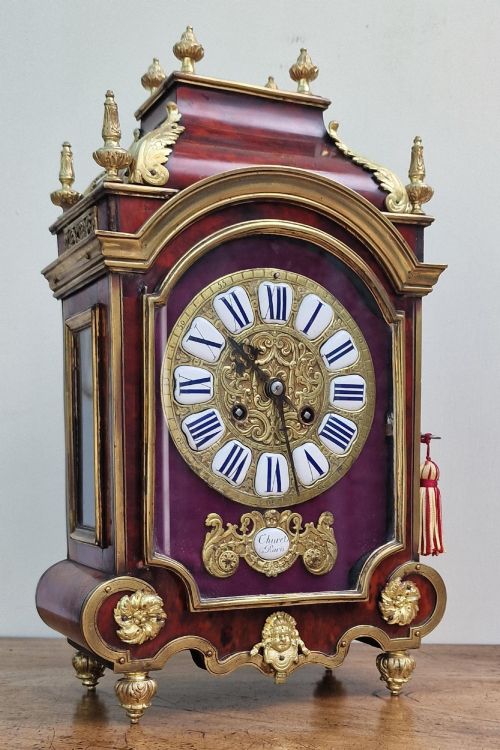
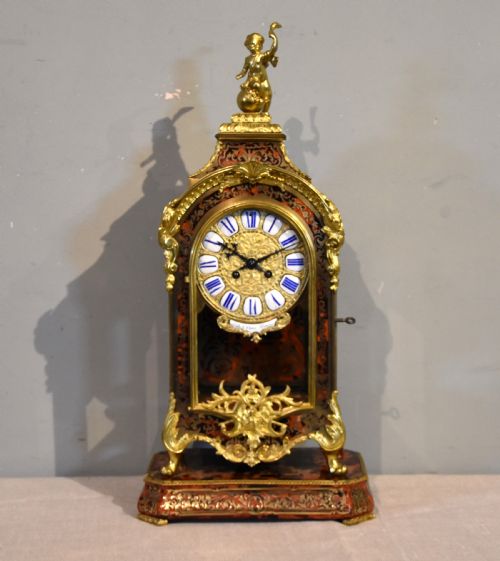
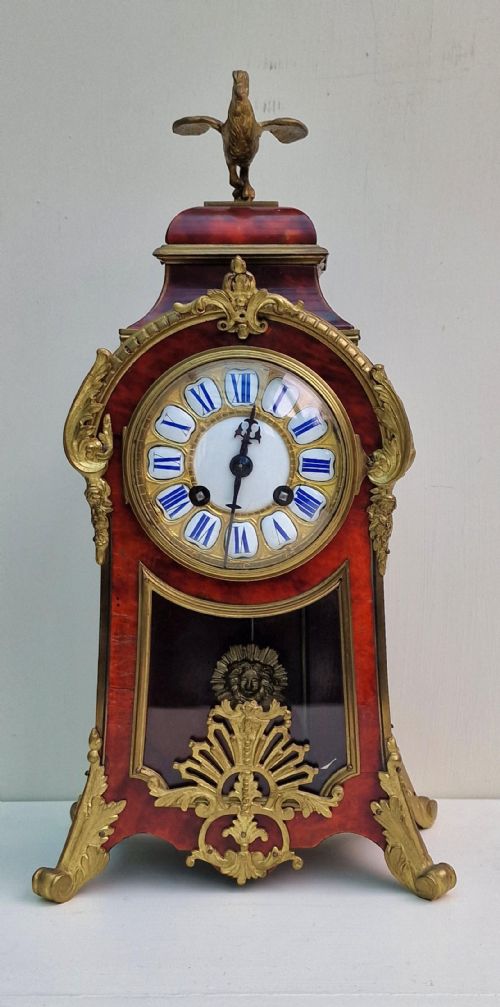
A boulle table clock is a timepiece encased in tortoiseshell and brass marquetry, often taking the form of a mantel clock or bracket clock. These pieces arrive in various revivals of French historical styles, including Louis XIV, Louis XV, and Rococo.
Most examples found here date from the nineteenth century, spanning Victorian interpretations and precise revival pieces. They range from diminutive mantel versions to substantial clocks standing with matching brackets.
Makers and origins stretch from Parisian workshops to English makers adopting continental methods, alongside occasional German makers like Berger und Würker. The core aesthetic relies on the dramatic contrast between dark shell and glittering metal.
Materials and technique
The technique relies on premier-partie and contre-partie marquetry, where sheets of tortoiseshell and brass or pewter are cut together to form intricate interlocking patterns. This skin of decoration is then applied to a wooden carcass, typically ebonised or stained wood.
Gilt bronze and ormolu mounts punctuate the corners, bezels, and feet, providing sculptural depth to the silhouette. Enamel cartouches or chapter rings indicate the hours, protected behind curved glass doors.
Movement construction involves brass plates, escapements, and pendulum regulation, sometimes driven by single chain fusee mechanisms in English adaptations or standard French eight-day movements.
Boulle Table Clock Retail Price Guide 2026
Typical asking prices for boulle table clock among the pieces listed under this phrase on Sellingantiques today, from the lower quarter to the upper quarter. They describe what is for sale here now, not the wider market.
Listings feature brass, tortoiseshell, ormolu, and ebonised wood across nineteenth-century mantel and bracket formats.
What separates the tiers
Quality rests in the crispness of the brass engraving and the precision of fit between the tortoiseshell and metal inlay. Lesser pieces show wider gaps filled with black mastic, whereas finer examples display seamless integration.
The weight, chasing, and fire-gilding of the ormolu mounts dictate the upper tier of production. Castings with deep relief and sharp detail outclass lighter, mechanically stamped brass ornaments.
Signed movements by known makers or Parisian clockmakers elevate a piece above unmarked workshop output, aligning the mechanical integrity with the decorative ambition of the case.
Thuret·Samuel Marti·Payne London·Berger and Würker
The Boulle Table Clock Glossary
- Boulle work
- A method of marquetry using brass and tortoiseshell, named after André-Charles Boulle. It creates a rich, patterned surface across the clock case.
- Ormolu
- Gilt bronze mounts applied to furniture and clocks. This technique uses a mercury amalgam to bond gold to a bronze base, yielding a warm, lasting lustre.
- Cartouche
- Enamel numeral plaques set individually around the dial. These white sections display Roman or Arabic numerals.
- Fusee
- A conical pulley used in clock movements to maintain even tension on the gear train as the mainspring unwinds. It ensures consistent timekeeping.
- Bracket clock
- A portable clock designed to sit on a matching wall bracket or a tabletop. Many include a swinging handle on top for movement.
Boulle Table Clock: Frequently Asked Questions
How do I wind a boulle table clock?
Use the appropriate winding key to turn the arbours located on the dial face, taking care not to overwind the mainspring.
Most nineteenth-century French movements require a gentle touch every week to maintain power across the eight-day duration.
Where should I place my clock?
Position the piece on a stable mantelpiece, sideboard, or dedicated wall bracket away from direct sunlight and dampness. Level surfaces prevent the pendulum from catching and stopping the movement.
Keep the clock clear of heat sources that might dry out the wooden carcass or warp the tortoiseshell veneer.
How do I tell Louis XIV style from Rococo?
Louis XIV style pieces exhibit formal symmetry, heavier architectural proportions, and classical motifs suited to grand Baroque interiors. Rococo Revival examples favour asymmetric curves, C-scrolls, and naturalistic floral flourishes.
Examining the mounts and overall silhouette clarifies which French period inspired the maker.