




Boulle Inlaid Credenza
A boulle inlaid credenza is a striking nineteenth-century display piece defined by brass and tortoiseshell marquetry, offering both surface splendour and substantial storage.
Boulle Inlaid Credenza
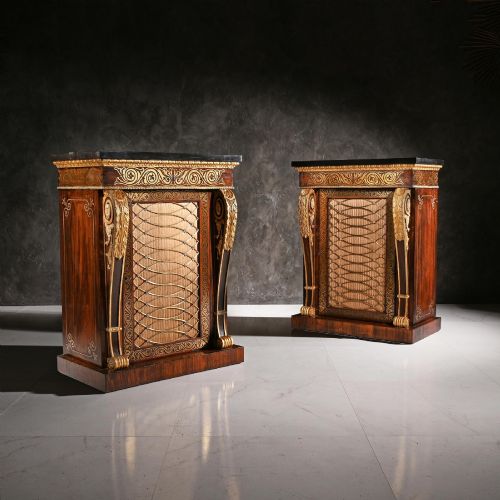
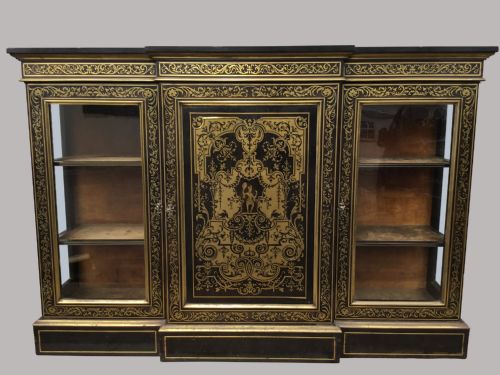
A boulle inlaid credenza represents a grand tradition of nineteenth-century French and English cabinet making, encompassing forms such as pier cabinets, side cabinets, and breakfront sideboards. These items serve primarily as focal points for formal rooms, combining glazed or panelled doors with decorative display surfaces.
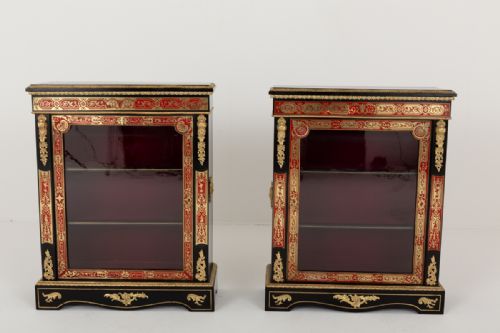
Most examples encountered on this page date from the nineteenth century, including specific periods like eighteen fifty, eighteen sixty, eighteen seventy, and eighteen eighty, alongside Victorian and French Napoleon III revivals. The surviving variants range from serpentine fronted marble topped Credenzas to pairs of ebonised pier cabinets.
The decorative vocabulary draws heavily on French Napoleon III, Louis XVI style, and Grand Regency influences, marrying architectural timber carcases with elaborate metal and shell detailing. Buyers select them to anchor a formal interior while providing enclosed shelving for objects of curiosity.
How they were made
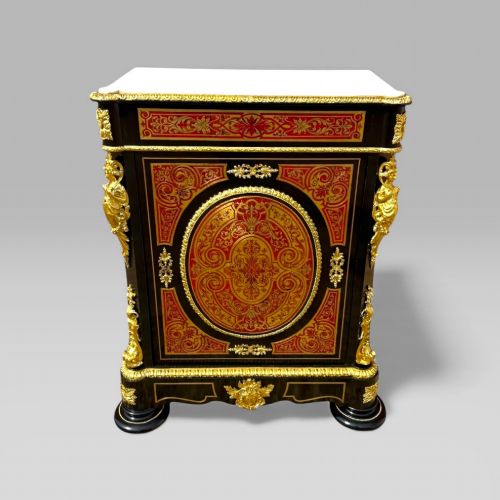
The construction relies on solid carcases of ebonised wood, ebony, or rosewood, which provide a dark, light-absorbing ground for intricate metalwork. Artisans cut thin sheets of brass and tortoiseshell together using a fretsaw, creating interlocking positive and negative patterns known as premiere partie and contre-partie.
Ormolu and gilt bronze mounts frame the doors, corners, and plinths, cast and chased to add architectural depth and protect vulnerable edges. Marble tops, often shaped with serpentine curves, are fitted precisely to the timber frames to provide a durable and luxurious upper surface.
Boulle Inlaid Credenza Retail Price Guide 2026
Typical asking prices for boulle inlaid credenza among the pieces listed under this phrase on Sellingantiques today, from the lower quarter to the upper quarter. They describe what is for sale here now, not the wider market.
Tortoiseshell panels were sometimes backed with vermilion red paper to make the translucent shell glow like fire beneath the brass.
What varies in quality
The refinement of the marquetry cutting separates superior examples from simpler production, visible in the tightness of the brass and tortoiseshell joints and the complexity of the scrollwork. Finer pieces display crisp hand-chasing on the ormolu mounts rather than dull, mass-produced cast surfaces.
The choice of foundational timber and the depth of the ebonised finish dictate the overall visual richness, with dense hardwoods providing stability and longevity to the complex cabinet structure.
Louis Constantin Le Gaigneur
The Boulle Inlaid Credenza Glossary
- Boulle
- A style of marquetry using brass and tortoiseshell, named after André-Charles Boulle, cabinetmaker to Louis XIV. This technique creates high-contrast metallic patterns set against a dark organic background.
- Ormolu
- Gilt bronze mounts used extensively for decorative enrichment on nineteenth-century furniture. The technique involves applying a gold amalgam to bronze before heating.
- Pier Cabinet
- A narrow display cabinet designed specifically to fit the wall space between windows. These upright pieces often feature single glazed doors and elaborate top mounts.
- Breakfront
- A cabinet front where the central section projects forward from the flanking sides. This architectural arrangement creates depth and shadow across the facade.
- Serpentine
- A gently curved front or top line that undulates outward in the centre and inward at the sides. This fluid shape requires precise carpentry to fit stone and timber components.
Boulle Inlaid Credenza: Frequently Asked Questions
What is a boulle credenza?
A boulle credenza is a nineteenth-century cabinet decorated with brass and tortoiseshell marquetry, often accented with ormolu mounts and marble tops. These pieces function as decorative storage and display units.
Originating from revived French and English design movements, they combine architectural timber carcases with meticulous metal inlay techniques.
How do I date a boulle cabinet?
Dating relies on examining the timber preparation, mount casting quality, and stylistic markers associated with the nineteenth century. Most surviving examples align with Victorian or Napoleon III periods.
Construction methods within the carcase and the style of the brass inlay also offer clues to the exact decade of manufacture.
Where were these cabinets placed?
Historically, these credenzas and pier cabinets occupied prominent positions in formal drawing rooms and reception spaces. They were designed to display porcelain, silver, and other treasured collectibles.
The inclusion of glass doors and mirrored backs helped reflect light and showcase the displayed objects.
How do I clean tortoiseshell inlay?
Maintenance requires gentle dusting with a soft, dry cloth to prevent abrasive particles from scratching the delicate tortoiseshell and brass surfaces. Avoid using harsh chemical cleaners or excessive moisture.
Specialist furniture waxes applied sparingly can help preserve the lustre of both the ebonised wood and the metal elements.