



Boulle Brass Inlay
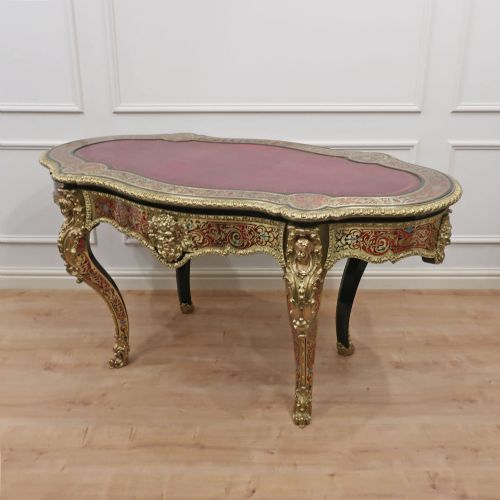
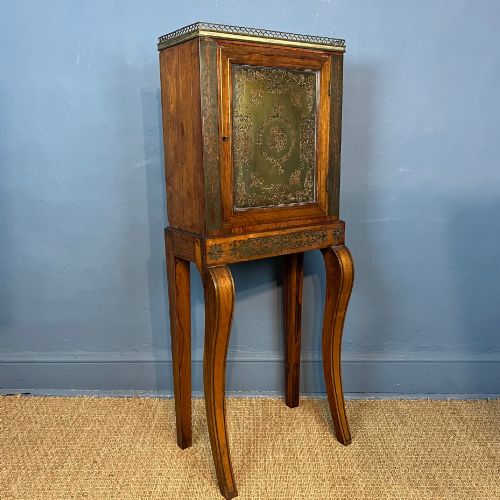
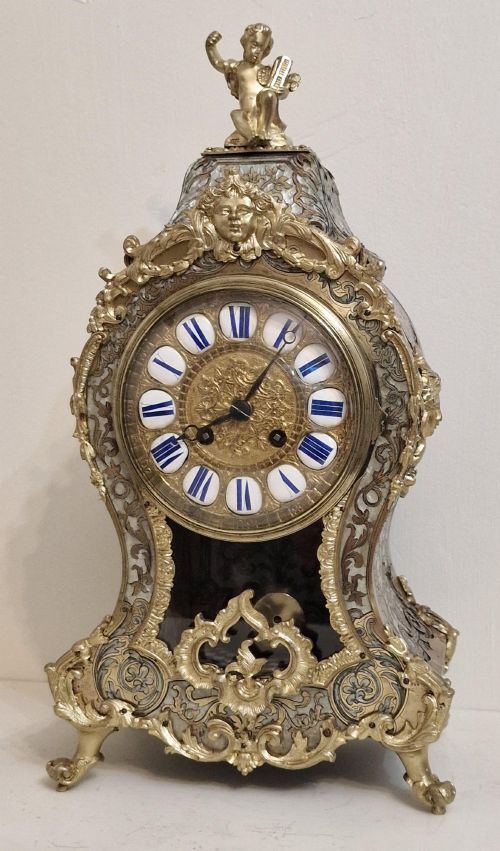
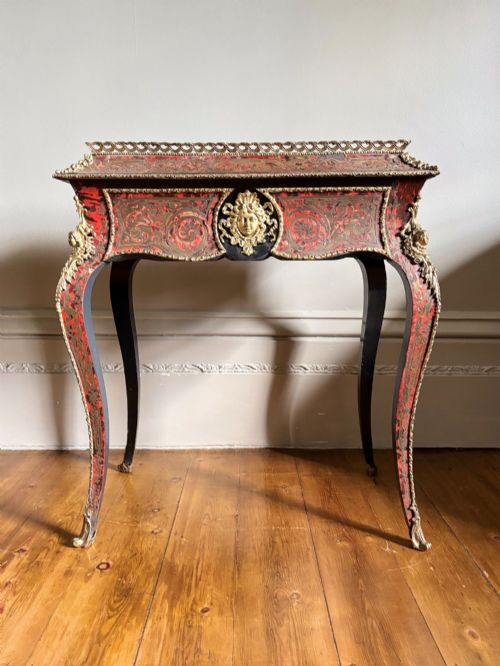
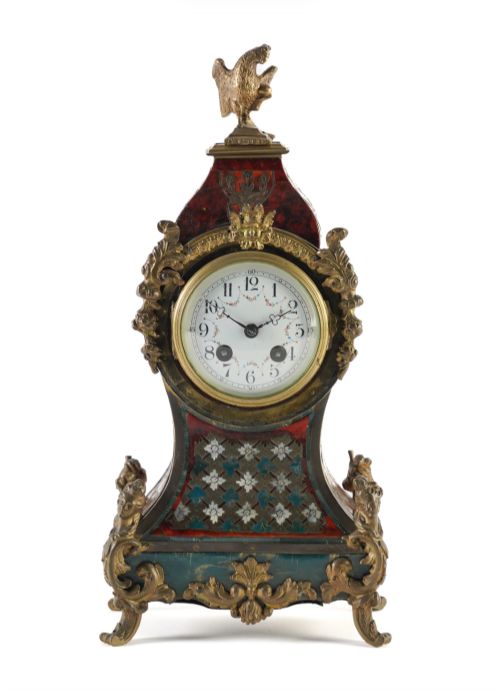
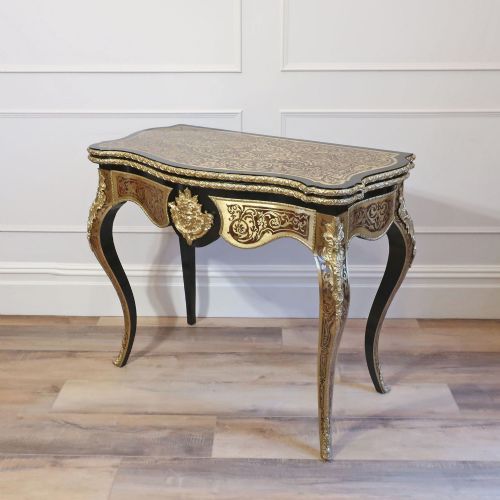
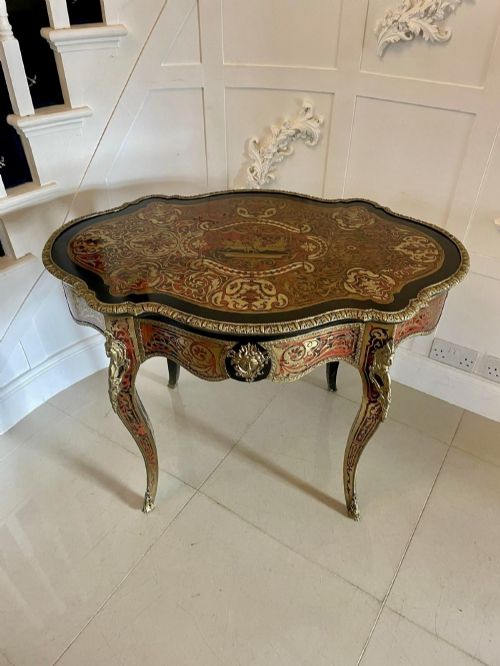
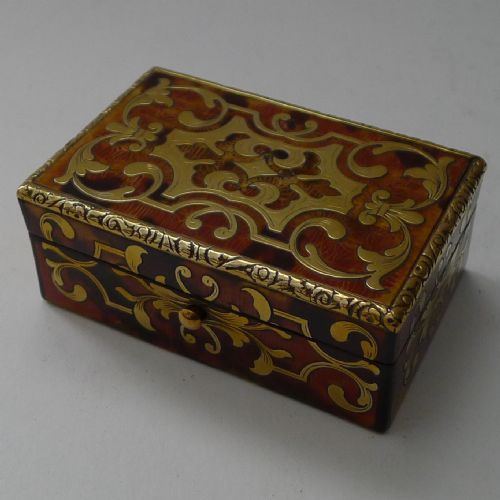
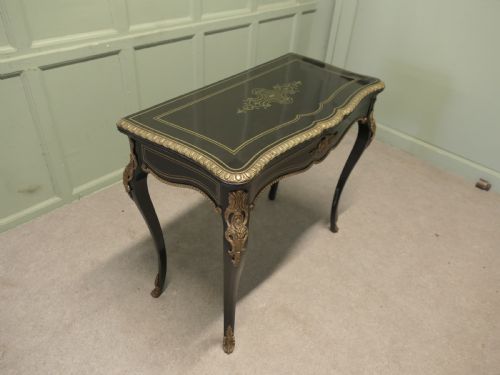
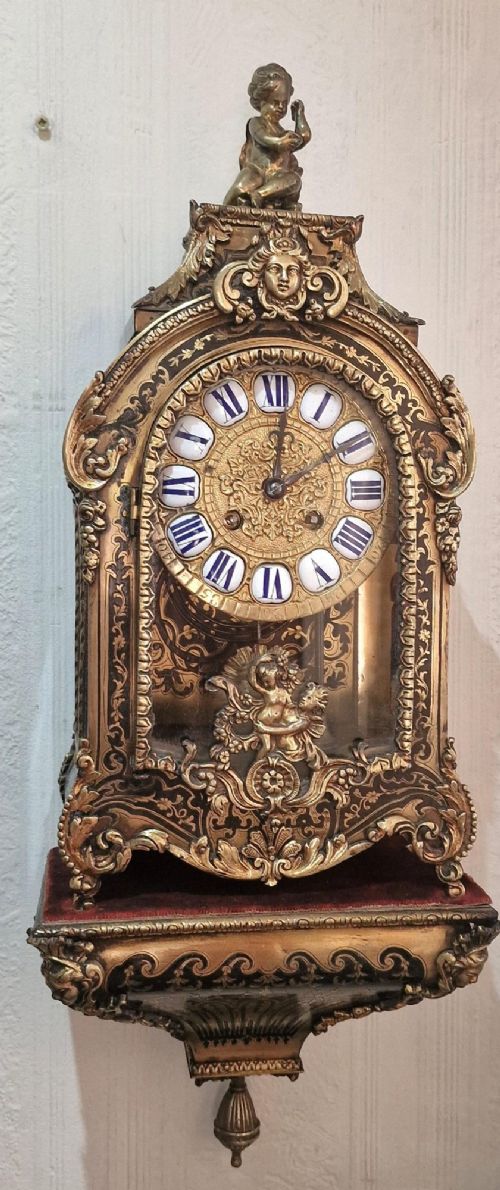
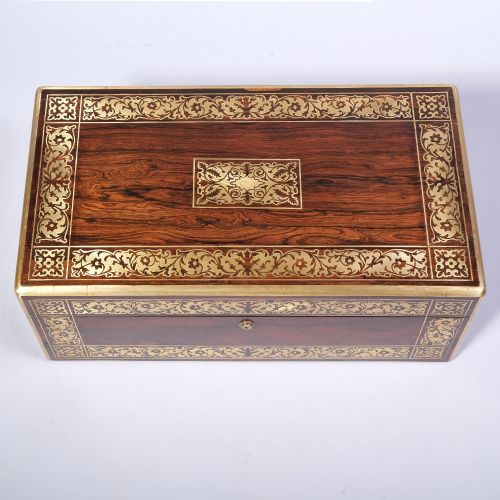
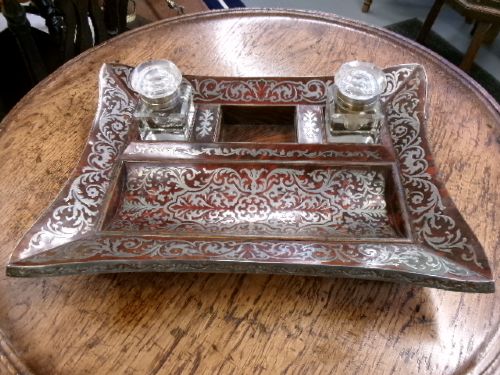
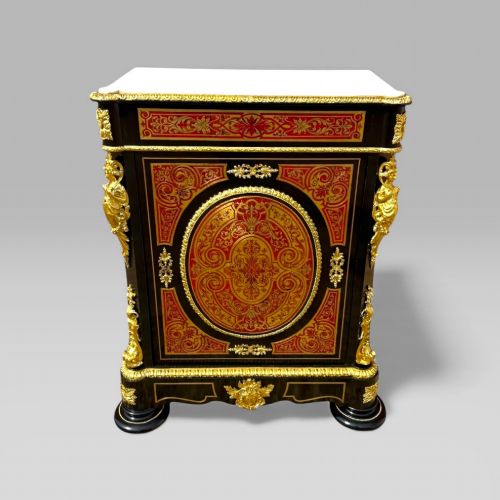
These boulle brass inlay pieces combine tortoiseshell, brass and ebonised wood to deliver the grandeur of French court design straight into a room.
Boulle Brass Inlay
Boulle brass inlay defines a tradition of ornate marquetry where brass and tortoiseshell interlock in elaborate scrollwork patterns. When searching this phrase, a buyer encounters pieces originating primarily from the nineteenth century, spanning the Victorian and Napoleon III periods.
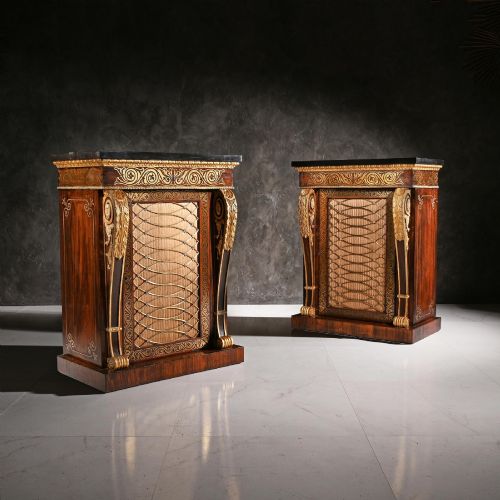
The selection here encompasses substantial furniture like centre tables, pier cabinets and side cabinets, alongside smaller items such as mantel clocks, desk stands and tea caddies. French workshops produced the majority of these works, drawing heavily on Louis XIV, Louis XV and Rococo Revival styles.
Most items on this page lean towards French nineteenth-century manufacture, employing ebonised wood or rosewood foundations. These surfaces provide the dark contrast required to let the metallic brass work and mottled tortoiseshell ground stand out.
What varies in quality
The standard of a boulle piece rests upon the crispness of the brass cutting and the tightness of the joints between the metal and the shell. Superior examples display microscopic precision in the scrollwork, where individual lines flow without awkward gaps or excessive infill.
Furthermore, the quality of the underlying carcase wood and the weight of the cast ormolu mounts dictate the overall success of the object. Heavier, more finely chased bronze mounts and deeply figured tortoiseshell indicate workshop standards far above standard commercial production.
Boulle Brass Inlay Retail Price Guide 2026
Typical asking prices for boulle brass inlay among the pieces listed under this phrase on Sellingantiques today, from the lower quarter to the upper quarter. They describe what is for sale here now, not the wider market.
Several mantel clocks incorporate working thermometers alongside the dial, ensuring the household knew the exact temperature while admiring the brass scrollwork.
Louis Constantin Le Gaigneur·Henri Marc·Maison Millet·Edwards and Roberts·Samuel Marti
The Boulle Brass Inlay Glossary
- Premiere partie
- The layout where brass forms the primary design against a tortoiseshell ground. This configuration typically yields a brighter, more reflective surface.
- Contre partie
- The reverse layout where tortoiseshell forms the primary design against a brass background. This arrangement produces a quieter, more sombre visual effect.
- Ormolu
- Gilded bronze used for mounts and decorative accents on furniture and clocks. The metal is cast and then treated to achieve a rich golden finish.
- Ebonised wood
- Timber treated to resemble ebony, providing a deep black surface. This finish creates the classic high-contrast backdrop for brass and tortoiseshell inlay.
- Marquetry
- The art of applying pieces of veneer to a structure to form decorative patterns. In boulle work, this involves metal and organic shell rather than wood veneers alone.
Boulle Brass Inlay: Frequently Asked Questions
How do I clean boulle brass inlay?
Dust surfaces gently using a soft, dry cloth to prevent debris from lodging in the fine joints between the brass and tortoiseshell. Avoid commercial chemical cleaners or excess water, which can damage the organic shell and loosen the historic glue.
Apply a microcrystalline wax sparingly if the wood or metal requires protection, but consult a professional restorer before attempting any restorative polishing on fragile areas.
Are these pieces French or English?
The vast majority of boulle pieces originate from French workshops, particularly in Paris during the nineteenth century under the influence of Napoleon III. English makers also adopted the style during the Regency and Victorian periods, often producing desk accessories and smaller cabinets.
Examining the internal timbers, lock mechanisms and construction techniques usually reveals whether a piece emerged from a Parisian atelier or an English workshop.
How can I date a boulle clock?
Dating relies on examining the movement maker's marks, the style of the case and the materials used in the construction. Nineteenth-century examples often feature brass movements by known makers like Samuel Marti housed in ebonised cases with Rococo Revival or Louis XIV styling.
Comparing the complexity of the brass inlay and the casting of the ormolu mounts against documented pieces helps narrow down the decade of production.