

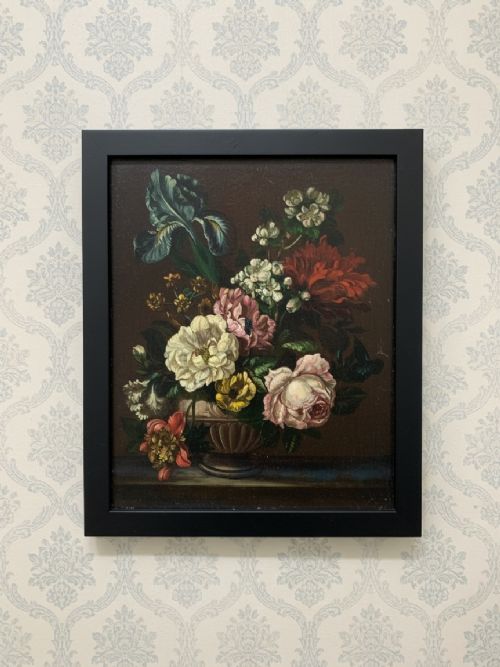
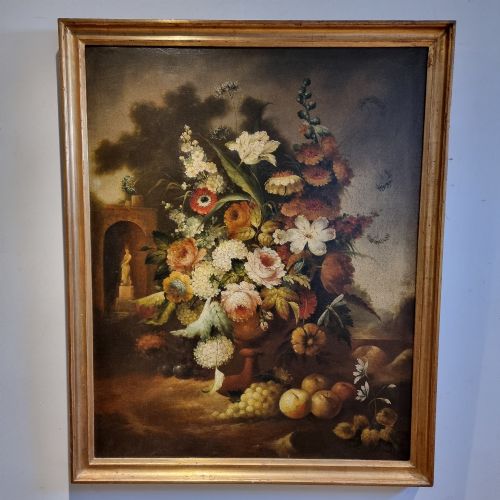
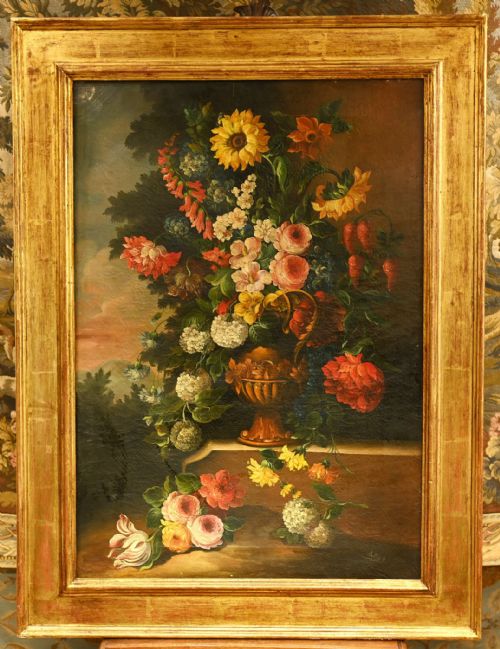


Botanical Urn Oil Painting
A botanical urn oil painting brings floral splendour and classical form to a wall, capturing blooms arranged within ornamental vessels in oils.
Botanical Urn Oil Painting
When you search for a botanical urn oil painting, you encounter works depicting floral arrangements set inside classical vases or urns, rendered in oil paint. These pieces span centuries, encompassing eighteenth-century creations and later revivals from the nineteenth and twentieth centuries.
The selections on this page most frequently present traditional still life subjects on wood panel or canvas. You will find Flemish and Dutch influences, alongside Italian school and classical style compositions featuring flowers and fruit.
Makers and artists range from named painters such as Terence Loudon to anonymous hands working within the Dutch Golden Age tradition or later eighteenth-century revival styles. These artworks appear framed in timber or gilded wood.
How they were made
Artists painted these botanical subjects using oil paint applied to canvas or wood panel supports. The medium allowed for rich colour blending and fine detail in depicting petals, leaves, and the contours of stone or metal urns.
Frames are integral to the presentation, utilising wood, gilded wood, or giltwood to enclose the panel or canvas. These timber frames often reflect the period aesthetic of the painting they surround, from baroque heaviness to simpler classical profiles.
Botanical Urn Oil Painting Retail Price Guide 2026
Typical asking prices for botanical urn oil painting among the pieces listed under this phrase on Sellingantiques today, from the lower quarter to the upper quarter. They describe what is for sale here now, not the wider market.
Listings feature works spanning the eighteenth, nineteenth, and twentieth centuries, employing oil paint on canvas and wood panel.
What varies in quality
Quality in these paintings rests upon the handling of light and shadow, particularly in how the artist renders the luminosity of petals against darker backgrounds. Stronger works demonstrate precise brushwork in botanical details and convincing depth within the urn or vase.
The construction and finish of the surrounding frame also influence the overall standard of the piece. Gilded wood and timber frames that retain their original character elevate the presentation of the oil painting on canvas or board.
Terence Loudon
The Botanical Urn Oil Painting Glossary
- Oil paint
- A slow-drying paint made by combining pigments with drying oils such as linseed. This medium permits subtle blending and rich colour saturation across canvas and panel supports.
- Wood panel
- A rigid flat wooden support used as a base for painting before canvas became dominant. These boards provide a stable surface for detailed brushwork.
- Giltwood
- Wood that has been treated with a thin layer of gold leaf or gold paint. This finish appears frequently on frames housing classical and baroque still life works.
- Trompe l'oeil
- An art technique that creates an optical illusion of three-dimensional space and objects. In still life painting, this approach makes floral compositions appear remarkably lifelike.
- Baroque
- An artistic style characterised by drama, exuberant detail, and deep chiaroscuro lighting effects. Paintings in this tradition often feature rich floral and fruit compositions.
Botanical Urn Oil Painting: Frequently Asked Questions
What is a botanical urn oil painting?
A botanical urn oil painting is a work of fine art depicting flowers arranged in a classical vessel, executed in oil on canvas or panel. These pieces focus on natural forms combined with architectural or ornamental urns.
Such artworks draw on historical traditions including the Dutch Golden Age and the classical style, spanning periods from the eighteenth century through to the mid-twentieth century.
Where were these paintings displayed?
Historically, still life paintings of florals and fruit hung in formal dining rooms, parlours, and drawing rooms of substantial homes. Their rich compositions suited reception spaces where guests gathered.
Today, they function well as focal points in living areas or studies, bringing traditional warmth and colour to domestic interiors.
How do I identify the period?
Dating relies on examining the support material, framing style, and artistic convention visible in the work. Wood panels and heavy gilded frames often point towards earlier centuries or specific revival movements.
Stylistic cues such as Flemish or Dutch Golden Age influences help distinguish eighteenth-century compositions from later twentieth-century interpretations.
Are these works on canvas or board?
Paintings in this category appear on both canvas and wood panels or boards. Artists selected their supports based on personal preference and the prevailing workshop practices of their era.
Both canvas and wood panel formats support the detailed application of oil paint required for intricate floral and botanical still life subjects.