
Botanical Still Life Artwork
Botanical still life artwork brings the quiet detail of cut flowers, fruit, and vessels into interiors through centuries of varied painting traditions.
Botanical Still Life Artwork
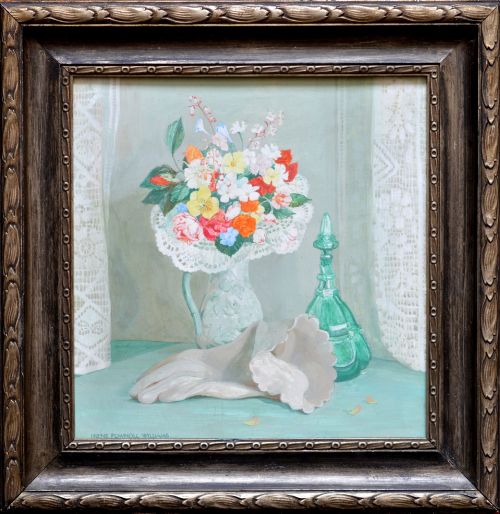
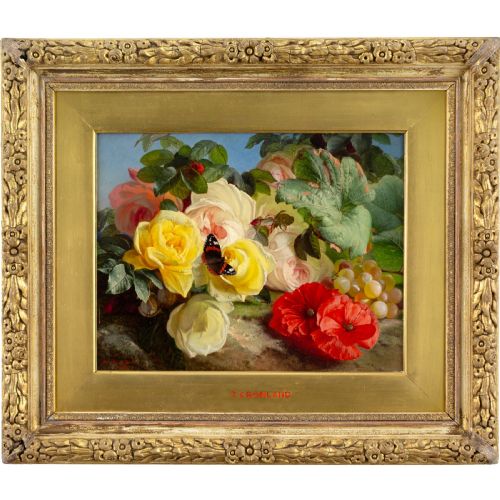
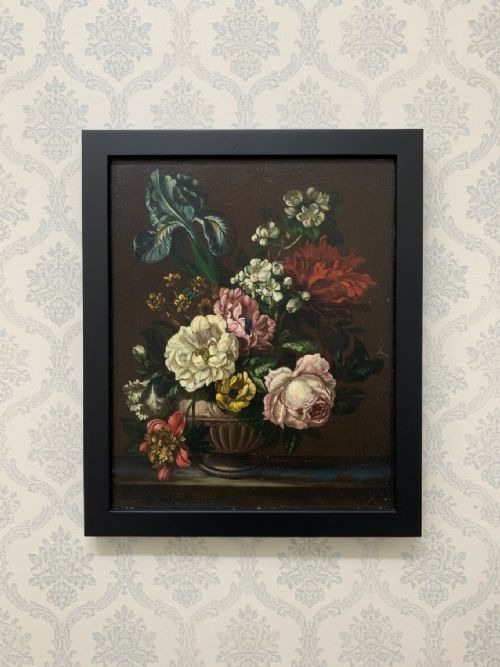
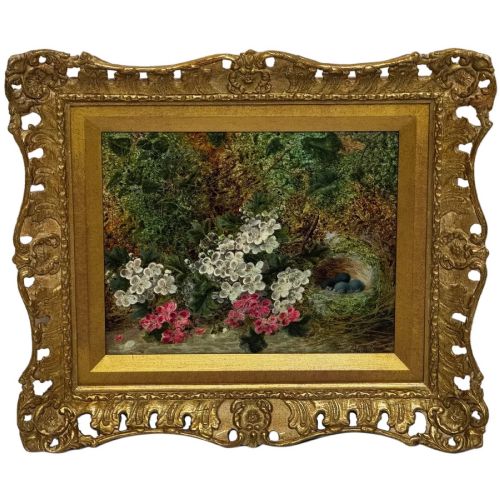
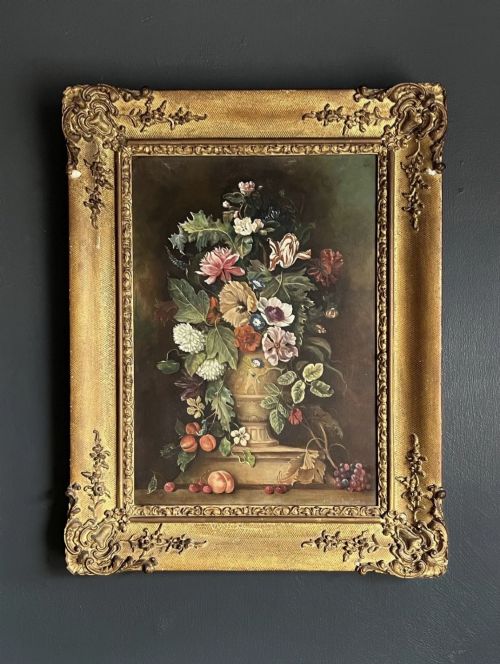
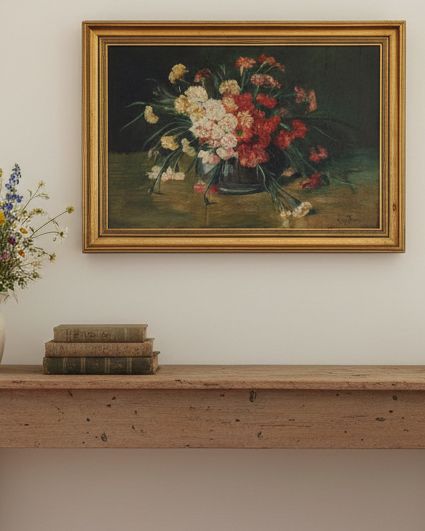
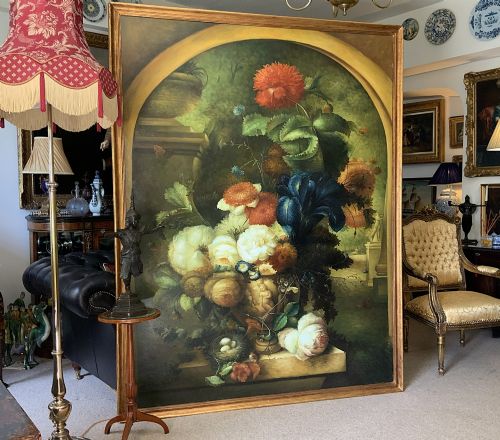
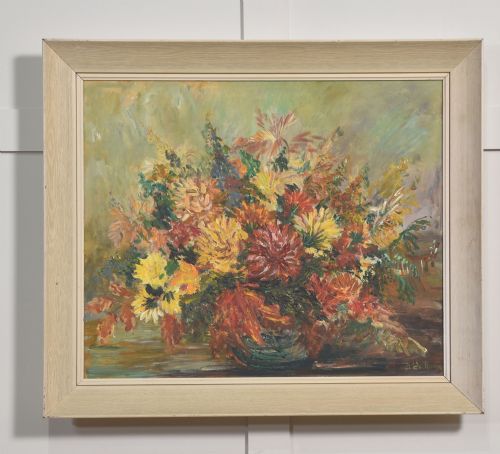
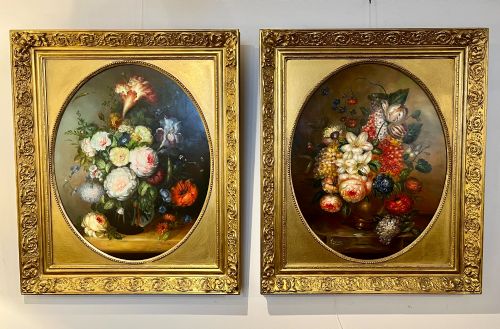
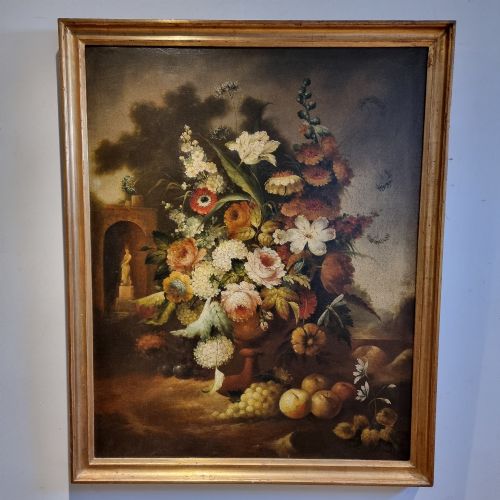
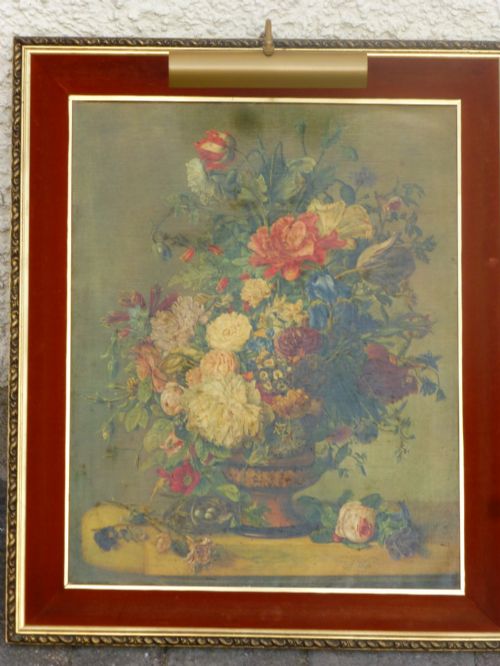
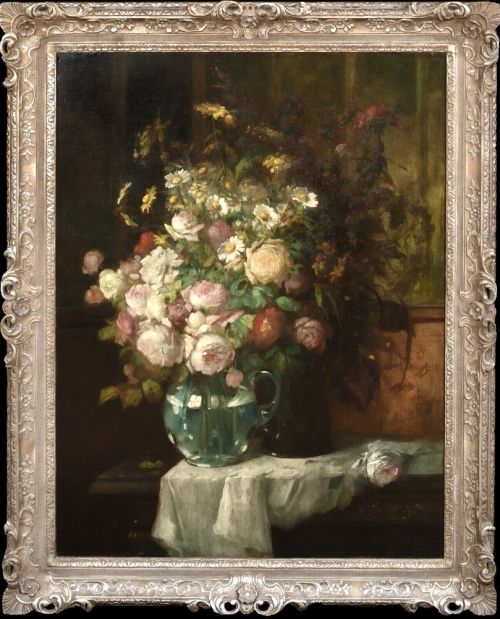
Botanical still life artwork focuses on arranged natural subjects, primarily flowers, fruit, and foliage, rendered across a wide temporal span. When exploring botanical still life artwork, collectors encounter Victorian oils, twentieth-century board paintings, and earlier Dutch-inspired compositions.
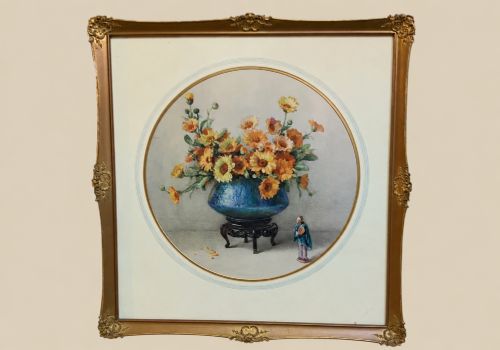
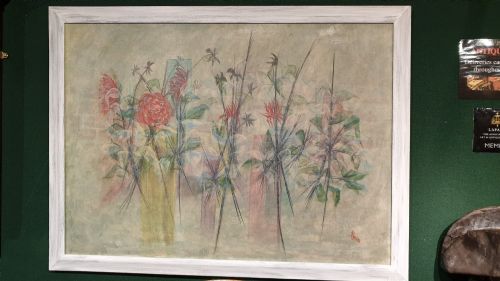
The physical forms include oil paintings, watercolours, pastels, and framed canvas works, alongside select tempera panels. These pieces range from intimate domestic studies to monumental floral canvases designed for grand wall settings.
How they were made
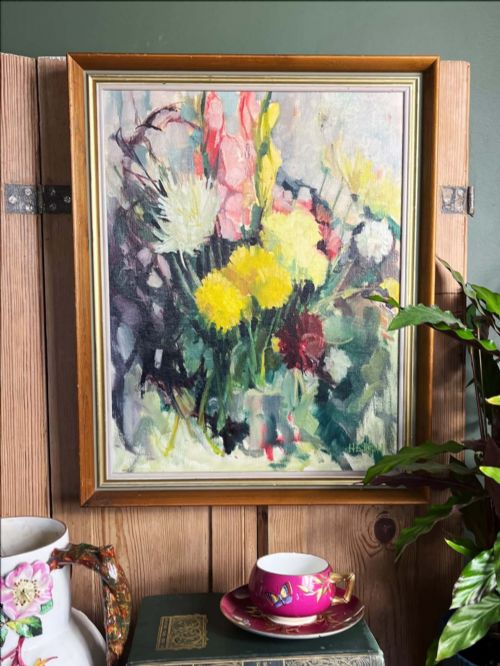
Artists painted primarily with oil paint on canvas, wood panels, or rigid board, building up textures for petals and fruit. Watercolours and pastels on paper also appear, often protected beneath glass within period frames.
Many works incorporate timber frames finished with gold leaf or gilded wood, occasionally featuring ornate gesso mouldings that complement the painterly subjects.
Listings feature works spanning from the 17th century through to the 1960s, executed in oil, watercolour, and pastel.
What varies in quality
Quality rests in the precision of brushwork, the handling of light across surfaces, and the compositional balance of the arrangement. Skilled artists capture depth in shadowed leaves and translucency in glass vessels.
The integration of the frame matters significantly, as original or period-matched gilded wood settings enhance the visual impact of the painted surface.
Irene Christobelle Pownoll Williams·Oliver Clare·D. L. Williams·Konstantin Stoitzner·Edward Ladell·Emma Fordyce MacRae·Gaspar Peeter Verbruggen·Ian Parker·Harold Clayton·Edwin Steele·D Hardy·Manuela Bonati·William Thomas Wood·John Sherrin·Owen Bowen·James Tower·Gertrude Hayes·Simon Pietersz Verelst
The Botanical Still Life Artwork Glossary
- Oil on canvas
- Pigment suspended in drying oil applied to a stretched woven fabric support. This combination allows for rich blending of colours and tactile brush textures.
- Tempera
- A permanent, fast-drying painting medium consisting of coloured pigment mixed with a water-binder. It creates a matte surface often found on wooden panels.
- Gesso
- A plaster-like mixture used as a smooth base for painting or applied to wood before gilding. It provides a durable ground for decorative frame mouldings.
- Oleograph
- A mechanical colour print textured to imitate an oil painting. These reproductions appeared in various periods to replicate popular artistic compositions.
- Panel
- A flat piece of wood used as a rigid support for painting. Wooden supports predated stretched canvas in many traditional European schools.
Botanical Still Life Artwork: Frequently Asked Questions
What subjects appear in botanical still life artwork?
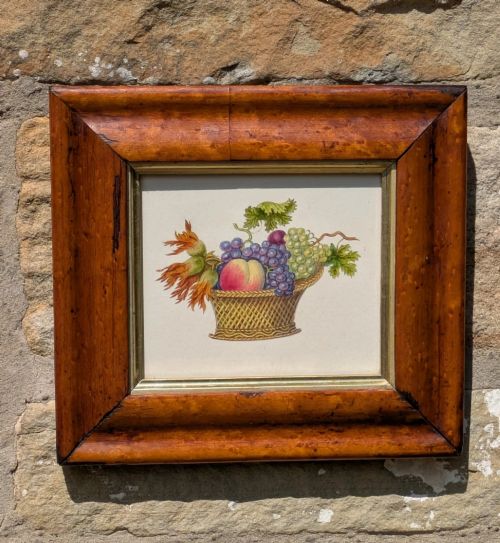
These works primarily feature cut flowers in vases, bowls of fruit, wicker baskets, and occasional ceramic vessels. Artists arranged these natural elements to study light, shadow, and organic textures.
Compositions range from simple studies of single stems to elaborate arrangements featuring multiple flower species and gathered garden produce.
How do I date a botanical still life painting?
Dating relies on stylistic clues, the framing materials, and the type of support used by the artist. Canvas, wood panels, and paper each point to different historical working methods.
Signatures, artist records, and historical clothing or pottery depicted within the scene also help narrow down the period of creation.
Are these artworks suitable for modern interiors?
These paintings integrate easily into contemporary rooms by adding organic warmth and traditional contrast to neutral walls. Framed pieces work well in living spaces, dining rooms, and hallways.
Selecting a frame that matches the interior aesthetic helps bridge centuries-old artwork with modern design schemes.
What is the difference between oil and watercolour versions?
Oil paintings utilise heavy pigments on canvas or board, offering rich colour depth and visible brushwork. Watercolours use translucent pigments on paper, creating lighter and more delicate studies.
Watercolour works require glass protection in their frames, whereas oil paintings on canvas remain open to the air.