





Bone Inlay Ottoman
Bone inlay ottoman furnishings bring intricate Levantine craftsmanship and geometric warmth into a room.
Bone Inlay Ottoman
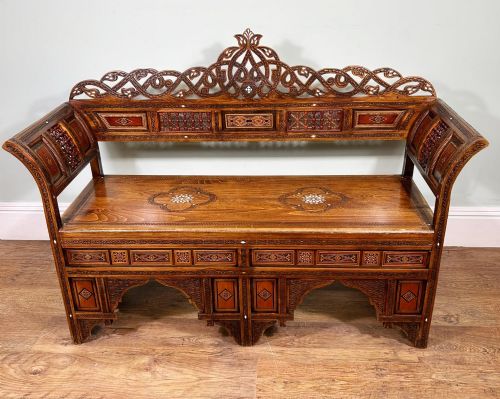
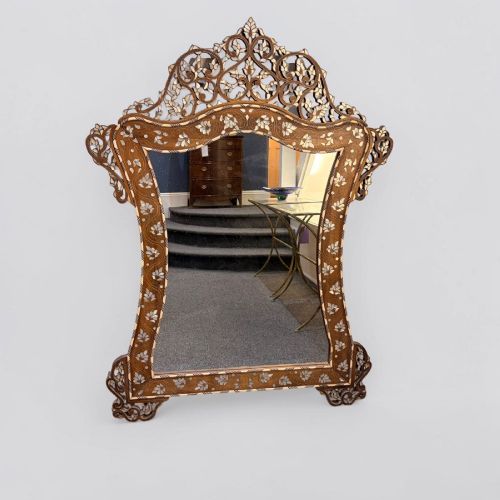
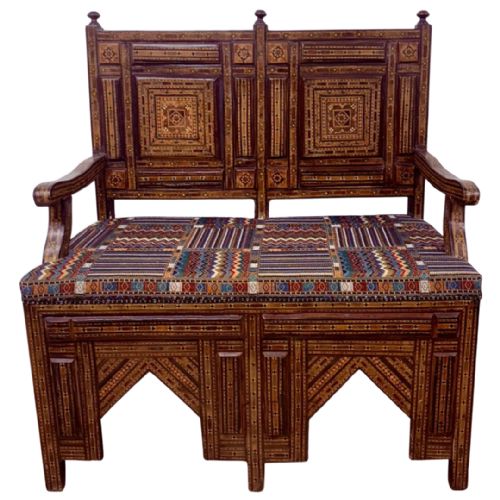
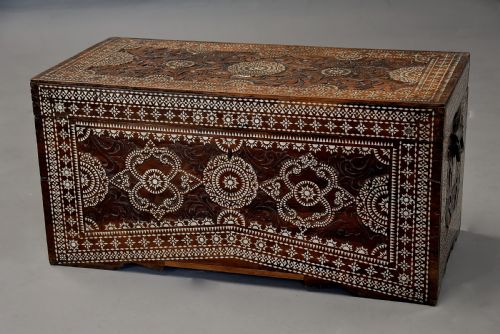
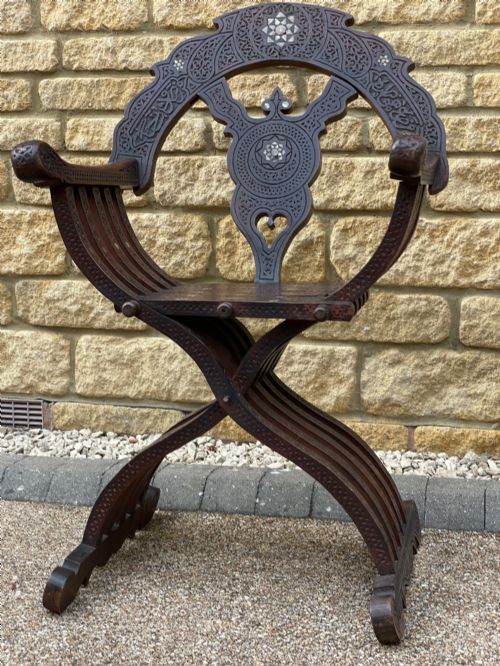
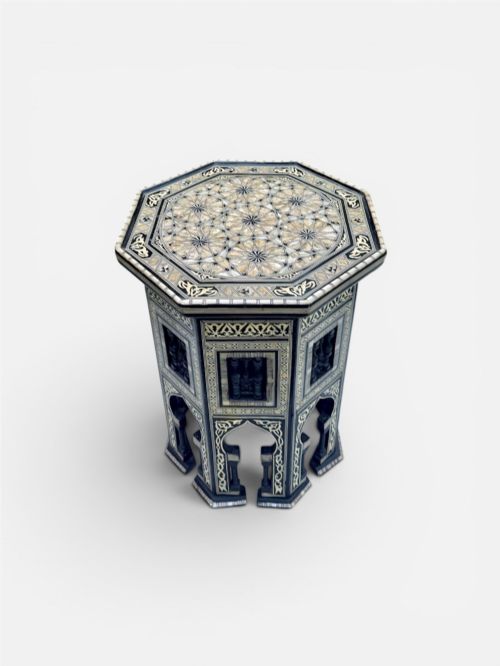
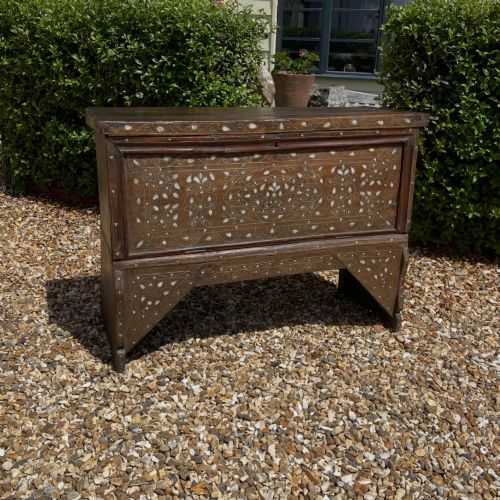
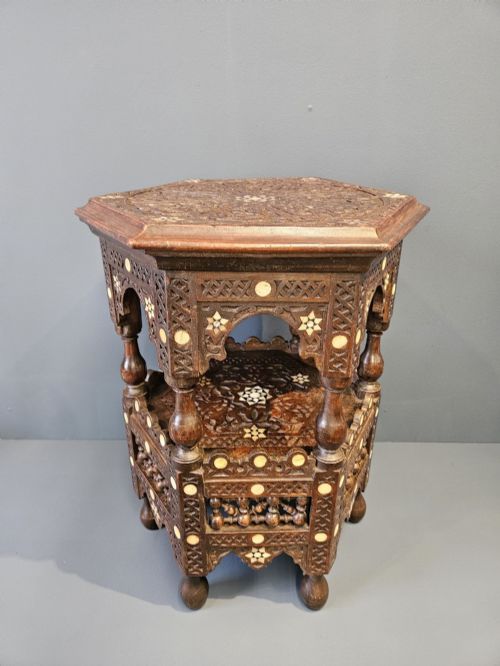
A bone inlay ottoman search reveals a rich collection of Levantine and Syrian furnishings spanning the nineteenth and early twentieth centuries. These pieces encompass side tables, armchairs, trunks, and wall mirrors shaped by Moorish Revival and Ottoman influences.
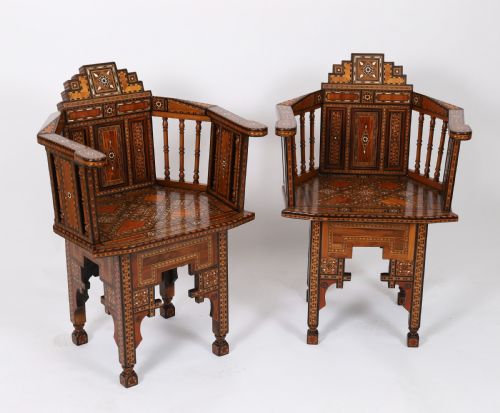
The version most commonly encountered on this page is the hexagonal or octagonal side table, alongside heavily inlaid wooden benches and armchairs. They demonstrate complex geometric parquetry that reflects historical trade routes and traditional Damascus craftsmanship.
How they were made
Artisans built solid hardwood frameworks using timbers such as walnut, ebony, and fruitwood, providing a dark, stable base for intricate surface decoration. These wooden structures supported dense geometric arrangements of cut bone and mother-of-pearl.
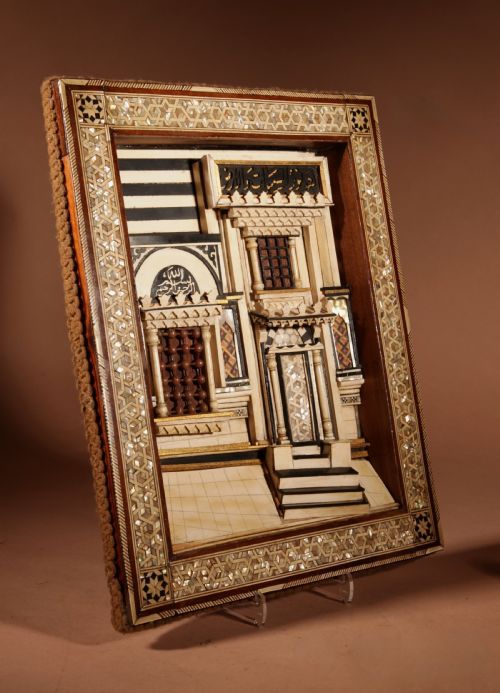
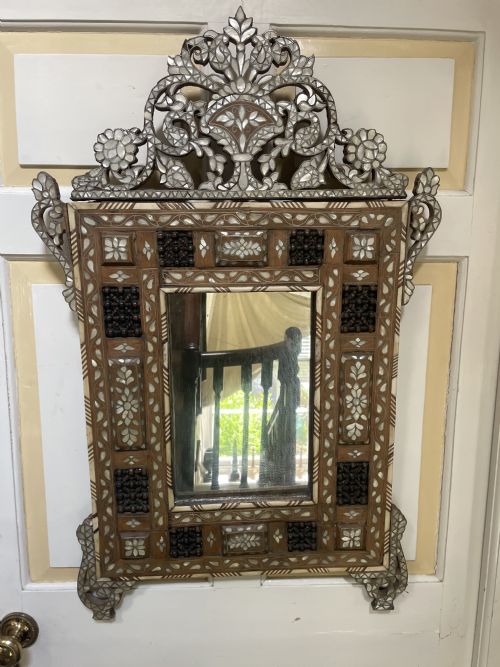
Individual pieces of bone and nacre shell were shaped by hand and set into precise channels within the wood. The surrounding surfaces frequently utilised detailed parquetry and turnings, such as mashrabiya panels, to complete the intricate decorative scheme.
Bone Inlay Ottoman Retail Price Guide 2026
Typical asking prices for bone inlay ottoman among the pieces listed under this phrase on Sellingantiques today, from the lower quarter to the upper quarter. They describe what is for sale here now, not the wider market.
Listings feature items spanning the nineteenth century up to the 1930s, constructed from walnut, ebony, bone, and mother-of-pearl.
What varies in quality
The choice of primary wood and secondary materials also distinguishes the work. Examples utilising ebony, walnut, and abalone alongside bone display a higher tier of workshop output than those made with plain fruitwood or standard timber.
The Bone Inlay Ottoman Glossary
- Parquetry
- A geometric mosaic of wood, bone, or shell pieces fitted together to form decorative patterns on furniture surfaces. This technique defines the visual complexity of Syrian and Levantine tables and chests.
- Mashrabiya
- An architectural element featuring turned wooden lattices used in panels and screens. It provides ventilation and shade while adding intricate texture to mirrors and seating.
- Nacre
- An iridescent internal layer of shells, commonly known as mother-of-pearl. Artisans cut this material to intersperse with bone for contrasting shimmer.
- Moorish Revival
- An architectural and decorative style drawing on North African and Middle Eastern design traditions. This aesthetic heavily influences the carved frames and tables found in these collections.
- Savonarola chair
- A type of folding chair formed from multiple curved wooden slats intersecting in an X-shape. Syrian examples integrate detailed inlay work into this traditional Renaissance form.
Bone Inlay Ottoman: Frequently Asked Questions
How do I clean bone inlay furniture?
Dust surfaces regularly with a soft, dry cloth to prevent dirt accumulation within the intricate geometric crevices. Avoid harsh chemical cleaners or excessive moisture, which can loosen the tiny bone and shell fragments.
Condition the surrounding hardwood occasionally with a suitable natural wax to maintain the timber's moisture balance. Gentle care preserves the historical integrity of the delicate mosaic work.
Where were these pieces made?
The items originate primarily from Damascus in Syria and the broader Levantine region during the nineteenth and early twentieth centuries. Workshops in these urban centres produced domestic furnishings for local use and export.
Many pieces reflect the Moorish Revival and Ottoman design traditions prevalent across the Middle East during that era. European interest subsequently brought these detailed wares to international markets.
How do I identify Ottoman inlay styles?
Look for dense geometric parquetry incorporating bone, mother-of-pearl, and dark hardwoods like walnut or ebony. Common forms include octagonal side tables, chests, and wall mirrors adorned with intricate floral and star motifs.
Turned wooden elements and mashrabiya panels frequently accompany the surface inlay. These characteristics point directly to traditional Syrian and Levantine craftsmanship from the Victorian period onward.
Can I use these items daily?
Side tables, chairs, and small chests function well in modern interiors for light daily use. Placing coasters on tables and avoiding heavy weight protects the detailed bone and shell surfaces from accidental damage.
Positioning pieces away from direct heat sources and strong sunlight prevents the wood from warping and the natural adhesives from failing. Careful placement ensures these historic items remain stable and functional.