






Bone Inlay Chest
A bone inlay chest brings intricate geometric patterns and centuries of craftsmanship into a room.
Bone Inlay Chest
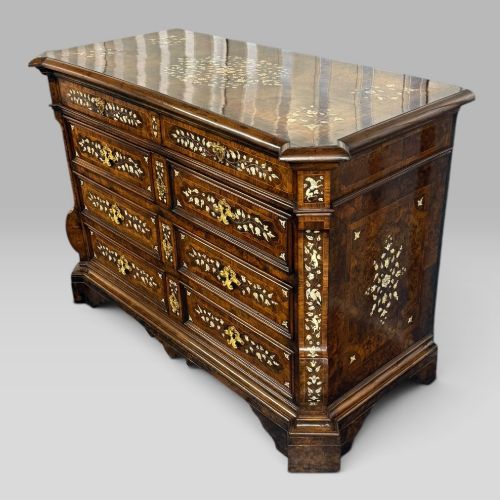
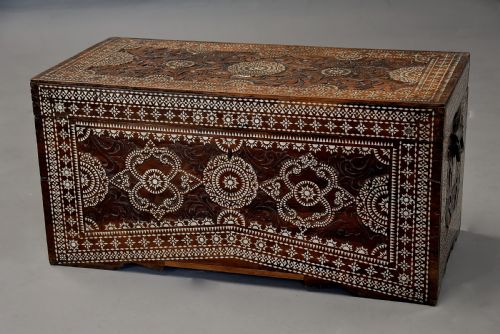
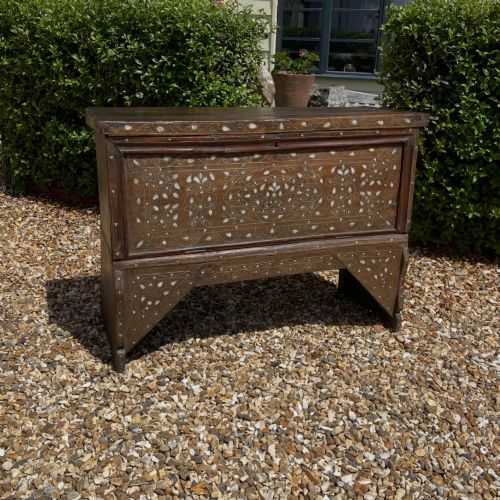
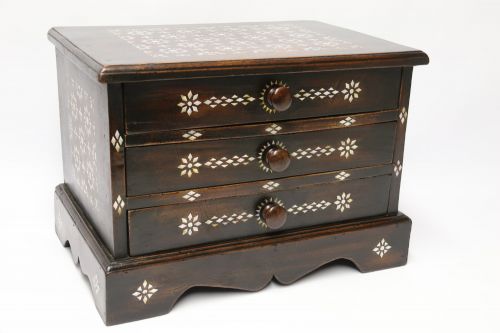
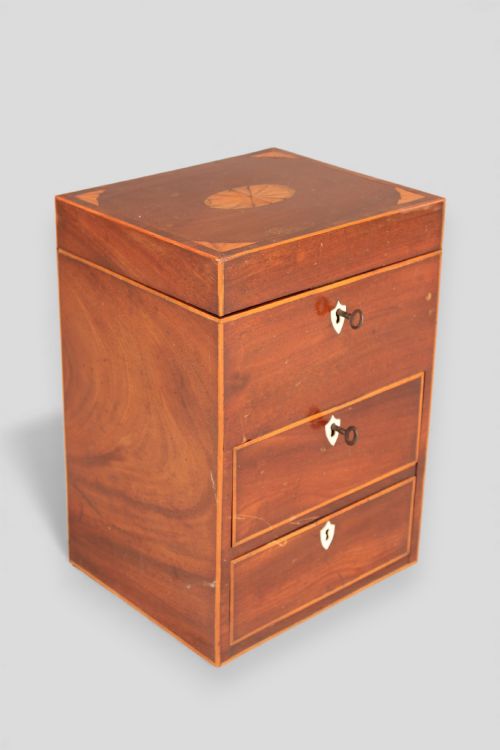
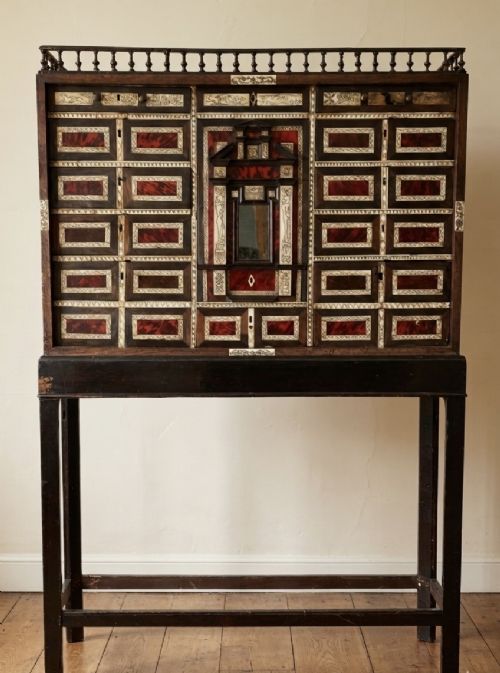
When you search for a bone inlay chest, you encounter a range of forms spanning centuries, from small tea caddies and decorative boxes to large storage trunks and cabinets on stands. The pieces on this page cross multiple periods, including the seventeenth century, the Georgian era, the Victorian period, and the early twentieth century.
You are most likely to meet smaller boxes, tea caddies, and storage chests rather than grand commodes, reflecting the diverse ways artisans applied bone work over time. The origins vary widely, encompassing Italian Baroque, Anglo-Indian, Syrian, Ottoman, and Dutch Colonial traditions.
The assortment includes specialised forms such as apothecary boxes, collector chests, and table caskets, each demonstrating the widespread appeal of inlaid surfaces across different global workshops.
Materials and construction
Artisans constructed these pieces using a foundation of hardwoods such as mahogany, walnut, rosewood, partridge wood, and ebony, providing a stable structure for intricate surface decoration. They combined bone inlay with other materials like mother-of-pearl, fruitwood, and tortoiseshell to create high-contrast geometric and floral patterns.
Craftsmen shaped small pieces of bone individually and set them into channels carved into the wooden carcase, securing them with animal glues and sometimes accentuating the designs with engraved dark resin or black mastic.
Bone Inlay Chest Retail Price Guide 2026
Typical asking prices for bone inlay chest among the pieces listed under this phrase on Sellingantiques today, from the lower quarter to the upper quarter. They describe what is for sale here now, not the wider market.
Listings span multiple centuries, uniting seventeenth-century European cabinets with twentieth-century Middle Eastern trunks under the umbrella of bone inlay.
Factors that separate the range
The execution of the geometric or figurative patterns dictates the refinement of the piece, with tighter joints and more complex interlocking motifs marking superior workshop output. The selection of the underlying timber, whether dense ebony or richly figured mahogany, sets the foundation for the overall visual weight.
Condition and the retention of the original bone elements without excessive replacement define the integrity of the surface. Pieces retaining their original metal mounts, hinges, and interior fittings command greater appreciation among collectors.
The Bone Inlay Chest Glossary
- Bone inlay
- A technique where small sections of animal bone are embedded into a wooden surface to create decorative patterns. This method appears across various regional traditions, notably in Italian, Syrian, and Anglo-Indian furniture.
- Collector's cabinet
- A specialised piece of furniture designed to hold small specimens, medals, or curiosities in shallow drawers. These often feature elaborate exterior decoration to signal the value of their contents.
- Tea caddy
- A small box constructed to store loose tea leaves securely when tea was a costly commodity. Examples often incorporate fine veneers and delicate inlay work.
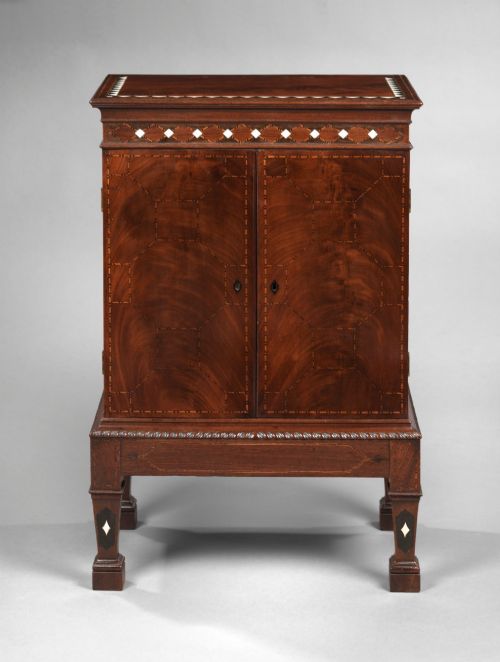
- Cabinet on stand
- A cabinet designed to sit upon a separate support frame, elevating the main storage compartment. This form highlights the decorative potential of both the upper storage unit and the supporting base.
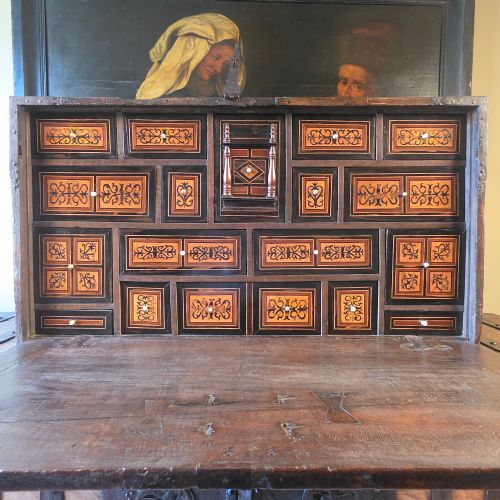
- Papillero varguenno
- A portable desk or cabinet featuring a drop-front that reveals numerous small drawers and compartments. These pieces frequently utilise complex exterior bone and ivory ornamentation.
Bone Inlay Chest: Frequently Asked Questions
How do I clean bone inlay?
Dust the surface regularly with a soft, dry brush to prevent dirt from settling into the crevices around the bone pieces.
Avoid using water, damp cloths, or chemical cleaners, as moisture can damage the underlying wood and loosen the adhesive holding the bone in place.
Where were these pieces made?
The listings show diverse geographic origins, including Italy, Syria, the Ottoman Empire, and regions influenced by British colonial trade such as India and the Dutch East Indies.
Each region developed distinct stylistic preferences, ranging from Italian Baroque floral scrolls to intricate geometric Anglo-Indian patterns.
Are all white sections made of bone?
Most white inlay sections consist of animal bone, though historical pieces occasionally incorporated ivory depending on the workshop and period.
Close inspection often reveals subtle growth lines or microscopic pores in the material that distinguish bone from synthetic substitutes.
How old is my chest?
Dating relies on examining the secondary woods, construction techniques, and regional style markers rather than relying solely on the exterior decoration.
Hand-cut dovetails, forged iron nails, and the type of adhesives used often provide reliable clues to the manufacturing period.