



Bone and Wood Box
A bone and wood box brings together contrasting textures and intricate geometric patterns, offering a tactile piece of functional history for your desk or mantelpiece.
Bone and Wood Box
A bone and wood box encompasses a wide variety of containers, ranging from tea caddies and stationery chests to miniature games boxes and jewellery caskets. These items span multiple centuries, with particular representation from the Georgian, Victorian, and Edwardian eras, as well as distinct regional traditions.
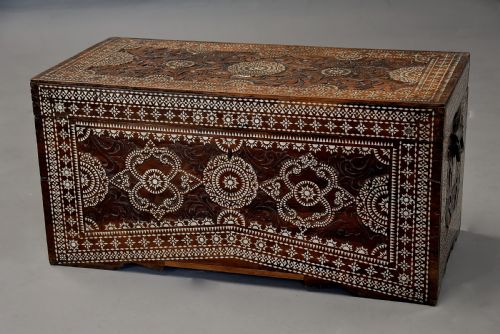
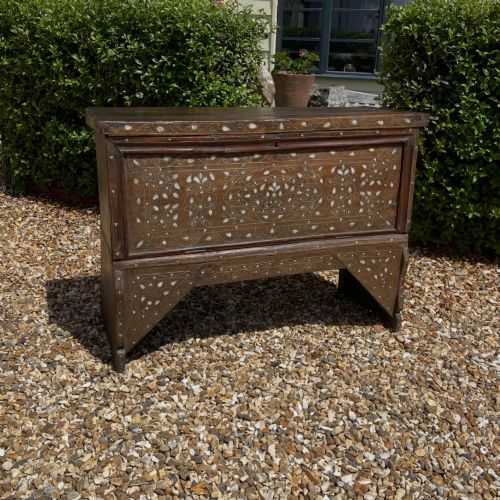
You will most commonly encounter pieces featuring decorative inlay, geometric parquetry, or carved relief work applied to surfaces of hardwood, partridge wood, boxwood, walnut, or rosewood. The combination of pale bone against darker timber creates striking visual contrast, whether executed in an Anglo-Indian, Syrian, or European workshop.
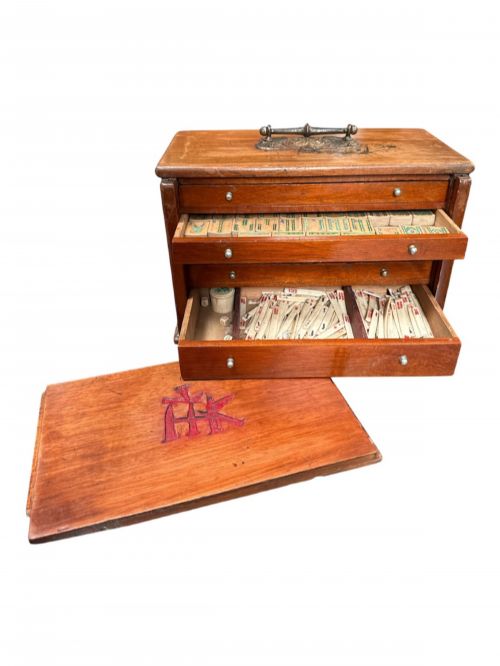
Functional forms dominate the category, serving specific domestic purposes such as housing playing cards, dominoes, correspondence, or tea leaves. Each piece reflects the material preferences of its origin, connecting utilitarian objects with fine decorative craft.
Materials and Construction
The construction of these vessels relies on contrasting organic materials, primarily animal bone or mother-of-pearl set into various dense timbers like partridge wood, coromandel, and kingwood. Artisans shaped the timber carcase before meticulously recessing thin sections of bone to form intricate geometric or floral motifs.
Specialised techniques define regional styles, such as the micro-mosaic Sadeli work found on Anglo-Indian pieces or the intricate Khatamkari polygon mosaic work seen on Persian examples. Metal hinges, brass details, and subtle relief carvings frequently complete the construction, securing the delicate veneer and inlay.
Bone and Wood Box Retail Price Guide 2026
Typical asking prices for bone and wood box among the pieces listed under this phrase on Sellingantiques today, from the lower quarter to the upper quarter. They describe what is for sale here now, not the wider market.
Some nineteenth-century carvers spent hours turning solid wood into snuff boxes shaped precisely like ladies' feet in open-toed shoes.
Evaluating Quality and Execution
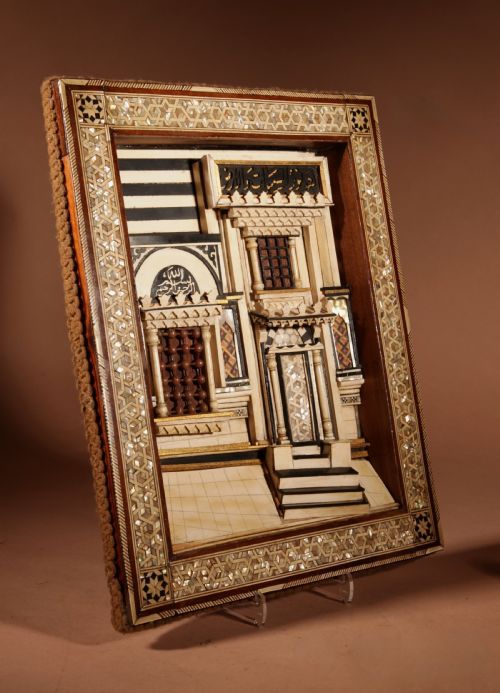
Quality in these boxes rests upon the precision of the inlay work and the tightness of the joints between disparate materials. Finer examples display infinitesimal gaps where bone meets timber, maintaining crisp geometric alignment even across complex curved surfaces like sarcophagus forms or architectural dioramas.
The choice of primary wood and the complexity of the decorative program further distinguish superior pieces. Dense exotic hardwoods paired with finely engraved bone details indicate advanced workshop skill, whereas simpler items rely solely on surface contrast rather than intricate assembly.
The Bone and Wood Box Glossary
- Sadeli work
- A specialised form of micro-mosaic inlay originating in nineteenth-century India. It typically incorporates geometric patterns formed from tin, wire, bone, and various woods.
- Khatamkari
- A Persian technique of marquetry and inlay work. It involves forming delicate geometric polygons from bone, metal, and wood to encase wooden objects.
- Parquetry
- A geometric mosaic of wood pieces used for decorative surfacing on furniture and boxes. It creates repeating patterns across lids and panels.
- Tea caddy
- A container designed specifically for storing dry tea leaves securely. They often feature internal lidded compartments and fine exterior veneers.
- Sarcophagus form
- A box shape characterised by a rounded or domed lid tapering down to a pedestal or plinth base. This style gained popularity during the Georgian and Victorian periods.
Bone and Wood Box: Frequently Asked Questions
What were bone and wood boxes used for?
These vessels served secure, domestic roles for storing valuable commodities, writing equipment, and parlour games. Tea caddies protected expensive imported leaves, while stationery boxes kept correspondence orderly.
Smaller caskets held jewellery, sewing implements, or gaming counters like cribbage pegs and dominoes. Their dual role as decorative ornaments meant they remained on prominent display in parlours and studies.
How do I date a wooden box?
Dating relies on observing the overall form, construction methods, and secondary woods used inside the carcase. Georgian pieces often show distinct proportions and specific tea caddy layouts, while Victorian boxes frequently utilise bolder exotic veneers and richer internal velvet or silk linings.
Stylistic markers such as Moorish architectural influences or specific regional mosaic techniques also anchor pieces to particular decades like the late nineteenth or early twentieth century.
How should I clean a bone inlay box?
Maintenance requires gentle dusting with a soft, dry brush to prevent debris settling into the recesses of the bone and wood inlay. Moisture can damage old adhesives and warp delicate wooden veneers, so liquids must be avoided entirely.
Applying microcrystalline wax sparingly to the timber surfaces helps preserve the finish without harming the porous bone elements. Professional consultation is advised if structural consolidation is needed.
Where were these inlaid boxes made?
Production spanned across British colonial workshops in India, Middle Eastern centres such as Syria and Persia, and various European domestic hubs. Anglo-Indian and Syrian pieces are easily identified by their distinct micro-mosaic and geometric surface patterns.
European makers frequently adapted these exotic styles or produced local interpretations using native fruitwoods alongside imported hardwoods and bone.