



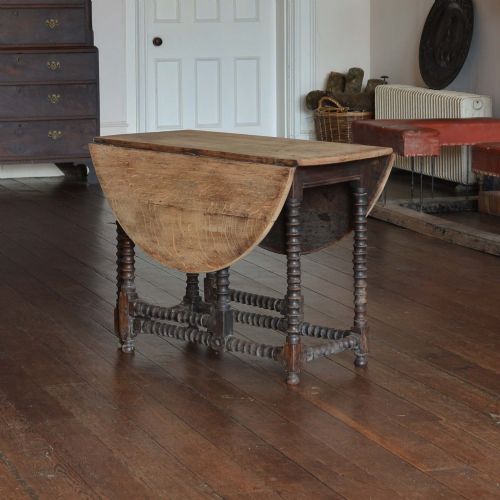

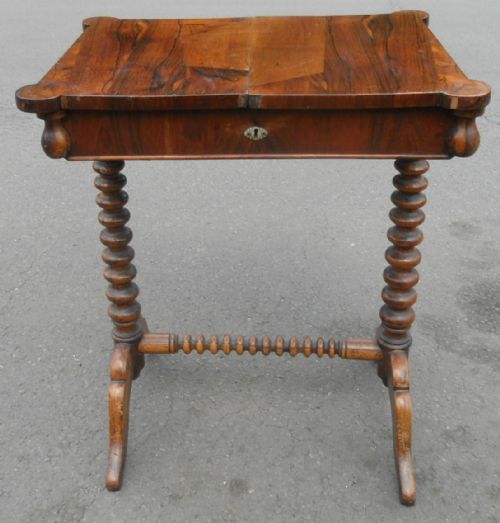
Bobbin Folding Table
A bobbin folding table brings sturdy turned wooden supports and practical drop leaves together into a compact piece that suits any room.
Bobbin Folding Table
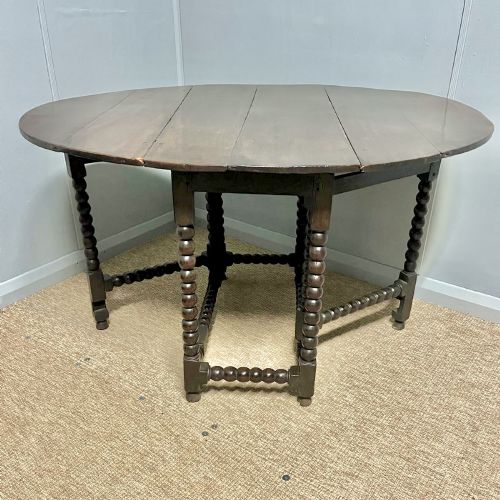
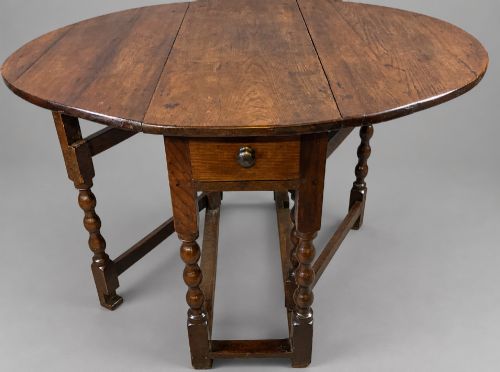
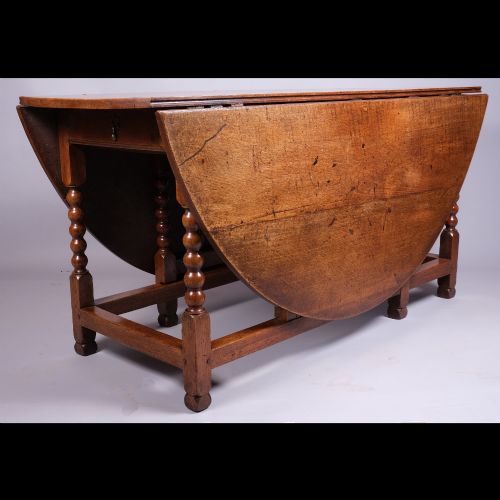
A bobbin folding table relies on hinged leaves or a folding mechanism to expand its surface area when needed and fold away flat for storage. The listings show forms ranging from compact side tables to larger dining pieces.
The versions you meet most frequently on this page belong to the seventeenth and nineteenth centuries, spanning oak gateleg designs and Victorian occasional pieces. These tables offer sturdy timber construction combined with clever folding frames.
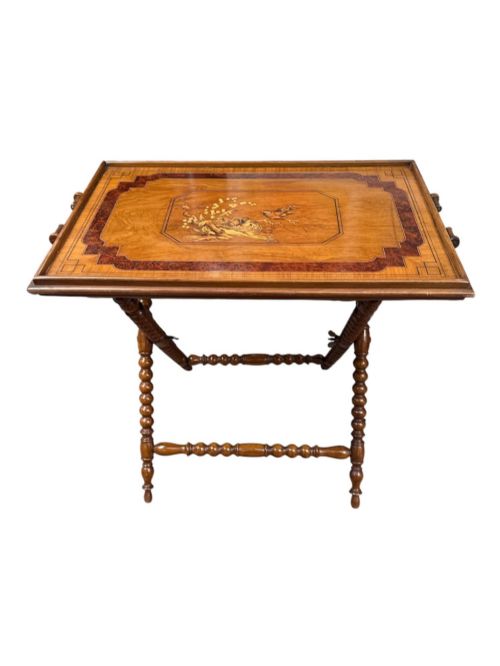
Makers utilised various timber types, meaning you find structural oak alongside decorative rosewood and burr walnut. Each piece combines practical folding mechanics with the distinct profile of bobbin or spool turnings.
How they were made
Cabinet makers shaped solid timbers like oak, walnut, and rosewood using lathe turnings to create the characteristic bobbin or spool profile along the legs and stretchers. These turned components provided robust support for the hinged folding leaves above.
Joinery techniques relied on pegged mortise and tenon joints for seventeenth-century gateleg forms, whilst later nineteenth-century examples incorporated sophisticated hinges and drop-leaf supports to manage the weight of heavier timber tops.
Bobbin Folding Table Retail Price Guide 2026
Typical asking prices for bobbin folding table among the pieces listed under this phrase on Sellingantiques today, from the lower quarter to the upper quarter. They describe what is for sale here now, not the wider market.
Some tables feature turned wooden bobbins that look rather like strings of beads holding up your tea.
What varies in quality
Quality rests in the crispness of the bobbin turnings and the selection of timber used for the top, where figured grain or marquetry inlay elevates the piece. Early examples show hand-carved detailing and pegged joints that denote high-grade workshop production.
The integrity of the folding action and the tightness of the leg joints dictate daily utility. Better examples maintain smooth movement in their gateleg or drop-leaf mechanisms without excessive slack in the turned framing.
The Bobbin Folding Table Glossary
- Bobbin turning
- A form of lathe work that creates a sequence of rounded spheres resembling bobbins or spools along a length of wood. This decorative profiling defines the legs and stretchers of seventeenth and nineteenth-century pieces.
- Gateleg table
- A table featuring hinged leaves supported by swinging legs that pivot out like a gate. This construction provides a large surface area that folds down compactly.
- Drop leaf table
- A table with a fixed centre section and movable flaps on either side supported by folding brackets or legs. It allows the overall footprint to change quickly.
- Burr walnut
- A prized timber harvested from walnut tree growths that produces intricate, swirling grain patterns. Cabinet makers used veneers of this wood on high-status Victorian surfaces.
Bobbin Folding Table: Frequently Asked Questions
What is a bobbin folding table?
A bobbin folding table is a versatile surface featuring turned spool legs and hinged leaves that allow the piece to expand or fold flat.
These tables combine decorative turned woodwork with practical folding mechanisms developed across several centuries.
How were gateleg tables used?
Gateleg tables served primarily as dining or side surfaces that could be reduced in size when floor space was needed.
By swinging out the hinged legs, users could support large drop leaves for meals and fold them away afterward.
What woods were used for these tables?
Early versions relied predominantly on native oak, while later nineteenth-century examples incorporated rosewood, walnut, and olivewood.
Cabinet makers also utilised inlay woods and burr walnut veneers to decorate the table tops.
How do I date a folding table?
Dating relies on identifying the timber species, joinery methods, and the specific style of the turned legs and hinges.
Seventeenth-century pieces typically show pegged oak construction, whereas Victorian examples feature refined turnings and alternative timbers.