

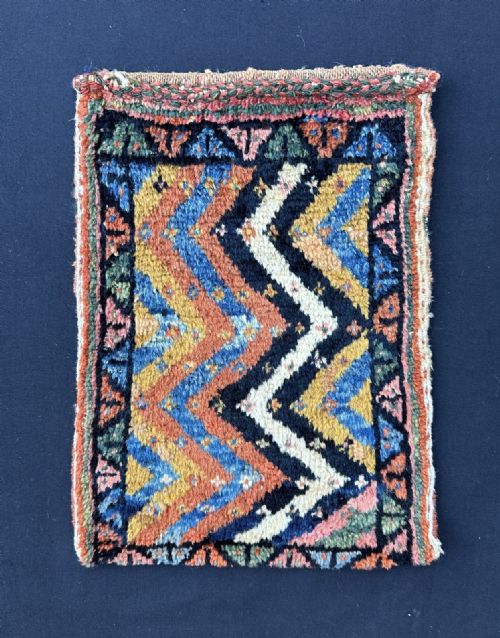
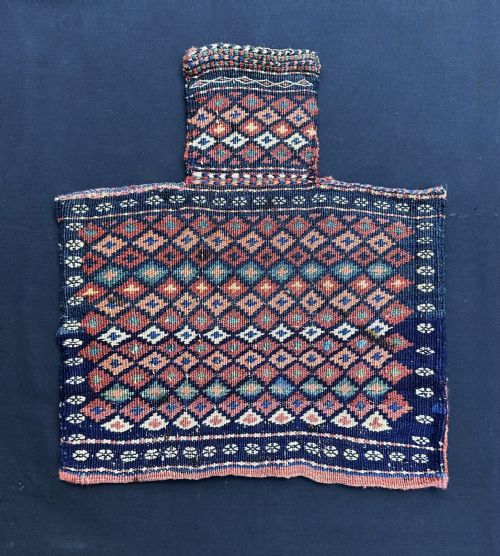

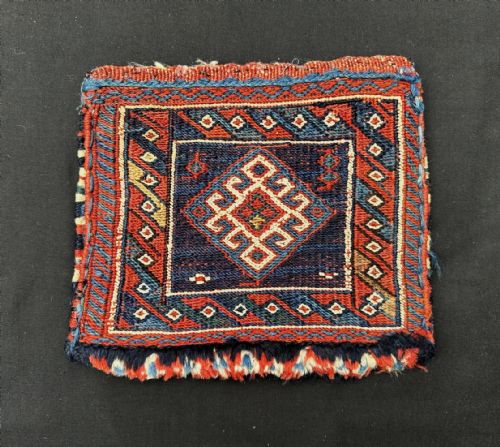
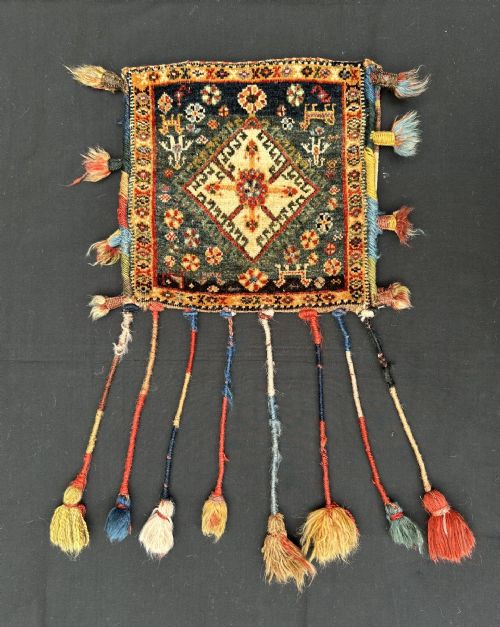
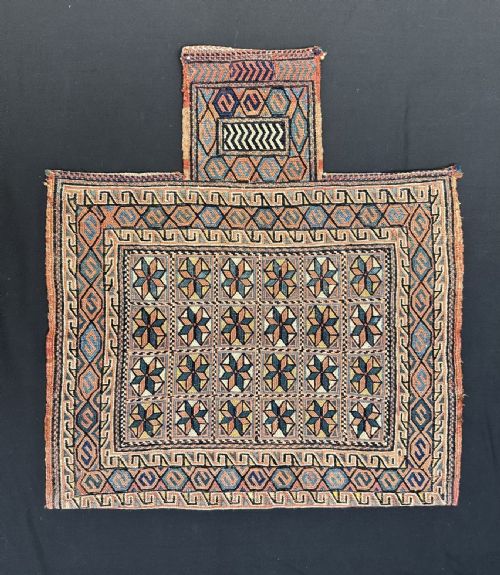
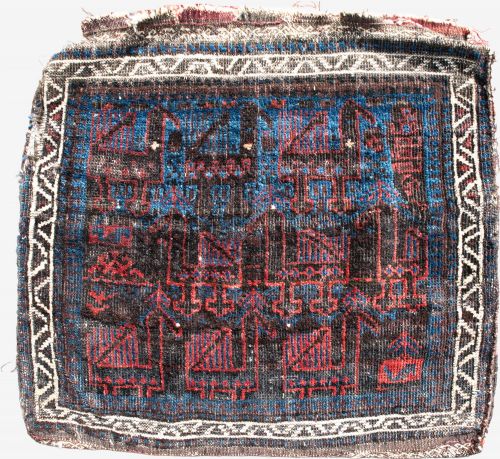


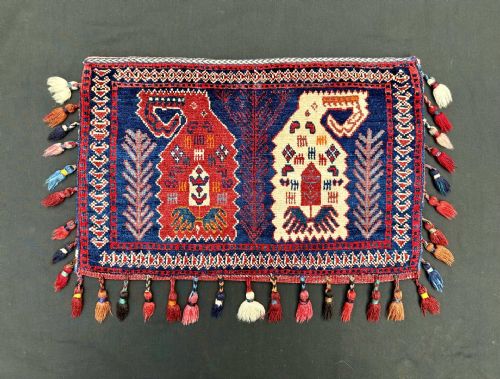
Blue Woven Tribal Pouch
A blue woven tribal pouch brings nomadic utility and rich natural dyes directly into your interior.
Blue Woven Tribal Pouch
The pieces appearing on this page date from the mid-nineteenth century through the early twentieth century, specifically spanning the decades between eighteen sixty and nineteen twenty. They originate from distinct regional confederacies and provinces including Fars, Khorassan, Kerman, Luristan, and the Trans-Caspian steppes.
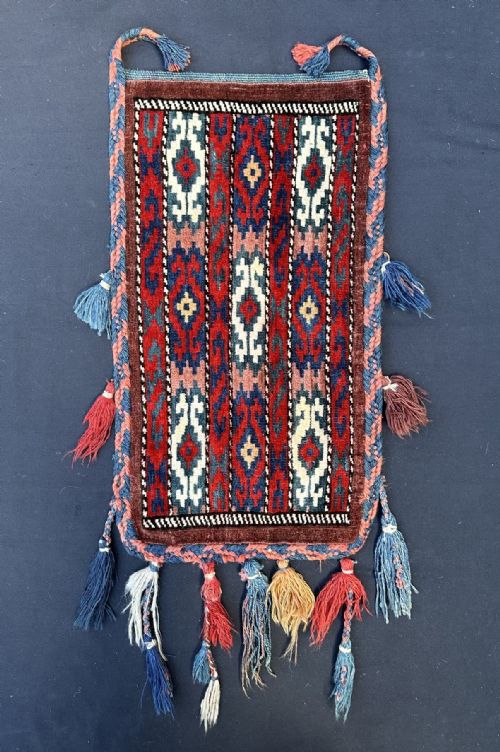
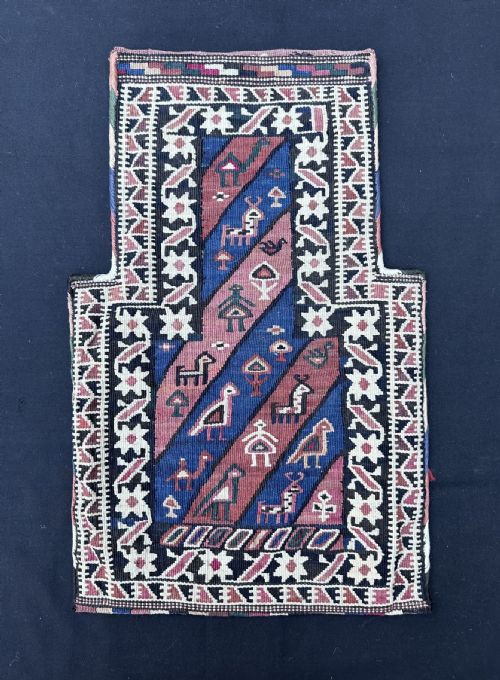
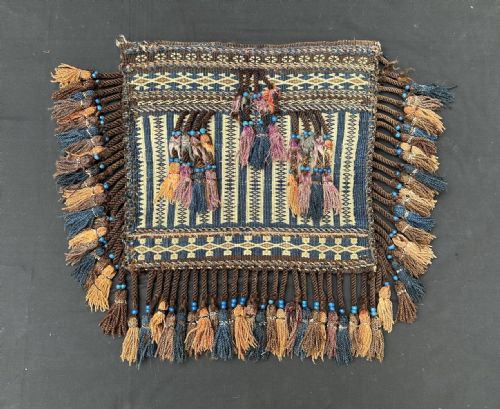
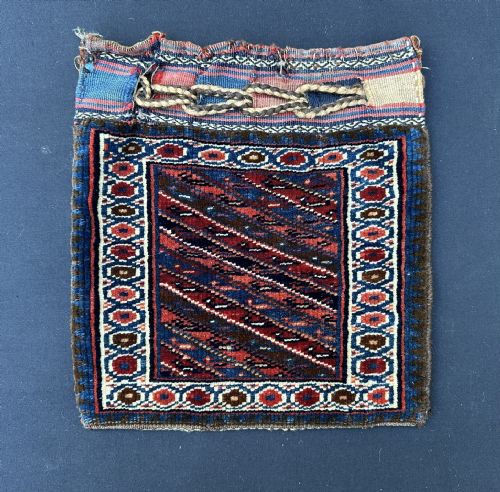
You will encounter various specific bag types, from half saddle-bags and complete pairs of kilim bags to specialised bird bags and spindle bags like the Yomut igsalyk. Each item reflects the domestic and migratory lifestyle of the weavers who made them for daily use within their communities.
What Varies in Quality
Quality in these nomadic textiles rests upon the fineness of the weave, the handling of the wool, and the clarity of the natural dyes. Pieces executed with tightly packed hand-spun wool and precise structural techniques demonstrate superior craftsmanship.
The sophistication of the tribal design work and the preservation of the original form, such as complete pairs or intact plain weave backs, elevate certain examples above standard utilitarian containers.
Blue Woven Tribal Pouch Retail Price Guide 2026
Typical asking prices for blue woven tribal pouch among the pieces listed under this phrase on Sellingantiques today, from the lower quarter to the upper quarter. They describe what is for sale here now, not the wider market.
Some Yomut weavers tucked their spinning tools inside specialised bags, ensuring their wool work travelled securely across the Central Asian steppes.
The Blue Woven Tribal Pouch Glossary
- Soumak
- A flat-weave technique where coloured weft threads are wrapped over the warp threads to create a textured, durable surface. This method produces a sturdier fabric than standard plain weave and allows for sharp, precise geometric patterns.
- Igsalyk
- A specific Yomut Turkmen term for a spindle bag used to hold spinning tools and materials. These elongated bags typically feature structured flat-weave or pile construction with distinctive tribal motifs.
- Salt-bag
- A utilitarian nomadic container traditionally used for storing and transporting salt. These smaller bags often display narrow openings and concentrated geometric ornamentation.
- Kilim
- A flat-woven textile produced without a pile, created by tightly interlocking warp and weft threads. Shahsavan examples often utilise this technique to form durable storage bags.
- Natural Dyes
- Colourants derived from plant, insect, and mineral sources prior to the widespread introduction of synthetic dyes. They produce rich, nuanced tones that age with considerable depth.
Blue Woven Tribal Pouch: Frequently Asked Questions
What were tribal pouches used for?
Nomadic groups utilised these bags for practical storage and transport during seasonal migrations. Specific forms held salt, vanity items, spindles, or served as half and complete saddle-bags.
Beyond simple storage, many pieces functioned as dowry items or essential household furnishings within tribal tents. Their construction reflected the specific domestic needs of communities ranging from the Afshar to the Baluch.
How do I date an antique tribal bag?
Dating relies heavily on material analysis, specifically identifying hand-spun wool and early natural dye palettes before synthetic colours became common. Structural traits and stylistic attributions to specific nineteenth and early twentieth-century tribal groups also guide the timeline.
Comparative study of regional weaving habits from areas like Khorassan, Fars, and the Trans-Caspian steppes helps narrow the production period. Pieces listed here generally fall between eighteen sixty and nineteen twenty based on these combined attributes.
Where did these pouches originate?
These textiles originate across a broad geographic expanse encompassing Persia, Afghanistan, Turkmenistan, and Central Asia. Specific regional attributions point to provinces such as Kerman, Khorassan, Luristan, and Varamin.
Different tribal confederacies and sub-tribes, including the Qashqa'i, Yomut, Shahsavan, and Luri, developed distinct weaving traditions within these areas. Their geographic origins directly influence the materials, patterns, and specific bag forms found on this page.
How should I care for a textile bag?
Protect antique wool and cotton textiles from direct sunlight to prevent natural dyes from fading over time. Gentle vacuuming through a mesh screen helps remove dust without damaging the delicate hand-spun fibres.
Keep these pouches in stable environments away from excessive moisture and insect activity. Avoid hanging heavy objects inside them, as antique woven structures are best preserved when supported evenly.