


Blue Wool Bag
These tribal bags and textiles, gathered under the description of blue wool bag, bring centuries of nomadic craftsmanship and rich indigo dye into modern interiors.
Blue Wool Bag
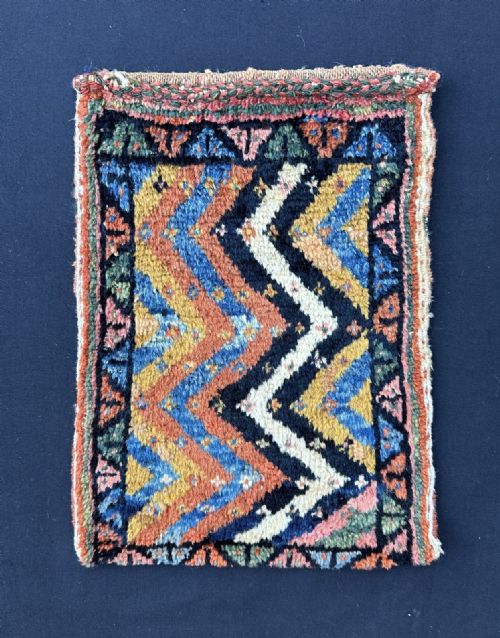
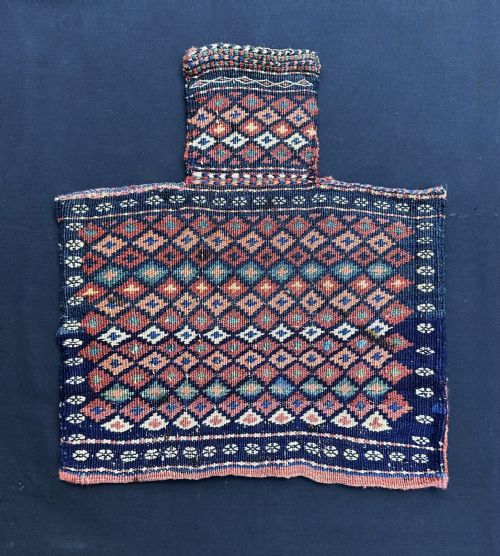
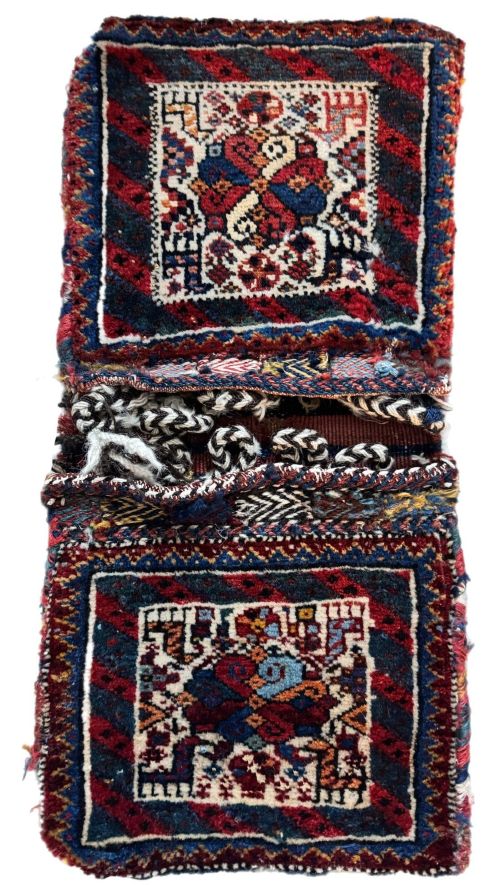
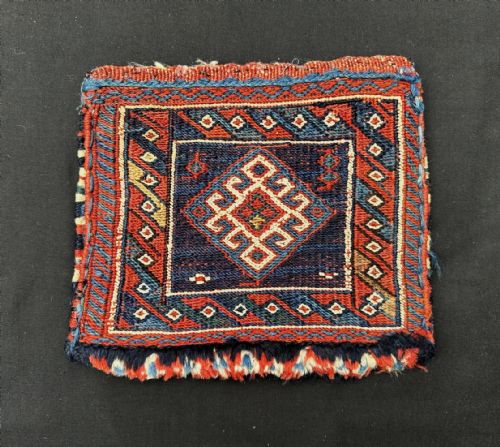
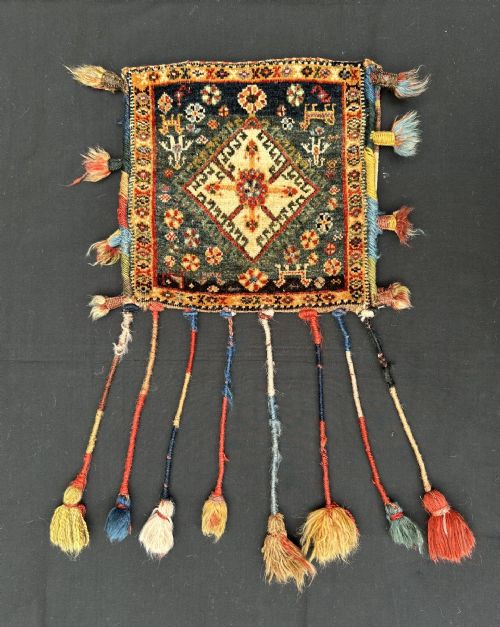
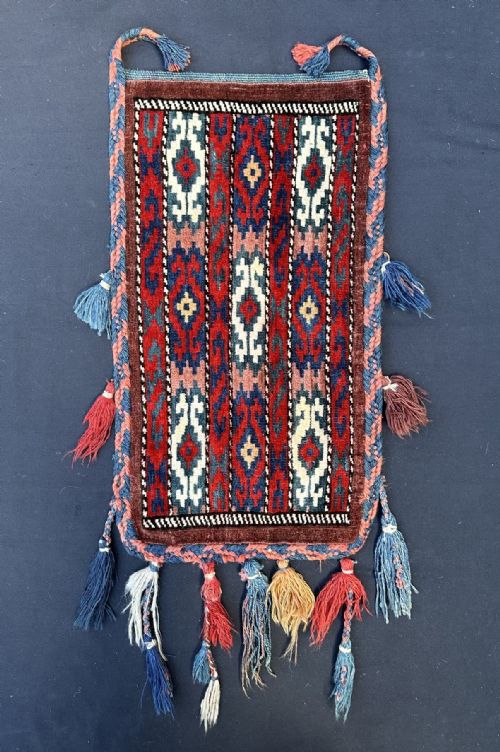
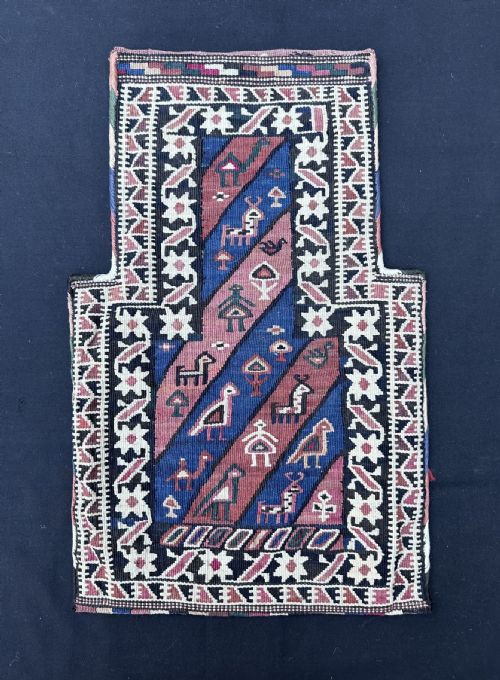
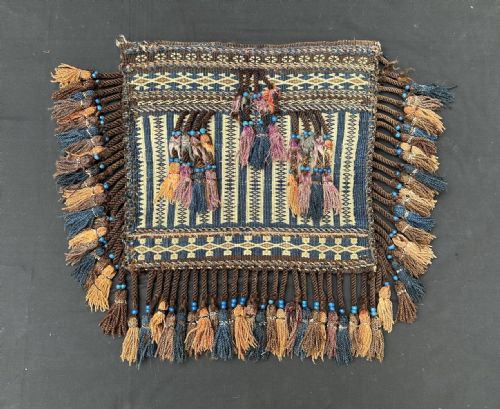
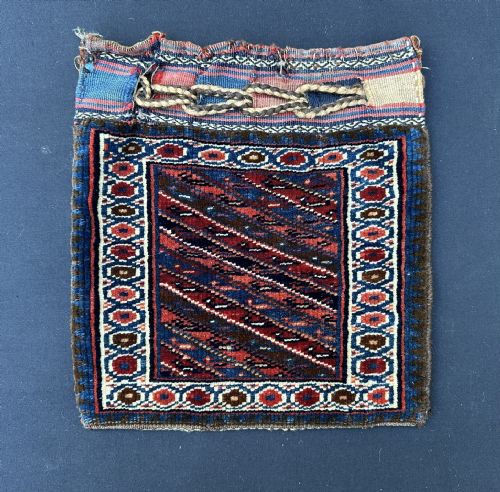
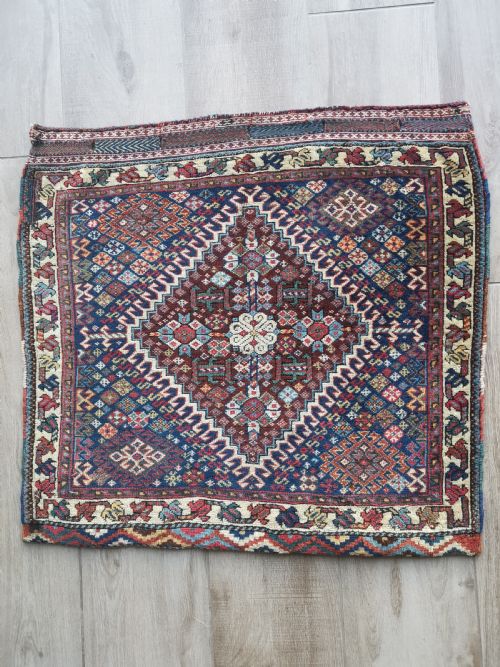
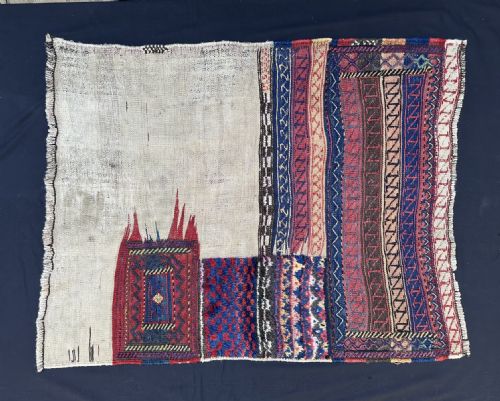
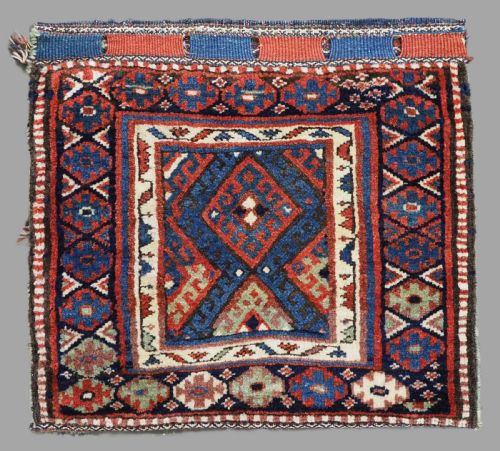
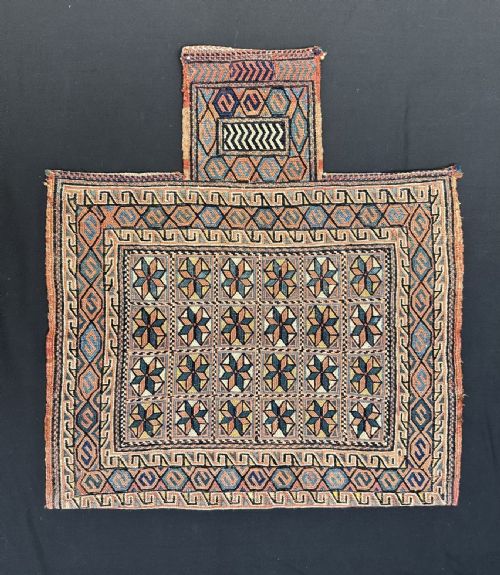
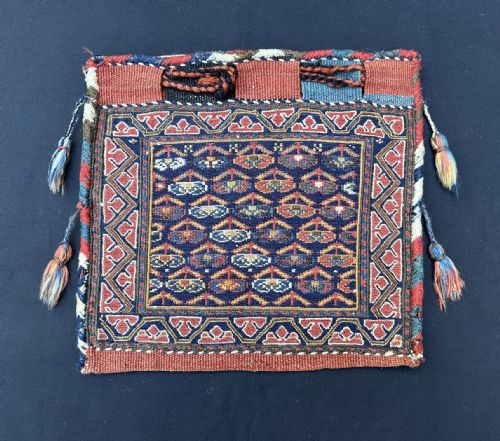
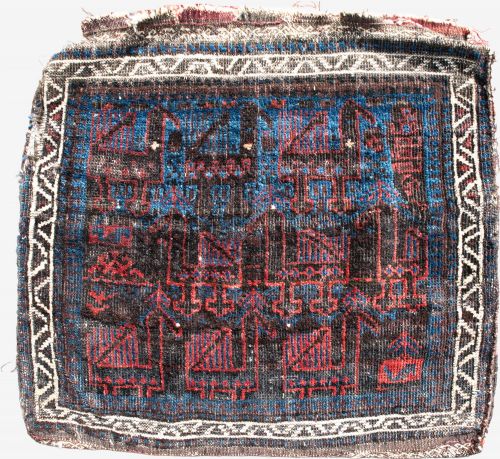
When you search for a blue wool bag, you encounter antique tribal textiles originating from nomadic and village weavers across Persia, the Caucasus, and Central Asia. These items include utilitarian storage pieces such as salt bags, vanity bags, saddlebags, and spindle bags created during the nineteenth and early twentieth centuries.
The selections on this page predominantly show tribal bag faces and complete half-khorjin or saddlebags made by groups like the Afshar, Qashqa'i, Shahsavan, and Baluch. Each object reflects the specific weaving traditions and geometric or pictorial designs of the tribe that produced it.
How they were made
Weavers utilised hand-spun wool and natural vegetable or natural dyes to create the durable pile and flatweave structures of these textiles. Goat hair and cotton frequently appear in the foundations and supplementary structures to provide strength and structural contrast.
Techniques range from standard pile knotting to soumac work and simple plain weave backs. Artisans also incorporated glass beads into specific decorative surfaces to enhance the visual texture of the bags.
Blue Wool Bag Retail Price Guide 2026
Typical asking prices for blue wool bag among the pieces listed under this phrase on Sellingantiques today, from the lower quarter to the upper quarter. They describe what is for sale here now, not the wider market.
Some nomadic salt bags were woven specifically to keep culinary treasures away from adventurous goats inside the tent.
What varies in quality
The standard of an antique tribal textile depends heavily on the handled quality of the wool and the depth achieved by natural dyes. Lustrous, luminous wool combined with rich, saturated indigo yields a far greater visual resonance than duller, unevenly dyed material.
Finesse of knotting and precision in tribal patterns also separate standard utilitarian pieces from exceptional examples. A tightly woven structure with well-balanced proportions and crisp geometric or zoomorphic motifs demonstrates superior tribal craftsmanship.
The Blue Wool Bag Glossary
- Khorjin
- A traditional double-sided saddlebag used by nomadic tribes for transport and storage. These pieces were often separated over time, leaving surviving half-bags or bag faces.
- Sumac
- A flatweave technique where pattern wefts are wrapped around warp threads in a continuous sequence. This method produces a durable, textured surface without a raised pile.
- Torba
- A wide tribal storage bag traditionally hung inside a yurt or tent. They frequently display intricate güls and secondary motifs particular to Turkmen weavers.
- Bag face
- The decorative front panel of a nomadic storage bag that survived after the plain weave back deteriorated or was removed. These panels are often mounted and displayed as small rugs.
- Soumac
- An alternative spelling for sumac work, denoting the wrapped flatweaving method common in Caucasian and Persian tribal textiles.
Blue Wool Bag: Frequently Asked Questions
How were these bags used originally?
Nomadic tribes utilised these containers for storing salt, grain, personal items, and spinning equipment during seasonal migrations. They served as durable, practical furniture within tents.
Over time, many of these utilitarian containers were divided or preserved for their decorative woven faces, transitioning from nomadic gear to valued textile art.
How do I live with a tribal bag?
These textiles adapt easily to modern domestic spaces as small wall hangings, table accents, or mounted decorative panels. Their rich indigo tones and geometric patterns complement both traditional and contemporary interiors.
Because antique wool and natural dyes are sensitive to intense light, placement away from direct sun exposure helps preserve the depth of the colour.
How can I tell different tribal styles apart?
Tribal attribution relies on specific structural traits, palette choices, and iconography unique to each region or confederacy. For instance, Afshar pieces often feature boteh motifs or structured medallions, while Yomut pieces display characteristic guls.
Examining the weave type, such as soumac work or pile knotting, alongside the foundation materials provides further clues to origin.
What does natural dye mean for these textiles?
Natural dyes refer to colourants extracted from plants, roots, and insects before the widespread adoption of synthetic alternatives in the late nineteenth century. Indigo provides the deep blues foundational to these pieces.
These organic dyes often display subtle abrash, which is a gentle tonal variation in colour resulting from different dye batches.