


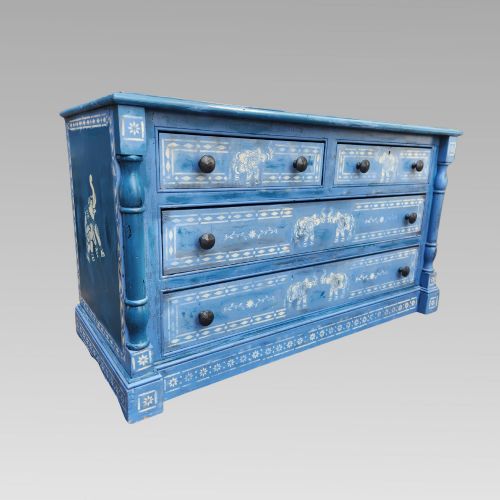
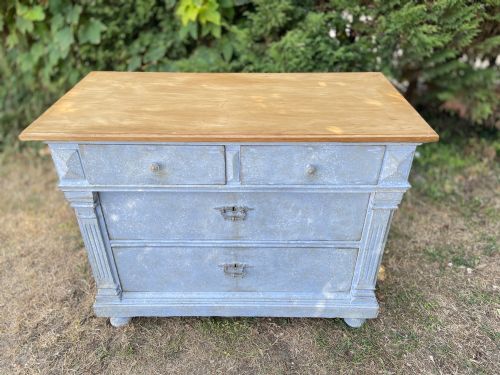


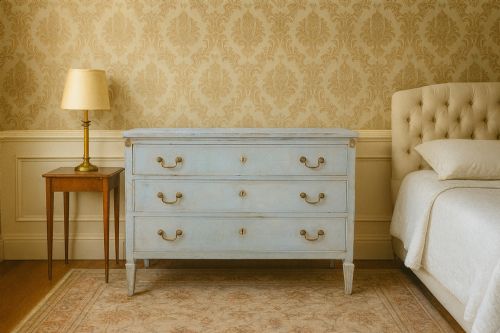


Blue Wooden Dresser
A blue wooden dresser brings heritage charm and practical storage to a room, ranging from rustic farmhouse cupboards to refined Gustavian commodes.
Blue Wooden Dresser
A blue wooden dresser encompasses a wide variety of storage furniture, including chests of drawers, kitchen cupboards, linen cupboards, and dresser bases found in country and neoclassical styles. When searching for a blue wooden dresser, buyers encounter items originating from English, Irish, French, Italian, and Scandinavian traditions.
The pieces span the eighteenth and nineteenth centuries, taking the form of commodes, bookcases, and upright cabinets with painted wooden surfaces. The selection leans heavily towards painted Scandinavian country pieces, alongside English country and Austrian folk art examples.
Forms vary from robust Baltic and kitchen cupboards to serpentine commodes and diamond-point chests of drawers. Each item serves a functional storage purpose while displaying historical regional painting traditions.
How they were made
Construction relies primarily on pine and oak, complemented by solid wood carcases designed for everyday domestic use. Joinery techniques reflect traditional cabinet-making methods suited to heavy timber construction.
Surfaces receive historical paint treatments, including ragwork and hand-painted finishes applied over wood. Metal iron and brass hardware such as drawer pulls and hinges complete the construction of these storage items.
Blue Wooden Dresser Retail Price Guide 2026
Typical asking prices for blue wooden dresser among the pieces listed under this phrase on Sellingantiques today, from the lower quarter to the upper quarter. They describe what is for sale here now, not the wider market.
The listings feature nineteenth-century and eighteenth-century pieces constructed from pine, oak, and painted wood, spanning Scandinavian, English, and Italian styles.
What varies in quality
The distinction between items rests on the integrity of the original paint surface and the sophistication of the regional style. Pieces with untouched historic paintwork and balanced proportions occupy the upper tier of the range.
Execution of decorative details, such as carved fronts and specialised paint techniques like ragwork or hand-painted motifs, determines the refinement of the piece. The choice of primary timber, whether durable oak or sturdy pine, also influences the character of the construction.
The Blue Wooden Dresser Glossary
- Commode
- A low chest of drawers or cabinet, often originating from French or Italian traditions. These decorative storage pieces frequently feature serpentine fronts or specialised painted finishes.
- Gustavian
- The Swedish neoclassical style spanning the late eighteenth and nineteenth centuries. It typically exhibits restrained classical detailing and lighter painted palettes.
- Dresser base
- The lower section of a traditional kitchen or dining room storage unit, configured with drawers or cupboards. This form provides a sturdy surface and enclosed storage space.
- Ragwork
- A decorative painting technique where fabric is manipulated across a wet glaze to create textured patterns on wooden surfaces. This method adds depth and movement to painted furniture.
- Serpentine
- A furniture front shape characterised by a curving line that bends outward in the centre and inward at the sides. This contour requires skilled woodworking to execute cleanly.
Blue Wooden Dresser: Frequently Asked Questions
What is a blue wooden dresser?
A blue wooden dresser refers to painted storage furniture including chests of drawers, cupboards, and commodes dating from the eighteenth and nineteenth centuries.
These pieces originate from various European traditions, featuring regional painted finishes on timber structures.
How do I date a painted cupboard?
Dating relies on examining the construction methods, timber types, and the composition of the painted surface.
Historical context, such as Gustavian neoclassical design cues or nineteenth-century folk art styles, helps establish the period.
Where were these pieces made?
The listings show items originating across Europe, including England, Ireland, France, Italy, Austria, and Sweden.
Each region developed distinct cabinetry forms and decorative painting traditions that separate English country pieces from Scandinavian folk art.
How do I care for historic painted wood?
Maintenance involves keeping the furniture away from direct sunlight and excessive moisture fluctuations to protect the aged wood and paint layers.
Gentle dusting with a soft, dry cloth preserves the historic surface without abrasive cleaners.