

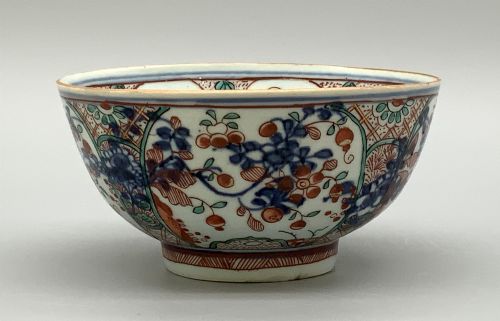


Blue White Red Porcelain Bowl
A blue white red porcelain bowl brings together rich ceramic traditions from China and Japan across several centuries.
Blue White Red Porcelain Bowl
A blue white red porcelain bowl presents striking palettes across forms ranging from decorative bowls to large jardinieres and tripod vessels. Collectors searching for a blue white red porcelain bowl encounter historical pieces originating from China and Japan, spanning the seventeenth century through to the early twentieth century.
The pieces listed on this page include examples from the Chinese Kangxi period and the Qing dynasty alongside Japanese Arita and Meiji period wares. Buyers most frequently meet Japanese Imari bowls featuring scalloped edges and traditional hand painted designs.
Materials and construction
Makers formed each blue white red porcelain bowl from refined ceramic clay before applying detailed hand painted enamel decoration. Potters utilised cobalt blue underglaze alongside iron red enamel and gold leaf accents to achieve the distinctive multi-coloured aesthetic.
Firing techniques in Chinese and Japanese kilns produced durable porcelain bodies finished with clear glaze. Metal mounts sometimes complemented the ceramic forms, particularly on tripod bowls and jardinieres.
Blue White Red Porcelain Bowl Retail Price Guide 2026
Typical asking prices for blue white red porcelain bowl among the pieces listed under this phrase on Sellingantiques today, from the lower quarter to the upper quarter. They describe what is for sale here now, not the wider market.
Materials recorded across the inventory include porcelain, enamel, glaze, gold leaf, metal, and gilt.
Judging quality
Quality in a blue white red porcelain bowl rests upon the precision of the hand painting and the crispness of the form. Finer pieces display confident brushwork in the cobalt blue and iron red pigments, with harmonious integration of gold leaf detailing.
The sophistication of the potting and the preservation of the enamel surface distinguish superior examples. Early pieces from the Kangxi or Genroku periods exhibit distinct potting characteristics that set them apart from later nineteenth and twentieth century production.
The Blue White Red Porcelain Bowl Glossary
- Imari
- A style of Japanese porcelain decorated in underglaze blue, iron red, and gold, originating in the town of Arita. These wares gained immense popularity in Europe during the seventeenth and eighteenth centuries.
- Arita
- The Japanese town renowned as the birthplace of Japanese porcelain production. Kilns in this region produced vast quantities of export wares.
- Kangxi
- A significant emperor of the Qing dynasty whose reign fostered exceptional technological and artistic achievements in Chinese ceramics. Pieces from this period are highly regarded by collectors.
- Jardiniere
- A large ornamental pot designed to hold plants or flowers. Ceramic examples often feature rich decorative schemes matching smaller table bowls.
- Enamel
- Vitreous material applied to the surface of fired porcelain to add colour before a secondary low-temperature firing. This technique allowed makers to introduce vibrant reds and other hues.
Blue White Red Porcelain Bowl: Frequently Asked Questions
Where were these bowls made?
These pieces originated in the kilns of China and Japan, particularly centres such as Arita for Japanese Imari wares. Production spans various historical eras including the Qing dynasty and the Edo period.
Export markets in Europe eagerly acquired these ceramics, influencing interior decoration schemes from the seventeenth century onwards.
How do I care for my bowl?
Display the ceramic away from direct sunlight and areas subject to sudden temperature fluctuations to protect the glaze and enamels. Clean the surface gently with a soft, dry cloth rather than using liquid immersion or abrasive cleaners.
Handle tripod bowls and scalloped vessels with care, supporting the base rather than relying on decorative edges.
How are different periods distinguished?
Collectors differentiate periods by examining the potting style, the tone of the cobalt blue underglaze, and the character of the iron red enamel. Early pieces from the seventeenth century often show distinct footring characteristics and body weight compared to later Meiji or twentieth century examples.
Stylistic motifs also evolve, shifting from classic Kangxi designs to the elaborate patterns of the Japanese Meiji era.
What is Chinese Export porcelain?
Chinese Export porcelain refers to wares manufactured in China specifically for overseas markets in Europe and the West. These pieces combined traditional Chinese manufacturing techniques with shapes and decorative motifs tailored to foreign tastes.
Imari and Chinoiserie styles frequently appeared on these export pieces.