


Blue White Pottery Set
A blue white pottery set brings together matching ceramic pieces decorated in cobalt pigment, prized for domestic display and daily service alike.
Blue White Pottery Set
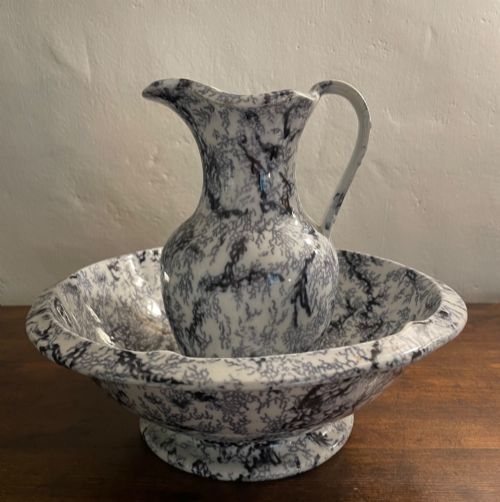
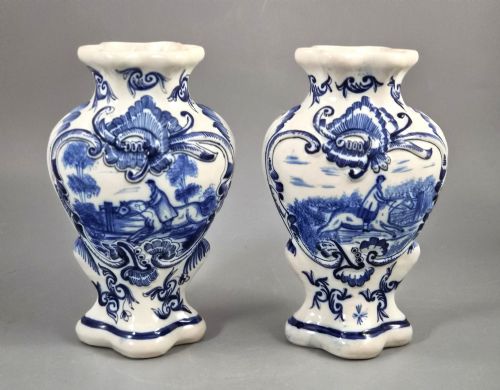
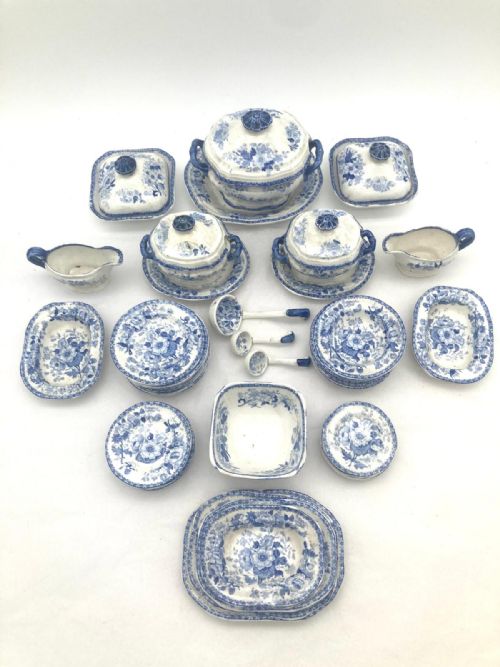
A blue white pottery set encompasses matched groupings spanning from eighteenth-century Dutch delftware plates and chargers to nineteenth-century English transferware child's services, miniature dinnerware, and graduating jugs. Buyers encounter various utilitarian and decorative configurations, including desk accessories, inkstands, and supper set tureens.
The domestic forms range from large meat platters and graduating sets of ironstone hydra jugs to botanical plates and miniature tea sets. Eighteenth-century Dutch examples and nineteenth-century English pearlware or earthenware predominate on this page.
Materials and production techniques
Potters shaped earthenware, pearlware, and ironstone into vessels before applying tin glazes or transparent lead glazes over cobalt pigment decoration. Many pieces utilise hand-painted motifs or blue and white transfer printing to achieve detailed patterns.
Firing took place in kilns where cobalt oxides fused beneath the glaze at high temperatures to produce the characteristic deep blue coloration against a white or cream ceramic body.
The listings feature earthenware, pearlware, and tin-glazed earthenware across periods from the eighteenth century through to nineteen-thirty.
Quality variations in the ceramics
Quality rests upon the crispness of the cobalt decoration and the uniformity of the glaze, whether hand-painted or transfer-printed. Finer pieces display sharp registration in patterns like floral sheets or architectural scenes without blurring.
The refinement of the ceramic body itself, from heavy tin-glazed earthenware to dense ironstone and delicate pearlware, dictates the overall durability and tactile appeal of each set.
Fourmaintraux-Courquin·Minton·Doulton Burslem·Mason's·Wedgwood·Elkin & Newbon·Davenport
The Blue White Pottery Set Glossary
- Pearlware
- A refined earthenware developed in the late eighteenth century featuring a subtle bluish glaze that pooled in recesses to mimic Chinese porcelain. It forms the body of many early dining sets.
- Tin-Glazed Earthenware
- Pottery coated with a white tin oxide glaze that provided an opaque white surface for painting in imitation of oriental porcelain. Dutch delftware and French faience rely on this technique.
- Transfer Printing
- A mechanical process developed in the eighteenth century to apply complex designs to pottery from a copperplate onto tissue paper and then onto the ceramic body. This technique enabled the production of uniform patterned services.
- Flow Blue
- A nineteenth-century ceramic style where cobalt pigment deliberately bled into the surrounding white glaze during firing to create a hazy, soft-edged effect. It appears frequently on Staffordshire jugs and plates.
Blue White Pottery Set: Frequently Asked Questions
How do I date a blue white pottery set?
Dating relies on identifying the underlying ceramic body, such as distinguishing eighteenth-century tin-glazed earthenware from nineteenth-century ironstone or pearlware. Transfer-printed patterns and retailer marks also help narrow the period of manufacture.
Changes in potting thickness, glaze pooling, and stylistic motifs like floral sheets or Chinoiserie scenes provide further chronological indicators for each service.
Can I use these antique sets daily?
Most antique earthenware and delftware sets suit gentle display or light occasional use rather than heavy daily service. The historic glazes and softer ceramic bodies can sustain wear or staining from modern dishwashers and cutlery.
Careful hand washing and considerate handling preserve the cobalt decoration and glaze integrity on these fragile historical vessels.
What is the difference between delft and faience?
Dutch delftware and French faience both describe tin-glazed earthenware decorated with cobalt pigment, though they originate from different regional ceramic traditions. Delft specifically refers to pottery made in or around the Dutch town of Delft.
Both categories share the characteristic opaque white glaze over a buff or earthenware body, though painting styles and forms vary by workshop and region.
Why do child's sets appear in these collections?
Miniature dinner services and child's sets were produced in the nineteenth century as educational toys for children of affluent families. Potters scaled down full-sized dinnerware, tea sets, and toilet sets to miniature proportions.
These smaller sets survive today as highly decorative cabinet pieces due to their intricate detail and relative scarcity compared to domestic tableware.