

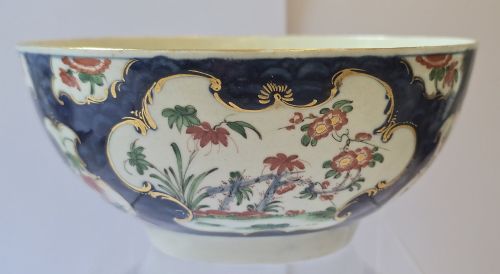
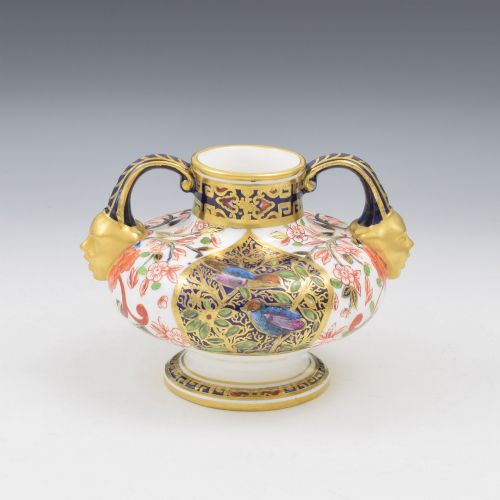
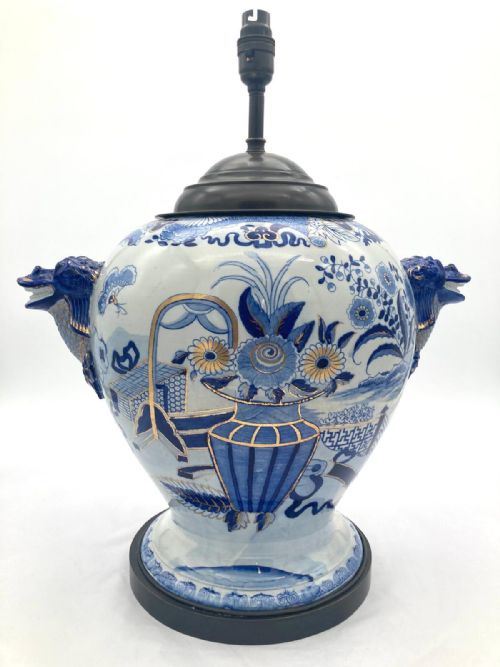


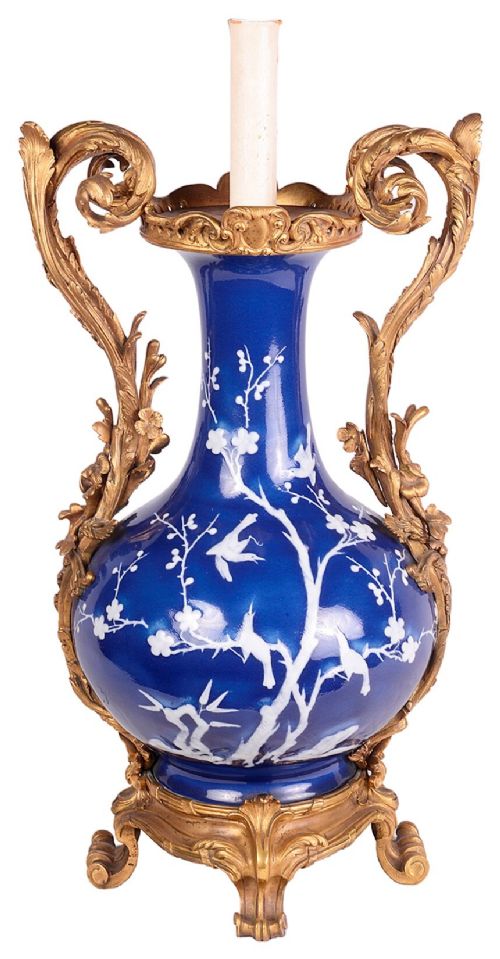
Blue White Gilt Vases
These blue white gilt vases range from nineteenth century porcelain table lamps to large Japanese and Chinese ceramic urns, bringing rich colour and historic character to any room.
Blue White Gilt Vases
When you search for blue white gilt vases, you encounter an eclectic mix of nineteenth century European porcelain and Asian ceramics. These pieces appear as decorative vessels, pot pourri jars with covers, and tall stick stands.
Many of these ceramic objects are converted into table lamps to suit modern interiors while retaining their historic form. You will frequently find pairs originating from English factories, French workshops, and Japanese kilns.
The styles span from Regency Chinoiserie and Rococo Revival to Meiji period Japanese designs. This selection reflects a global trade in ceramics spanning Georgian elegance through to the early twentieth century.
How they were made
Makers shaped these vessels from porcelain, ironstone, and earthenware before applying cobalt blue pigments under the glaze. Artisans then added gold leaf, gilding, and enamel highlights to create the characteristic metallic contrast against the blue and white ground.
Potters utilised transfer printing and hand-painting techniques to achieve intricate Chinoiserie scenes, exotic birds, and floral motifs. Some heavier ironstone and porcelain bodies were subsequently drilled and fitted with brass or electric lamp components.
Blue White Gilt Vases Retail Price Guide 2026
Typical asking prices for blue white gilt vases among the pieces listed under this phrase on Sellingantiques today, from the lower quarter to the upper quarter. They describe what is for sale here now, not the wider market.
Styles represented include Chinoiserie, Regency, Meiji period Japanese, Rococo Revival, and Empire designs.
What varies in quality
The finesse of the hand-painted detailing and the precision of the gilding set the finest examples apart from standard production pieces. Superior porcelain bodies display crisp cobalt transfer work and deeply burnished gold leaf rather than flat bronze paint.
Proportion and scale also dictate quality, particularly in large pairs of vases and urns designed as garniture sets or floor-standing stick stands. The preservation of the original enamel colours and the integrity of the ceramic body after any lamp conversion heavily influence the standing of each piece.
Hicks and Meigh·Spode·Masons·Samson of Paris·Royal Worcester·Meissen·Moorcroft Macintyre·Fukagawa
The Blue White Gilt Vases Glossary
- Ironstone
- A heavy, durable type of earthenware patented in the nineteenth century to rival true porcelain. It provides a robust body for large vases and transfer-printed decoration.
- Pot pourri
- A decorative vase or jar fitted with a pierced cover designed to hold dried scented plant material. These vessels often feature elaborate gilt and blue painted surfaces.
- Imari
- A style of Japanese export ceramic featuring a palette of underglaze cobalt blue, iron red, and abundant gilt highlights. European factories frequently copied this vibrant aesthetic.
- Gilding
- The application of gold leaf or gold powder to the surface of ceramics to create metallic ornamentation. It catches the light and frames the blue and white painted panels.
Blue White Gilt Vases: Frequently Asked Questions
Can I use these vases as everyday lamps?
Many of these ceramic vessels are already converted into table lamps, allowing you to place them safely on side tables or desks.
They combine historic craftsmanship with functional household lighting without losing their decorative presence.
How do I care for gilt porcelain?
Dust the surface gently with a dry, soft cloth to protect the delicate gold leaf and enamel highlights from abrasion.
Avoid using liquid cleaners or harsh chemicals, which can permanently damage the historic gilding and painted glazes.
Are these pieces English or Asian?
The selection includes both European examples from English and French factories and East Asian imports from China and Japan.
Potters in Europe frequently drew inspiration from Asian export wares, resulting in overlapping styles like Chinoiserie.
What period do most pieces date from?
The majority of the collection dates from the nineteenth century, spanning the Georgian, Regency, and Victorian eras.
A few items extend into the early twentieth century, including pieces from the nineteen-twenties and nineteen-thirties.