






Blue Ushak Rug
A blue ushak rug brings understated botanical motifs and a soft palette to a room, offering genuine historical depth for a well-considered interior.
Blue Ushak Rug
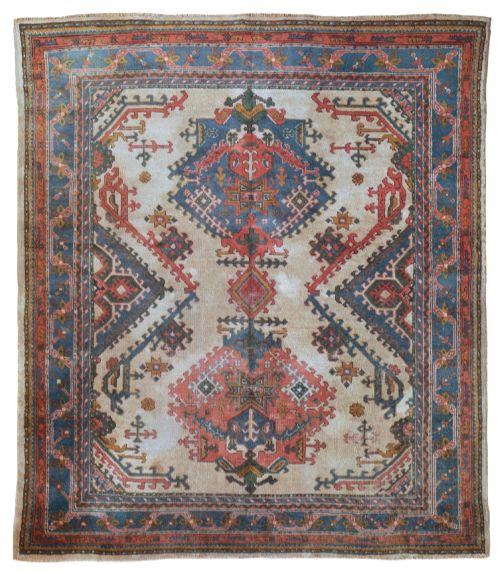
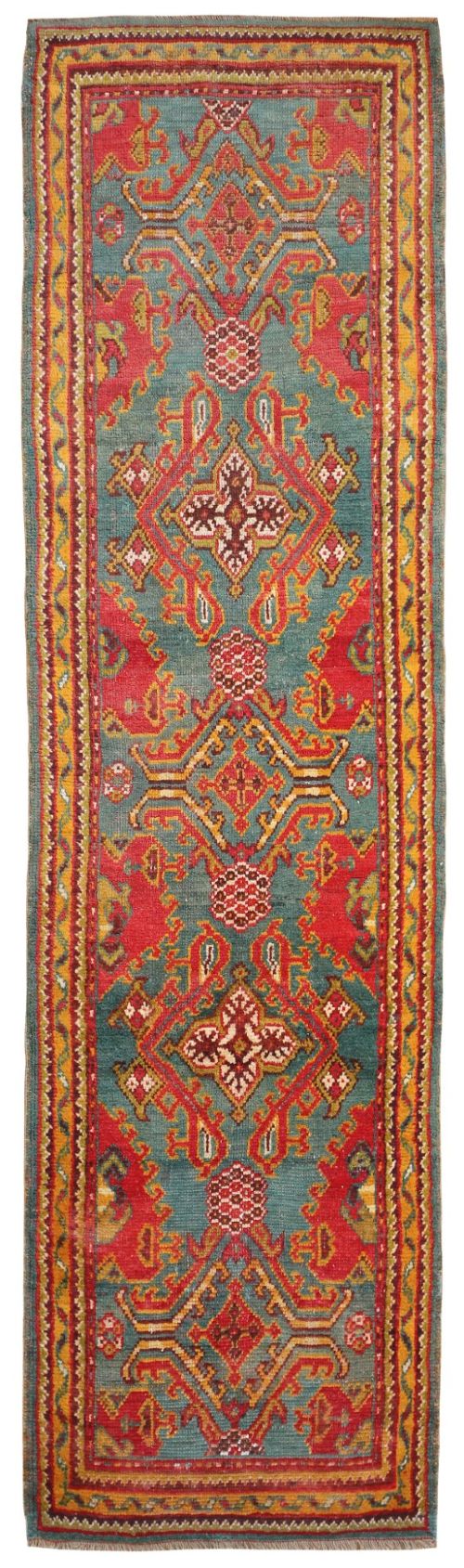
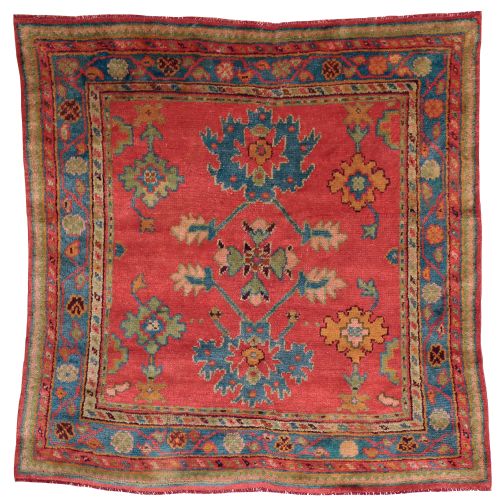
When you search for a blue ushak rug, you are looking at hand-knotted floor coverings originating from Western Anatolia, often bearing large-scale medallions or star designs. The examples you are most likely to meet on this page span the late nineteenth century up to the early twentieth century, taking the form of square carpets, elongated runners, and standard area rugs. These pieces carry regional styles described across Ottoman, Anatolian, and Turkish traditions.
The format ranges from standard room-size carpets down to narrow runner rugs suited to corridors and galleries. Many incorporate traditional ivory grounds or muted blue fields that anchor the composition without overpowering surrounding furniture. The makers worked within established Anatolian weaving centres, producing durable floor coverings designed for both domestic use and formal reception rooms.
How they were made
The weavers built these rugs using a foundation of spun cotton for the warp and weft threads, providing structural stability and a flat lie on the floor. Pile construction relies primarily on hand-spun wool, occasionally incorporating softer angora wool to yield a tactile finish and subtle sheen across the surface. Natural dyestuffs produced the characteristic palette, fixing soft blues, ivories, and muted reds into the fleece.
Knotting techniques followed regional Turkish traditions, securing the pile firmly to the cotton grid to withstand generations of foot traffic. Artisans finished the edges with overcast side cordings and secured the ends with flatweave skirts to prevent fraying. Every rug developed its character through this manual process, ensuring slight irregularities that mark them out from machine-made textiles.
Blue Ushak Rug Retail Price Guide 2026
Typical asking prices for blue ushak rug among the pieces listed under this phrase on Sellingantiques today, from the lower quarter to the upper quarter. They describe what is for sale here now, not the wider market.
Listings feature pieces dated across the late nineteenth and early twentieth centuries, spanning 1870 to 1920.
What varies in quality
Quality in these carpets rests on the handling of the wool and the clarity of the underlying design. Finer pieces utilise soft angora wool that catches the light and deepens the tonal variation across the blue field. The precision of the central medallion and the balance of the surrounding floral motifs dictate the visual success of the piece.
Proportion and scale also separate standard room-size formats from oversized or runner configurations that required greater architectural planning on the loom. The integrity of the cotton foundation and the retention of the original side bindings preserve the structural longevity of the weaving. Pieces that maintain their pile depth and dye saturation without heavy restoration sit at the upper end of the range.
Maples
The Blue Ushak Rug Glossary
- Ushak
- A town in Western Anatolia renowned historically for large-scale carpet production. Its weavers supplied major decorative carpets featuring distinctive floral and geometric medallions to European and Ottoman markets.
- Angora wool
- A fine, soft fleece harvested from goats bred in the Anatolian region. It imparts a silky lustre and pliable handle to the pile of antique rugs.
- Medallion
- A large central ornamental design motif placed in the field of a carpet. In these weaves, it typically takes a star or cusped geometric form.
- Warp
- The vertical foundation threads stretched lengthwise on the loom before knotting begins. Cotton serves as the primary material for these structural strands.
- Weft
- The horizontal threads passed alternately over and under the warp strands to lock the rows of knots into place. It contributes to the overall rigidity of the rug.
Blue Ushak Rug: Frequently Asked Questions
How do I clean an antique rug?
Regular gentle vacuuming without a beater bar removes surface grit before it settles into the cotton foundation. Professional textile cleaning is necessary for deeper maintenance to protect the natural dyes.
Avoid household detergents and excessive moisture, which can weaken the wool pile and cause colours to bleed. Professional care ensures the structural integrity of the weave remains undisturbed.
Are these rugs suitable for high-traffic areas?
The sturdy wool pile and strong cotton foundation make these pieces durable enough for everyday living spaces. Proper underlay helps absorb foot pressure and prevents slipping on hard floors.
Placing them in hallways or living rooms allows the wool to settle naturally while enduring regular movement. Routine rotation ensures even wear across the surface over time.
How do I tell different periods apart?
Late nineteenth-century examples often display bolder vegetal motifs and richer saturation in the natural dyes. Pieces from the early twentieth century shift towards softer palettes and more open compositions.
Examining the knot density and the crispness of the border guards helps establish the approximate weaving decade. Stylistic shifts reflect changing export demands between the Ottoman period and the early Turkish republic.
Will the colours match modern interiors?
The muted blues and neutral ivory grounds blend easily with contemporary wooden floors and neutral walls. Their faded patination provides a bridge between historic craftsmanship and modern design schemes.
These rugs act as a grounding element rather than a dominant focal point in a room. Their understated tones complement both minimalist and traditional furniture layouts.