




Blue Ushak Carpet
A blue ushak carpet brings a restrained, architectural palette to a room through centuries of Anatolian design tradition.
Blue Ushak Carpet
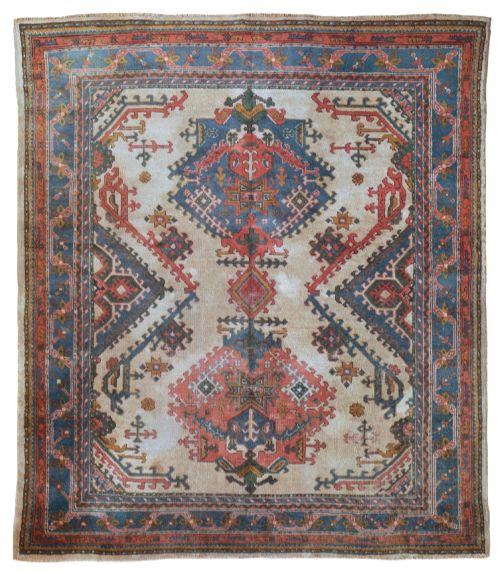
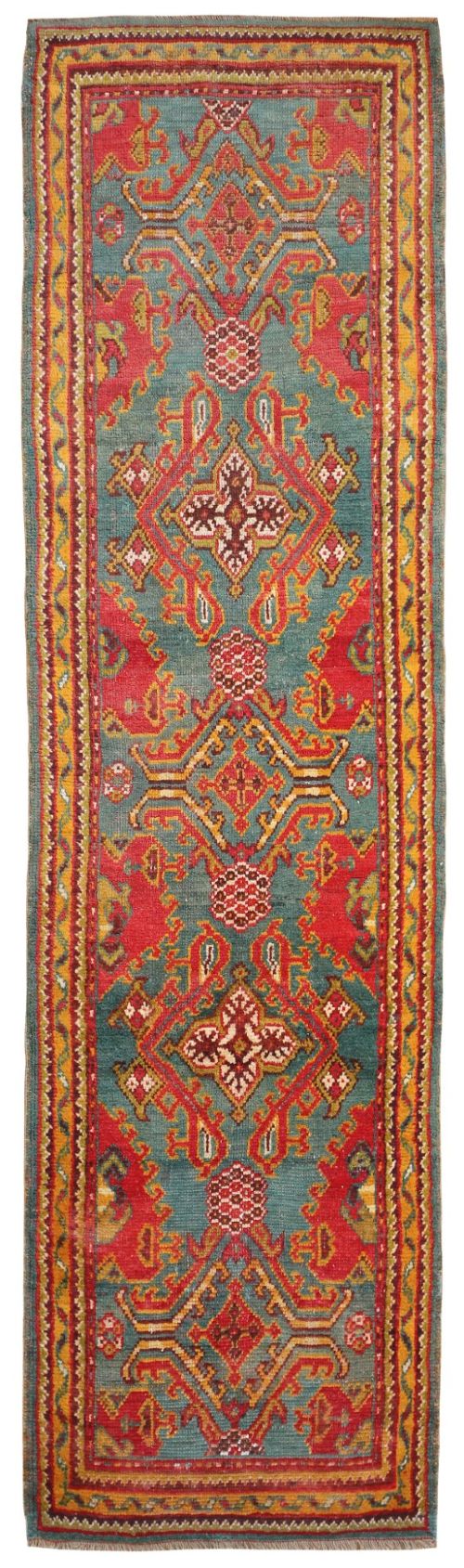
When you search for a blue ushak carpet, you examine hand-knotted floor coverings originating from the Anatolian region of Turkey, spanning the late nineteenth and early twentieth centuries. These pieces appear most frequently as room-size carpets, runners, and large square formats dating from the Victorian era up to the nineteen-twenties.
The selections on this page demonstrate the enduring influence of Ottoman design aesthetics, executed in distinctive blue and ivory grounds rather than traditional red tones. Buyers encounter both grand medallion compositions and smaller runner configurations suited to hallways and reception spaces.
How they were made
Weavers constructed these carpets using wool and cotton foundations, often incorporating fine angora wool for added softness in the pile. Artisans knotted the fibres by hand onto cotton warps and wefts, creating a dense yet pliable textile structure.
Natural dye traditions ensured that the characteristic blue and ivory tones achieved subtle variations across the surface of each piece during production.
Blue Ushak Carpet Retail Price Guide 2026
Typical asking prices for blue ushak carpet among the pieces listed under this phrase on Sellingantiques today, from the lower quarter to the upper quarter. They describe what is for sale here now, not the wider market.
Object types recorded across the inventory include square formats, room-size carpets, and narrow runners.
What varies in quality
Quality in these textiles depends heavily on the fineness of the knotting and the complexity of the medallion or star design geometry. Superior examples display precise drawing and harmonious colour saturation across the wool pile.
The integrity of the foundation materials and the evenness of wear across large formats separate standard production pieces from exceptional survivors of the period.
Maples Ushak
The Blue Ushak Carpet Glossary
- Ushak
- A city in western Anatolia renowned for historical carpet production. Ushak workshop pieces are celebrated for large-scale floral and geometric motifs.
- Medallion
- A central ornamental design motif placed in the field of a carpet. This focal element anchors the symmetrical layout of traditional Anatolian weaving.
- Warp
- The vertical threads stretched lengthwise on a loom that form the structural foundation of the carpet. Fringe typically extends from these parallel cords.
- Weft
- The horizontal threads passed across the warp threads to bind the knots in place. Together, warp and weft create the stable grid of the textile.
Blue Ushak Carpet: Frequently Asked Questions
How do I date a blue ushak carpet?
Dating relies on stylistic markers, structural analysis of the foundation, and recorded periods such as the late Victorian era or the early twentieth century. Comparing medallion geometry and dye characteristics against documented pieces helps narrow the decade of production.
Changes in chemical dye usage around the turn of the twentieth century also provide reliable clues for separating nineteenth-century pieces from later examples.
Where should I place a runner?
Runners suit narrow spaces such as hallways, corridors, and galley kitchens where length is prioritized over width. Their elongated format directs foot traffic and introduces pattern to transitional areas of a home.
Ensure adequate underlay is used beneath the cotton foundation to prevent sliding on hard flooring.
Are these carpets suitable for heavy traffic?
The dense wool and angora pile used in these constructions provides natural resilience against regular foot traffic in domestic settings. Proper maintenance and quality underlay protect the foundation fibres from premature wear.
Placing large formats in reception rooms balances decorative impact with manageable daily usage.
What maintenance do these rugs require?
Regular gentle vacuuming without a rotating brush roll prevents dust accumulation in the wool pile. Professional cleaning by specialists in antique textiles is recommended when deep cleaning becomes necessary.
Keep pieces out of direct, prolonged sunlight to preserve the subtlety of the blue and ivory dyes.