




Blue Turquoise Jewellery
Blue turquoise jewellery brings together vibrant blue stones and precious metals across periods from the Victorian era to the mid-century.
Blue Turquoise Jewellery
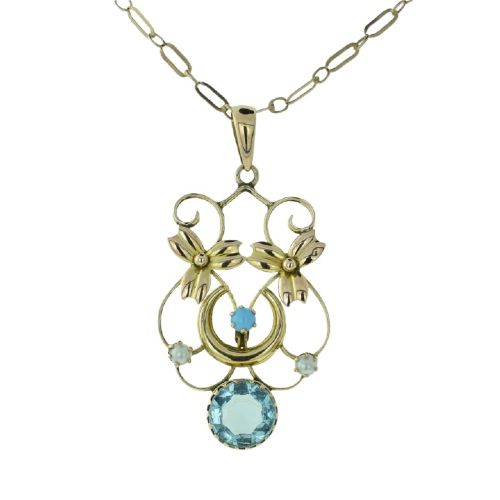
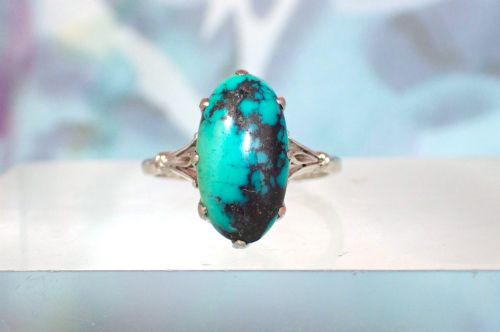
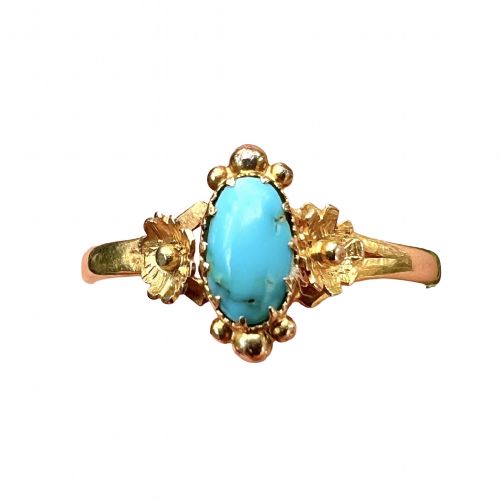
Blue turquoise jewellery encompasses rings, pendants, brooches, earrings, necklaces, lockets, and bracelets set with turquoise stones. These pieces span multiple eras including the Victorian period, Edwardian period, Art Nouveau, Arts and Crafts, and Art Deco styles.
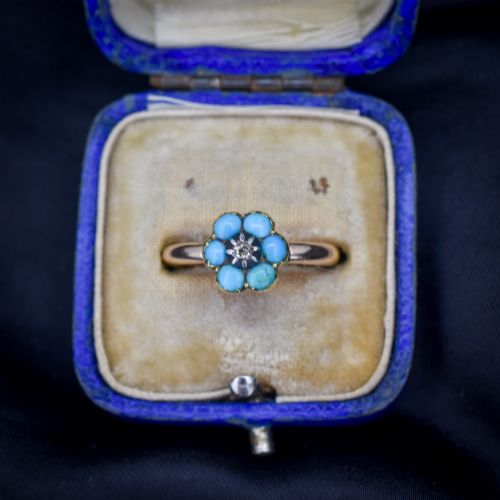
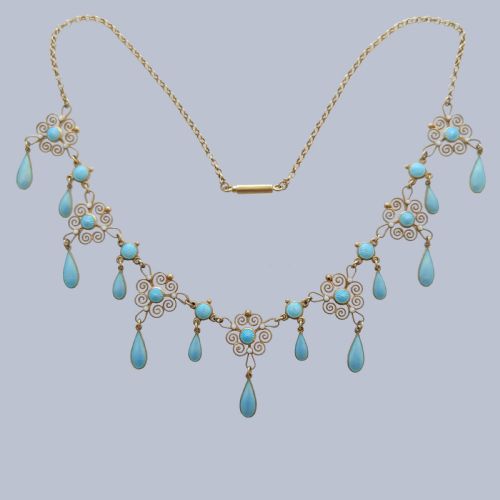
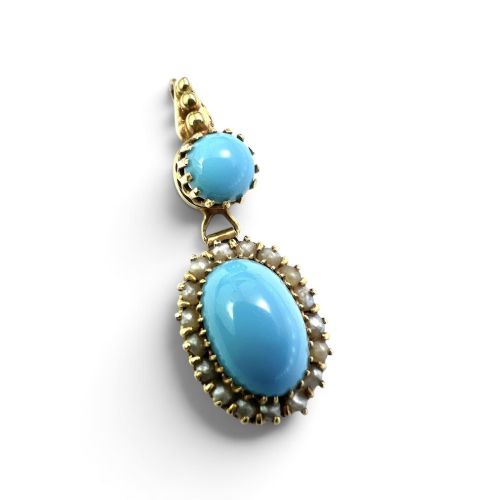
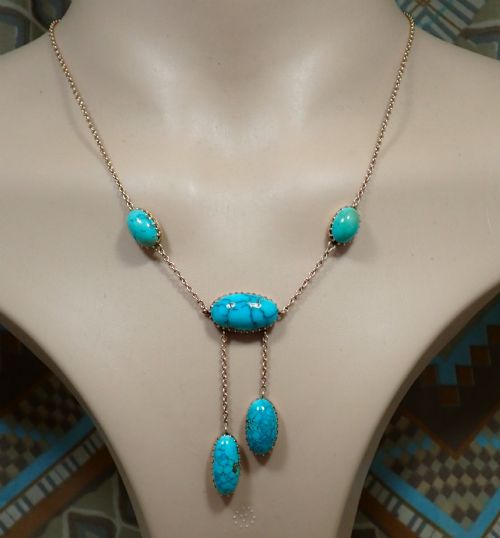
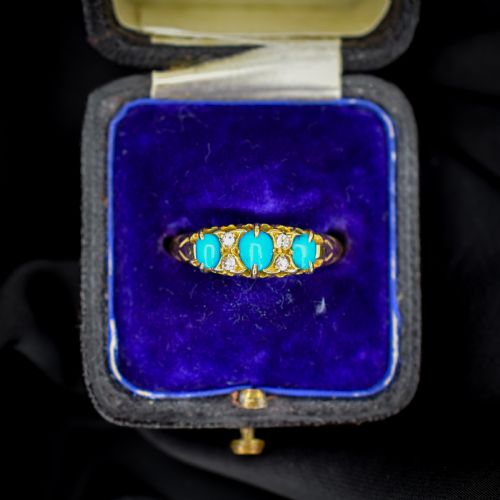
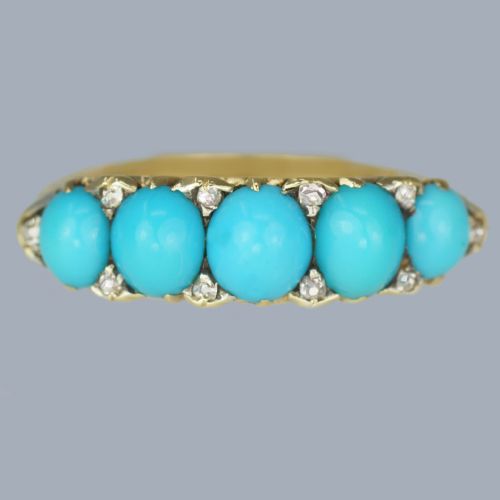
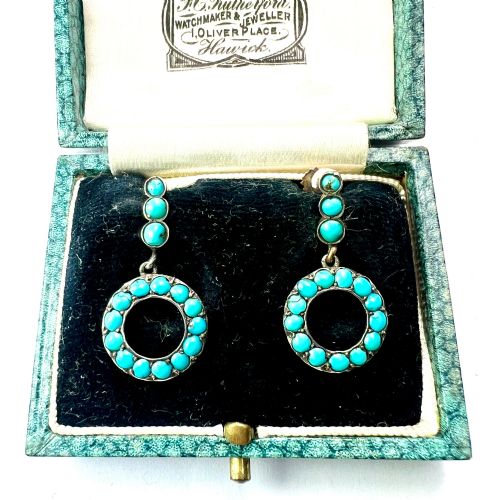
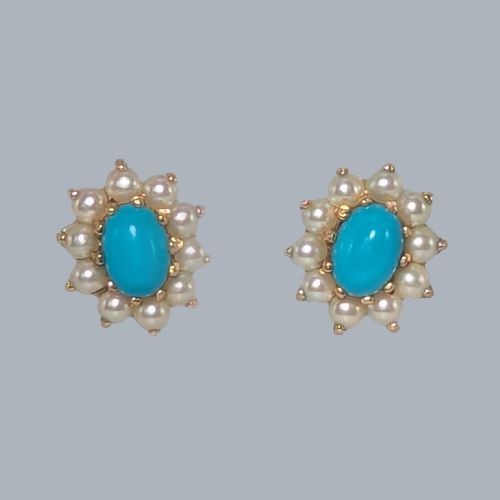
The most common items found in this selection include cluster rings, negligee necklaces, drop earrings, and mourning lockets. Pieces often combine turquoise with complementary gems such as diamonds, pearls, and enamel work.
Origins range from British workshops featuring provincial hallmarks to Austro-Hungarian and Norwegian designs. Pieces utilise metals such as 9ct gold, 18ct gold, silver, and silver gilt.
How they were made
Goldsmiths and silversmiths shaped precious metals into complex settings using techniques like filigree work, scroll casting, and hand-cut bezels. Stones were carefully selected to fit cluster rings, scroll boat mounts, and dangling hoop earrings.
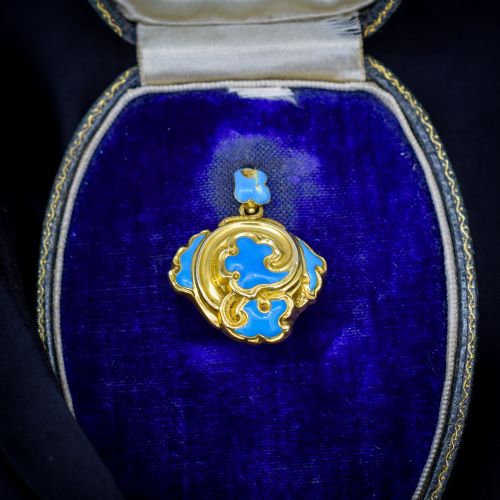
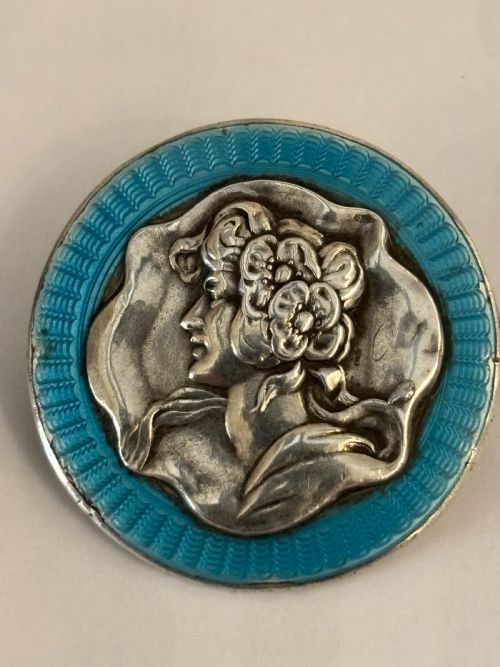
Enamel work frequently accompanied the metal and stone combinations, seen in guilloche patterns, blue enamel mourning slides, and decorative belt buckles. Pearl drops and rose-cut diamonds were integrated alongside natural turquoise stones to enhance the design.
Blue Turquoise Jewellery Retail Price Guide 2026
Typical asking prices for blue turquoise jewellery among the pieces listed under this phrase on Sellingantiques today, from the lower quarter to the upper quarter. They describe what is for sale here now, not the wider market.
The inventory includes items bearing assay marks from Chester, Birmingham, and London across multiple decades.
What varies in quality
The standard of blue turquoise jewellery depends on the uniformity and matrix of the turquoise stones, alongside the precision of the metalwork. Higher-grade pieces exhibit well-matched stones with stable colour and secure flush or claw settings.
Artistic execution dictates distinction, particularly in Arts and Crafts or Art Nouveau pieces where hand-wrought silver and gold frame the stones. Intricate filigree, undamaged enamel, and substantial precious metal weight separate standard production from superior examples.
Henry Matthews·Dorrie Nossiter
The Blue Turquoise Jewellery Glossary
- Negligee necklace
- A necklace featuring asymmetrical drops suspended from a central chain, popular during the Edwardian and Arts and Crafts periods.
- Guilloche enamel
- A decorative technique where a precise geometric pattern is engraved beneath a transparent layer of enamel.
- Cluster ring
- A ring design featuring a central stone surrounded by a border of smaller gems, commonly turquoise and diamonds.
- Filigree
- Ornamental work consisting of fine wire, usually gold or silver, twisted into delicate openwork patterns.
- Mourning locket
- A pendant designed to hold hair or a miniature portrait, often decorated with black or blue enamel and pearls.
Blue Turquoise Jewellery: Frequently Asked Questions
What periods do these pieces date from?
The inventory spans the nineteenth and twentieth centuries, encompassing Victorian, Edwardian, Arts and Crafts, Art Nouveau, and Art Deco movements. Later examples reach into the mid-century period.
Craftsmanship shifts noticeably across these eras, moving from ornate Victorian cluster rings and mourning lockets to geometric Art Deco mounts and fluid Arts and Crafts silver work.
How do I care for antique turquoise?
Turquoise is a softer, porous gemstone that requires gentle handling and protection from harsh chemicals, cosmetics, and prolonged immersion in water. Cleaning should be done with a soft, dry cloth rather than liquid jewellery dips.
Store pieces individually in padded boxes to prevent scratching from harder gems like diamonds or sapphires that are frequently set alongside the turquoise.
What styles are most common?
Victorian cluster rings and five-stone settings appear frequently, often combining turquoise with diamonds or pearls. Pendant necklaces, drop earrings, and decorative belt buckles also represent standard forms.
Art Nouveau and Arts and Crafts pieces tend to feature hand-worked silver filigree and natural turquoise matrixes, while Edwardian examples favour lighter platinum or gold settings.