

Blue Transferware China
Blue transferware china brings the depth of 19th-century printed scenes to the table through durable earthenware and ironstone.
Blue Transferware China
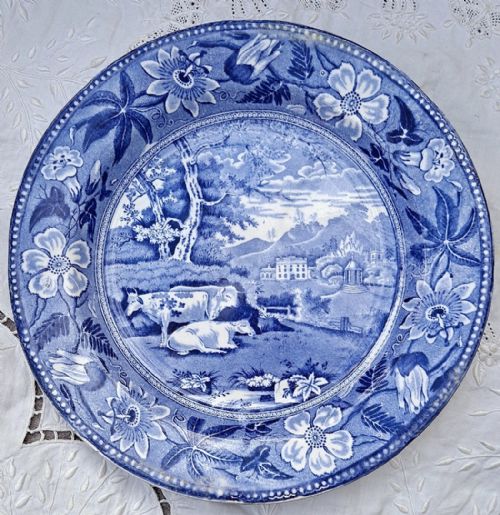
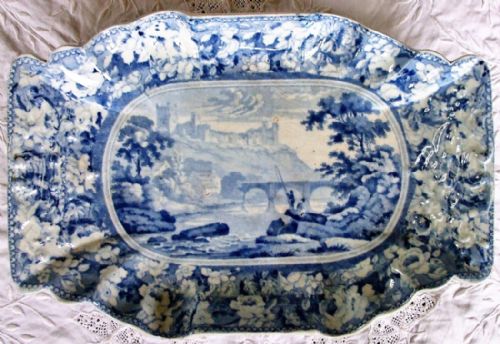
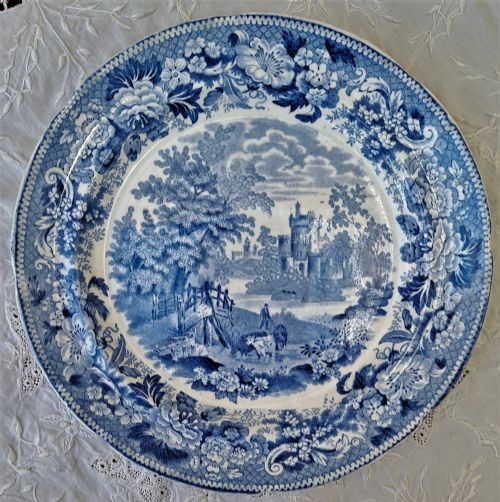
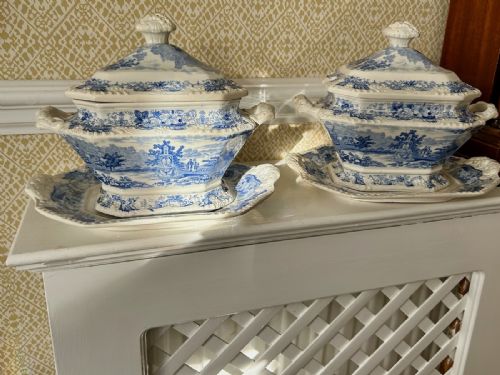
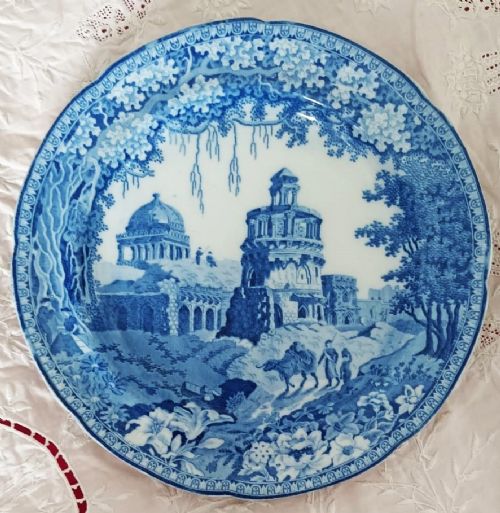
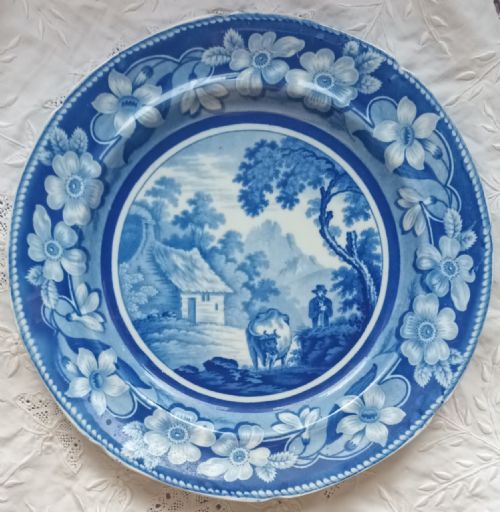
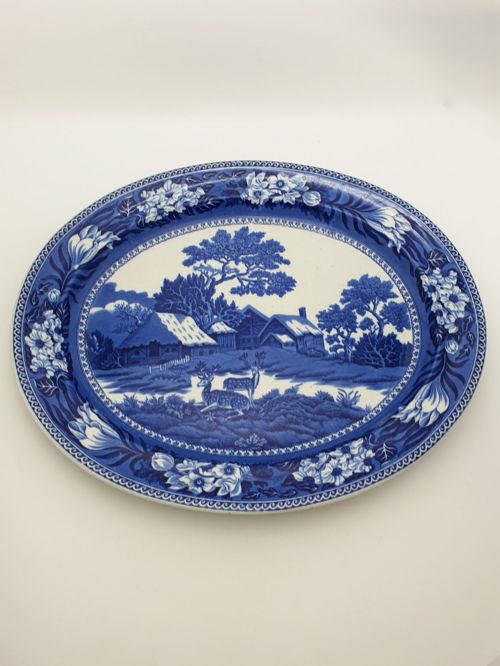
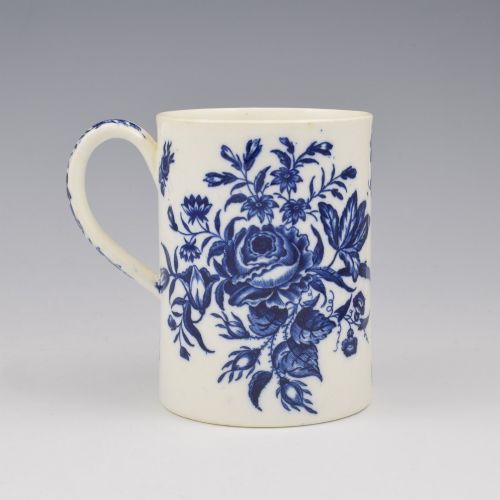
Blue transferware china comprises plates, platters, tureens, and complete services decorated with detailed monochromatic blue scenes transferred from copper plates. Buyers seeking this category encounter an array of serving dishes and tableware spanning the Georgian, Regency, and Victorian periods.
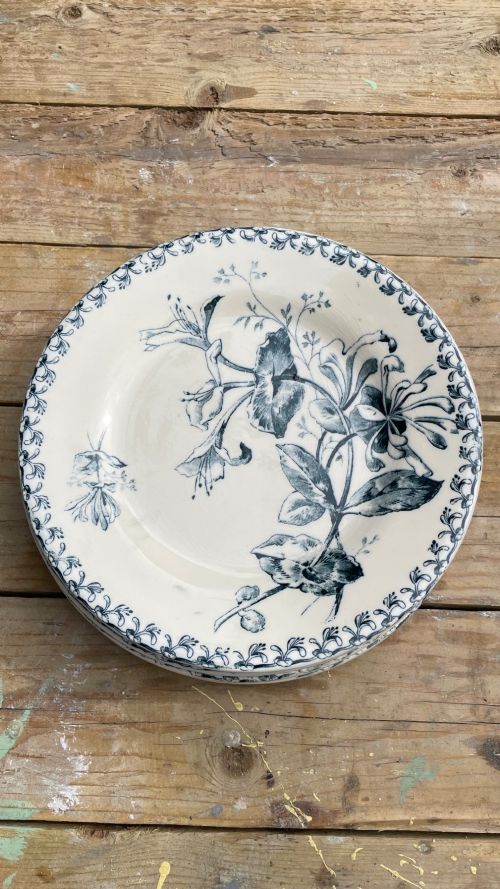
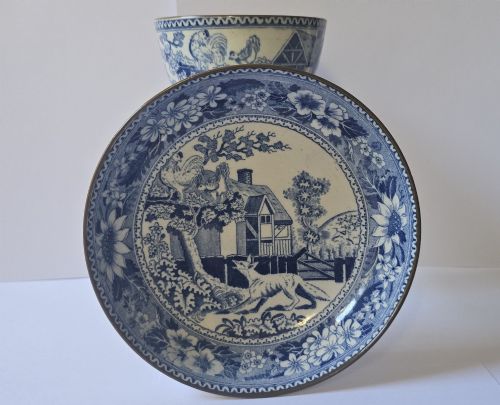
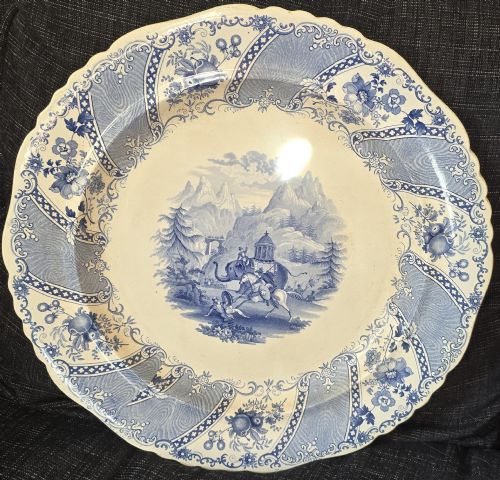
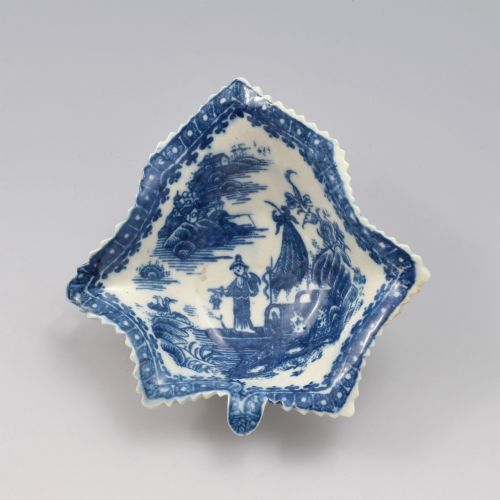
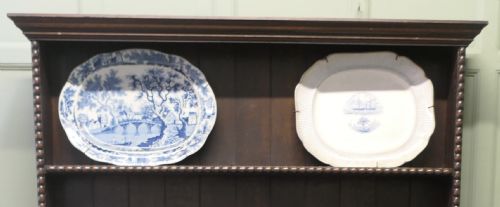
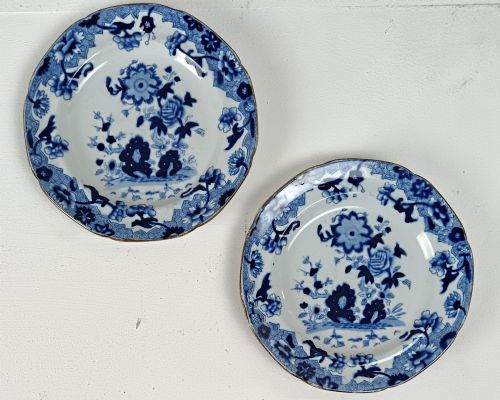
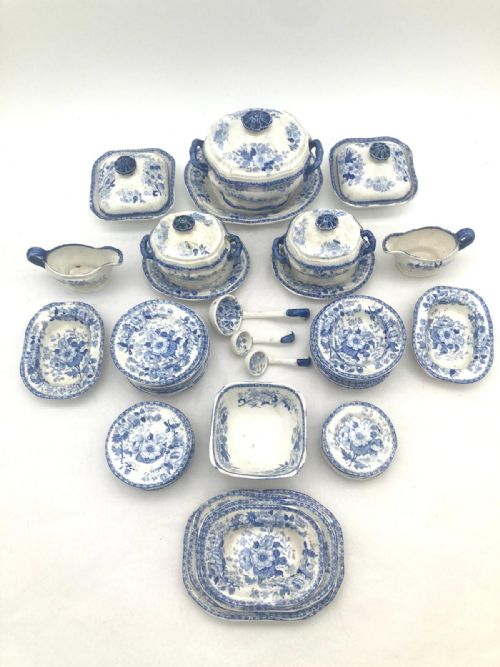
The objects on this page range from modest tea plates to large meat platters and child's services, predominantly shaped in earthenware, ironstone, and pearlware. Pastoral landscapes, architectural views, and Chinoiserie motifs dominate the patterns found across these historical pieces.
How they were made
Potters produced these items by engraving copper plates, applying cobalt blue pigment, and transferring the inked design onto tissue paper for pressing onto the unglazed ceramic body. A transparent glaze sealed the print before firing in the kiln, fixing the rich blue coloration beneath the glassy surface.
The ceramic bodies themselves evolved through the periods represented here, moving from soft-paste porcelain and pearlware to robust ironstone and refined earthenware. Copeland & Garrett, Spode, and Minton utilised these varied clay bodies to support intricate transfer prints ranging from botanical studies to sprawling castles.
Blue Transferware China Retail Price Guide 2026
Typical asking prices for blue transferware china among the pieces listed under this phrase on Sellingantiques today, from the lower quarter to the upper quarter. They describe what is for sale here now, not the wider market.
Listings feature earthenware, ironstone, and pearlware across Georgian, Regency, and Victorian periods.
What varies in quality
The crispness of the transfer print dictates the visual merit of each piece, distinguishing sharp, clear architectural lines from blurred or smeared applications. Early copper plate impressions display fine details in the shading and foliage, whereas worn plates yield muddier transfers.
The complexity of the form and the consistency of the glaze also separate standard production wares from superior examples. Specialist bodies like ironstone and refined pearlware provide a smoother canvas for the cobalt blue, elevating the overall presence of the finished service.
William Smith & Co·Spode·Minton·Doulton Burslem·William Adams·J. & R. Clews·Brameld & Co.·Copeland & Garrett·Wedgwood·Rogers
The Blue Transferware China Glossary
- Transfer printing
- A method of decorating ceramics by transferring an inked engraving from a copper plate onto paper and then onto the clay body. This technique allowed potteries to produce complex, repeatable pictorial designs efficiently.
- Pearlware
- A refined earthenware developed in the late 18th century featuring a bluish glaze that pooled in recesses to mimic Chinese porcelain. It served as a common base for early blue and white transfer patterns.
- Ironstone
- A heavy, durable ceramic patented in the early 19th century to resist chipping while maintaining a smooth surface for printed decoration. It forms the robust foundation of many large platters and dinner services.
- Flow blue
- A style where cobalt blue pigment intentionally bled into the surrounding white glaze during the firing process, creating a hazy, atmospheric effect. This aesthetic gained popularity during the Victorian era.
- Chinoiserie
- European interpretations of Chinese artistic motifs, featuring imaginary landscapes, pagodas, and exotic figures. It remains one of the most frequently encountered decorative schemes on blue and white tableware.
Blue Transferware China: Frequently Asked Questions
How do I identify different periods of blue transferware china?
Earlier pieces from the Georgian and Regency eras often utilise pearlware bodies with subtle blue-tinted glazes, whereas Victorian examples tend to feature heavier ironstone or distinct flow blue techniques. Examining the style of the border patterns and the crispness of the cobalt transfer helps pinpoint the manufacturing decade.
Potters' marks stamped or printed on the underside also provide definitive clues, though many early items rely solely on visual stylistic markers and ceramic composition for dating.
Can I use antique blue transferware for everyday dining?
While these ceramics were originally created for practical household use, centuries of wear mean most pieces are now better suited for light service or display. Hand washing is essential to preserve the integrity of the glaze and prevent modern detergents from harming the historic surfaces.
Earthenware and ironstone can withstand occasional use, but delicate soft-paste porcelain pieces and items with gilt highlights require careful handling and should be kept off modern dishwashers entirely.
What is the difference between earthenware and ironstone bodies?
Earthenware provides a lighter, more porous structure typical of earlier Georgian tea plates and children's services, offering a softer ground for delicate transfer prints. Ironstone, introduced during the Regency period, is a much denser and heavier ceramic designed to endure the rigours of large dinner services.
Both materials take the cobalt blue transfer exceptionally well, but ironstone pieces generally feel heavier in the hand and show greater resistance to crazing in the glaze.
How should I display blue transferware platters and plates?
Large meat platters and chargers look striking mounted on sturdy wall hangers or displayed upright on plate stands within a cabinet. Grouping matching patterns, such as Italian or botanical designs, creates a cohesive visual impact on a dining room wall or dresser.
Ensuring the display hardware supports the weight evenly protects the edges of these heavy ceramic pieces from accidental chipping or strain over time.