



Blue Transfer Print Platter
A blue transfer print platter brings deep cobalt decoration and narrative scenes to the table, offering a robust centrepiece for historic dining.
Blue Transfer Print Platter
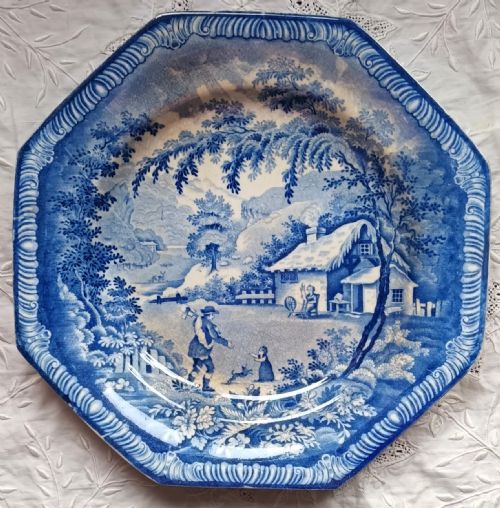
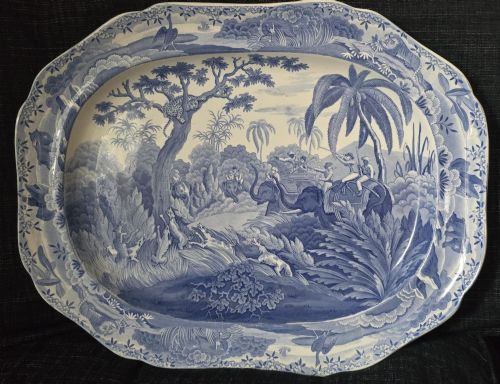
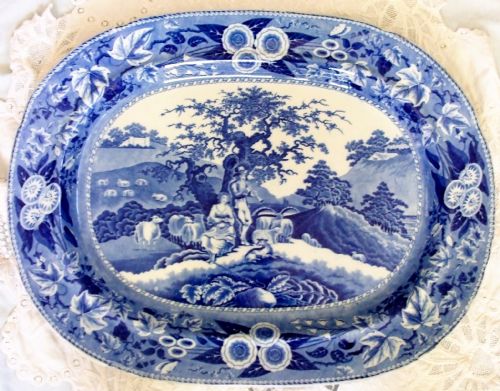
A blue transfer print platter represents the core of nineteenth-century tableware production, emerging in large serving formats for meat and fish. These pieces display pastoral, architectural, and exotic subjects transferred onto ceramic surfaces from engraved copper plates.
The most common examples on this page belong to the Georgian and Victorian eras, originating from English potteries in Staffordshire and surrounding districts. Makers applied named patterns such as London Bridge, Classical Ruins, and sporting scenes to earthenware and pearlware bodies.
Forms range from standard meat dishes with deep wells to bread stands and asparagus dishes, each designed to hold substantial quantities of food. The palette relies entirely on cobalt pigment fired beneath a clear glaze to achieve its characteristic rich tone.
Materials and technique
Potters shaped these items from earthenware and pearlware, applying a lead glaze over the porous clay body to seal the surface. This combination provided a smooth canvas capable of receiving detailed printed designs without absorbing moisture during daily use.
Cobalt pigment served as the primary colorant, mixed into an oil-based medium and transferred from an engraved copper plate onto thin tissue paper. Workers then pressed the printed paper onto the biscuit ceramic before firing the piece at high temperatures to set the blue design.
Blue Transfer Print Platter Retail Price Guide 2026
Typical asking prices for blue transfer print platter among the pieces listed under this phrase on Sellingantiques today, from the lower quarter to the upper quarter. They describe what is for sale here now, not the wider market.
Listings feature earthenware and pearlware bodies decorated with cobalt pigment under a lead glaze.
Assessment of quality
Quality rests in the clarity of the printed transfer and the precision of the copper plate engraving. Stronger examples exhibit sharp lines and deep cobalt saturation without smudging or pooling in the glaze.
The sophistication of the narrative pattern and the weight of the ceramic body distinguish superior items from standard domestic ware. Master potteries invested in intricate landscape and figurative compositions that remain crisp across large surfaces.
Spode·Thomas Lakin·Brameld & Co·Mason·John Rogers & Son
The Blue Transfer Print Platter Glossary
- Transfer printing
- A method of decorating ceramics by applying an inked design from a copper plate onto paper and then onto the clay body. This technique allowed potteries to produce complex pictorial scenes rapidly.
- Pearlware
- An improved earthenware developed by Josiah Wedgwood featuring a bluish glaze that masked the yellowish tint of the underlying clay. It forms the basis of many early nineteenth-century serving dishes.
- Cobalt pigment
- A metallic oxide used to achieve deep blue coloration under the glaze. It withstands high kiln temperatures without losing its intensity.
- Gravy well
- A depression or channel carved into the surface of a meat platter to collect juices during carving. This practical addition kept the main cut of meat raised above its runoff.
Blue Transfer Print Platter: Frequently Asked Questions
How do I date a blue transfer print platter?
Dating relies on the style of the ceramic body, the shade of the glaze, and specific makers' marks stamped or impressed on the underside. Pearlware bodies typically point to the early nineteenth century, while heavier white earthenware often indicates the Victorian period.
The subject matter of the pattern also provides chronological clues, as topographical views frequently reference specific bridge openings, military campaigns, or literary publications of the era.
Can I use these platters for serving food?
These ceramic dishes served functional dining purposes historically, handling substantial joints of meat and heavy courses for large households. The lead glaze seals the earthenware body against normal food acids.
Modern users should consider the age and historical significance of the piece before daily use, opting for gentle hand washing to preserve the fragile glaze and historic ceramic body.
What is the difference between earthenware and pearlware?
Pearlware contains a small amount of flint and uses a slightly blued lead glaze that gives the white ceramic body a pearly appearance. Standard earthenware lacks this specific formulation and often appears creamier or yellower beneath the glaze.
Pearlware production peaked during the Georgian era, bridging the gap between creamware and the denser white earthenwares of the later nineteenth century.
Why do some platters feature a well?
Meat dishes required a drainage system to manage juices released during carving at the dining table. The recessed well pooled the liquid away from the roast, keeping the meat intact and making serving cleaner.
Gravy wells represent a practical innovation found primarily on larger serving platters intended for joints of beef or game.