

Blue Transfer Pottery
Blue transfer pottery brings the depth of cobalt pigment on earthenware into everyday domestic settings through scenic platters and plates.
Blue Transfer Pottery
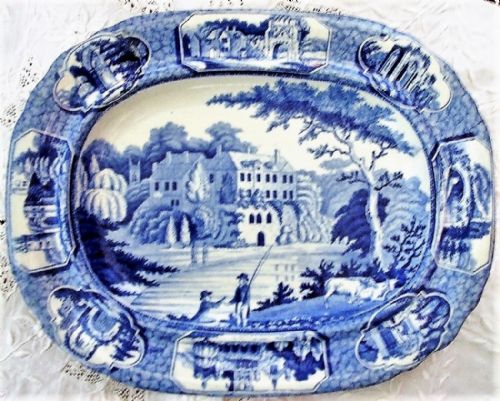
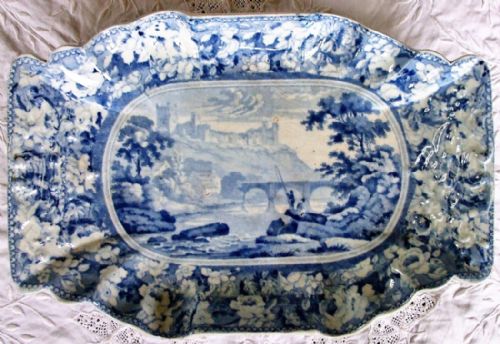
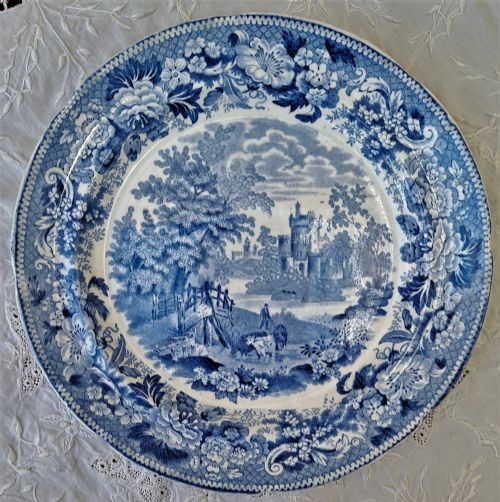
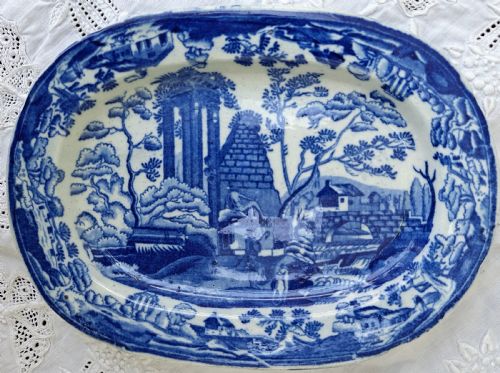
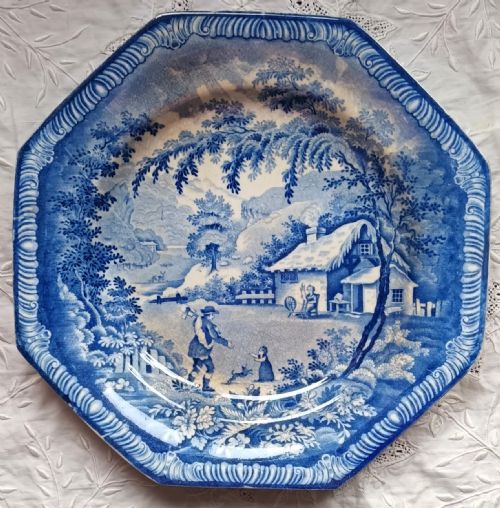
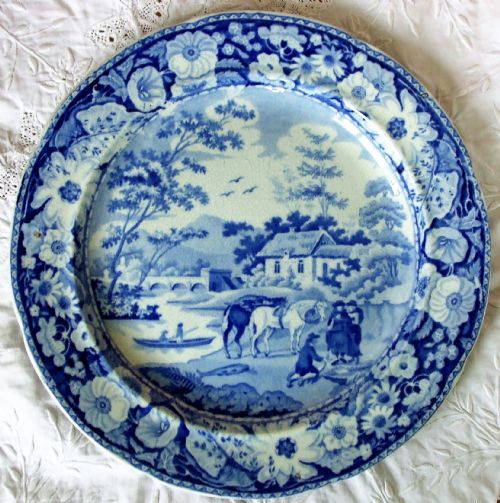
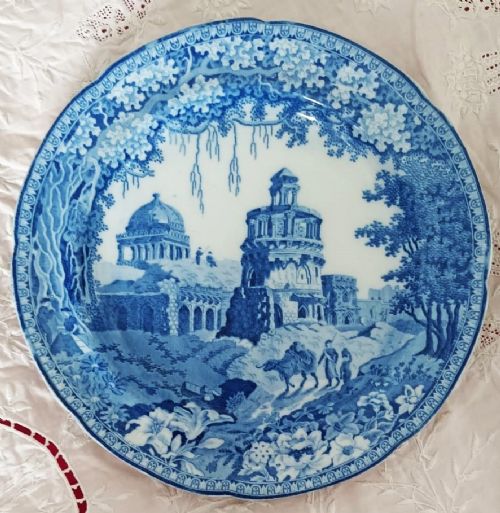
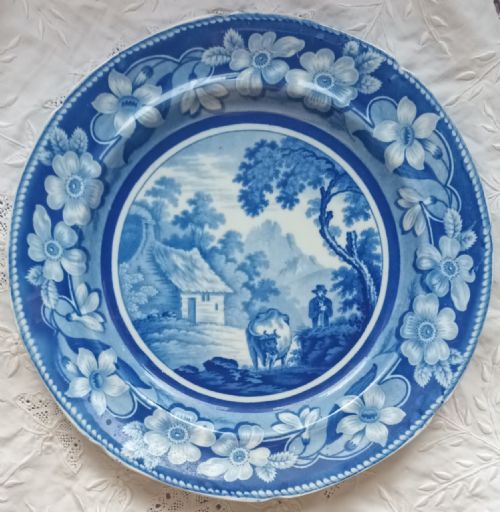
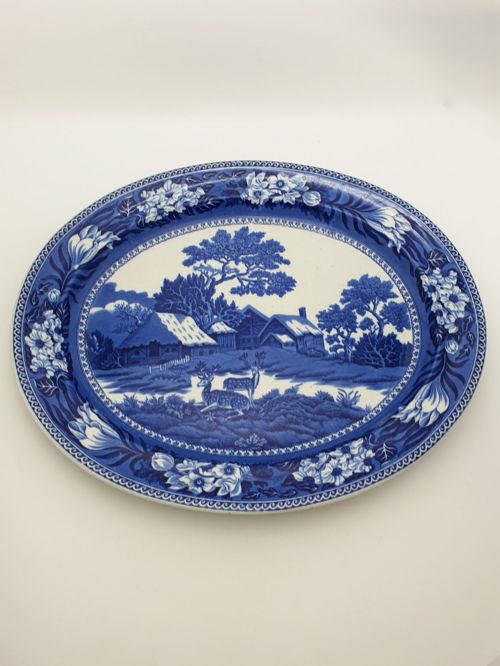
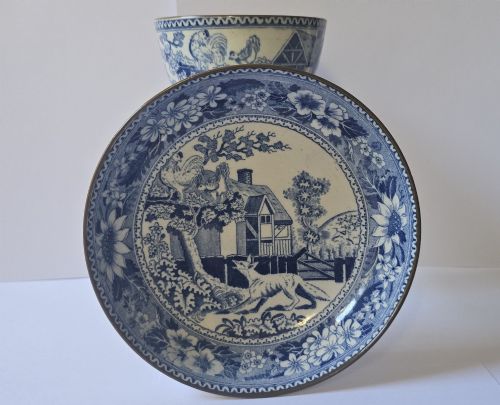
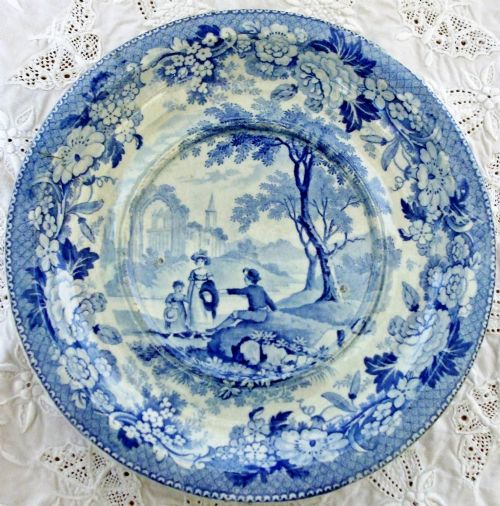
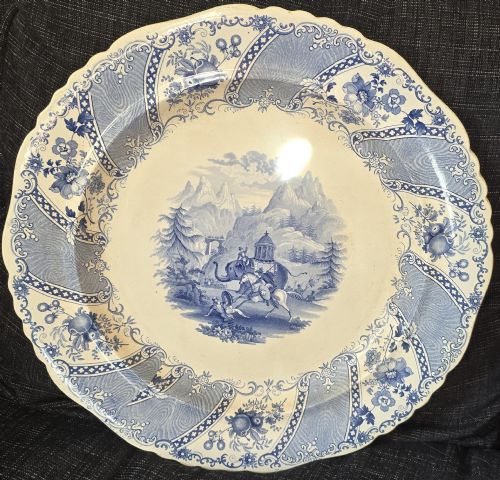
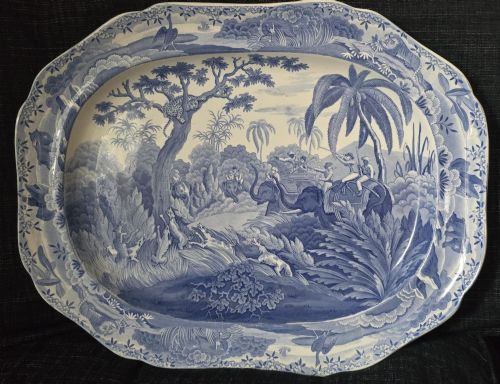
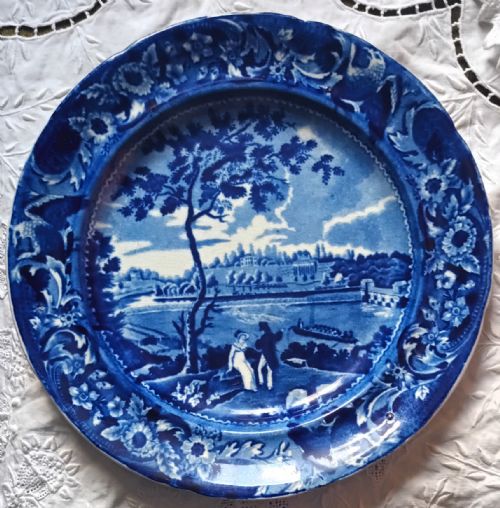
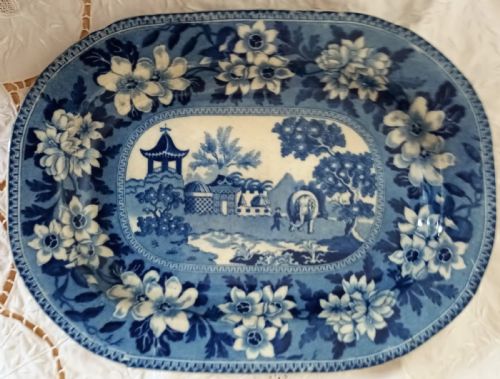
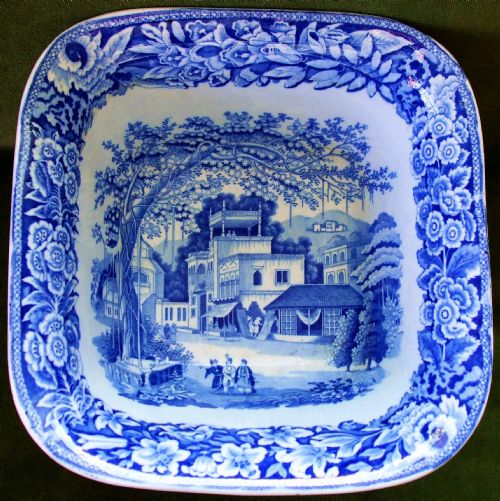
When you search for blue transfer pottery, you encounter British earthenwares adorned with printed scenes spanning the Georgian and Victorian eras. These items range from decorative plates and serving platters to large tureens, footbaths and reticulated chestnut baskets.
The objects most frequently met on this page originate in the nineteenth century, carrying topographical views, classical ruins, or narrative subjects like historical scenes and pastoral motifs. Makers applied copperplate printing techniques to transfer intricate designs onto ceramic bodies before glazing.
Materials and Technique
Potters built these pieces using earthenware, pearlware, ironstone and porcelain, applying a ceramic glaze over the clay body. Cobalt pigment provided the deep blue colour for the printed designs.
Engraved copper plates carried the cobalt mixture onto tissue paper, which technicians pressed onto the biscuit ware before applying lead glaze and firing the pieces in kilns.
Blue Transfer Pottery Retail Price Guide 2026
Typical asking prices for blue transfer pottery among the pieces listed under this phrase on Sellingantiques today, from the lower quarter to the upper quarter. They describe what is for sale here now, not the wider market.
Judgements of Quality
Clarity of the transfer print distinguishes superior examples, where fine lines remain sharp and the cobalt pigment sits evenly beneath the glaze without blurring. The ambition of the form also matters, separating standard plates from complex reticulated chestnut baskets and large lidded tureens.
The sophistication of the pictorial subject influences the standing of a piece, with historical narratives and specific topographical views holding greater artistic interest than generic floral sheet patterns.
Spode·William Smith And Co·Robert Hamilton·John Rogers And Son·J And R Clews·J And R Riley·Stubbs·Mintons·Heathcote·Pettys And Co Leeds·William Adams·Thomas Lakin·Brameld And Co
The Blue Transfer Pottery Glossary
- Transferware
- Pottery decorated by transferring a printed design from an engraved copper plate onto the ceramic surface using tissue paper. This method allowed intricate pictorial scenes to be replicated consistently across multiple pieces.
- Pearlware
- A refined earthenware developed in the late eighteenth century featuring a subtle bluish glaze that pooled in recesses to mask the underlying yellowish tint of the clay body. It served as a common base for early nineteenth-century blue printed designs.
- Cobalt Pigment
- A metallic oxide used to achieve deep blue colouration on ceramics that could withstand high kiln temperatures without fading. It formed the foundation of the transfer printing palette.
- Chestnut Basket
- A pierced or reticulated ceramic vessel designed for serving fruit or nuts at the dining table, often accompanied by an underplate. These baskets frequently featured elaborate woven patterns and twisted handles.
- Bistre
- A brown pigment derived from wood soot, though in these blue and white ceramics, cobalt remains the defining colourant. The term occasionally arises in discussions of early printing trials.
Blue Transfer Pottery: Frequently Asked Questions
How do I date blue transfer pottery?
Dating relies on identifying the pottery body, such as pearlware versus later ironstone, alongside the style of the printed border and registration marks when present. Makers often changed their factory marks over time, which helps narrow the production window.
Historical subjects on the pieces also provide clues, as scenes commemorated specific events like the construction of American public buildings or military campaigns of the early nineteenth century.
Were these pieces used for dining?
Large platters, tureens, and plates served functional roles in nineteenth-century dining, accommodating meats, vegetables, and soups at large household meals. Footbaths and custard sets fulfilled specific domestic washing and dessert duties.
Over time, many of these utilitarian vessels transitioned into decorative display items as dining fashions shifted and their printed scenes gained collector interest.
How should I care for antique pottery?
Display these items away from direct sunlight and areas subject to rapid temperature fluctuations to protect the glaze and ceramic body. Dust them gently with a soft, dry cloth rather than using liquid cleaners.
Hand washing in lukewarm water with mild soap is suitable only when necessary, avoiding dishwashers entirely to preserve the historic surfaces.