
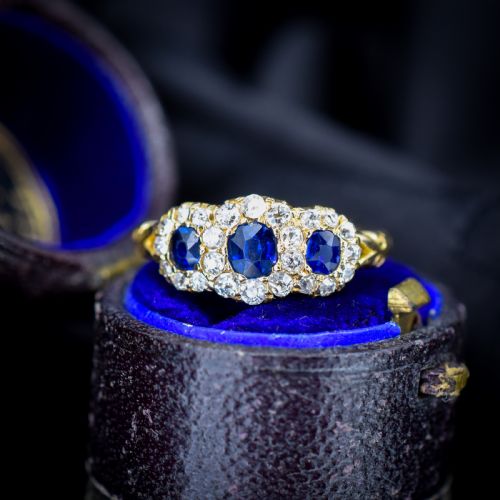

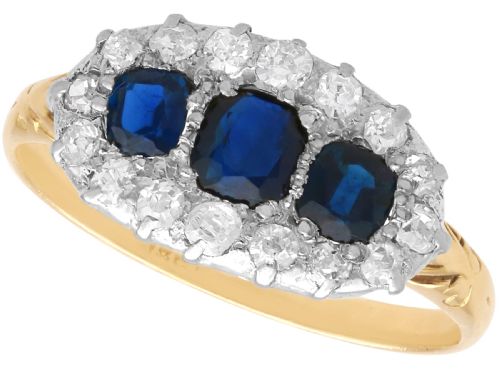


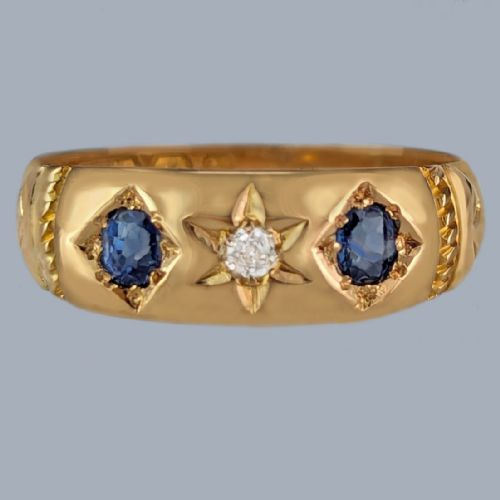


Blue Stone Trilogy Ring
A blue stone trilogy ring carries three gems on a precious band, offering a classic finger presence that buyers seek for historic charm.

Blue Stone Trilogy Ring
A blue stone trilogy ring presents three central stones, most often pairing sapphires with diamonds across historic and mid-century eras.
The selections span Georgian, Victorian, Edwardian, Art Deco, and mid-century periods, showing shifts from silver-topped gold to platinum and yellow gold.
While deep blue sapphires dominate, variations include turquoise, aquamarine, tanzanite, and paste stones set in traditional ring mounts.
Markers of Quality
The brilliance of the central blue stone and the matching quality of the flanking diamonds dictate the visual weight of the piece.
Subtleties in metalwork, such as hand-carved shoulders or crisp hallmarks, separate standard workshop output from finer examples.
Materials recorded across the pieces include sapphire, diamond, turquoise, aquamarine, tanzanite, paste, 9ct gold, 15ct gold, 18ct gold, and platinum.
The Blue Stone Trilogy Ring Glossary
- Trilogy ring
- A ring set with three stones, traditionally symbolising the past, present, and future.
- Old cut diamond
- A hand-faceted diamond shape typical of older periods, featuring a smaller table and a higher crown.
- Paste
- Hand-cut lead glass used historically as a bright gemstone simulant.
- Rubover setting
- A mounting style where a thin metal collar surrounds the edge of the stone to hold it securely.
Blue Stone Trilogy Ring: Frequently Asked Questions
How do I date a sapphire trilogy ring?
Dating relies on metal choices, stone cuts, and setting styles visible in the piece. Georgian and Victorian rings often combine yellow gold with silver tops, while Art Deco pieces favour platinum.
Official hallmarks stamped inside the band provide additional clues, pointing to specific assay offices and production years.
Are all blue stones sapphires?
Sapphires form the majority of blue stones in these rings, varying from deep Ceylon and Burmese tones to basaltic shades. Other blue materials like aquamarine, tanzanite, turquoise, and glass paste also appear.
Examining the internal characteristics under magnification helps distinguish natural corundum from alternative minerals.
Can I wear a vintage trilogy ring daily?
Historic gold and platinum rings can withstand regular wear if handled with reasonable care. Sturdier settings like 18ct gold and platinum offer good longevity for everyday use.
Checking the security of the claws and settings with a jeweller periodically helps prevent stone loss over time.