



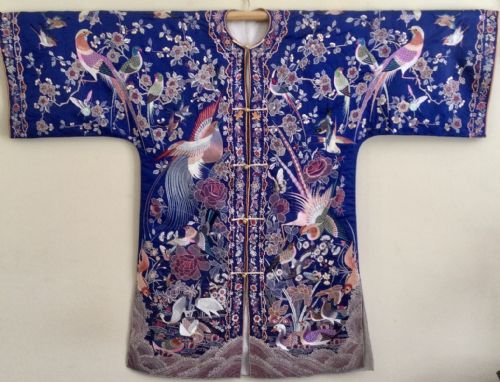
Blue Silk Textile
A blue silk textile brings rich colour and historic handwork into a room through tapestries, embroideries and woven panels.
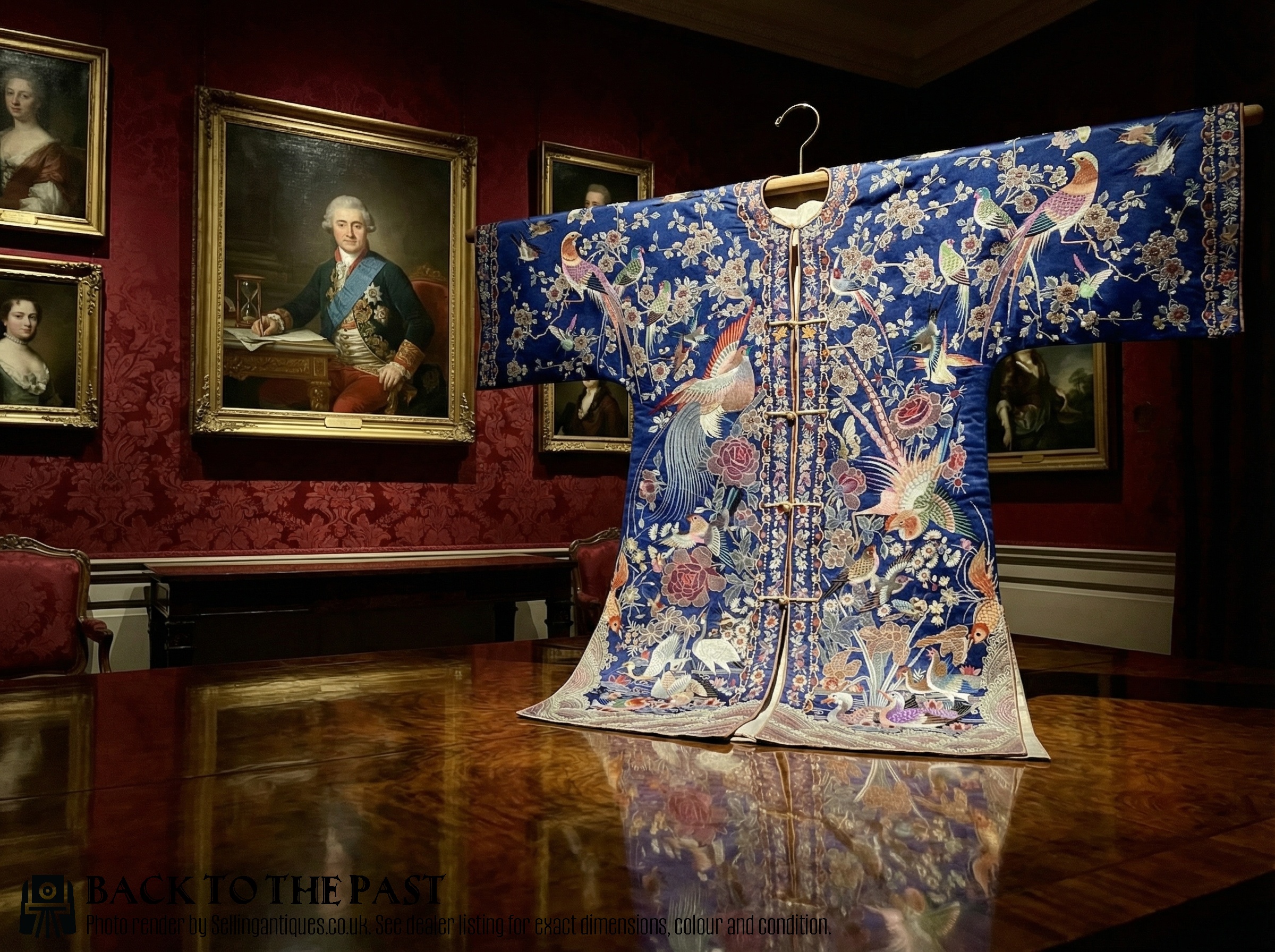
Blue Silk Textile
A blue silk textile encompasses a varied group of historic items, ranging from large Flemish wall tapestries and verdure panels to detailed Chinese embroideries and Central Asian garments. Buyers search for these pieces to introduce deep colour, texture and centuries of craftsmanship into an interior scheme.
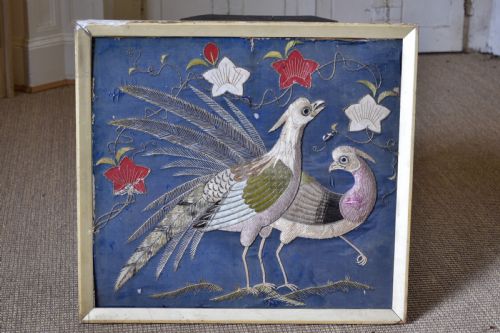
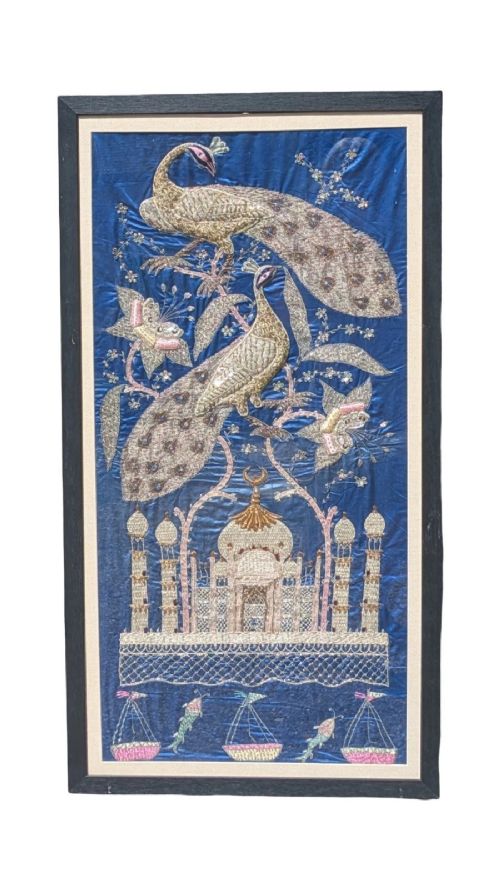
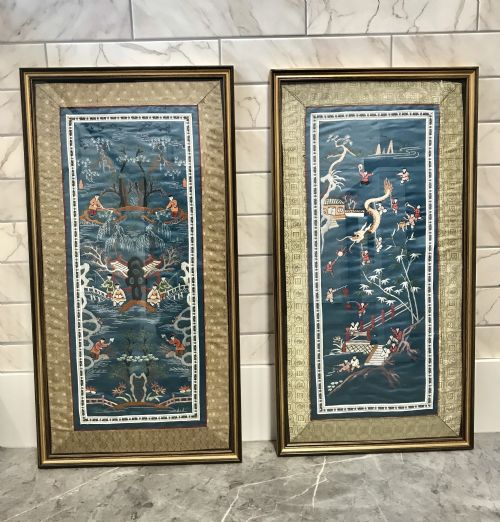
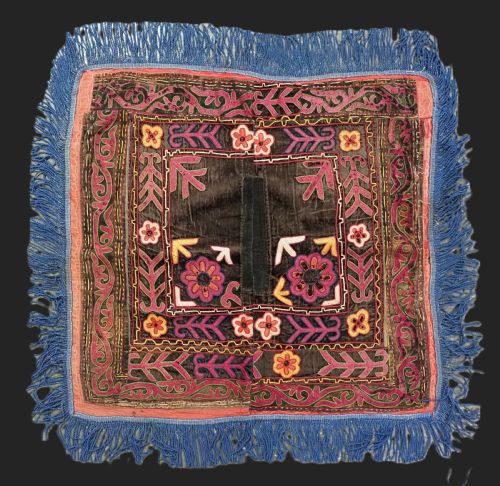
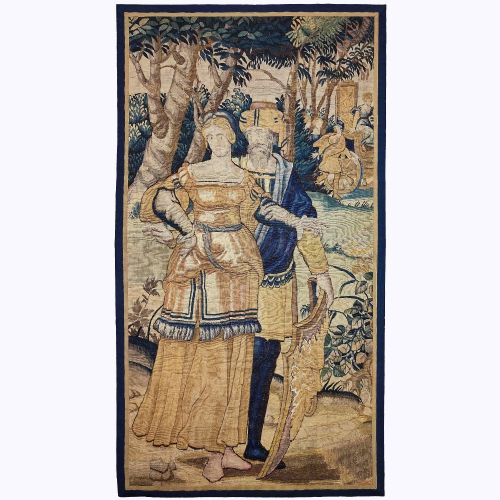
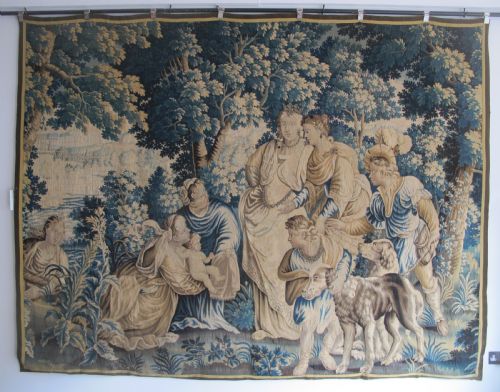
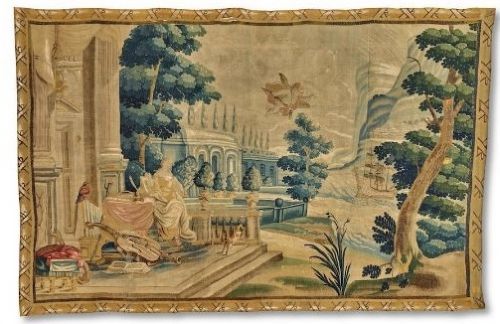
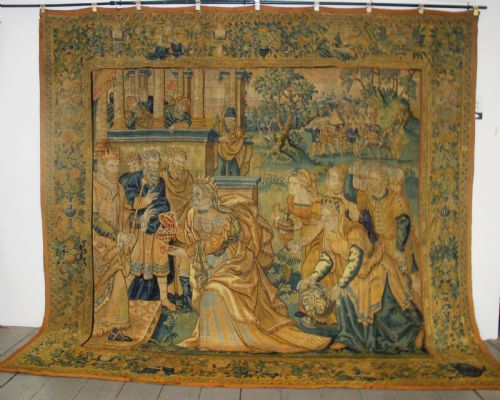
The selections available here span multiple centuries, from sixteenth-century fragments to twentieth-century decorative works. Examples include framed embroideries featuring figures and trees, traditional Uzbek coats, and classical European tapestries depicting mythological or pastoral scenes.
Domestic forms such as cushions, robes and needlework pictures appear alongside grand architectural wall hangings. Each piece demonstrates how silk was utilised across different cultures, often combined with wool, cotton or metallic thread to create lasting visual depth.
Materials and construction methods
The construction of a blue silk textile relies on specialised weaving and needlework techniques passed down through generations. Artisans combined silk fibres with wool, cotton and metallic thread to achieve durability and varied surface textures.
Many items utilise hand-sewn embroidery stitches directly onto a silk ground, while others employ intricate loom weaving, as seen in traditional tapestry and rug production. Padding, quilting and framing often protect these fragile historic materials for modern display.
Object types vary from sixteenth-century Flemish tapestries and nineteenth-century Chinese robes to Central Asian ikat coats and framed needlework pictures.
Distinguishing quality in historic textiles
Quality in a blue silk textile is determined by the density of the weave, the complexity of the design and the preservation of the material. Finer pieces display intricate pictorial detail, careful colour retention in the blue dyes and skilled execution in the needlework.
The condition of the silk ground and the integrity of any metallic thread or subsidiary materials heavily influence the overall standard. Pieces retaining their original scale and structural support command greater attention from collectors of historic fabric.
The Blue Silk Textile Glossary
- Verdure tapestry
- A wall hanging featuring a stylized landscape design dominated by foliage, trees and often animals. These panels were popular in European weaving centres during the seventeenth and eighteenth centuries.
- Ikat
- A dyeing technique where yarns are tied and dyed before weaving to create intricate patterned designs with characteristic blurred edges. Central Asian examples often utilise this method for traditional garments.
- Aubusson
- A style of tapestry woven in the French town of the same name, known for classical or mythological scenes and refined floral borders. These works typically date from the seventeenth and eighteenth centuries.
- Embroidery
- The art of decorating fabric using a needle to apply thread or yarn, frequently incorporating silk and metallic elements. Historic examples often depict figures, birds or botanical motifs.
- Tapestry fragment
- A surviving portion of a larger historic wall hanging, mounted or preserved for display. These pieces allow collectors to own examples of early weaving without requiring wall space for a grand scale work.
Blue Silk Textile: Frequently Asked Questions
How should I hang a heavy textile on the wall?
Large tapestries and wall hangings require even weight distribution to prevent strain on the historic fibres. Professional conservators often recommend stitching a Velcro band or a supportive fabric sleeve along the top reverse edge to attach to a matching wall-mounted batten.
Avoid hanging textiles in direct sunlight or damp environments, as blue silk is particularly sensitive to ultraviolet fading and moisture degradation over time.
Can I clean an antique silk textile myself?
Historic silk requires specialist conservation treatment rather than standard domestic cleaning methods. Water or chemical solvents can permanently damage fragile fibres, dissolve old dyes and weaken aged threads.
Surface dust should only be removed very gently using low suction through a mesh screen, and any deeper cleaning must be left to a professional textile restorer.
How do I identify the age of a tapestry fragment?
Dating relies on examining the weave structure, the types of dyed fibres used, and the stylistic conventions of the depicted figures or foliage. Seventeenth-century Flemish works typically show specific verdure motifs and wool-silk combinations that differ markedly from later revival pieces.
Comparing the border design and the selvage edges with documented examples helps narrow down the century of production.
What is the difference between embroidery and tapestry?
Tapestry is a form of textile art woven on a loom where the design is built up by interweaving warp and weft threads directly. This creates a structurally integrated picture that forms part of the fabric itself.
Embroidery, by contrast, is stitched onto an already complete foundation fabric using a needle, adding surface decoration rather than forming the structural cloth.
How are framed textile pieces protected?
Framed embroideries and panels require conservation-grade mounting to ensure the historic fabric does not touch the glass directly. Trapped moisture can cause mould or adhere the silk to the glazing if proper spacing is omitted.
Using ultraviolet-filtering glass helps preserve the blue silk dyes from fading while keeping the delicate needlework secure.