




Framed Chinese Silk Textile
A framed chinese silk textile brings colour and intricate needlework to a wall, offering centuries of craftsmanship preserved behind glass in hardwood frames.
Framed Chinese Silk Textile
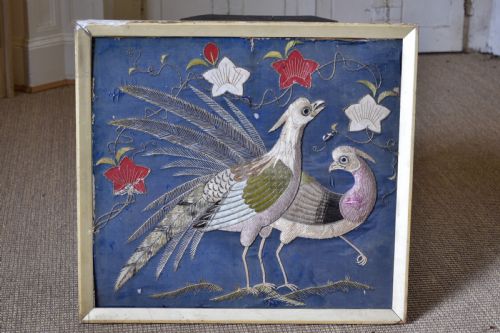
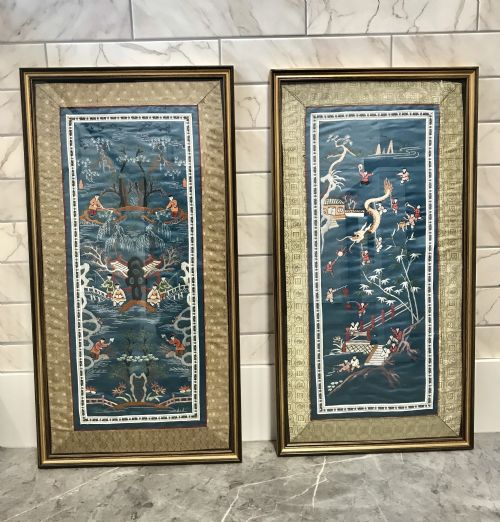
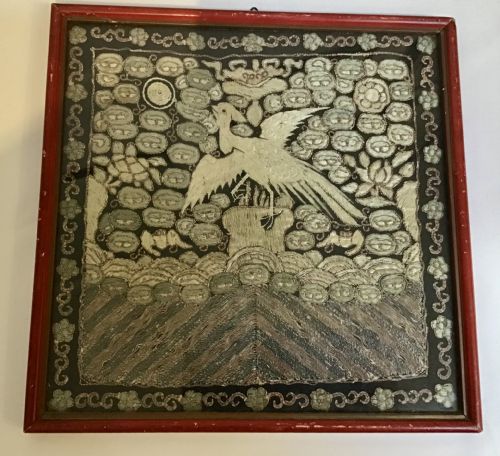
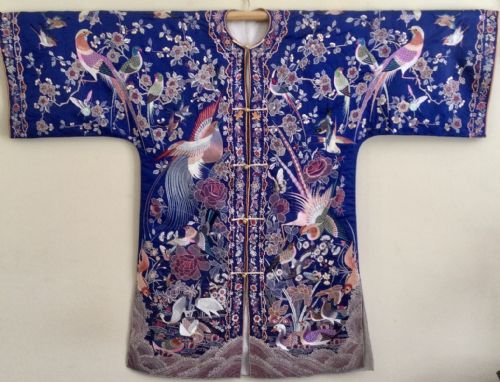
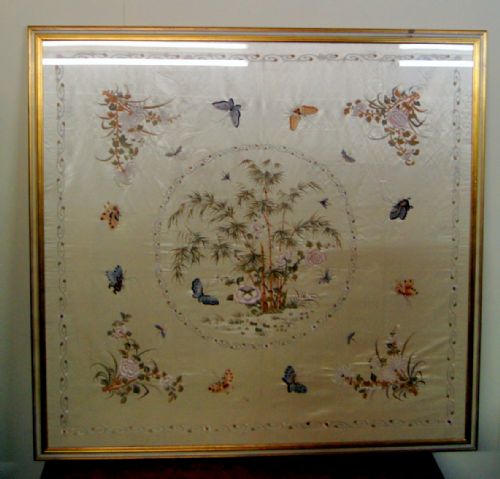
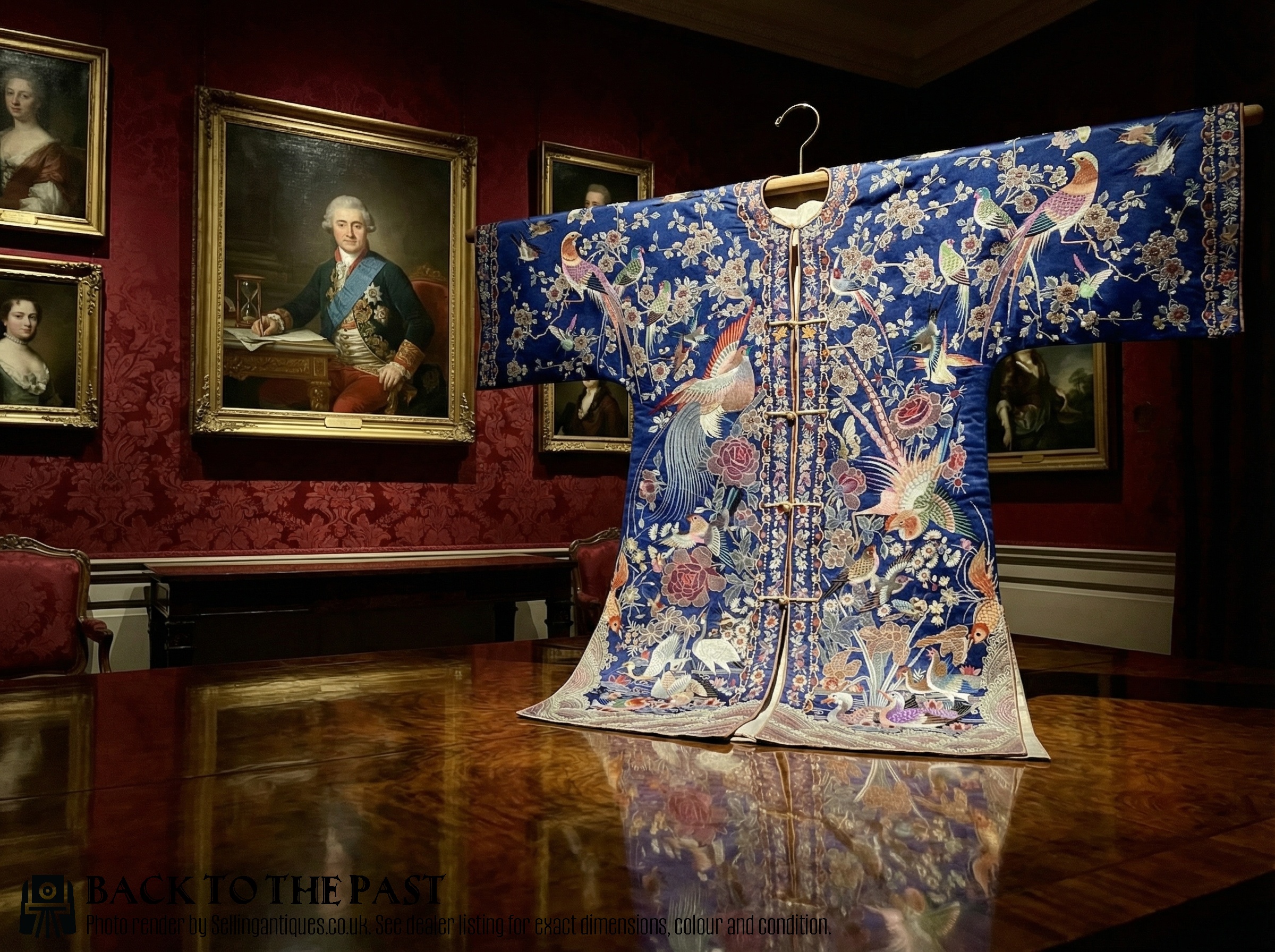
A framed chinese silk textile encompasses embroidered panels, rank badges, silk paintings and robe fragments originating from the Qing Dynasty down to the early twentieth century. These pieces display traditional motifs including dragons, mandarin ducks, figures and garden birds executed in fine threadwork.
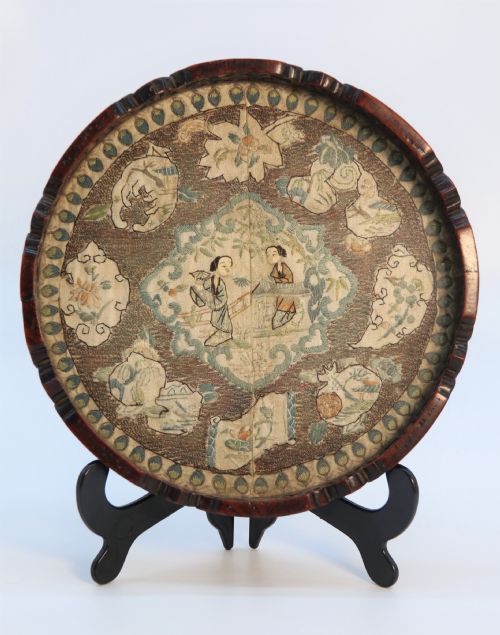
Buyers on this page most frequently meet nineteenth-century and nineteen-hundreds examples, often housed behind protective glass within carved hardwood frames or repurposed as decorative trays. The selection balances wall art with textile art, capturing the shifting aesthetic from imperial court pieces to later commercial export work.
Materials and construction
Makers utilised silk as the primary ground and thread material, frequently incorporating metallic thread and pigment to add depth and shimmer to the imagery. Cotton and wool appear in specific textile types such as rug fragments.
Needlework techniques rely on hand-sewn stitching applied to delicate silk fabrics, while structural elements involve carved hardwood for frames and serving trays. Glazing protects the vulnerable textiles from environmental damage.
Mandarin ducks appear frequently in the embroidery, immortalising avian devotion inside nineteenth-century drawing rooms.
Determining quality
Quality rests upon the density and precision of the hand sewing, where finer, tighter stitches delineate complex subjects like figures and dragons with greater clarity. The complexity of the composition and the preservation of the silk ground distinguish superior examples from simpler decorative pieces.
The housing contributes significantly to the overall merit, with period carved hardwood frames and original glass providing a more integrated and desirable object than later restorations or makeshift mountings.
The Framed Chinese Silk Textile Glossary
- Rank badge
- A square insignia sewn onto the robes of Qing Dynasty officials to denote their civil or military station. These badges feature distinct animal or bird motifs.
- Qing Dynasty
- The final imperial dynasty of China, lasting from sixteen-forty-four until nineteen-twelve. Much of the fine embroidery seen on these textiles dates from its later decades.
- Chinoiserie
- A European stylistic interpretation of Chinese artistic motifs and techniques. It reflects Western fascination with Eastern aesthetics.
- Metallic thread
- Flat metal strips or metal-wrapped threads incorporated into needlework to create reflective highlights. It adds a formal and opulent finish to court textiles.
- Khotan rug fragment
- A surviving portion of a textile woven in the East Turkestan oasis town of Khotan. These pieces show distinct regional carpet weaving traditions.
Framed Chinese Silk Textile: Frequently Asked Questions
How old are these framed textiles?
The pieces span the nineteenth century and the early decades of the twentieth century, with styles rooted in the Qing Dynasty.
Specific dates are attributed based on material wear, subject matter, and the construction methods of the accompanying frames or panels.
Were these always meant for display?
Many items began as functional garments, rank insignia, or painted artworks before being mounted behind glass for preservation.
Over time, collectors and dealers framed these fragments to protect delicate silk threads from handling and dust.
How do I care for framed silk?
Keep the framed pieces away from direct sunlight to prevent the silk ground and coloured threads from fading.
Stable indoor humidity prevents the brittle historic fibres and the surrounding wooden frames from degrading.
What motifs appear on these pieces?
Common subjects include imperial dragons, garden birds, mandarin ducks, trees, flowers, and human figures.
Many of these traditional symbols carried specific meanings of status, longevity, and good fortune in historic China.