

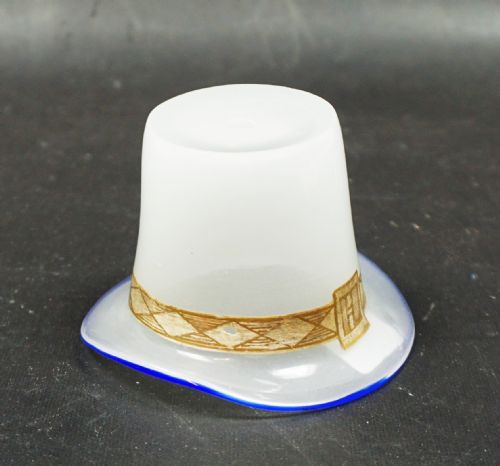


Blue Rim Glass
These striking examples of blue rim glass bring vibrant colour and historic craftsmanship to any room, making them a staple for discerning collectors.
Blue Rim Glass
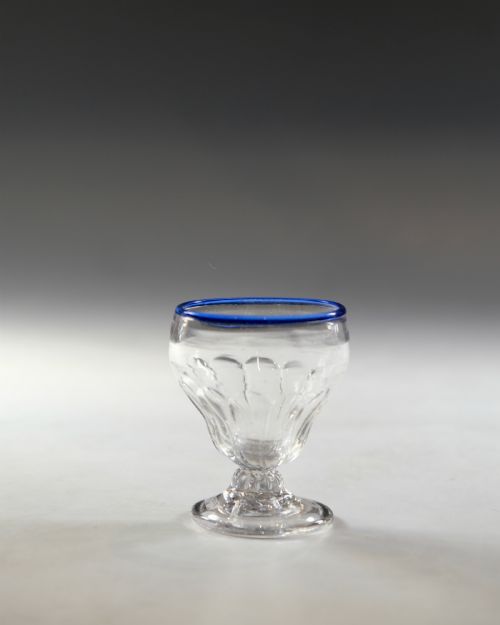
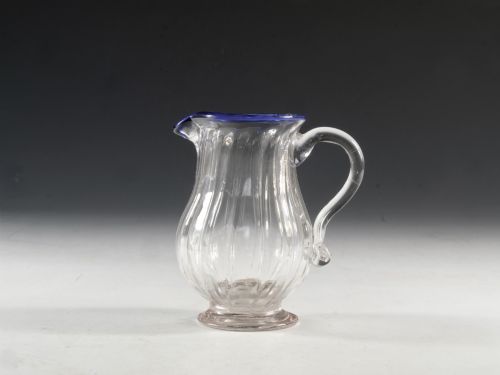
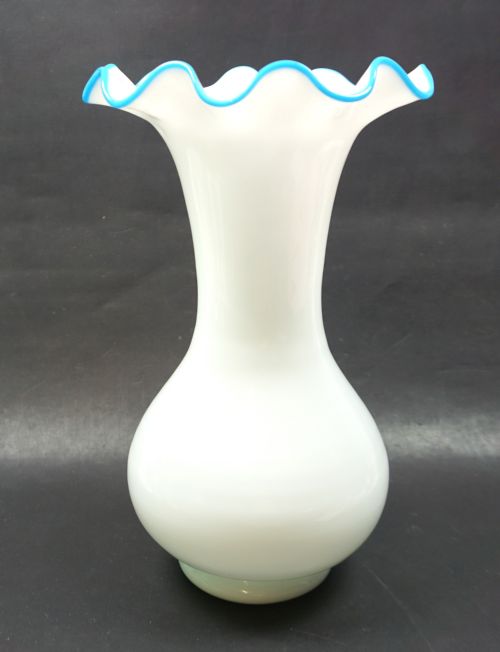
When searching for blue rim glass, you encounter a diverse array of historical forms spanning several centuries of design. The selection includes everything from delicate 18th-century bonnet glasses and sugar bowls to Victorian vases and Art Deco decanters. English and French origins dominate the pieces, showcasing traditional craftsmanship in domestic and decorative glassware.
Vases and tableware items form the core of what appears in this category. You will frequently find items featuring contrasting white or clear bodies finished with distinctive blue glass rims, canes, or enamel accents. These pieces reflect shifting domestic tastes across the Georgian, Victorian, and Art Deco periods without losing their characteristic splash of colour.
Materials and Techniques
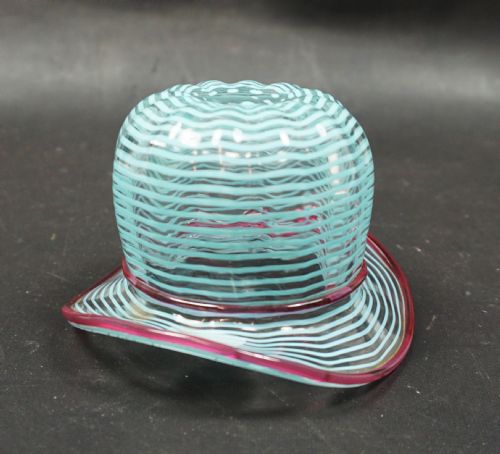
Makers utilised various glass types including lead glass, opaline glass, satin glass, and heavy cobalt glass. Artisans often applied contrasting coloured glass canes around the rims of vessels while the material remained hot. Cased glass techniques and surface enamelling further enhanced the visual depth of these decorative objects.
Secondary materials like silver mountings and silver-plated fittings frequently complement the glassware, particularly in later 19th-century and Art Deco pieces. Gilding and delicate cane work also appear on French opaline wares, demonstrating precise thermal manipulation and finishing skills.
Blue Rim Glass Retail Price Guide 2026
Typical asking prices for blue rim glass among the pieces listed under this phrase on Sellingantiques today, from the lower quarter to the upper quarter. They describe what is for sale here now, not the wider market.
Listings feature items spanning the 18th century through to the 1930s, utilising materials such as opaline, satin glass, and lead glass.
Judging Quality and Execution
Quality in these items rests upon the precision of the rim application and the clarity of the primary glass body. Finer pieces display seamless integration of the coloured rim with the vessel, maintaining uniform thickness and smooth fire-polished surfaces. Heavier lead glass and well-executed cased layers denote superior workshop standards.
The sophistication of secondary decoration, such as hand-applied enamel work or secure silver mounts, separates standard domestic ware from exceptional pieces. Artisans who achieved crisp cane patterns and balanced proportions produced works that endure as high-tier examples of period glassmaking.
Baccarat·Fritz Heckert·Monart·Webb
The Blue Rim Glass Glossary
- Bonnet glass
- A small, stemmed bowl traditionally used in the 18th century for serving sweetmeats or fruit. These often feature distinctive folded rims or coloured threading.
- Opaline glass
- An opaque or translucent glass developed in France during the 19th century, prized for its delicate pastel appearance. It frequently serves as a canvas for contrasting rims and gilding.
- Cased glass
- A method where a layer of glass is encased inside or outside by another layer of a different colour. This technique allows cutters to create dramatic contrast when removing the outer layer.
- Latticinio
- A decorative glass technique involving opaque white or coloured glass threads embedded in clear glass. It creates intricate criss-cross patterns across the body of the vessel.
- Monteith
- A type of bowl with a scalloped or notched rim, originally designed for chilling wine glasses. Georgian examples occasionally incorporate coloured glass borders.
Blue Rim Glass: Frequently Asked Questions
What is blue rim glass?
Blue rim glass encompasses historical glassware items featuring a distinct blue border, cane, or edge applied to the main body. The selection includes tableware like sugar bowls and cream jugs alongside decorative vases.
These objects span multiple centuries, reflecting evolving glassmaking techniques from Georgian England to Art Deco workshops on the continent.
How were these coloured rims created?
Artisans typically applied molten coloured glass canes or threads to the rim of a vessel while it was still hot on the blowpipe. The piece was then reheated and shaped to fuse the contrasting colour permanently into the structure.
More complex pieces combined this technique with surface enamelling or cased glass layers for added depth and visual texture.
How do I date these glass pieces?
Dating relies on identifying the underlying form, material composition, and stylistic markers such as Georgian proportions or Art Deco geometric mounts. Opaline and satin glass finishes strongly point toward 19th-century Victorian and French production.
Examining pontil marks and manufacturing methods also helps narrow down the period of creation.
How should I display coloured rim glassware?
Display these items in well-lit cabinets or on surfaces where natural light can pass through the glass and highlight the blue rims. Pairing them with neutral backgrounds allows the coloured glass details to stand out effectively.
Care should be taken to place fragile pieces away from busy household traffic to protect delicate rims and silver mounts.