



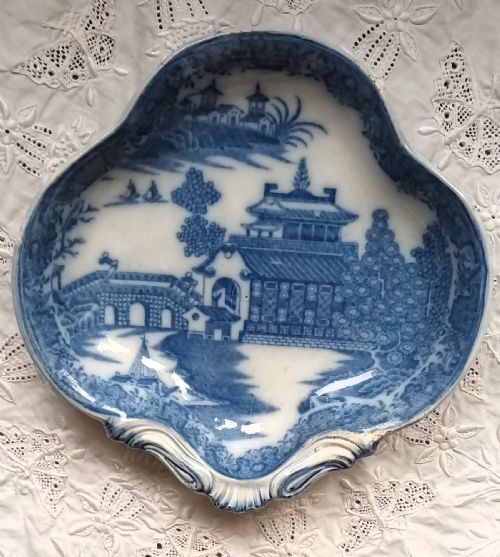


Blue Pottery Tray
A blue pottery tray brings blue and white transfer printing to the table, offering practical utility and historic ceramic design.
Blue Pottery Tray
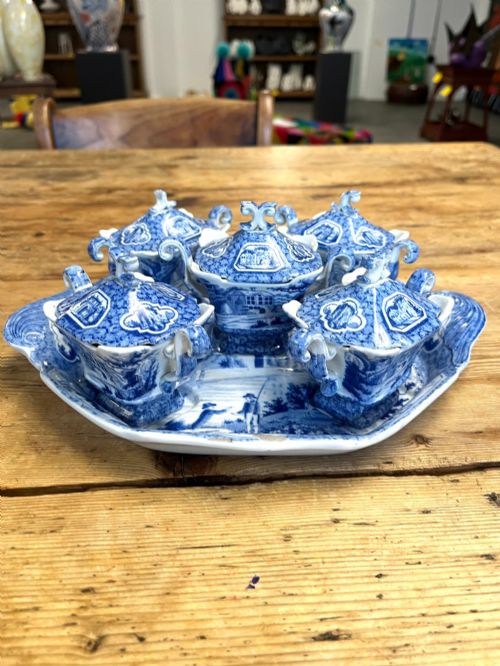
A blue pottery tray encompasses earthenware serving platters, small pin trays, trinket dishes, and inkstand bases decorated in blue and white. These pieces emerge primarily from Georgian, Regency, and Victorian periods across English, French, and Dutch workshops.
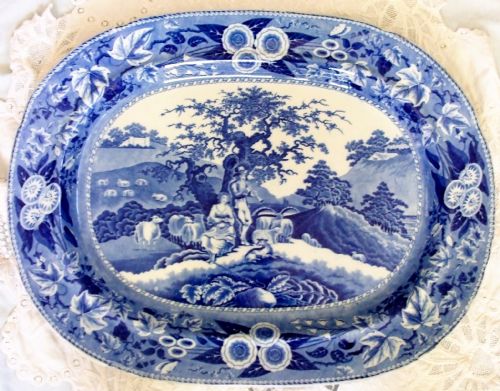
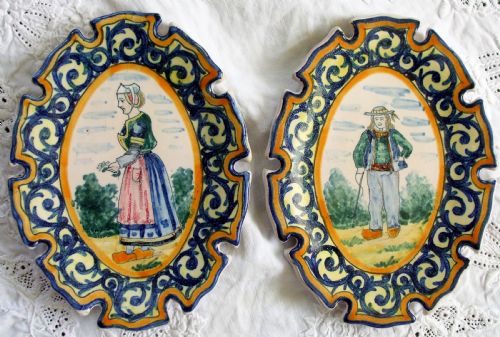
The items range from large transfer-printed meat plates and bread stands to small vide-poche dishes and spoon trays. English transferware and continental faience dominate the selections on this page.
Materials and methods
Potters utilised earthenware, pearlware, ironstone, and tin-glazed ceramic bodies shaped into serving dishes and small trays. Cobalt pigment provided the rich blue colour applied beneath the glaze or directly onto tin-glazed faience.
Transfer printing transferred detailed copperplate engravings onto the ceramic surface before firing. Hand-painted Dutch Delft and French faience pieces relied on direct brushwork over tin glazes.
Blue Pottery Tray Retail Price Guide 2026
Typical asking prices for blue pottery tray among the pieces listed under this phrase on Sellingantiques today, from the lower quarter to the upper quarter. They describe what is for sale here now, not the wider market.
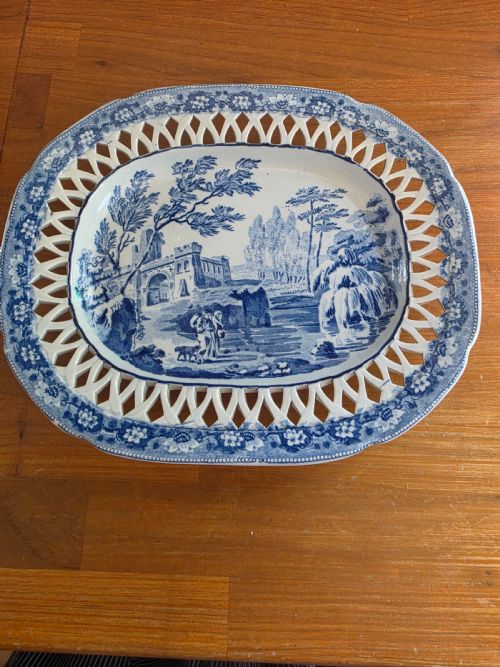
Piping shepherds, classical ruins, and golden finches share space with utilitarian advertising plates for mustard and scales.
Judging the quality
Quality rests in the crispness of the cobalt transfer print and the clarity of the white ceramic ground. Smudged printing or heavy crazing alters the visual balance of the pattern.
Form dictates utility, with fretted pierced borders, scalloped edges, and moulded foot rims representing higher standards of potter's craft.
Davenport·Spode·Copeland and Garrett·Don Pottery·John Rogers and Son·J and R Clews·Elkin Knight and Bridgwood·Masons Ironstone·Thomas Lakin
The Blue Pottery Tray Glossary
- Transferware
- Earthenware decorated by applying a paper transfer pulled from an engraved copper plate. This technique allowed intricate pictorial scenes like pastoral landscapes and Chinoiserie patterns to be reproduced consistently.
- Faience
- Tin-glazed earthenware produced widely in France and the Netherlands. The opaque white glaze provided a smooth canvas for hand-painted blue motifs.
- Pearlware
- A refined earthenware developed in the late eighteenth century featuring a subtle bluish glaze that pooled in crevices. It bridged creamware and later white ironstone.
- Vide-poche
- A small pocket-emptying tray designed for holding loose items like keys or coins. These shallow dishes often feature fretted or shaped edges.
Blue Pottery Tray: Frequently Asked Questions
What were blue pottery trays used for?
These ceramic trays served functional roles on dining tables and desks. Larger platters and meat plates held joints and bread, while small pin trays and spoon trays organised dressing tables and tea sets.
Inkstands and desktop inkwell stands held writing equipment, protecting furniture from spills while adding a decorative element to the study.
How do I date a blue and white tray?
Dating relies on ceramic body composition, pottery marks, and decorative styles. Pieces from the Georgian period often feature pearlware bodies and romantic landscape transfers.
Victorian items introduce ironstone fabrics and commercial advertising wares, while tin-glazed faience pieces frequently point to continental European production.
How do I care for antique pottery trays?
Display these pieces away from direct sunlight and areas prone to heavy temperature fluctuations. Hand washing with mild soap is necessary if cleaning is required, avoiding dishwashers entirely.
Glazed earthenware can develop crazing over time, so soaking these items should be avoided to prevent moisture penetration into the ceramic body.
What is the difference between Delft and transferware?
Dutch Delft utilises a tin glaze painted by hand with cobalt pigment, resulting in soft brush strokes and an opaque white surface. Transferware employs a printed paper template applied to a fired earthenware body.
Transfer printing created sharper, highly detailed architectural and pastoral scenes that hand painting could not replicate at speed.