



Blue Persian Textile
A blue persian textile carries the dynamic hand of nomadic makers, offering rich indigo depths and practical utility for modern interiors.
Blue Persian Textile
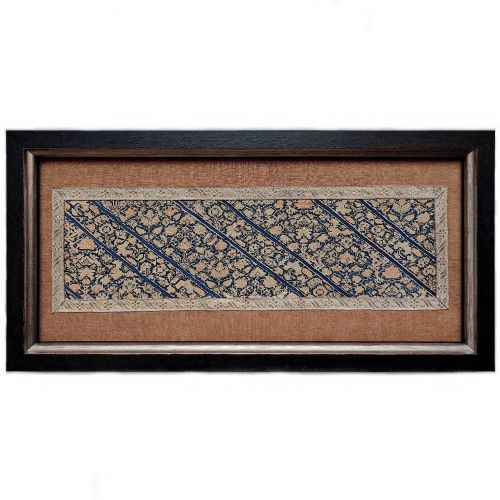
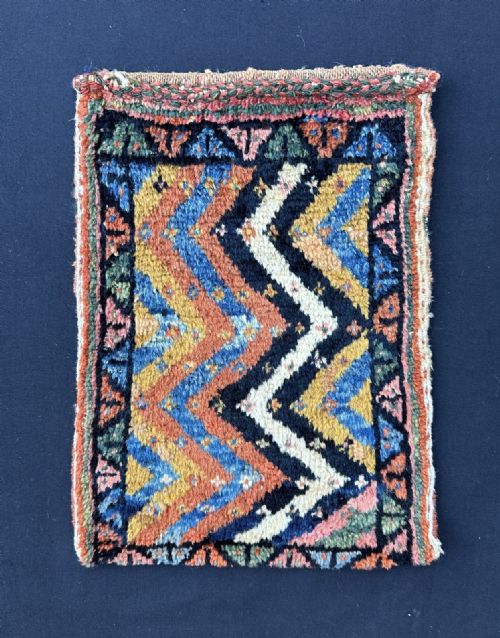
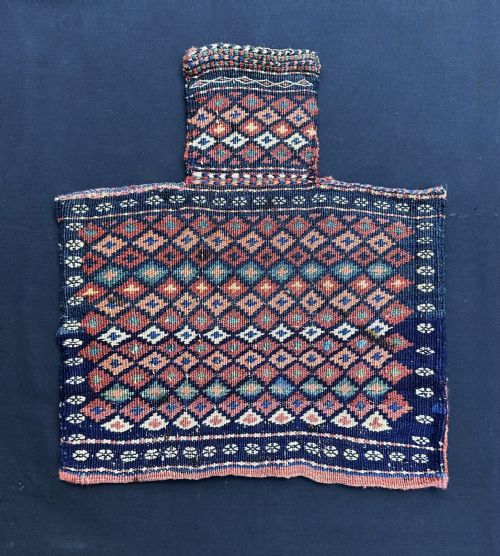
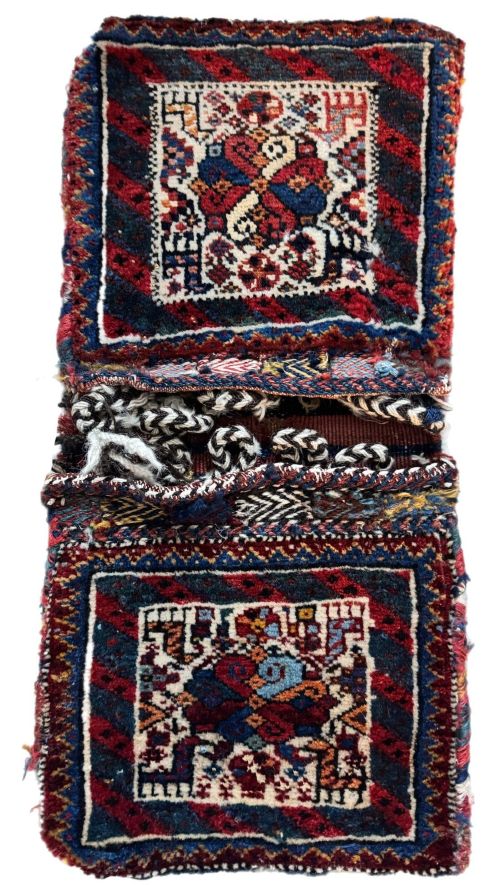
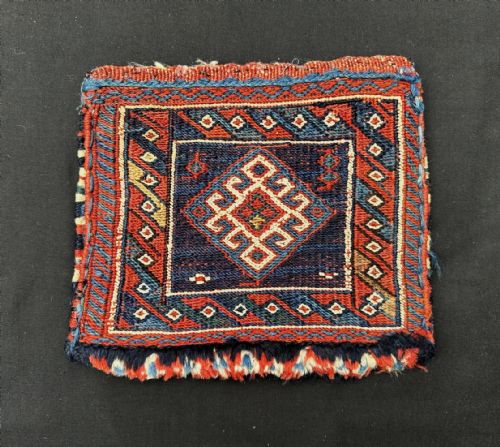
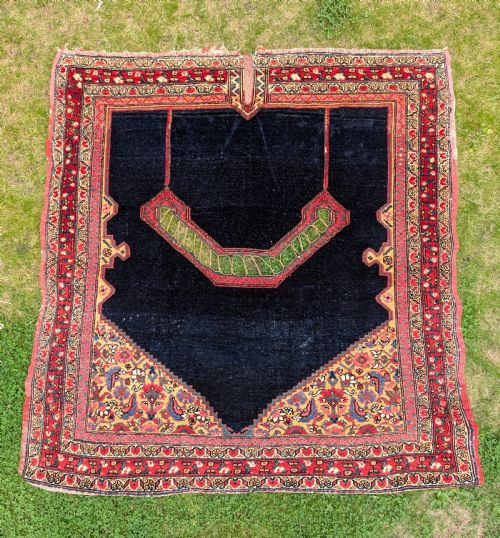
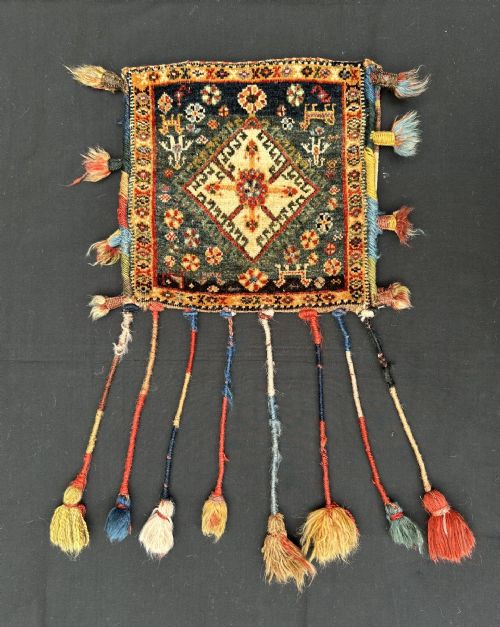
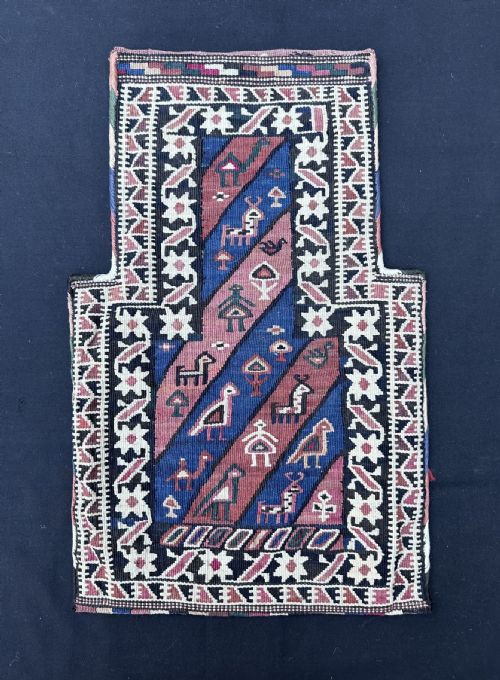
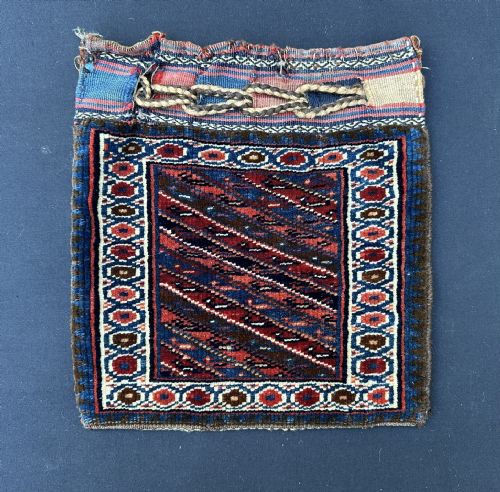
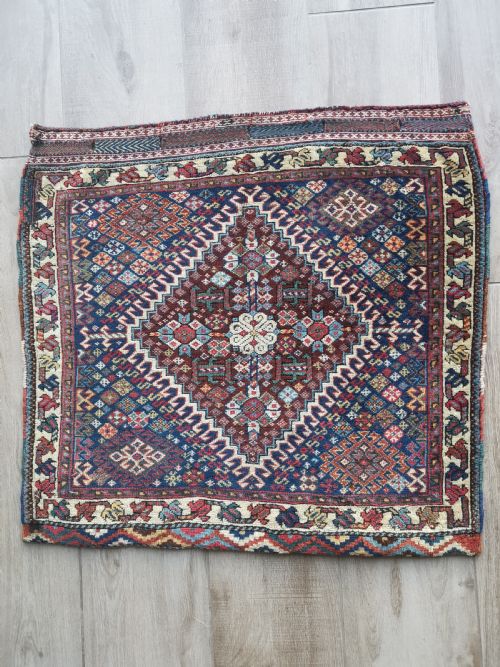
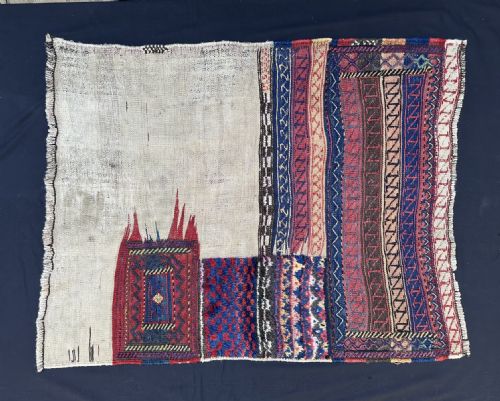
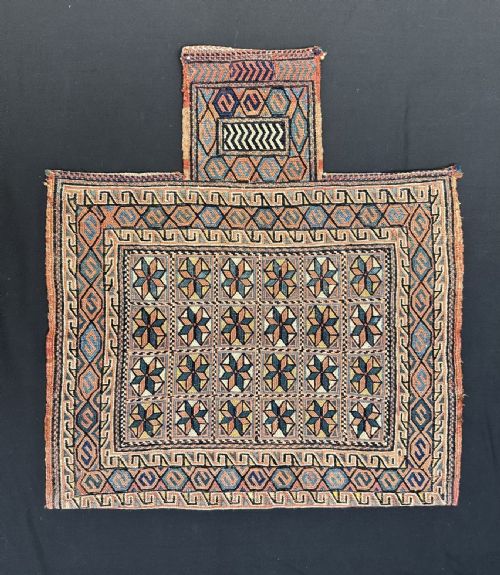
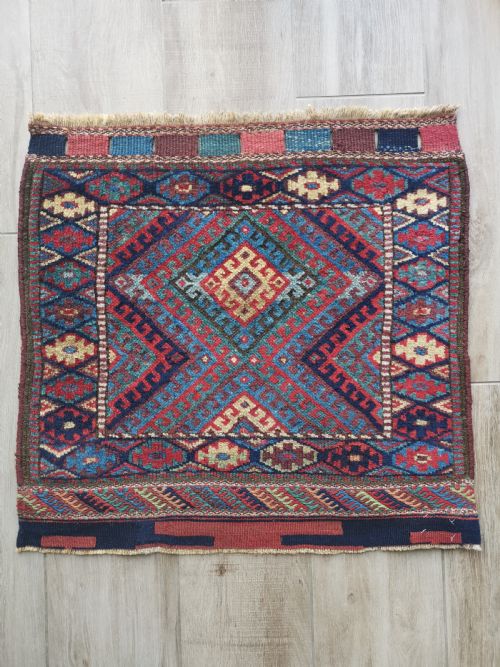
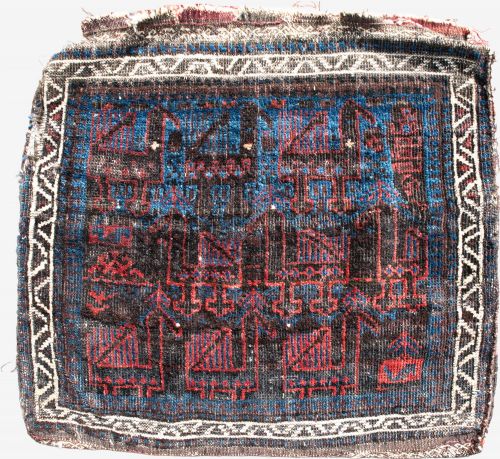
A blue persian textile on this page typically originates from tribal and nomadic groups such as the Afshar, Qashqai, Shahsavan, and Bakhtiari. These functional pieces include saddlebags, salt bags, vanity bags, and bread sofrehs created during the nineteenth and early twentieth centuries.
The dominant visual element is indigo or deep blue, grounding geometric patterns, animal motifs, and tribal medallions. Collectors encounter compact woven faces designed for portable storage and daily domestic life across western, southern, and northern Persia.
Materials and construction
Makers utilised hand-spun wool and natural vegetable or plant dyes to achieve resilient, saturated indigo grounds. Goat hair and cotton frequently appear in the foundational warps and wefts to provide structural durability for utilitarian bags.
Techniques range from pile knotting to flat-woven soumak work and soumac weave, allowing intricate bird, dragon, and boteh motifs to emerge sharply across the surface.
Blue Persian Textile Retail Price Guide 2026
Typical asking prices for blue persian textile among the pieces listed under this phrase on Sellingantiques today, from the lower quarter to the upper quarter. They describe what is for sale here now, not the wider market.
Certain bags retain stubborn grains of desert sand tucked deep within their flat-woven bottoms after more than a century.
Factors influencing quality
Quality rests upon the purity and depth of the natural blue dyes, alongside the fineness of the hand-spun wool. Luminous, oily wool absorbs indigo with variation, creating an internal shimmer that flat synthetic dyes cannot replicate.
Structural integrity, tightness of the weave, and clarity of tribal iconography separate standard utility items from exceptional examples. Surviving complete pieces with intact plain weave backs command greater attention than fragmented faces.
The Blue Persian Textile Glossary
- Sofreh
- A flat-woven or pile-knotted spread used for kneading bread or serving communal meals. These textiles often feature minimalist tribal fields framed by protective borders.
- Khorjin
- A traditional pair of saddlebags designed for transport on horseback or camel. Surviving examples frequently appear separated into individual bag faces.
- Soumak
- A supplementary weft-wrapping technique that creates a durable, textured surface without pile. This method allows weavers to render crisp diagonal lines and complex animal motifs.
- Boteh
- An ancient motif resembling a almond, pear, or sprouting shrub. In these textiles, it is rendered in varied scales across the blue field.
- Medallion
- A central symmetrical ornament anchored in the middle of the textile field. It typically frames geometric or floral abstractions specific to the weaving tribe.
Blue Persian Textile: Frequently Asked Questions
How were these bags used?
Tribal groups utilised these woven pouches for transporting grain, salt, bread, and personal possessions during seasonal migrations.
They served essential domestic functions within nomadic tents before eventually entering the collector market as decorative art.
What is a sofreh?
A sofreh is a flat-woven cloth dedicated to the preparation and sharing of food within the household.
Unlike vertical rugs intended for flooring or display, these textiles held practical space for daily domestic rituals.
How do I care for an antique textile?
Protect the wool from direct sunlight to preserve the fugitive indigo and natural dye colours over time.
Gentle vacuuming with a mesh screen safeguards the fragile hand-spun fibres from physical stress.
Can these textiles be hung on walls?
Many collectors mount smaller bag faces and sofrehs as wall art to display the intricate tribal iconography safely.
Weight distribution must be carefully managed using professional conservation sleeves or non-damaging display clips.