


Blue Pattern Easy Chair
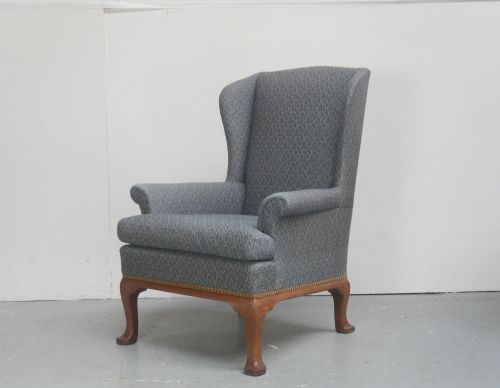
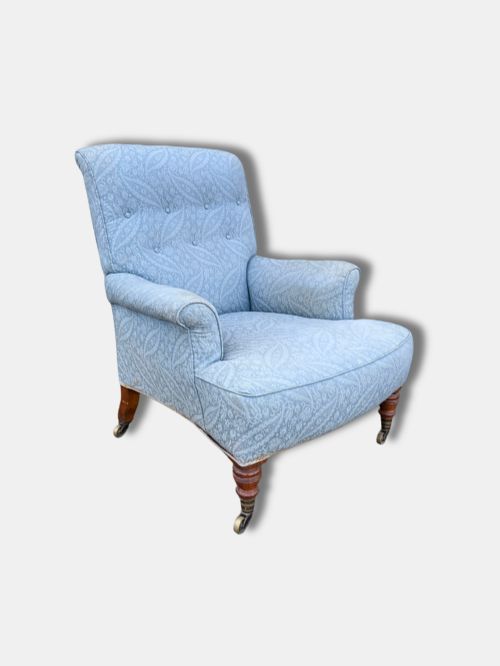
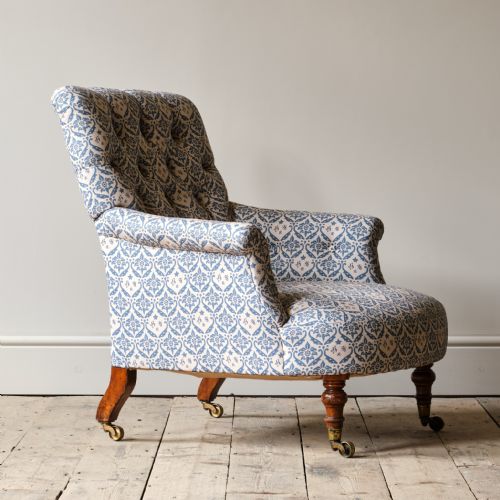
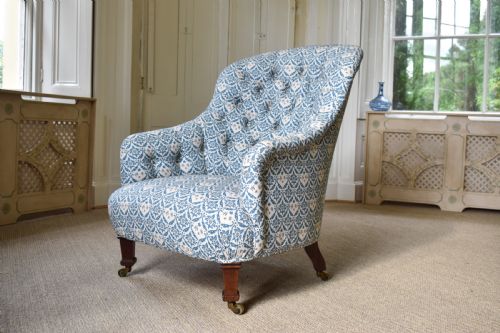
A blue pattern easy chair brings upholstered comfort and classic nineteenth-century character into a room.
Blue Pattern Easy Chair
A blue pattern easy chair groups together upholstered seating designed for relaxation, spanning the nineteenth century through the Edwardian era. You will frequently encounter nineteenth-century pieces alongside Victorian and Edwardian examples in this selection.
The assortment includes specific forms such as club armchairs, wing chairs, tub armchairs, and open armchairs. Many pieces reflect English country house and Arts and Crafts styles, incorporating mahogany or walnut frames.
Makers such as Howard and Sons and William Morris appear frequently among the listings, often upholstered in distinctive fabrics like ticking or printed textiles.
How they were made
Makers built the structural frames using hardwoods such as mahogany and walnut, occasionally supported by brass components. These robust wooden skeletons provided the necessary foundation for deep upholstery.
Upholstery layers utilised cotton and various textile fabrics, secured over traditional springing systems. Finished surfaces often featured signature materials like cotton ticking or patterned printed cottons.
Materials recorded across the selection include brass, mahogany, walnut, cotton, and various upholstered textiles.
What varies in quality
The distinction between ordinary and superior examples lies in the integrity of the frame construction and the authenticity of the upholstery materials. Pieces retaining their original manufacturer markings and period fabric demonstrate higher desirability.
Proportion and woodwork detail also separate standard productions from exceptional workshop creations. Finer chairs exhibit careful carving on mahogany or walnut frames and harmonious upholstery choices that respect the original design.
Howard and Sons·William Morris
The Blue Pattern Easy Chair Glossary
- Easy chair
- An upholstered armchair designed primarily for comfort and relaxation rather than formal sitting. These pieces often feature deep seats and sprung backs.
- Club armchair
- A deep, heavily upholstered low armchair originating in nineteenth-century England. It offers generous proportions for lounging.
- Wing chair
- An armchair with high backs and side panels designed to shield the sitter from draughts. Early versions date to the Georgian style and later periods.
- Ticking
- A tightly woven cotton or linen fabric traditionally used to cover mattress springs and upholstered furniture stuffing. It appears frequently on period workshop pieces.
- Tub armchair
- An upholstered seat where the arms curve continuously into a rounded back. This compact form offers a neat profile.
Blue Pattern Easy Chair: Frequently Asked Questions
What is a blue pattern easy chair?
A blue pattern easy chair is a nineteenth or early twentieth-century upholstered seat featuring patterned fabric in shades of blue. These include club chairs, wing chairs, and armchairs from makers like Howard and Sons.
They reflect Victorian and Edwardian aesthetics, combining sturdy wooden frames with comfortable sprung upholstery for daily use.
How do I identify a Howard and Sons chair?
Howard and Sons chairs are identified by their generous proportions, sturdy timber frames, and often by stamped legs or castors bearing the maker's name.
Many also retain their original branded ticking fabric or paper labels beneath the upholstery, marking them out as quality Victorian workshop pieces.
Where were these chairs used originally?
These armchairs originally sat in drawing rooms, libraries, and bedrooms of large English country houses during the Victorian and Edwardian periods. Their primary purpose was to provide comfortable seating for reading or resting.
Over time, they moved into various domestic settings as relaxed seating options prized for their craftsmanship.
How should I care for vintage upholstery?
Caring for vintage upholstery involves gentle vacuuming with a soft brush attachment to remove dust without damaging fragile period fabrics. Avoid placing the chair in direct sunlight to prevent the blue pattern from fading.
Professional cleaning is recommended for antique textiles to preserve the integrity of cotton prints, ticking, and internal stuffing.