


Blue Pattern Chair
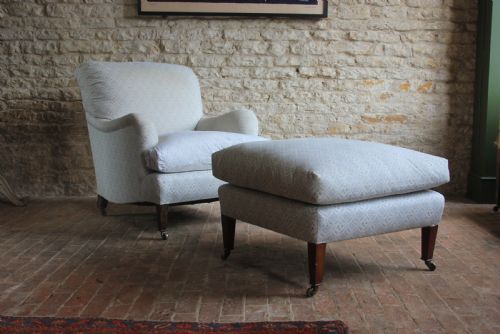
A blue pattern chair brings patterned textile upholstery into a room across forms from wing armchairs to slipper chairs.
Blue Pattern Chair
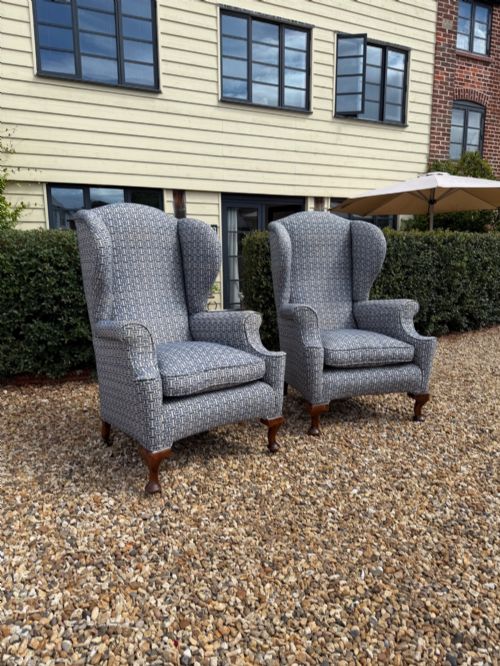
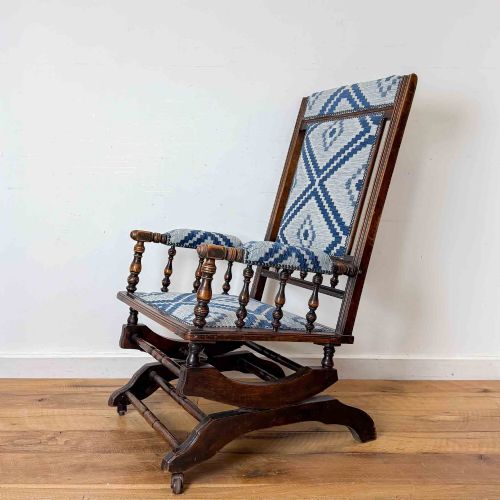
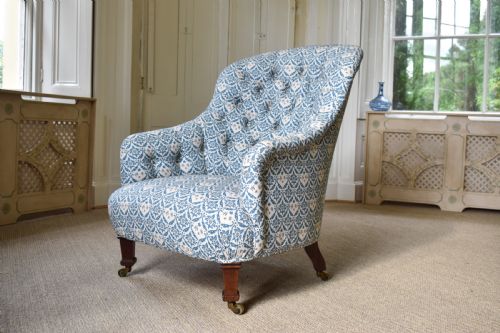
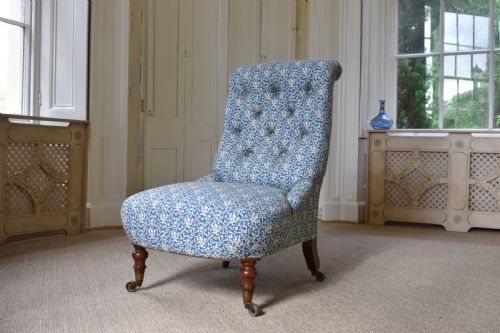
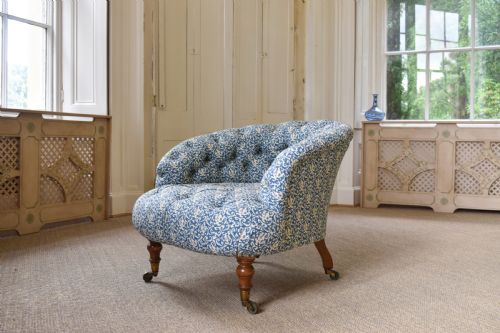
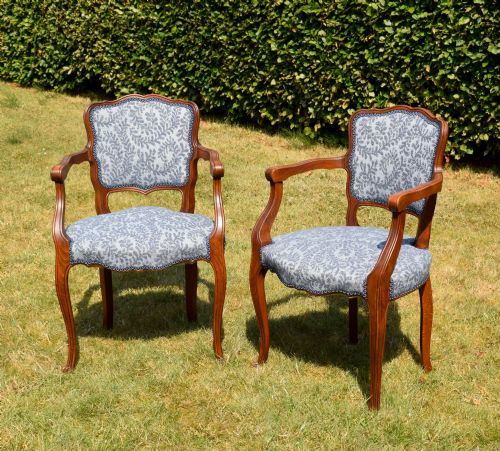
A blue pattern chair is a seat upholstered in patterned fabric featuring blue tones, encompassing forms such as armchairs, slipper chairs, wing armchairs, and rocking chairs. These pieces span periods from the mid nineteenth century through the Edwardian era and into the early twentieth century.
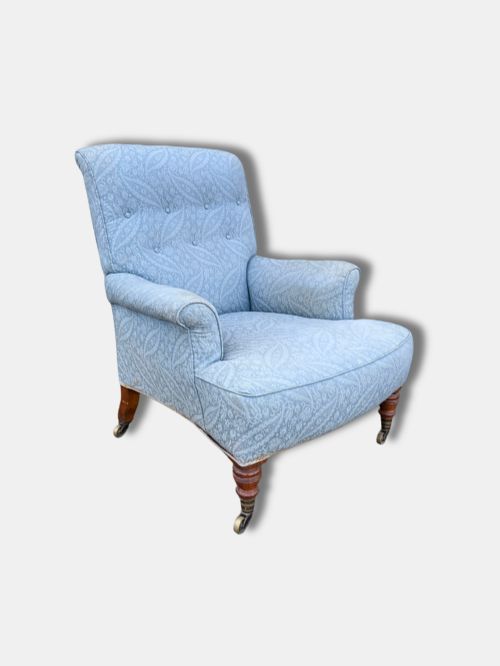
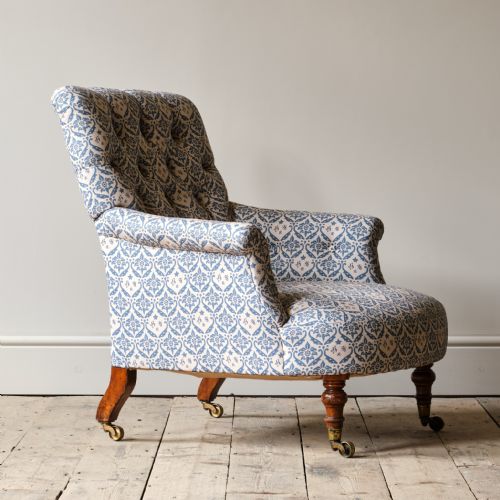
The version most commonly met on this page is the nineteenth century or Edwardian armchair, often upholstered in textile, cotton, or specialised upholstery fabric. Makers such as Howard and Sons and Whytock and Reid produced these forms using wood frames in mahogany, walnut, or general timber.
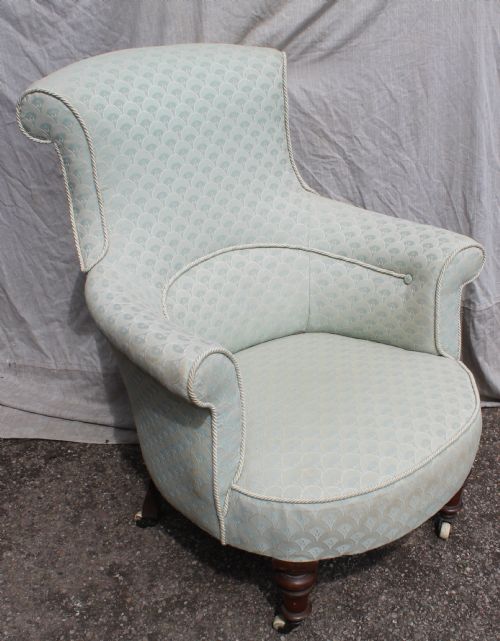
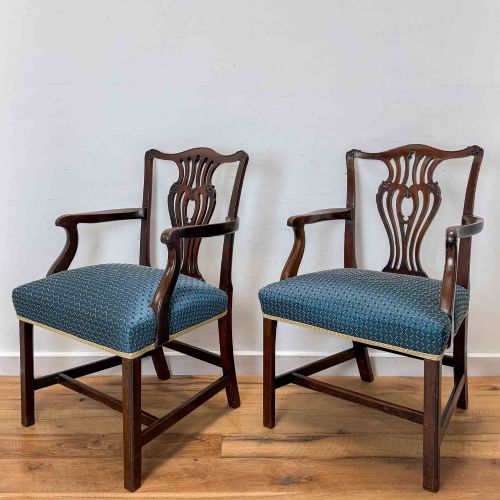
Styles range across Victorian, Edwardian, English Country House, Chippendale Style, Queen Anne Revival, and Louis XV Revival. Pieces may include turned front legs with castors, buttoned backs, or exposed timber frames.
How they were made
Frames are constructed from woods such as mahogany and walnut, providing structural support for the upholstered forms. Some pieces incorporate brass details, particularly in castors attached to turned front legs.
Upholstery relies on textiles, cotton, and specialised fabric, sometimes built over traditional ticking foundations. Button backing and sprung interiors give shape and comfort to club armchairs, wing armchairs, and slipper chairs.
Listings feature wood frames in mahogany and walnut, paired with brass castors and textile upholstery.
What varies in quality
Quality rests in the integrity of the wooden frame, whether mahogany or walnut, and the precision of the joinery beneath the upholstery. Maker attribution also separates pieces, with works originating from workshops like Howard and Sons or Whytock and Reid carrying specific construction standards.
The execution of the upholstery, from the tension of the fabric to the retention of original ticking and castors, dictates the integrity of the piece. Proportions scale from large club armchairs down to small bedroom chairs and slipper chairs.
Howard and Sons·Whytock and Reid
The Blue Pattern Chair Glossary
- Slipper chair
- A low-set upholstered chair traditionally placed in bedrooms for ease of dressing. It usually lacks arms and sits close to the floor.
- Wing armchair
- A high backed seat featuring side panels designed to shield the occupant from drafts. These panels extend down from the backrest to the arms.
- Club armchair
- A deep seated, heavily padded lounge chair designed for comfort. Originating in nineteenth century clubs, it uses robust internal springing.
- Castor
- A small wheel attached to the base of furniture legs to ease movement. Brass fittings are common on Victorian and Edwardian examples.
Blue Pattern Chair: Frequently Asked Questions
What is a blue pattern chair?
A blue pattern chair is an antique or vintage seating piece upholstered in fabric featuring blue designs. These range from nineteenth century Victorian armchairs to Edwardian library chairs.
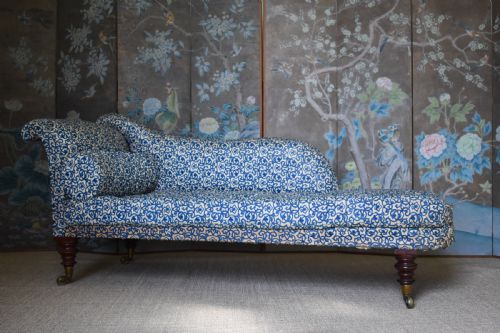
They appear in forms including wing armchairs, slipper chairs, rocking chairs, and chaise longues.
How do I identify a Howard and Sons chair?
Howard and Sons chairs typically feature maker stamps on the legs or castors, alongside characteristic low profiles and deep seats. Many retain their original branded ticking fabric beneath the outer upholstery.
Their production spans the nineteenth century and the Edwardian period, encompassing club armchairs and Bridgewater models.
Where were these chairs used?
These chairs served multiple domestic spaces, from formal libraries and drawing rooms to bedrooms and fireside settings. Smaller forms like slipper chairs and bedroom chairs suited private chambers.
Larger club armchairs and wing armchairs anchored English country house living rooms and studies.
How do I care for antique upholstery?
Antique upholstery requires gentle vacuuming with a soft brush attachment to remove dust without stressing the fabric or stitching. Avoid direct sunlight to prevent the blue pattern from fading over time.
Professional textile conservation is recommended for deep cleaning or repairing fragile nineteenth century fabrics.
What is the difference between a club chair and a wing chair?
A club chair is a deep, low seated padded armchair built for relaxed lounging without side head wings. It prioritises cushioned comfort over formal posture.
A wing chair includes protective side panels extending from the backrest to block drafts, offering a more enclosed seating experience.