


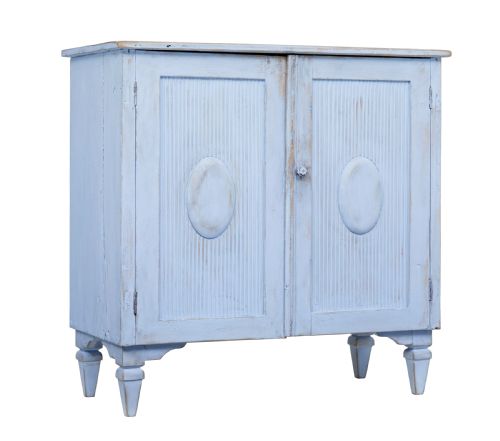


Blue Painted Buffet
A blue painted buffet brings country character and storage to a room, using aged colour to soften heavy timber.
Blue Painted Buffet
A blue painted buffet takes several forms across this selection, including cupboards and cabinets, sideboards and buffets, dressers, and linen cupboards. These pieces serve as practical storage items while introducing traditional painted finishes to an interior.
The objects stem from various regional traditions such as Scandinavian Country, French Provincial, English Country, and Rustic Farmhouse. Buyers will encounter items ranging from eighteenth-century French architectural pieces to nineteenth-century Swedish cupboards and early twentieth-century kitchen sideboards.
Most examples rely on timber construction finished with blue paint, often showing scraped or ragwork surfaces accumulated over generations. Alongside large case pieces, the selection includes related items like painted lamps and vases that share the same palette.
Materials and construction
Makers constructed these buffets and cupboards primarily using pine and timber, building sturdy frames designed for daily household storage. Iron and brass hardware such as hinges and latches often secure the doors and drawers.
Surfaces received layers of paint, sometimes utilising specialised decorative techniques like ragwork or scraped finishes to reveal underlying coats. Certain decorative accessories incorporate porcelain, glass, and gilded ormolu details alongside the painted wooden elements.
Blue Painted Buffet Retail Price Guide 2026
Typical asking prices for blue painted buffet among the pieces listed under this phrase on Sellingantiques today, from the lower quarter to the upper quarter. They describe what is for sale here now, not the wider market.
The listings feature pieces spanning the eighteenth century through to the early twentieth century, utilising pine, painted wood, and brass.
Judging quality in painted furniture
Quality rests in the integrity of the original construction and the character of the surface finish. Pieces displaying genuine age through worn paint and patinated timber carry greater visual depth than later repainted surfaces.
Proportion and regional detail distinguish finer vernacular pieces from standard utilitarian storage. Well-executed decorative paint techniques, such as ragwork or fine brushwork, elevate the craftsmanship of a provincial cabinet.
The Blue Painted Buffet Glossary
- Ragwork
- A decorative painting technique where rags are used to manipulate wet paint on a surface, creating textured patterns. This method appears frequently on Scandinavian pine furniture.
- Buffet à deux corps
- A large two-part cupboard or sideboard originating in France, typically featuring an upper cabinet set upon a deeper lower section. These tall storage pieces provide substantial capacity.
- Scraped paint
- A surface condition where layers of older paint have been partially scraped back to reveal previous colours underneath. It indicates a long history of decorative updates.
- Ormolu
- Gilt bronze mounts applied to furniture or decorative objects for ornamentation. This material reflects French neoclassical and Napoleon III taste.
- Bleu celeste
- A bright sky-blue ceramic glaze associated with French porcelain factories like Sevres. It provides a vivid contrast to traditional dark blue tones.
Blue Painted Buffet: Frequently Asked Questions
What is a blue painted buffet used for?
These pieces function primarily as storage furniture in dining rooms, kitchens, or living spaces, holding tableware, linens, or household goods. Their decorative painted surfaces also allow them to act as visual centrepieces within a room.
Larger case pieces offer deep shelving and enclosed cupboards, while smaller sideboards provide surface display space alongside internal storage.
How do I identify a Swedish cupboard?
Swedish cupboards from the nineteenth century often feature pale or bright painted finishes, simple architectural mouldings, and distinctive regional hardware. Pine is the predominant timber used in these northern European vernacular pieces.
They frequently display specific surface treatments like ragwork paint or scraped layers that distinguish them from English or French counterparts.
What distinguishes French provincial furniture?
French provincial items exhibit softer, more classical lines adapted for regional homes, utilising materials like timber and paint. Pieces such as the buffet à deux corps demonstrate traditional joinery and proportion.
They often incorporate subtle carved details or hardware that reflect French stylistic periods without the extreme formality of court furniture.
How should I care for antique painted wood?
Maintain painted furniture by keeping it away from direct sunlight and dramatic fluctuations in temperature or humidity, which can cause timber to move and paint to flake. Dust gently with a dry, soft cloth rather than using harsh cleaning agents.
Wax or polish should only be applied if the specific finish allows, as many historic painted surfaces require minimal intervention to preserve their character.