




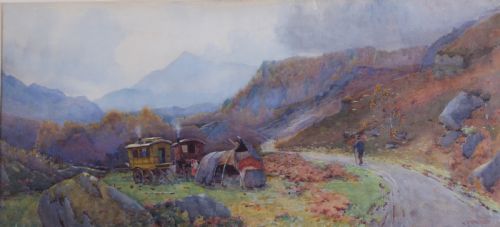


Blue Mountain Artwork
Blue mountain artwork captures the dramatic topography of peaks and valleys through the focused lenses of British Impressionism and Victorian landscape painting.
Blue Mountain Artwork
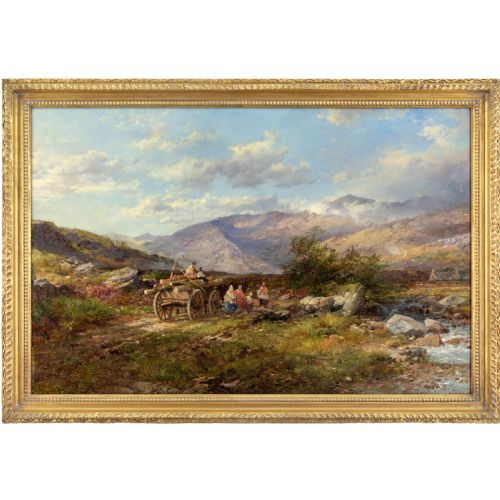
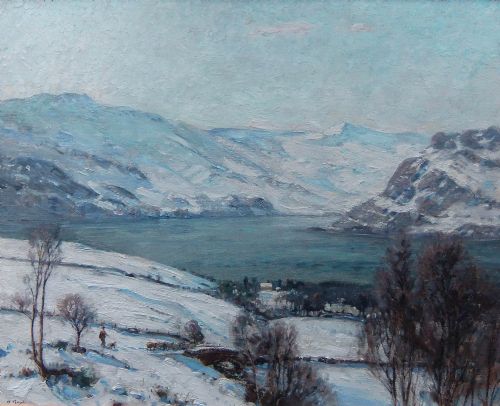
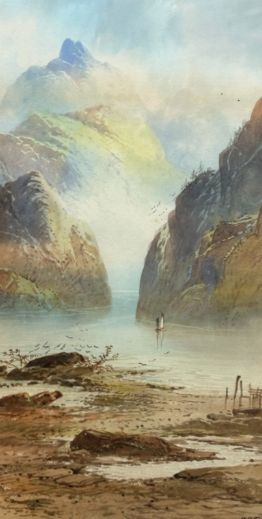
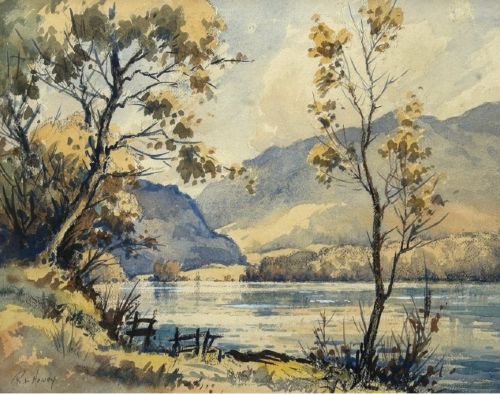
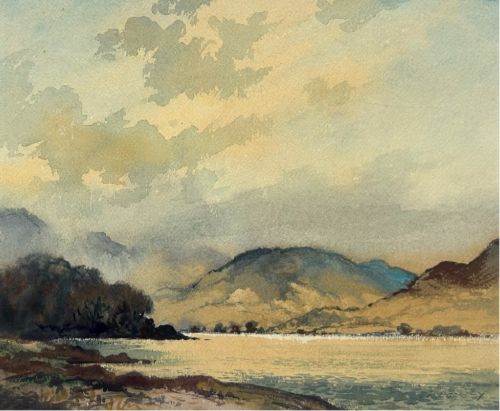
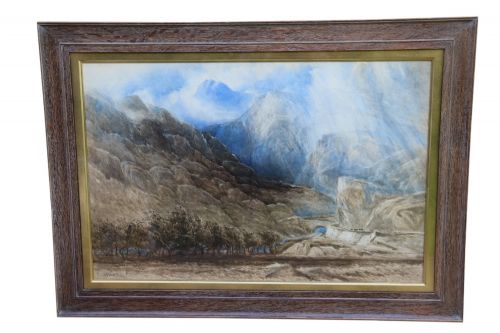
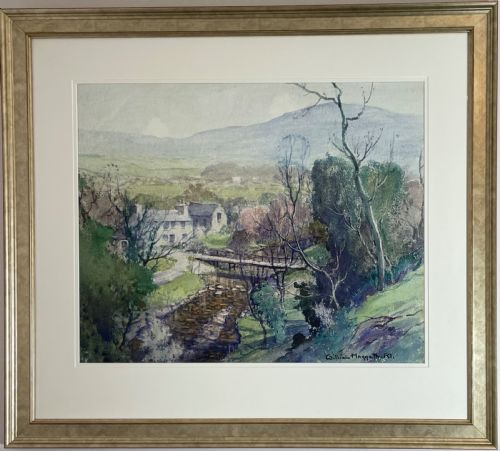
Blue mountain artwork comprises paintings that depict elevated terrain, rocky passes, and highland vistas across various periods. These works capture atmospheric conditions in places such as Scotland, Wales, the English Lake District, and continental ranges.
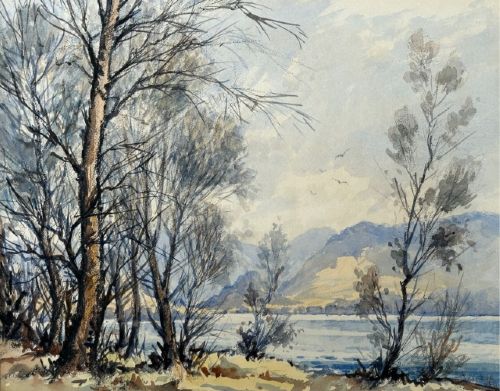
The selection ranges from nineteenth-century watercolours and oils to mid-century British school pieces. Buyers encounter depictions of mountain streams, quiet lakesides, and distant peaks rendered with distinct regional observation.
Materials and Techniques
Artists record these upland scenes primarily using watercolour pigment on paper or oil on canvas supported by wooden stretches. Gouache and ink also appear in specific sketches and studies.
Makers apply pigment with varied brushwork, sometimes adding gilt highlights within traditional frames to enhance the depth of the painted landscape.
Blue Mountain Artwork Retail Price Guide 2026
Typical asking prices for blue mountain artwork among the pieces listed under this phrase on Sellingantiques today, from the lower quarter to the upper quarter. They describe what is for sale here now, not the wider market.
Listings feature paper, canvas, and wood materials spanning the nineteenth century up to nineteen-sixty.
Assessing Quality and Execution
Quality rests in the precision of atmospheric perspective and the handling of light across distant elevations. Stronger examples demonstrate confident brush control that defines geological form and weather without excessive detail.
The ability of the artist to establish spatial depth between foreground paths and distant crags separates standard topographical records from accomplished works of art.
Herbert Royle·William Henry Earp·Robert Leslie Howey·Henry Martin Pope·John Grenville Fennell·William Hoggatt·C Caldwell·Thomas Lound·James H Hulse·Hirst Walker RBA·Noel Harry Leaver·Samuel Towers·Milton Drinkwater·Willie Stephenson·John William Gilroy·Percy Lancaster·Hubert Sattler
The Blue Mountain Artwork Glossary
- Watercolour pigment
- Colour ground in a water-soluble binder, used on paper to achieve translucent washes of tone.
- Oil on canvas
- Pigment suspended in drying oils applied to a stretched woven fabric support, allowing rich texture and depth.
- Gilt
- A thin layer of gold applied to frames or surfaces to provide decorative enrichment.
- Gouache
- An opaque water-soluble paint that produces solid blocks of colour and matte highlights.
Blue Mountain Artwork: Frequently Asked Questions
What periods do these paintings span?
The works stretch from the mid-nineteenth century through the Victorian era and into the mid-century modern period.
This broad timeline incorporates nineteenth-century romanticism alongside later impressionistic interpretations of scenery.
Where do these landscapes depict?
Locations include Scottish lochs, Welsh passes, Cumbrian lakes, and European mountain ranges such as the Alps.
Artists also record Mediterranean ports and Spanish vistas alongside domestic countryside views.
How should I display watercolour works?
Watercolours on paper require protection from direct sunlight to prevent fading of the pigments over time.
Mounting them behind conservation glass preserves the delicate paper and watercolour washes.
What is the difference between oil and watercolour?
Oils utilise pigment mixed with drying oil on canvas, offering a heavier texture and deep saturation.
Watercolours employ water-soluble media on paper, creating lighter and more translucent atmospheric effects.