

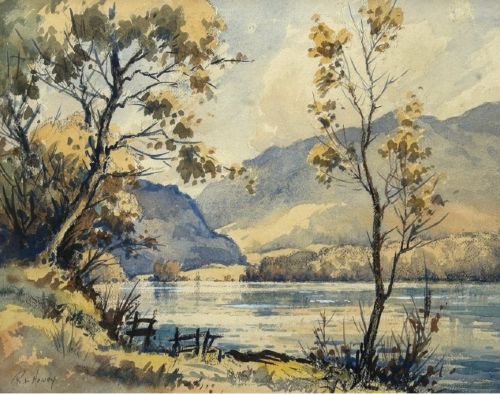


Blue Lake Landscape Painting
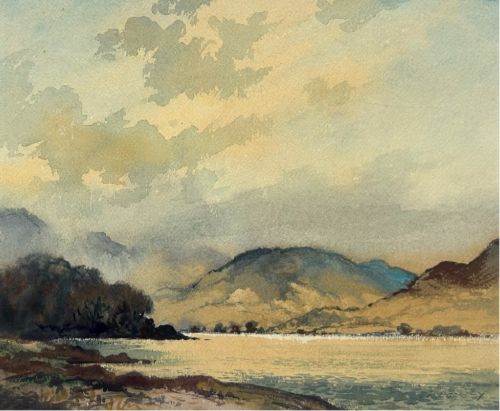
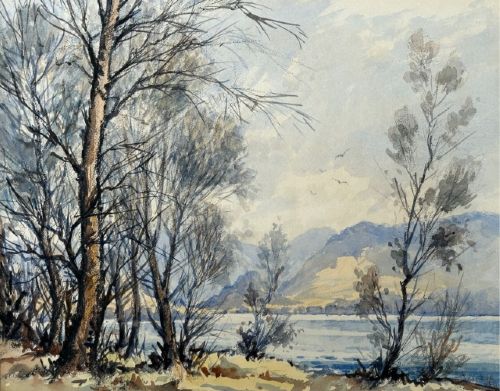
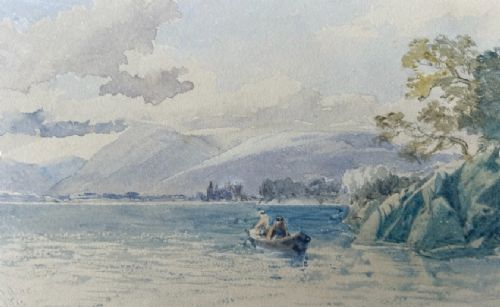
A blue lake landscape painting captures open water and distant shores, offering tranquil views across Scottish lochs, English lakes and continental waters.
Blue Lake Landscape Painting
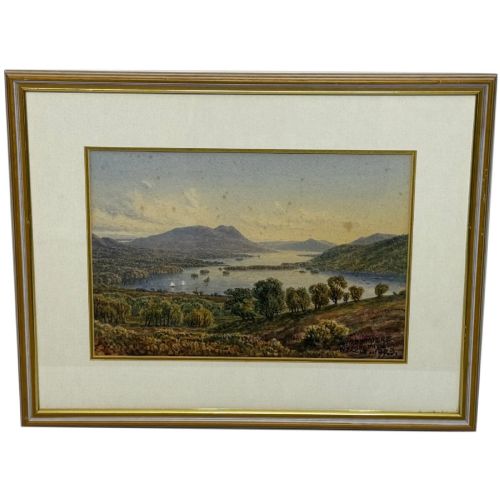
A blue lake landscape painting depicts bodies of water framed by mountains, valleys and distant horizons, capturing natural scenery from Britain, France and Italy. These works range from topographical studies of specific sites like Loch Awe and Coniston Water to broader impressionistic visions of lake shores.
The most common version met on this page is the watercolour on paper executed during the nineteenth and twentieth centuries. These pieces frequently record specific British and European lakes, rendered by regional artists working in Victorian, Edwardian and mid-century styles.
Beyond standard works on paper and canvas, the category encompasses diverse formats including oil paintings, gouache studies, porcelain cabinet plates and hand-painted leaded glass panels. Each medium interprets the subject through distinct palettes, shifting from muted nineteenth-century tones to brighter mid-century impressions.
How they were made
Artists created these works primarily using watercolour pigment on paper or oil paint applied to canvas or wood panels. Watercolour washes built transparent layers of blue and grey to render water and sky, while oil paint allowed for richer impasto textures and deeper colour saturation.
Support materials varied from fine canvas and heavy watercolour paper to specialised items such as porcelain plates and leaded glass windows. Framing played an essential role, with many surviving works housed in period wooden frames that sometimes featured gilt ornamentation.
Blue Lake Landscape Painting Retail Price Guide 2026
Typical asking prices for blue lake landscape painting among the pieces listed under this phrase on Sellingantiques today, from the lower quarter to the upper quarter. They describe what is for sale here now, not the wider market.
One leaded glass window preserves a painted boat on a lake from 1900, letting sunlight shine straight through the water.
What varies in quality
Quality rests in the artist's handling of light, atmosphere and perspective across the water and surrounding landscape. Finer examples display confident brushwork and precise topographical accuracy, whereas simpler pieces rely on formulaic compositions and repetitive colour application.
The integration of the frame with the painting significantly influences the overall standard of a piece. Original period frames that complement the age and style of the artwork elevate the presentation above items fitted with later or generic replacements.
Thomas Miles Richardson Jnr RWS·Robert Leslie Howey·Helen Layfield Bradley·Claude Muncaster·Antoine Bouvard
The Blue Lake Landscape Painting Glossary
- Watercolour pigment
- A colour medium suspended in a water-soluble binder, applied to paper to create translucent washes. It allows artists to build delicate gradients representing shifting light on water.
- Impasto
- Paint applied thickly to a canvas or panel so that the brush or palette knife marks remain visible. This technique adds tactile dimension to foliage, waves and shorelines.
- Topographical landscape
- An artwork depicting a specific, recognizable geographical location rather than an idealized scene. These works served as accurate records of particular lakes and estates.
- Gouache
- An opaque water-based paint containing pigment mixed with a binding agent and white filler. It produces a solid, matte finish distinct from transparent watercolour.
Blue Lake Landscape Painting: Frequently Asked Questions
What periods do these lake paintings come from?
The selection spans from the nineteenth century through the Edwardian era up to the mid-twentieth century. Works reflect stylistic shifts from Victorian and nineteenth-century romanticism to mid-century impressionism.
Dating relies on signatures, framing styles and recorded artist active periods. Pieces range from early Victorian watercolours to post-war British school oils.
Where were these lake scenes painted?
Subjects include British locations such as the English Lake District, Scottish lochs and Lancashire, alongside continental views in France and Italy. Artists recorded both famous tourist sites and quiet rural waters.
Topographical watercolours often name the exact body of water in the title. European scenes frequently capture Italian lakes or French winter landscapes.
What mediums were used for these artworks?
Paintings utilise watercolour pigment, oil paint and gouache on paper, canvas or wood panels. Alternative formats include painted porcelain cabinet plates and leaded glass window panels.
Works on paper dominate the selection, often complemented by original wooden frames. Oil paintings provide heavier texture through canvas supports and thick pigment application.
How should I care for a antique watercolour?
Watercolours require protection from direct sunlight to prevent fading of the delicate pigments on paper. Displaying works away from moisture and extreme temperature fluctuations preserves the paper and mount.
Original glass and backing boards should be maintained where possible. Professional framing with UV-protective glass safeguards the piece against environmental damage.