


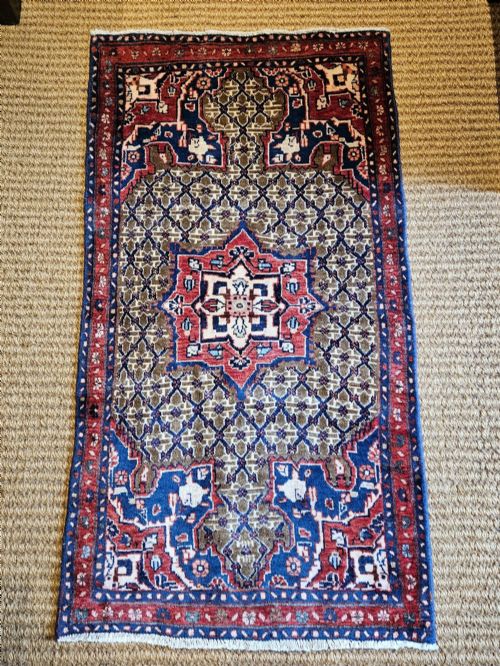
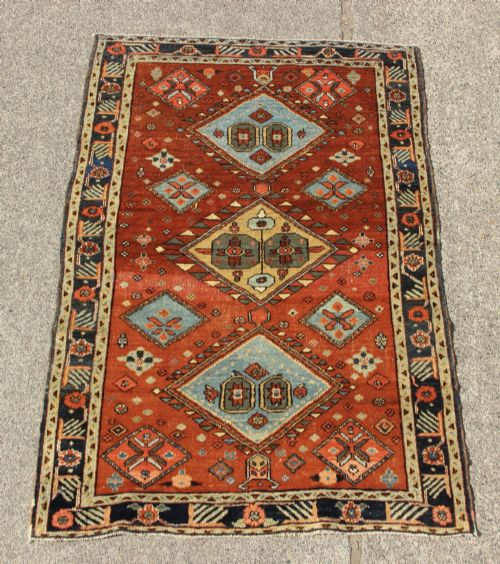
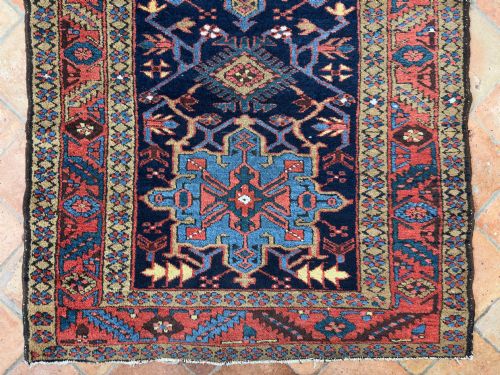
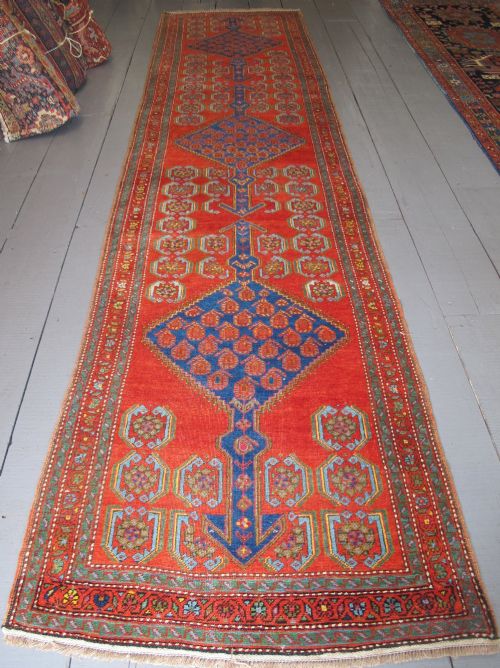
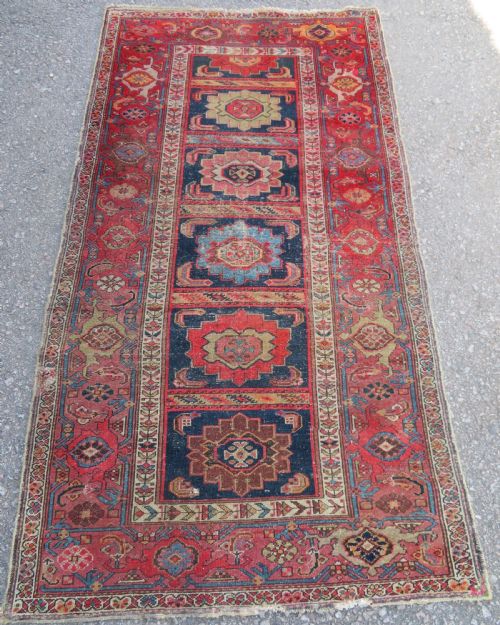


Blue Heriz Runner
A blue heriz runner brings robust North-West Persian geometry and enduring blue hues into long hallways.
Blue Heriz Runner
A blue heriz runner is a hand-knotted carpet format originating from the Heriz region and surrounding North-West Persian districts. These narrow compositions serve domestic corridors and galleries with distinct tribal and traditional Persian patterns.
The selection includes specific regional variants such as Karaja, Gorevan, Bakshaish, Serapi, Sarab, and Hastrud weaves. Pieces date predominantly from the late nineteenth century through the early decades of the twentieth century, spanning the 1870s to the 1930s.
Buyers encounter long hallway formats alongside broader rugs and carpets categorized under runner rugs and area rugs. The predominant structural layouts utilise durable wool foundations intended for high-traffic environments.
Materials and Construction
Weavers constructed these runners using hand-spun wool pile knotted onto sturdy cotton warps and wefts. This combination yields a dense, resilient textile capable of enduring decades of heavy footfall.
Natural dye traditions supplied the characteristic blue tones alongside contrasting earth pigments. Artisans tied symmetrical knots by hand, securing geometric medallions and repeating motifs across the elongated field.
Blue Heriz Runner Retail Price Guide 2026
Typical asking prices for blue heriz runner among the pieces listed under this phrase on Sellingantiques today, from the lower quarter to the upper quarter. They describe what is for sale here now, not the wider market.
Listings span multiple decades from the 1870s through the 1930s, using wool and cotton materials across Persian tribal styles.
Assessing Quality and Execution
Knot density and structural integrity dictate the baseline durability of each runner. Finer knotting allows for sharper geometric precision in the medallion and corner spandrel designs.
The saturation and variety of natural dye colours influence visual depth. Expressive handling of the wool pile and well-balanced proportions separate exceptional regional specimens from standard village production.
The Blue Heriz Runner Glossary
- Heriz
- A region in North-West Persia known for producing sturdy, large-scale geometric carpets and runners. These textiles typically feature prominent central medallions and durable cotton foundations.
- Serapi
- An older, highly regarded stylistic grouping associated with Heriz production. Pieces from this tradition often display more open fields and softer, harmonious colour palettes.
- Karaja
- A neighbouring weaving centre producing village rugs with distinct geometric village patterns. Such pieces share technical traits with Heriz work while maintaining individual tribal motifs.
- Runner
- An elongated narrow carpet format designed specifically for corridors, staircases, and hallways. Proportions prioritize length over width to fit transitional architectural spaces.
- Medallion
- The central ornamental motif dominating the field of the carpet. Traditional Persian design uses this focal point to anchor the surrounding geometric geometry.
Blue Heriz Runner: Frequently Asked Questions
How do I date an antique runner?
Dating relies on stylistic markers, structural analysis, and material characteristics recorded across nineteenth and twentieth-century production. Early examples often display specific regional palettes and coarser village wools.
Changes in synthetic dye introduction around the late nineteenth century also help establish chronological brackets for Persian carpets.
Where were these runners made?
These textiles originate from towns and villages across the North-West Persian region, notably Heriz, Karaja, Serapi, and Bakshaish. Local workshops utilised indigenous wool and traditional geometric designs.
Surrounding districts like Sarab and Hastrud contributed distinct regional variations to this broader weaving tradition.
How do I care for wool runners?
Wool runners require regular gentle vacuuming without rotary brush attachments to protect the hand-knotted pile. Professional cleaning suited for antique textiles preserves the natural lanolin in the wool.
Using a quality underlay prevents sliding and reduces friction against hard flooring during daily use.