

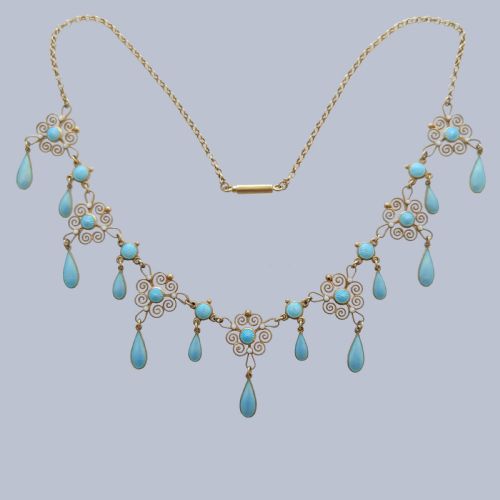
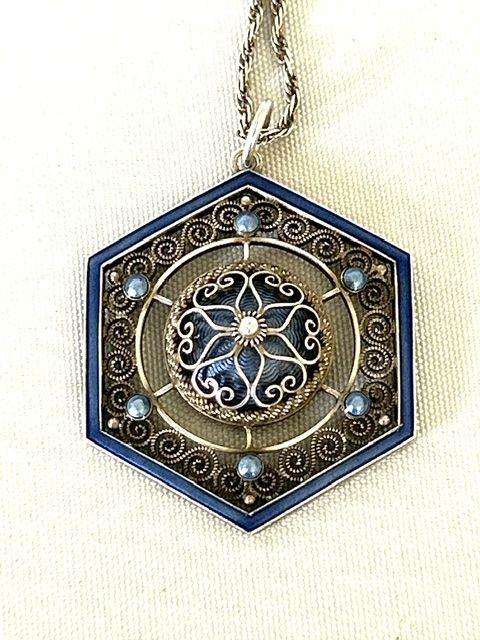
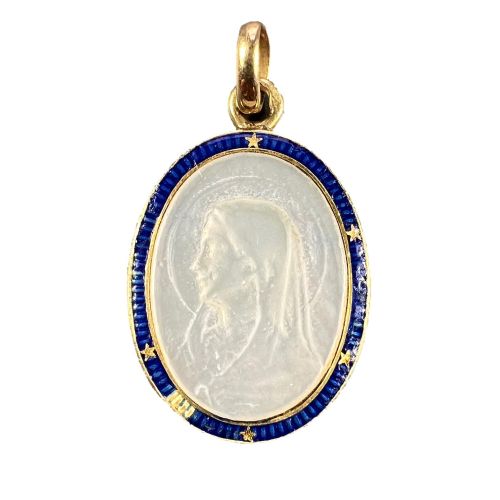
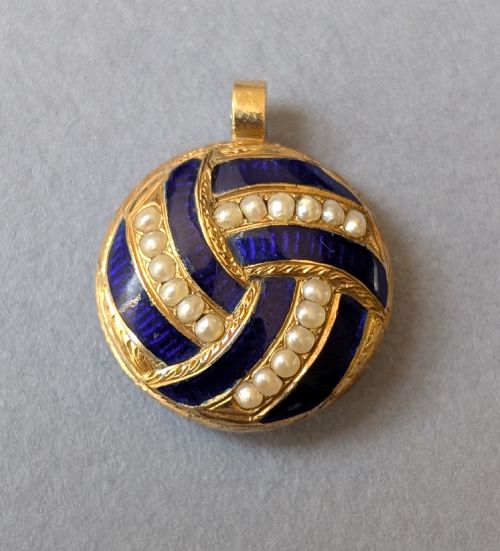



Blue Guilloche Pendant
A blue guilloche pendant brings precision engine-turned engraving beneath translucent enamel, offering a wearable piece of history.
Blue Guilloche Pendant
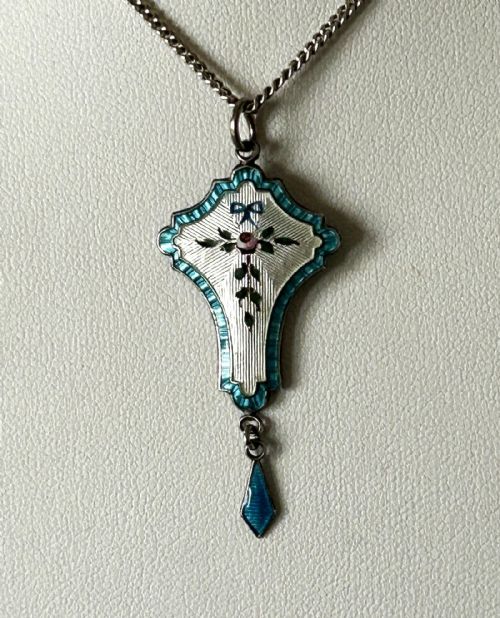
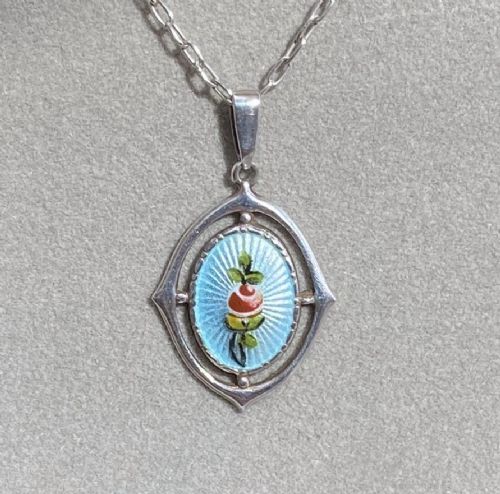
A blue guilloche pendant is a small wearable ornament defined by geometric machine-turned patterns showing through layers of coloured vitreous enamel. These pieces cross several eras, appearing in Victorian, Edwardian, and Art Deco designs that span the 18th century to 1930.
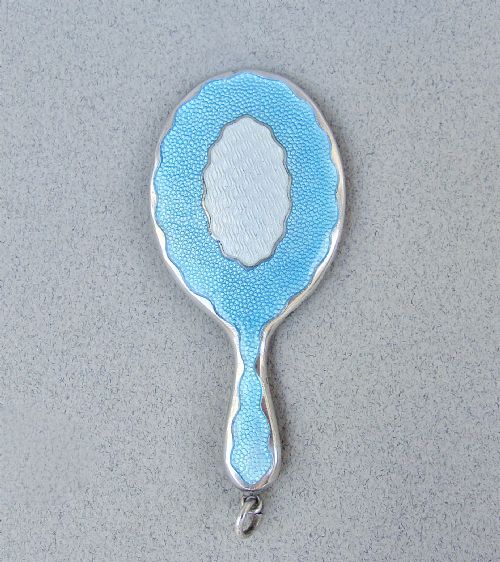
The form stretches beyond simple necklaces to encompass heart-shaped puff pendants, lockets, and miniature purses or compacts fitted with suspension loops. Silver and gold serve as the primary mountings for these items.
Makers from various European centres produced them, combining metalwork with enamel techniques to create distinct circular and geometric motifs. Buyers frequently encounter examples featuring sterling silver and yellow gold settings.
How they were made
Craftsmen used a rose engine lathe to cut precise, repetitive mechanical patterns into a metal base of silver or gold before applying enamel. This engine-turning creates the signature shimmering background visible beneath the translucent blue surface.
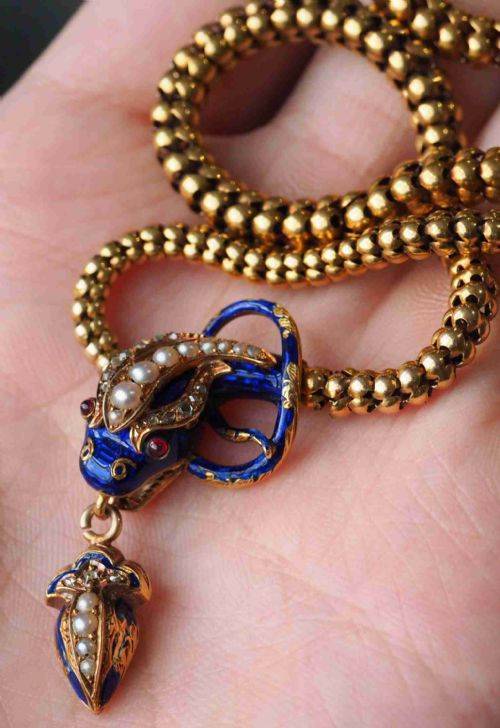
Vitreous enamel powder was then fused to the engraved metal through high-temperature firing, often enhanced with supplementary gemstones like pearls and diamonds. Certain pieces integrate additional decorative elements such as mother-of-pearl or miniature mirror panels.
Blue Guilloche Pendant Retail Price Guide 2026
Typical asking prices for blue guilloche pendant among the pieces listed under this phrase on Sellingantiques today, from the lower quarter to the upper quarter. They describe what is for sale here now, not the wider market.
Listings feature Victorian, Edwardian, and Art Deco periods, utilising materials such as vitreous enamel, sterling silver, gold, pearls, and diamonds.
What varies in quality
Quality rests upon the crispness of the underlying machine engraving and the even depth of the enamel layer above it. Superior pieces maintain flawless glass surfaces without chipping or cloudiness across the patterned fields.
The fineness of the metalwork, whether sterling silver or high-carat gold, also dictates the standard of the object. Integral details like secure hinge mechanisms and well-set diamonds elevate specific examples.
Marius Hammer·Henry Williamson·Henry Matthews·Henry Perkins And Sons·Charles Horner
The Blue Guilloche Pendant Glossary
- Guilloche
- A decorative technique where a mechanical lathe engraves precise geometric patterns into a metal substrate. This underlying texture creates a shifting play of light when viewed through translucent enamel.
- Vitreous Enamel
- A material made by fusing powdered glass to a metal surface at high temperatures. It provides the glossy, coloured coating characteristic of these pendants.
- Puff Pendant
- A rounded, three-dimensional pendant form often fashioned as a hollow heart or locket. These pieces provide internal space for keepsakes or photographs.
- Vinaigrette
- A small ornamental box featuring a perforated inner grille that once held a sponge soaked in aromatic vinegar. These portable containers date from the 18th century onward.
- Rose Engine Lathe
- A specialised machine tool used to produce complex curved and geometric patterns on metal surfaces. It forms the basis of authentic guilloche decoration.
Blue Guilloche Pendant: Frequently Asked Questions
How do I date a blue guilloche pendant?
Dating relies on hallmarks stamped into the metal mounts, alongside the overall stylistic clues of the piece. Victorian examples often show heavier gold work, while Art Deco pieces favour clean geometric lines and silver.
Examining the fastening loops and interior compartments also helps confirm the period of manufacture, matching stylistic trends from the 18th century through 1930.
Are these pendants made of solid gold or silver?
The mounting materials vary across the pieces, ranging from sterling silver and chrome to fifteen-carat and eighteen-carat gold. Makers matched the metal choice to the intended luxury level of the accessory.
Precious metal marks or assay stamps frequently appear on the frames or jump rings, confirming the exact standard used by the workshop.
How should I care for enamel jewellery?
Enamel is essentially coloured glass fused to metal, meaning it requires protection from hard knocks and sharp impacts. Cleaning should involve only warm soapy water and a soft cloth rather than harsh chemical dips.
Storing each pendant separately prevents scratching against other items in a collection, preserving the smooth translucent surface over time.
What is the difference between a locket and a pendant?
A pendant is designed primarily as a decorative ornament suspended from a chain or cord. A locket includes a hinged compartment intended to hold miniature portraits or small keepsakes.
Many antique pieces combine both functions, presenting decorated guilloche enamel on the exterior while concealing a functional photo frame inside.