







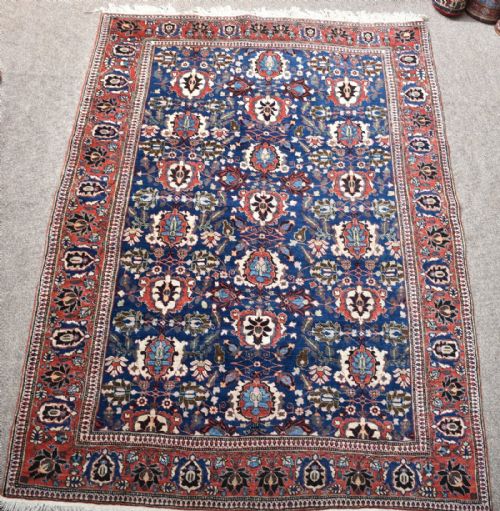
Blue Ground Persian Carpet
A blue ground persian carpet brings deep indigo and azure warmth to a floor, grounding a room with centuries of hand-knotted tradition.
Blue Ground Persian Carpet
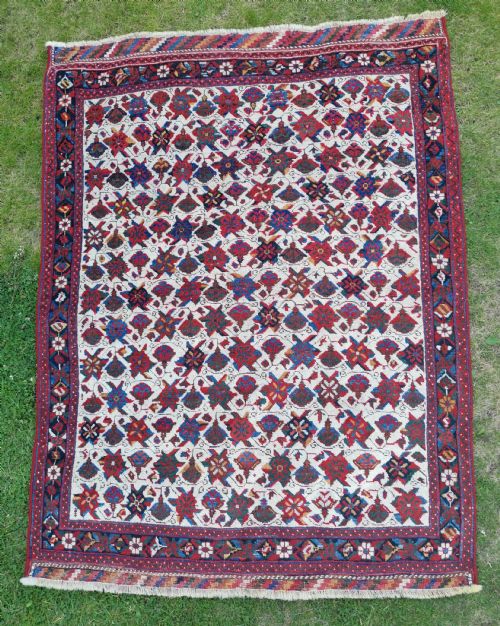
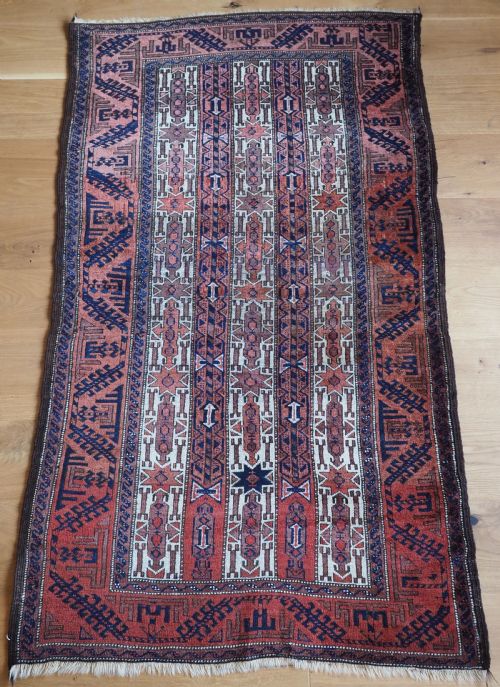
A blue ground persian carpet brings together regional styles from across Persia, spanning village rug production and larger city carpets. When you search for a blue ground persian carpet, you encounter room-sized carpets and smaller rugs woven with distinctive indigo and blue fields.
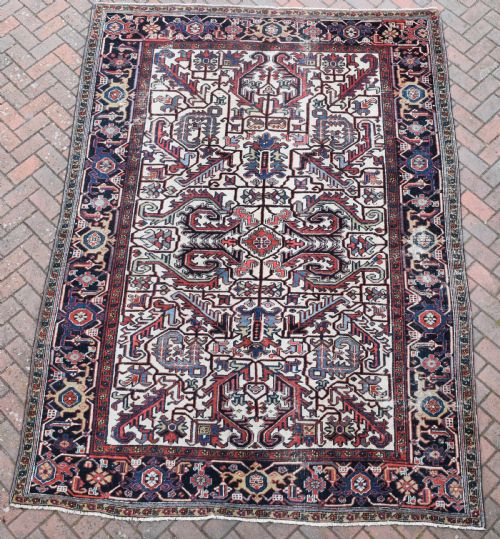
The pieces listed on this page encompass traditional Persian, nomadic tribal, and specific regional designs such as Heriz, Mahal, and Bakhtiari. You are most likely to meet hand-knotted wool examples dating from the late nineteenth century up through the 1930s.
How they were made
Traditional weavers constructed these carpets using wool piles hand-knotted onto sturdy cotton foundations. This pairing of resilient wool and reliable cotton allowed the rugs to endure decades of daily foot traffic while retaining their structural integrity.
Dyers utilised natural materials to achieve rich colour palettes, producing deep indigo blues alongside contrasting tones of ivory, red, and green. The application of these dyes often resulted in subtle abrash, where shade variations occur naturally across the wool field.
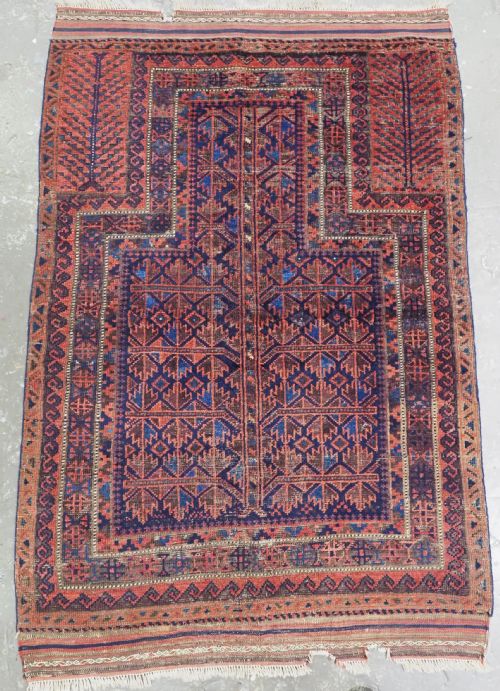
Certain Baluch prayer rugs contain deliberate weaver errors in the border geometry, traditionally left to ward off the evil eye.
What varies in quality
Quality in these carpets rests upon the precision of the knotting and the density of the wool pile. Finer knot counts allow for sharper delineation in intricate motifs like dragon and phoenix designs or geometric mina khani patterns.
The depth and permanence of the dyed field further distinguish individual pieces, as natural indigo patinates differently over time than synthetic alternatives. Structural condition also plays a role, with intact original borders and stable foundation yarns elevating a piece's standing.
The Blue Ground Persian Carpet Glossary
- Medallion
- A large, symmetrical ornamental design motif placed at the exact centre of the carpet field. Many Heriz and Mahal carpets utilise this central focal point.
- Abrash
- A natural variation of colour within the same dye colour field of a rug, caused by batch-dying wool at different times. It creates a subtle, banded visual texture.
- Prayer rug
- A small rug featuring a mihrab or arch design at one end, traditionally used for individual prayer. Timuri and Baluch weavers frequently produced this format.
- Knot count
- The number of individual knots per square inch or decimetre, determining the fineness and durability of the weave. Higher counts generally permit greater detail in geometric and floral patterns.
Blue Ground Persian Carpet: Frequently Asked Questions
How do I clean a vintage Persian carpet?
Regular gentle vacuuming without a beater bar removes surface dust and grit from the wool pile. Professional specialist cleaning remains essential for deep washing to protect natural dyes.
Water spills should be blotted immediately rather than rubbed to prevent the wool fibres from matting. Harsh chemical detergents must be avoided entirely to preserve the integrity of the cotton foundation.
Where should I place a blue ground carpet?
A blue indigo field anchors a living room seating arrangement or adds warmth beneath a dining table. Placing the carpet out of direct, harsh sunlight helps protect the natural dyes from fading.
A quality underlay beneath the rug prevents slipping on hard floors and reduces friction between the cotton foundation and the ground. This extra layer also cushions the wool pile against heavy foot traffic.
How do I date an antique Persian rug?
Stylistic indicators such as specific medallion structures, border motifs, and colour combinations help narrow down the period of production. Comparing the weave density and material handling against documented pieces from the late nineteenth and early twentieth centuries provides further clarity.
Selvedge construction and end finishes often reveal the working methods of particular tribal groups or village workshops. Examination of the wool and cotton yarns gives clues regarding manufacturing eras.
What is the difference between a rug and a carpet?
In historical and trade terminology, carpets generally refer to larger floor coverings designed to span significant portions of a room. Rugs typically describe smaller formats intended for specific areas or accent placement.
Both categories utilise identical hand-knotting techniques and material compositions. The distinction rests purely on physical dimensions rather than methods of construction.