



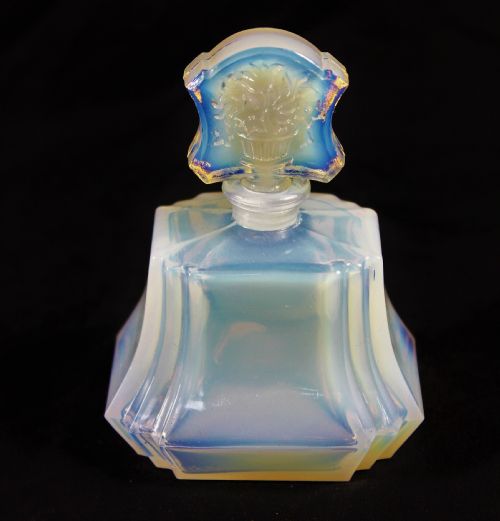


Blue Glass Perfume
Blue glass perfume bottles unite functional vanity items with centuries of glassmaking skill, spanning Victorian opaline and Art Deco opalescent editions.
Blue Glass Perfume
When someone searches for blue glass perfume, they encounter diverse vessels designed to hold scent, ranging from miniature travel scent bottles to dressing table glassware. The most common examples on this page date from the Victorian period through to the Art Deco era of the 1930s.
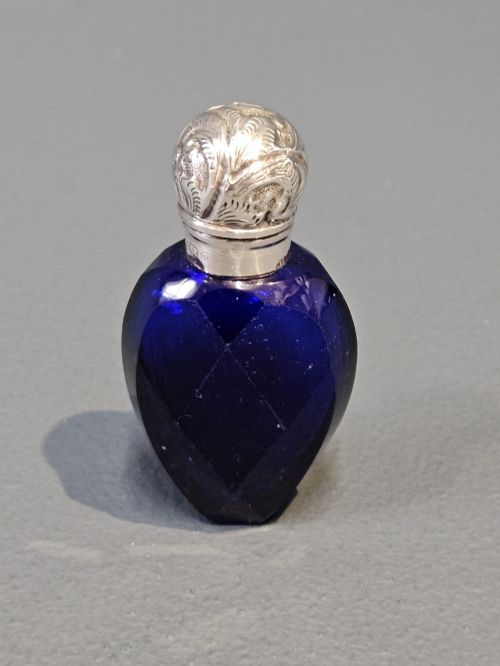
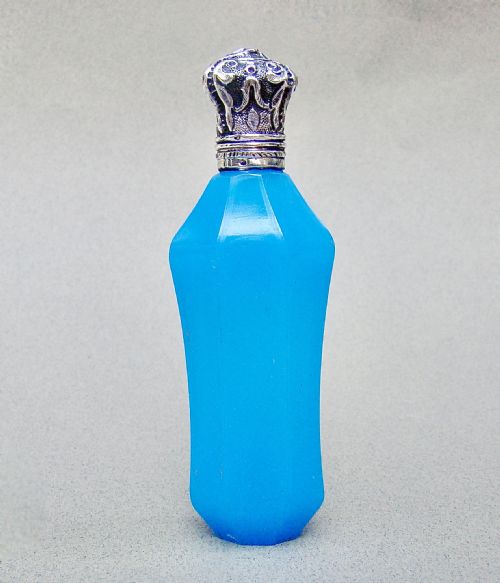
Victorian pieces frequently combine blue opaline or overlay glass with sterling silver mounts, while 1930s examples often take the form of moulded opalescent glass bottles by makers such as Sabino and René Lalique. Earlier forms extend back to 19th-century Venetian and French production, alongside ancient Roman unguentaria.
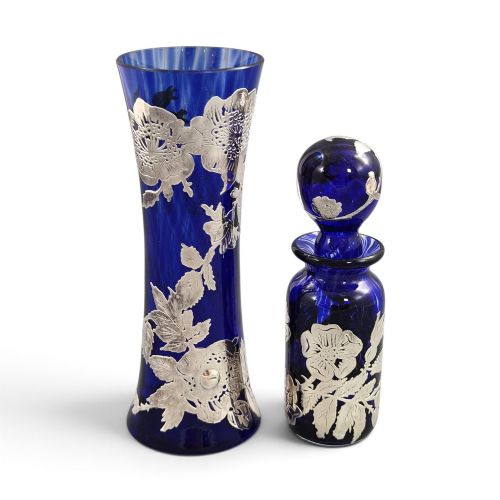
Alongside dedicated perfume bottles, the category embraces vanity glassware, chatelaine scent bottles, and matching dressing table sets that incorporate glass vessels with silver and enamel components.
Materials and construction
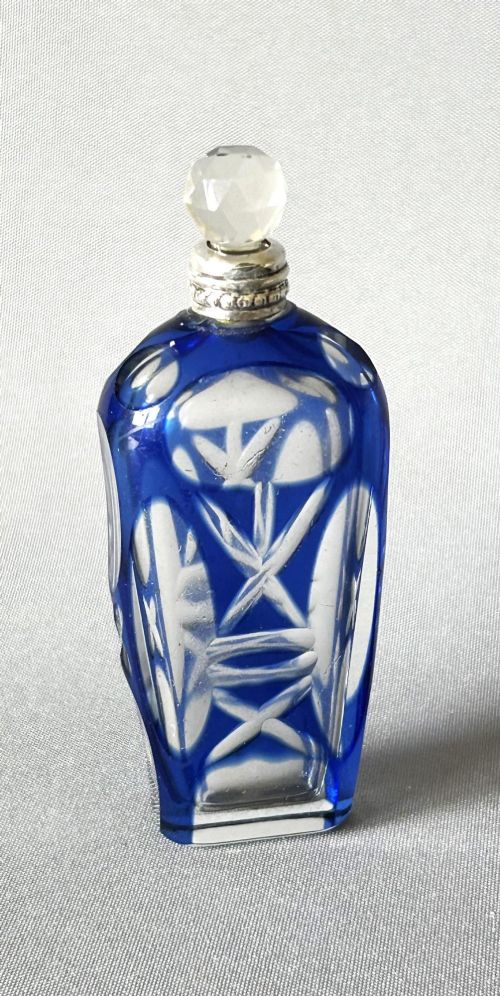
The foundation of these pieces relies on glass in various formulations, including standard blue glass, opaline glass, opalescent glass, and multi-layered overlay glass that allows craftsmen to cut through colours to reveal contrasting layers beneath. Murrina glass techniques also appear in mid-19th-century Italian work.
Metalwork plays an integral structural role, utilising sterling silver, silver mounts, brass, and applied silver overlay or guilloche enamel. Velvet and leather frequently line accompanying vanity cases and jewellery boxes that house these glass vessels.
Blue Glass Perfume Retail Price Guide 2026
Typical asking prices for blue glass perfume among the pieces listed under this phrase on Sellingantiques today, from the lower quarter to the upper quarter. They describe what is for sale here now, not the wider market.
French production dominates the mid-19th and early 20th-century selections, alongside notable contributions from British Victorian silversmiths and Welsh studio glassmakers.
Distinctions in quality
Quality rests upon the crispness of the glass moulding, the depth and clarity of the blue colouration, and the precision of any overlay cutting. Pieces with multi-layered cased glass demand high technical proficiency from the glassblower and cutter.
The integration of metal mounts also dictates standard; heavily chased sterling silver or intricate guilloche enamel work elevates a piece above standard commercial production. Maker attribution, particularly clear signatures on Art Deco opalescent pieces or documented French provenance, distinguishes exceptional items from unmarked contemporaries.
Laugharne Glass·Franchini And Bigaglia·Rene Lalique·Sabino
The Blue Glass Perfume Glossary
- Opaline glass
- An opaque or semi-translucent glass popular in the 19th century, often tinted in delicate shades of blue. It provides a smooth, porcelain-like surface texture.
- Guilloche enamel
- A decorative technique where a precise geometric pattern is mechanically engraved beneath a translucent layer of enamel. It frequently decorates the caps of 1930s bottles.
- Overlay glass
- Glass formed of two or more distinct layers of different colours fused together, allowing craftsmen to cut away the exterior layer to expose the contrasting colour underneath.
- Unguentarium
- A small ancient glass flask used for holding oils or perfumes, commonly excavated from Roman contexts. These early vessels represent the ancient origins of scent storage.
- Chatelaine scent bottle
- A small perfume container suspended from a belt hook or chatelaine wearable frame, designed for portable use during the Victorian period.
Blue Glass Perfume: Frequently Asked Questions
How do I date a blue glass perfume bottle?
Dating relies on stylistic indicators such as Victorian silver hallmarks, Art Deco moulding techniques, and material types like opaline versus opalescent glass.
Examining the metal mounts, screw threads, and stoppers also helps place the bottle within a specific nineteenth or twentieth-century period.
Were these bottles meant for travel?
Many Victorian scent bottles with secure silver screw caps or hinged lids were manufactured for use on travels or suspended from chatelaines.
Larger Art Deco vanity bottles remained stationary on dressing tables as part of matching glass and powder box sets.
What is opalescent glass?
Opalescent glass diffuses light through microscopic particles suspended in the matrix, creating a milky blue glow that shifts appearance depending on the angle of illumination.
This technique was particularly favoured by French makers during the 1930s for sculptural perfume bottles.
How should I clean antique glass scent bottles?
Gentle cleaning with warm water and a soft cloth preserves delicate silver mounts and enamel work without abrasive scratching.
Harsh chemical immersions should be avoided, especially where historical silver overlay or surface gilding remains present.