


Blue Glass Pendant
A blue glass pendant brings rich colour and light to a room, ranging from moulded Art Deco shades to delicate jewellery pieces.
Blue Glass Pendant
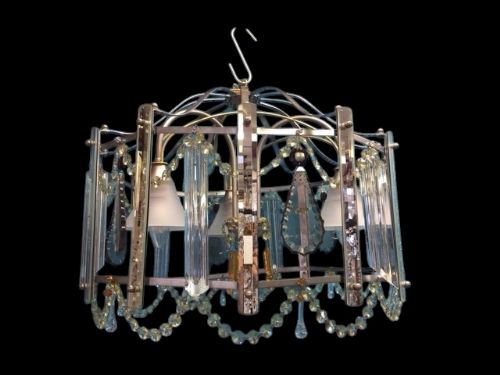
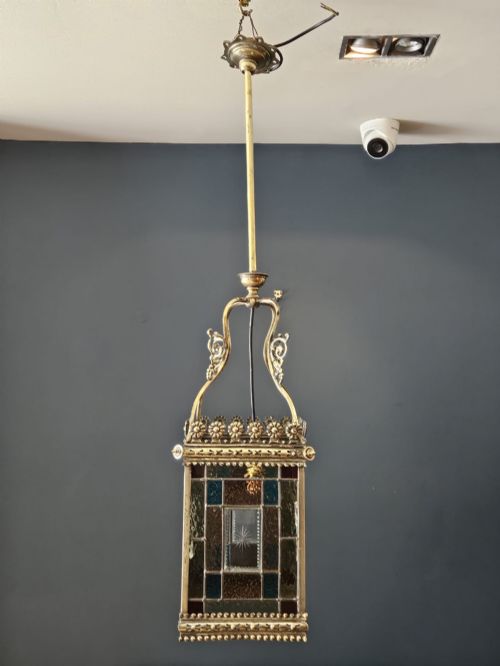
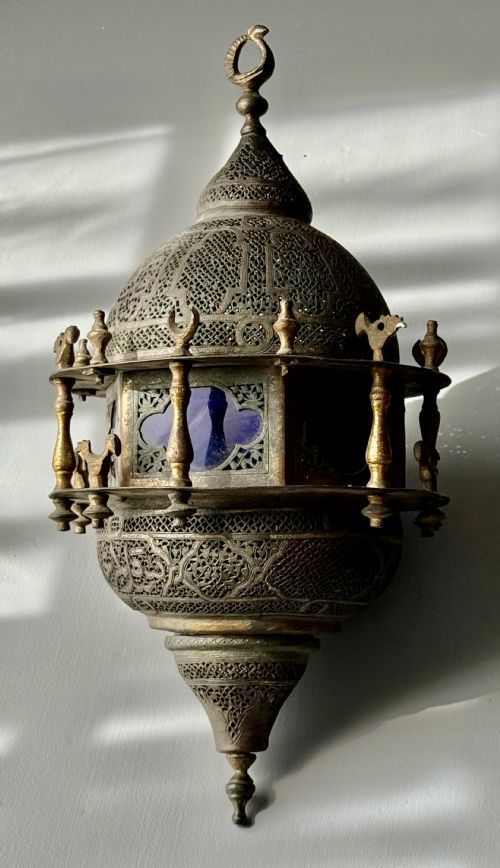
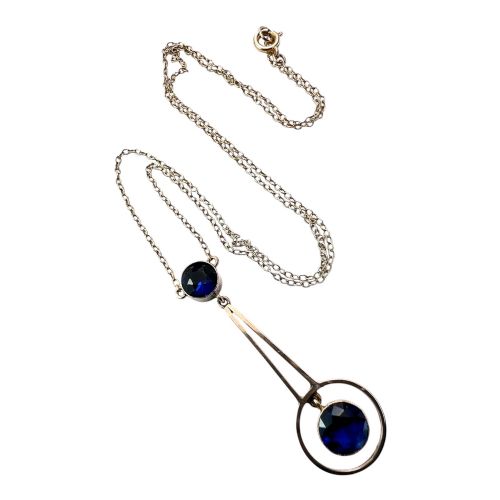
When you search for a blue glass pendant, you encounter a mix of hanging ceiling lights, lanterns, and wearable jewellery spanning the Victorian, Edwardian, and Art Deco periods. These pieces utilise various shades of blue, from deep cobalt to turquoise, captured in glass, crystal, and enamel.
The selection on this page leans heavily towards twentieth-century ceiling fittings alongside nineteenth-century brass-framed lanterns and gold-mounted necklaces. Pendant lights and chandeliers dominate the architectural items, while smaller drops and medals represent the jewellery side.
Materials and construction
Makers shaped the glass elements through mould-blowing, pate de verre, and cutting, often incorporating cobalt or other metallic oxides to achieve deep blue colouration. Metal components typically involve brass, wrought iron, chrome, or precious metals such as nine-carat and eighteen-carat gold.
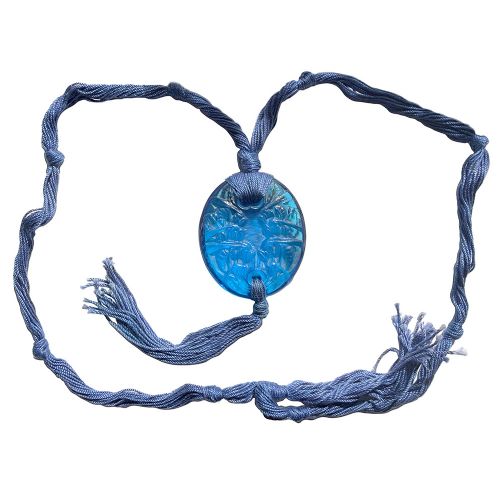
Hanging light fixtures rely on lead or brass framing to secure panels of stained, leaded, or cobalt glass. Jewellery pieces utilise enamel work, such as plique-a-jour, set within gold frames alongside paste or sapphire stones.
Wasps and dragonflies share shelf space here, immortalised in blue glass alongside traditional chandeliers.
Assessing quality and execution
Quality rests on the clarity and depth of the glass, the precision of the metalwork, and the distinctness of the moulding or cutting. Superior pieces display crisp details in pressed glass and secure, well-finished metal frames.
The integrity of the materials distinguishes finer examples, whether through the rich saturation of cobalt glass or the delicate execution of enamel in jewellery. Original mounts and uncompromised glass panels elevate the standing of both lighting and wearable items.
R Lalique·Amalric Walter·Wedgwood
The Blue Glass Pendant Glossary
- Cobalt glass
- Glass coloured deep blue by the addition of cobalt oxide. This intense hue appears in both nineteen-century lanterns and twentieth-century pendant lights.
- Pate de verre
- A glass-casting method involving crushed glass packed into a mould and fused in a kiln. This technique yields textured, vibrant surfaces seen in specific Art Deco pendants.
- Plique-a-jour
- An enamelling technique where enamel is applied to open cells, creating a stained-glass effect without a backing. It appears frequently in fine gold pendant medals.
- Plafonnier
- A ceiling light fixture mounted flush or close to the ceiling. These fixtures often feature moulded or frosted glass bowls.
Blue Glass Pendant: Frequently Asked Questions
How do I hang a heavy pendant light safely?
Ceiling pendants require secure anchoring into ceiling joists using appropriate metal hooks and brackets that match the weight of the brass or iron frame.
Consulting a qualified electrician ensures the wiring handles the drop and meets current safety standards for older light fittings.
What is the difference between a pendant and a chandelier?
A pendant hangs from a single suspension point, typically featuring one main shade or light source like the Art Deco examples listed here.
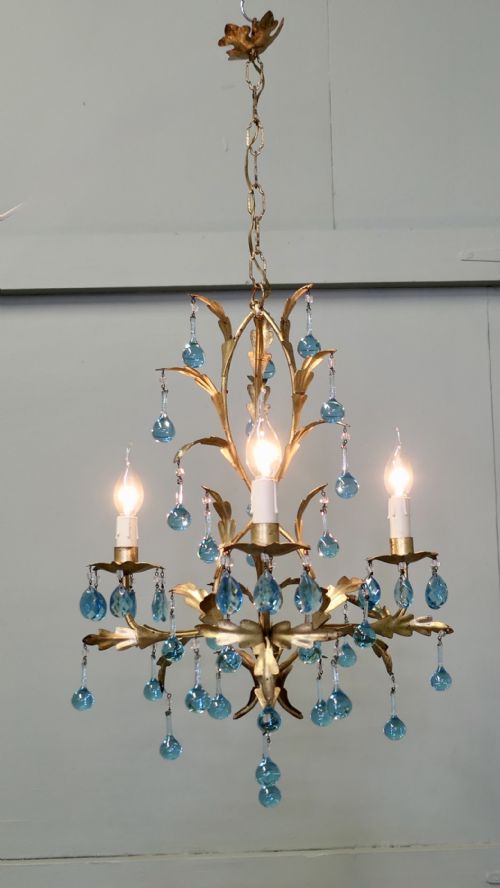
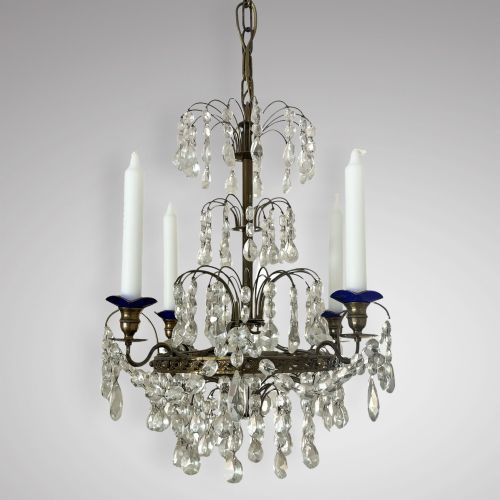
By contrast, a chandelier involves multiple branches or tiers distributing light across several arms, as seen in the Swedish and French crystal pieces.
How should I clean antique blue glass?
Warm water and a mild detergent applied with a soft cloth safely remove dust from glass and metal surfaces without damaging the material.
Avoid harsh chemical cleaners that can strip patination from brass frames or harm delicate enamel work on jewellery pendants.
Are these lighting fixtures wired for modern use?
Many antique light fittings retain older wiring components that require replacement to function safely in contemporary homes.
An electrician can easily rewire brass frames and lantern bodies while preserving the original metalwork and glass shades.