
Blue Gemstone Gold Ring
A blue gemstone gold ring brings together precious metal and coloured stones in designs spanning the Victorian era to the mid-twentieth century.
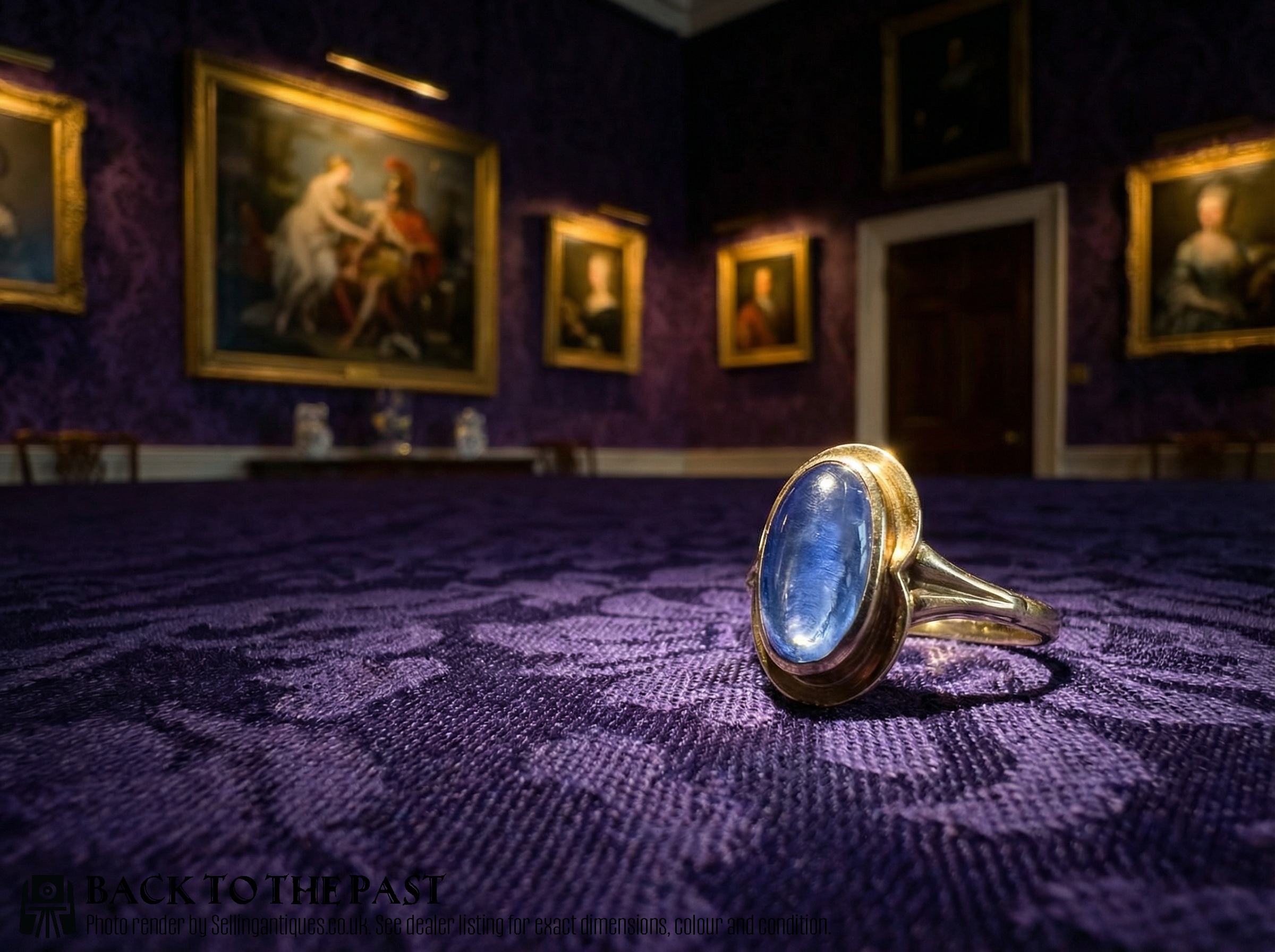
Blue Gemstone Gold Ring
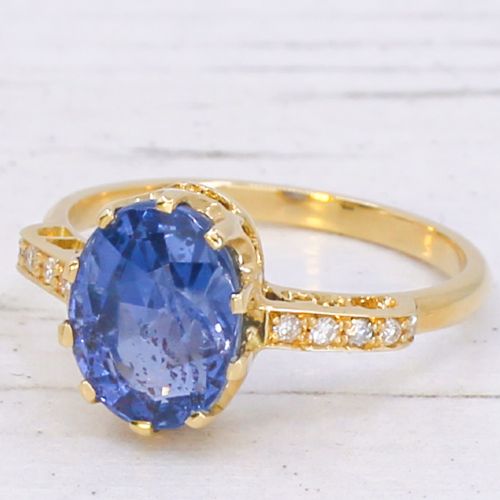
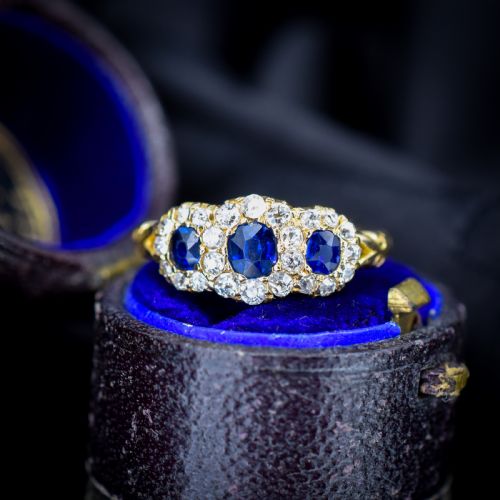
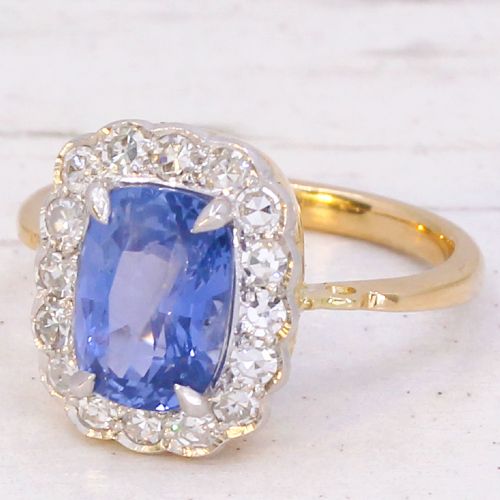
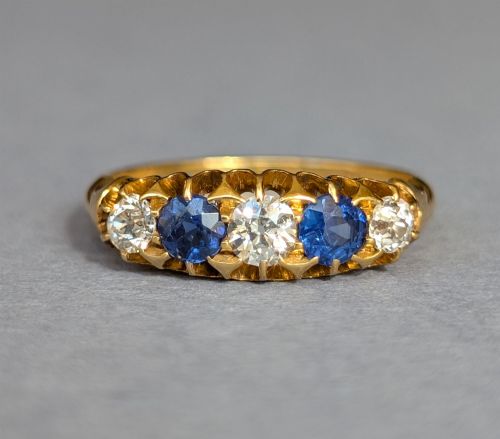
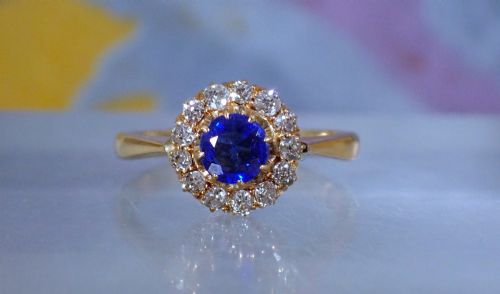
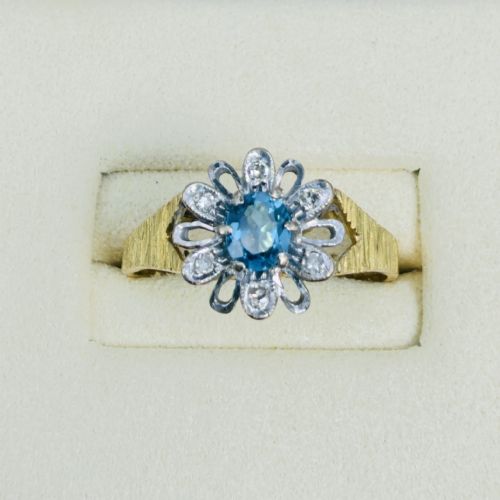
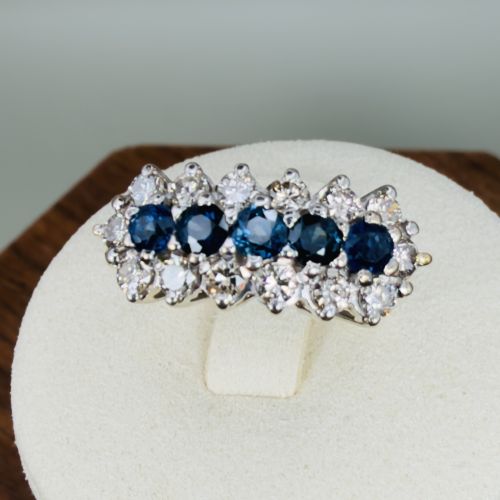
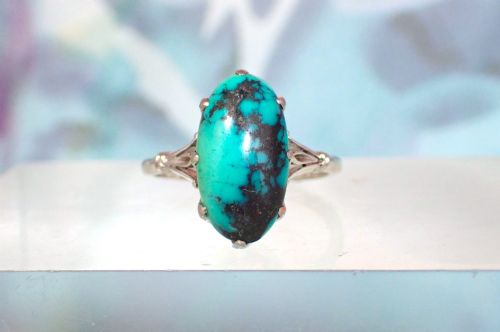
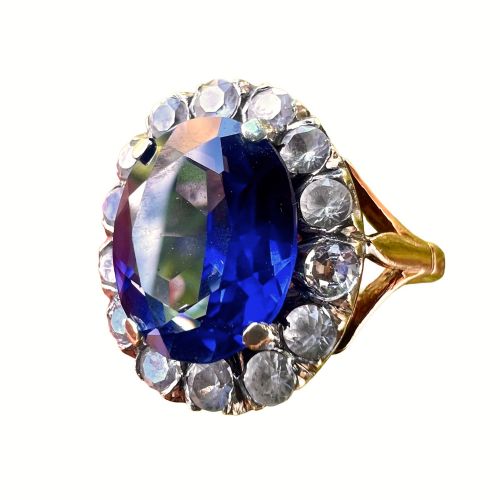
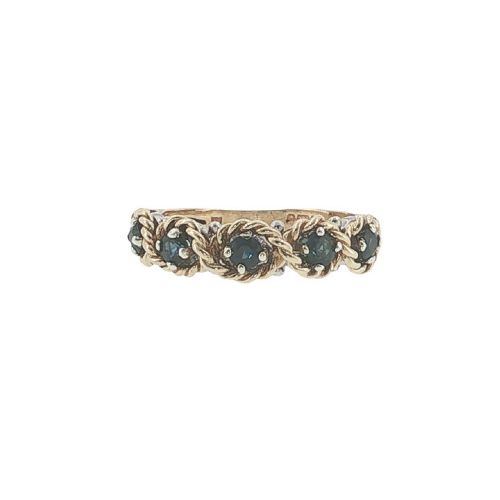
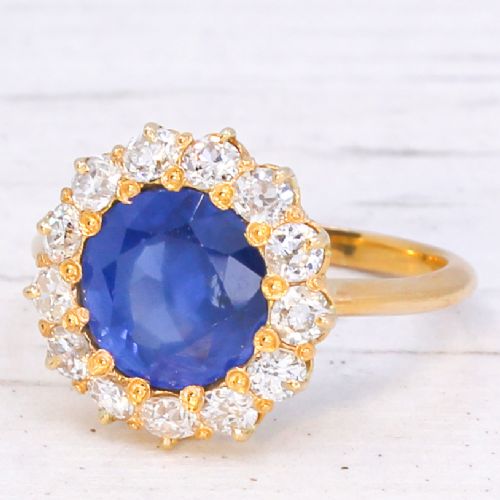
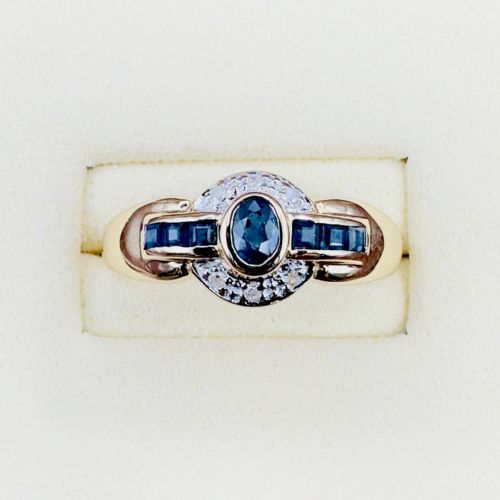
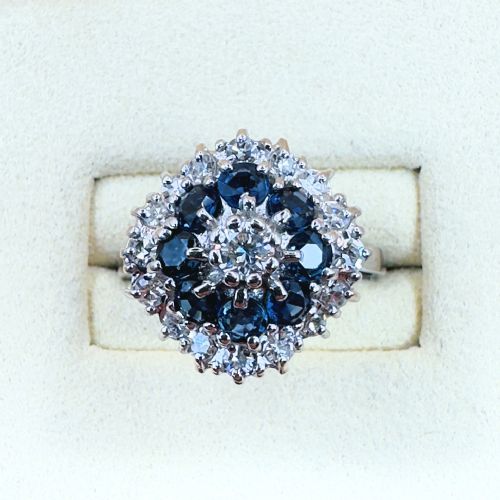
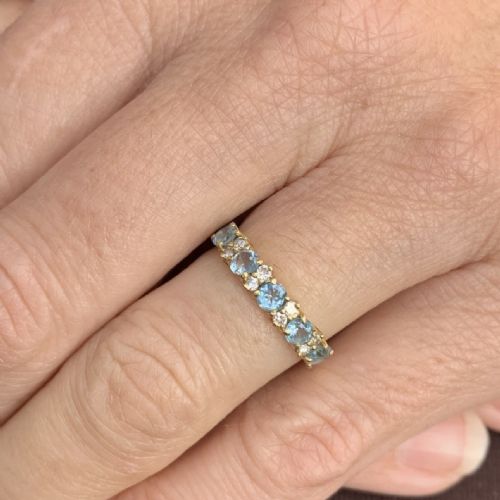
A blue gemstone gold ring is a piece of jewellery centring on a blue stone set in gold, drawing on periods from the nineteenth century through the mid-twentieth century. The selection includes cluster, daisy, and solitaire arrangements alongside multi-stone band configurations.
Buyers seeking this style encounter antique Victorian and Edwardian examples alongside Art Deco and mid-century pieces. Sapphires dominate the selection, accompanied by aquamarine, turquoise, blue spinel, and blue zircon.
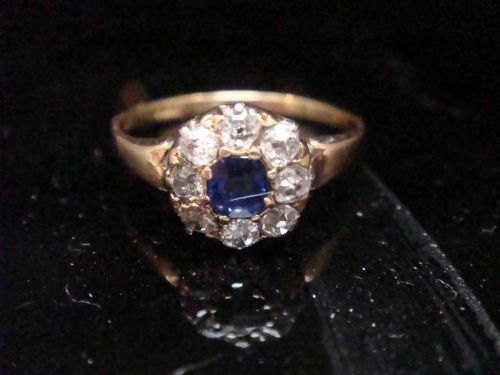
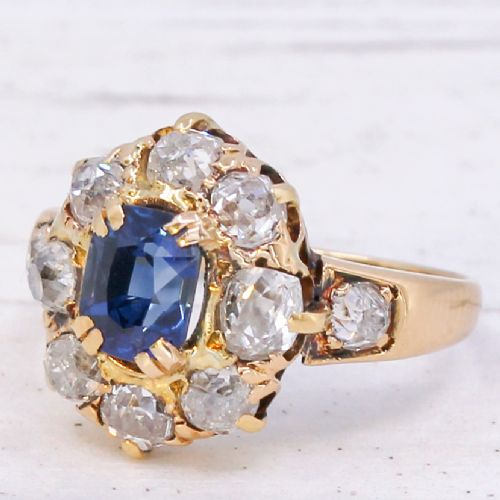
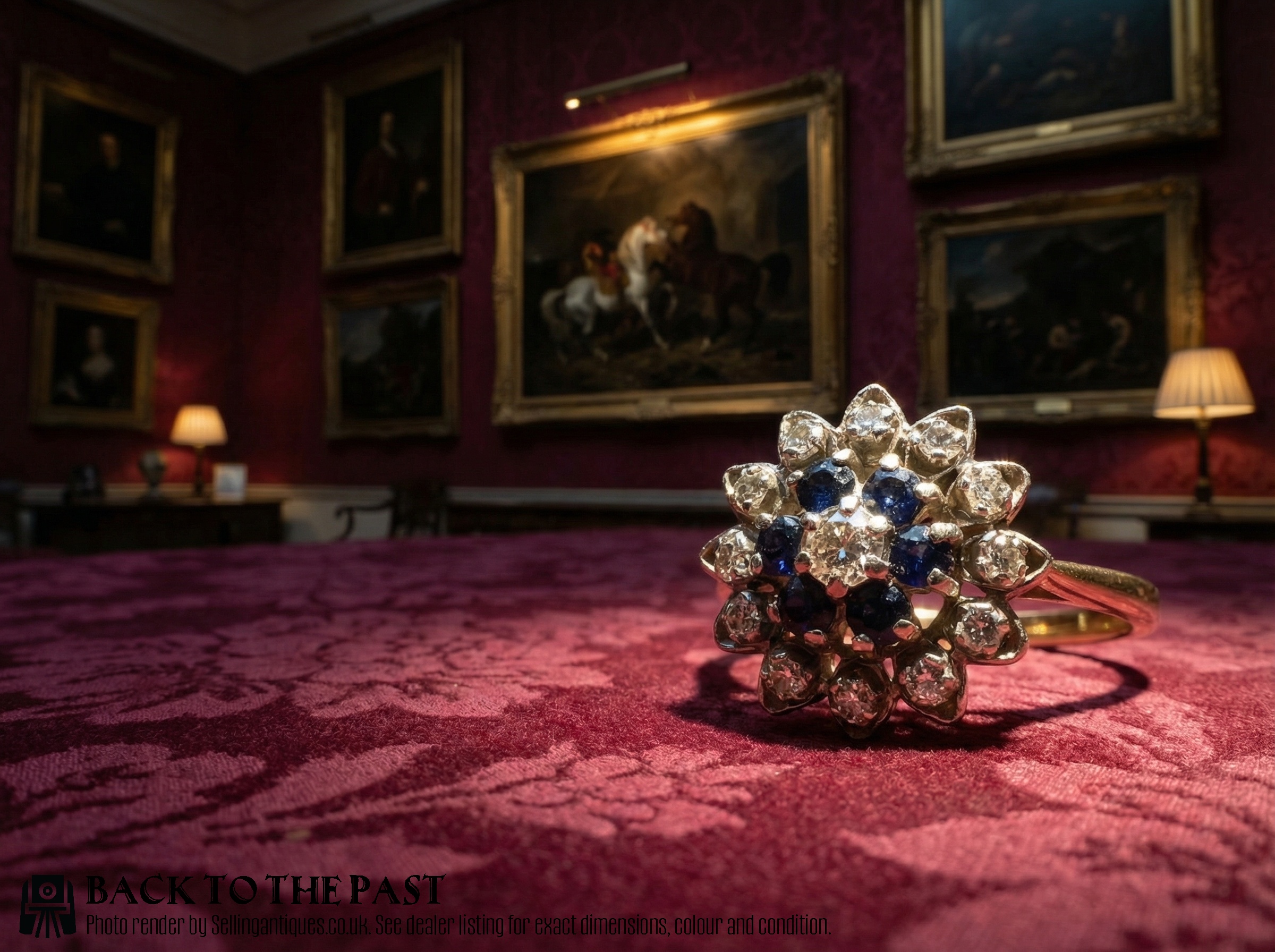
Cluster and daisy formations appear frequently among the pieces, often combining the central blue stone with surrounding diamonds. Simpler band formats and half eternity styles also represent the range available.
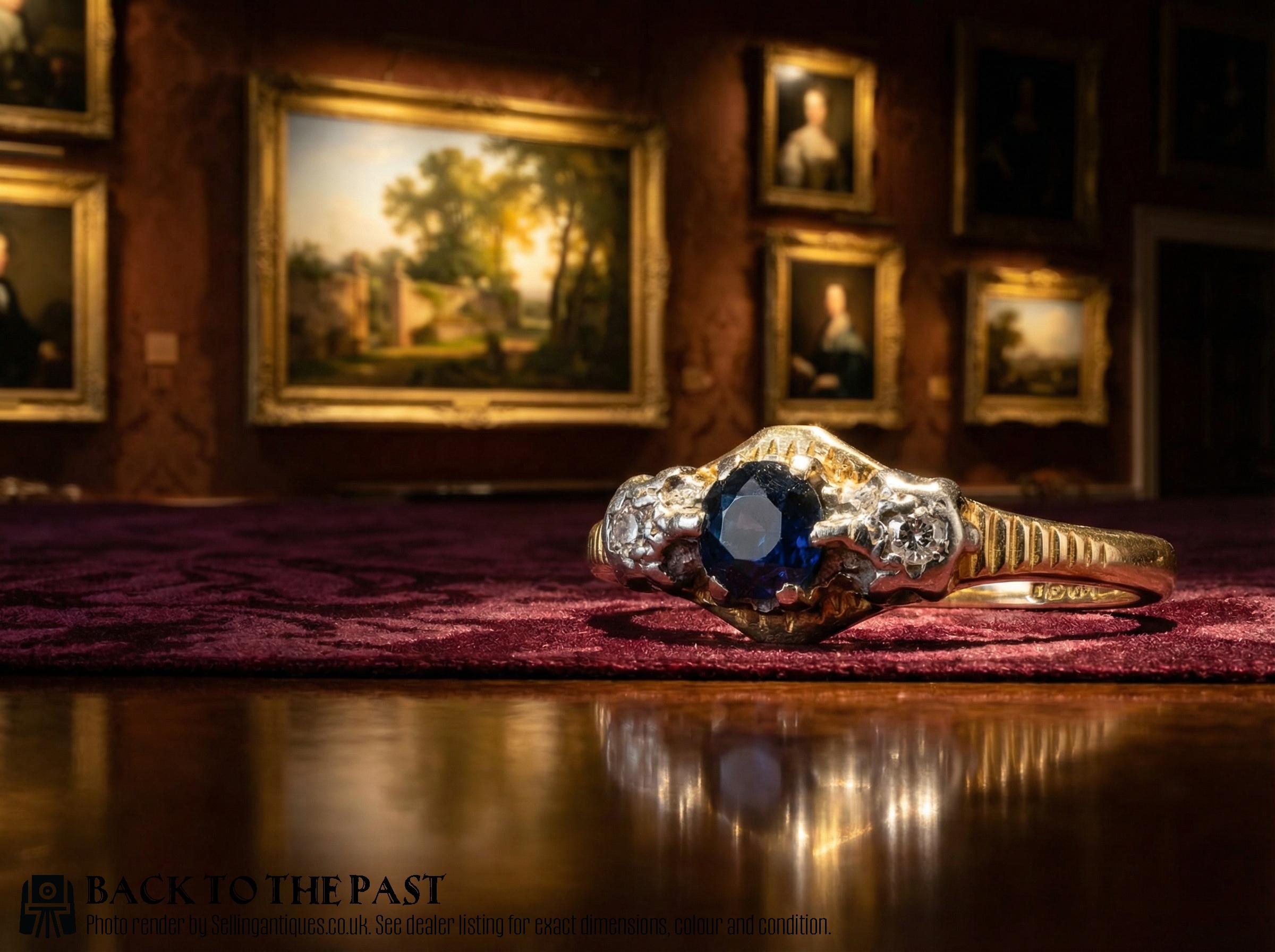
Materials and construction
The mounts utilise 18ct yellow gold, 18ct white gold, 9ct gold, 14ct gold, and platinum. Metal selection shifted according to period preference, from traditional yellow gold in earlier Victorian designs to white gold and platinum during the Art Deco era.
Gemstone setting involves traditional claw, bezel, and halo arrangements tailored to the cut of the stone. Old cut diamonds frequently accompany the central blue stones in cluster configurations.
Blue Gemstone Gold Ring Retail Price Guide 2026
Typical asking prices for blue gemstone gold ring among the pieces listed under this phrase on Sellingantiques today, from the lower quarter to the upper quarter. They describe what is for sale here now, not the wider market.
Gemstone choices extend beyond sapphire to include aquamarine, turquoise, blue zircon, and blue spinel.
Distinguishing quality
Quality separates pieces through the provenance and treatment status of the central gemstone, with unheated origins and notable carat weight commanding attention. The clarity and cut of supporting diamonds further distinguish finer examples.
The integrity of the metalwork and the precision of the stone settings indicate the level of craftsmanship involved. Well-preserved original mounts maintain sharper detail in cluster and daisy configurations.
The Blue Gemstone Gold Ring Glossary
- Cluster ring
- A ring featuring a central gemstone encircled by a group of smaller stones, typically diamonds.
- Daisy ring
- A specific cluster formation where round stones radiate around a central gem to resemble a flower.
- Old cut diamond
- A diamond cut by hand before modern machinery, characterised by a high crown and smaller table.
- Unheated sapphire
- A sapphire that has undergone no thermal enhancement to improve its natural colour or clarity.
- Half eternity ring
- A band set with gemstones along roughly half of the circumference of the ring.
Blue Gemstone Gold Ring: Frequently Asked Questions
How do I identify a Victorian blue gemstone gold ring?
Victorian examples often utilise 18ct yellow gold and incorporate stones like turquoise, split pearls, or sapphires alongside diamonds in cluster or multi-stone arrangements. The mount construction reflects nineteenth-century hand-finishing techniques.
Heavier bezels and rich yellow gold hues help separate these nineteenth-century pieces from later twentieth-century designs.
What is the difference between synthetic and natural sapphires?
Natural sapphires formed within the earth over millions of years, while synthetic counterparts are laboratory-grown materials with identical chemical properties. Antique pieces occasionally feature synthetic stones accompanied by gem reports.
Examination under magnification reveals growth lines or inclusions that confirm natural origin compared to laboratory creation.
How should I care for a vintage gold and sapphire ring?
Sapphire and gold withstand daily wear relatively well, though regular cleaning in warm soapy water maintains stone brilliance. Avoid harsh chemical cleaners that might affect softer surrounding gems like turquoise or pearls.
Storing the ring separately prevents scratching against other items in a jewellery collection.
What defines an Art Deco blue stone ring?
Art Deco pieces from the 1920s and 1930s frequently employ 18ct white gold or platinum to complement geometric designs. Blue zircon, spinel, and sapphires often appear alongside onyx accents.
Symmetrical layouts and precise linear metalwork distinguish this period from earlier ornate styles.