

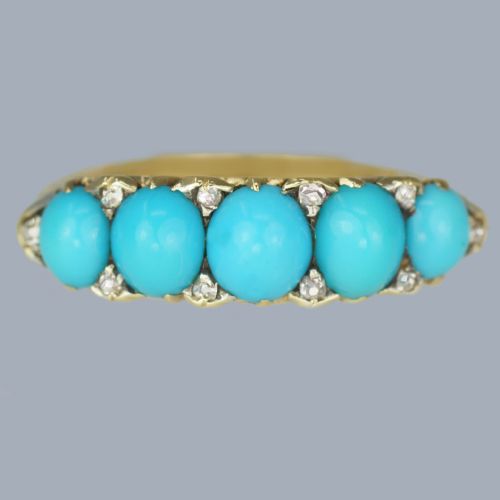


Blue Gemstone Band
A blue gemstone band brings together rich sapphire, turquoise and spinel set across Victorian, Edwardian and mid-century rings.
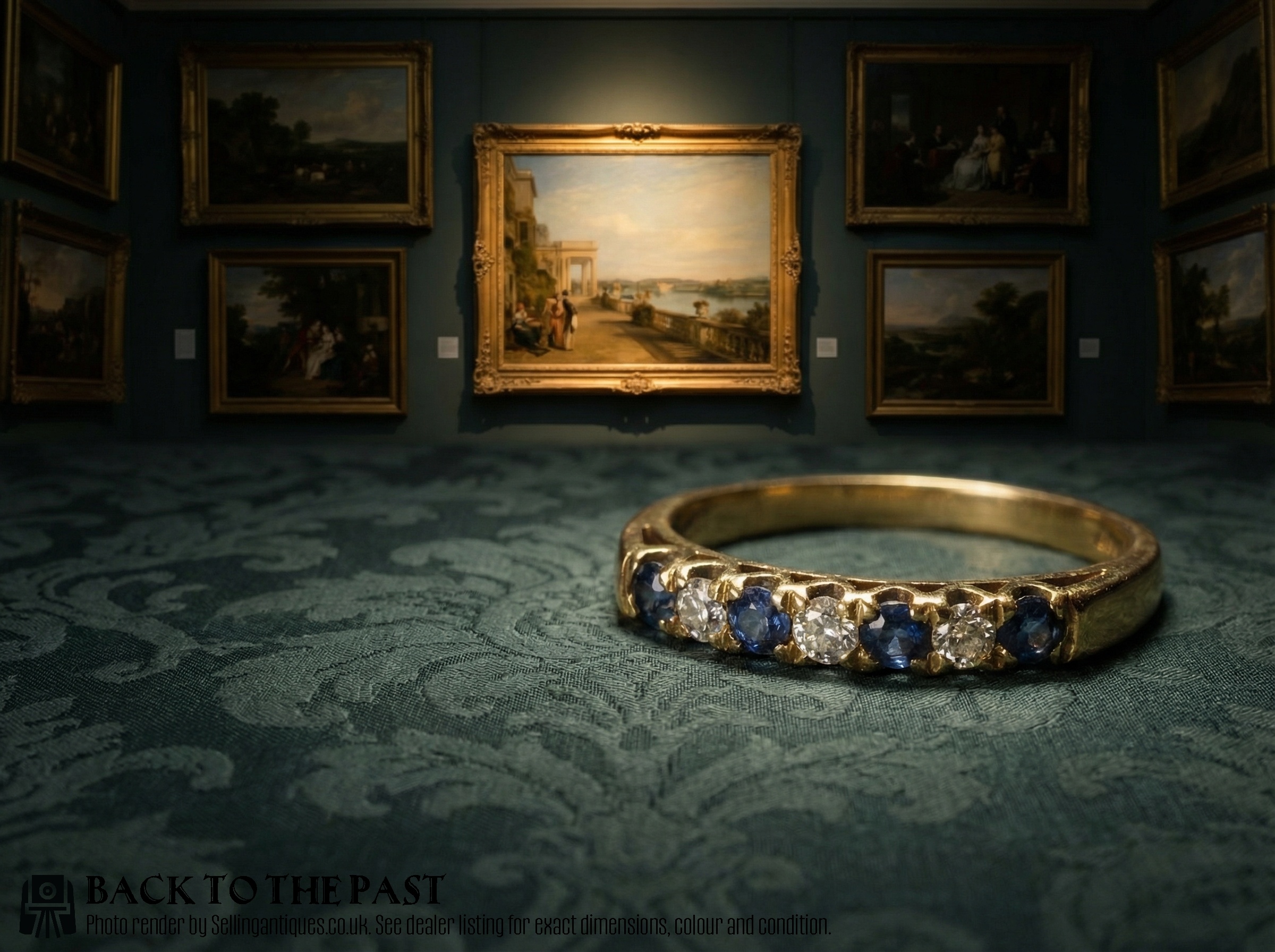
Blue Gemstone Band
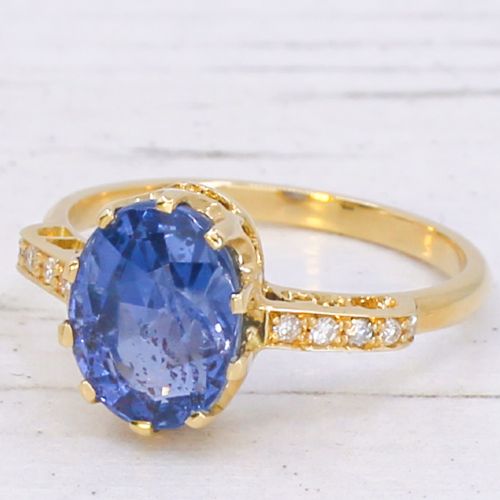
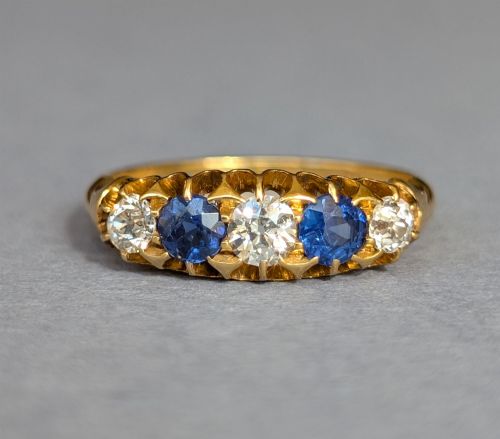
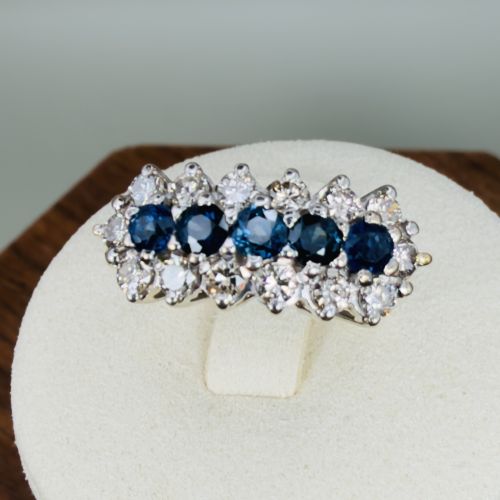
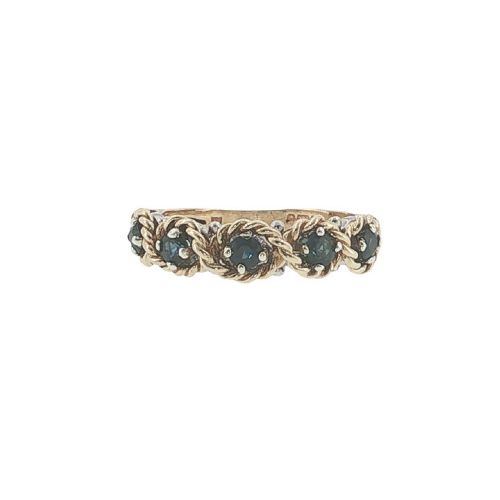
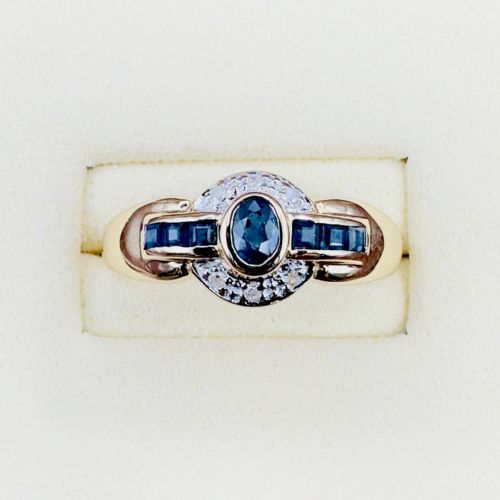
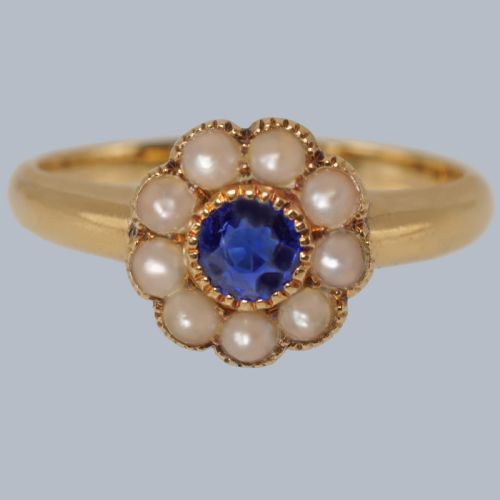
A blue gemstone band encompasses finger rings featuring sapphire, turquoise, spinel and moonstone mounted in gold, platinum and silver. The pieces span periods from the nineteenth century through the Edwardian era and into the mid-twentieth century.
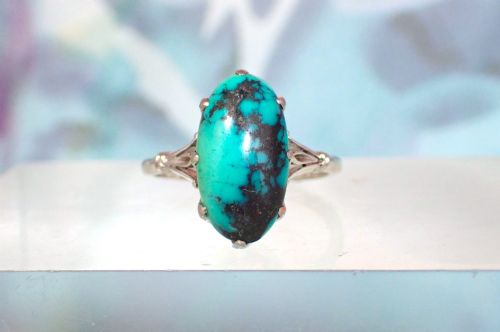
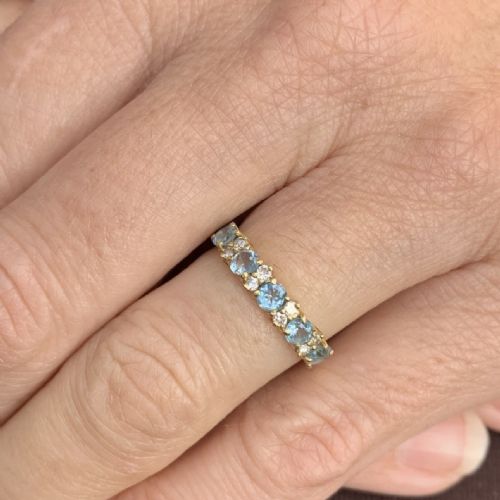
Most items on this page are sapphire and diamond cluster or multi-stone rings, alongside turquoise mounts and half eternity configurations. These pieces function as everyday wear or historic adornment, appearing in yellow gold, white gold and platinum settings.
Materials and Construction
Goldsmiths utilised 18 carat yellow gold, 9 carat gold, platinum and sterling silver to fabricate these mounts. Gemstones such as unheated Ceylon sapphires, Burmese sapphires and turquoise cabochons are secured alongside old cut and diamond accents.
Techniques range from hand-carved boat settings and cluster arrangements to channel-set half eternity bands. Metalwork incorporates hallmarking and traditional claw or bezel settings suited to each period.
Listings feature pieces spanning the Victorian, Edwardian, Art Deco and mid-century periods, utilising sapphire, turquoise, spinel and diamond set in gold and platinum.
Distinctions in Quality
Quality rests upon the natural origin and treatment status of the central stones, such as unheated Kashmir or Ceylon sapphires, compared to standard commercial stones. The weight and cut of accompanying diamonds further separate examples.
The integrity of the metalwork, clarity of period hallmarks and overall preservation of the setting define the standing of each ring. Heavier gauge gold and crisp casting distinguish finer workshops.
The Blue Gemstone Band Glossary
- Cabochon
- A gemstone shaped and polished with a smooth convex surface rather than faceted. This cut suits opaque or translucent stones like turquoise and moonstone.
- Half Eternity
- A ring set with gemstones along approximately half of the band's circumference. This layout provides the visual effect of an eternity ring while allowing easier resizing.
- Boat Ring
- A ring featuring a navette or boat-shaped setting that tapers towards the shoulders. This design was popular during the Georgian and Victorian periods to display clustered gems.
- Trilogy Ring
- A ring set with three principal stones, often interpreted as representing the past, present and future. These commonly pair a central sapphire with flanking diamonds.
Blue Gemstone Band: Frequently Asked Questions
How do I care for a turquoise ring?
Turquoise is a softer, porous material that requires gentle handling away from harsh chemicals and prolonged water immersion. Clean the stone using a soft, dry cloth rather than ultrasonic jewellery cleaners.
Store the ring separately from harder diamonds to prevent surface scratching. Removing the ring during physical tasks preserves the integrity of both the stone and the gold mount.
What is the difference between an unheated sapphire and a standard sapphire?
An unheated sapphire has undergone no artificial thermal enhancement to improve its natural colour or clarity. These stones are evaluated for their inherent geological qualities.
Standard commercial sapphires frequently undergo routine heating to intensify hue. Certification papers usually accompany unheated stones to confirm their natural origin.
Can these rings be resized easily?
Resizing depends on the construction of the band and the distribution of stones around the hoop. Half eternity bands with stones set all the way along the sides present greater sizing challenges than solitaire or three-stone designs.
A skilled jeweller can usually alter plain metal shanks on cluster and boat rings without disturbing the principal gems.
How do I identify an Edwardian sapphire ring?
Edwardian rings typically employ platinum or yellow gold frames featuring intricate filigree work and delicate garland motifs. The era favoured bright white platinum tops paired with yellow gold shanks to highlight old cut diamonds and sapphires.
Many pieces from this period carry legible hallmarks indicating London assay offices and dates around the early twentieth century.