


Blue Framed Watercolour
A blue framed watercolour brings together transparent pigment, paper, and timber moulding to anchor a room.
Blue Framed Watercolour
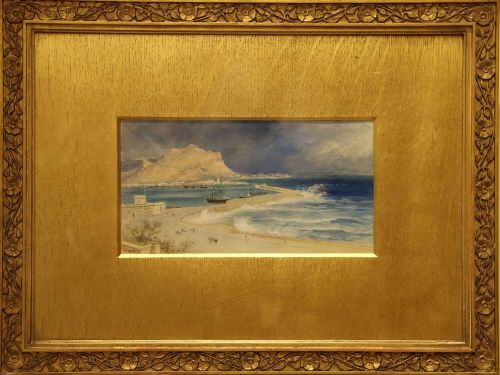
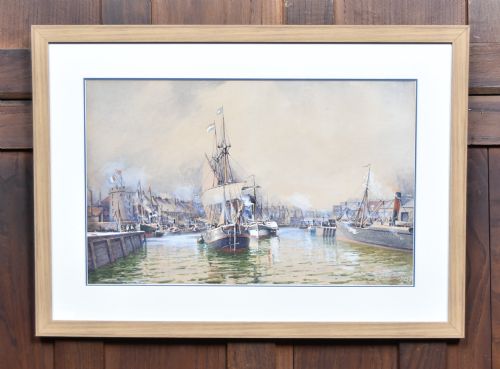
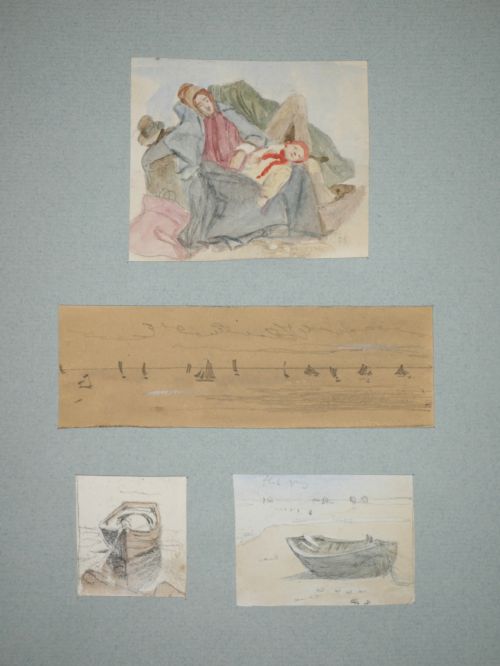
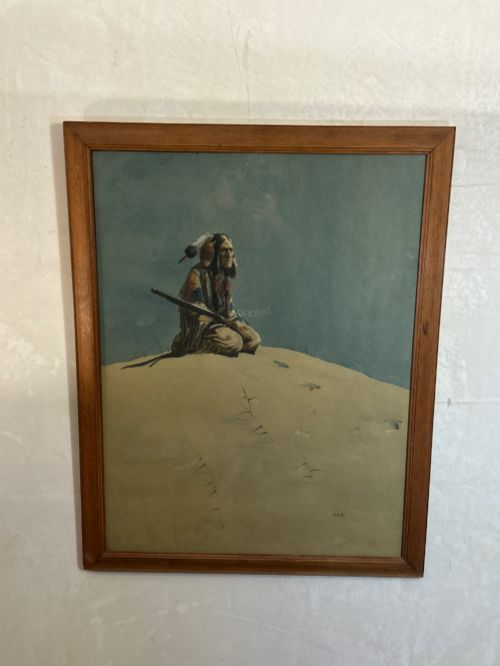
A blue framed watercolour encompasses works executed on paper using pigment and ink, housed within timber surrounds that frequently display painted or gilded finishes. When searching this phrase, a buyer encounters landscape scenes, maritime views, and portrait miniatures spanning the Georgian, Victorian, and mid-twentieth-century periods.
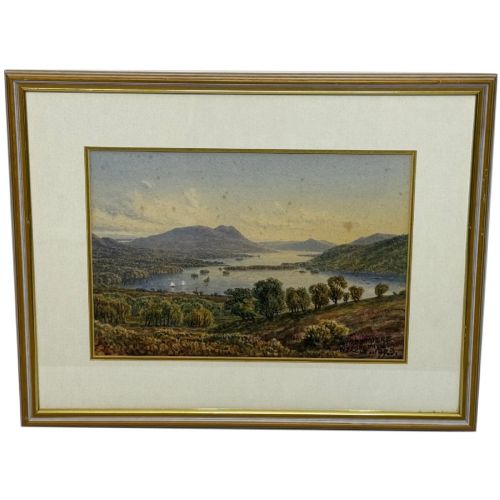
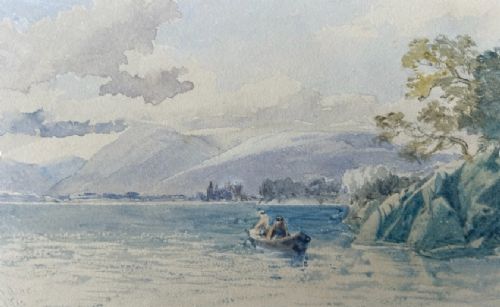
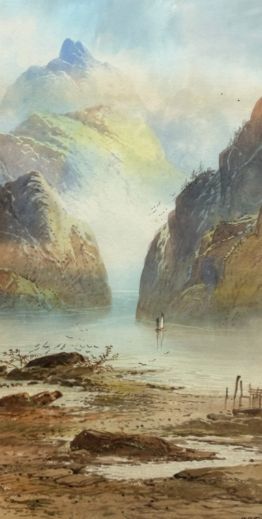
The nineteenth-century examples dominate the selection, offering detailed topographical views of Scottish lochs, English coastal harbours, and Italianate scenes. These pieces capture the atmospheric lighting favoured by British artists of the period, ranging from precise topographical studies to looser impressionistic sketches.
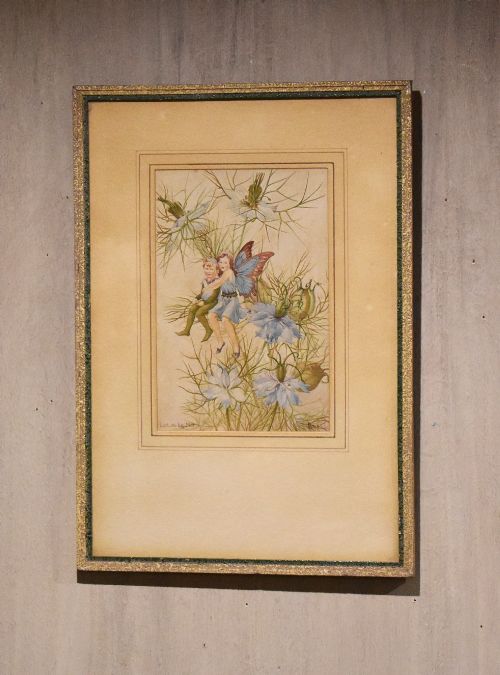
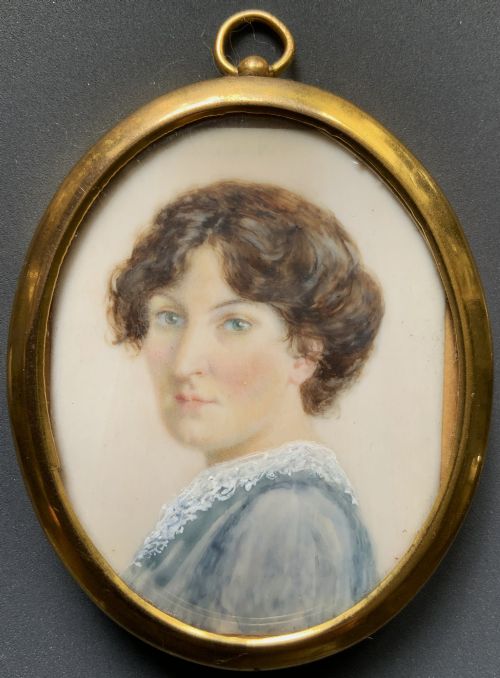
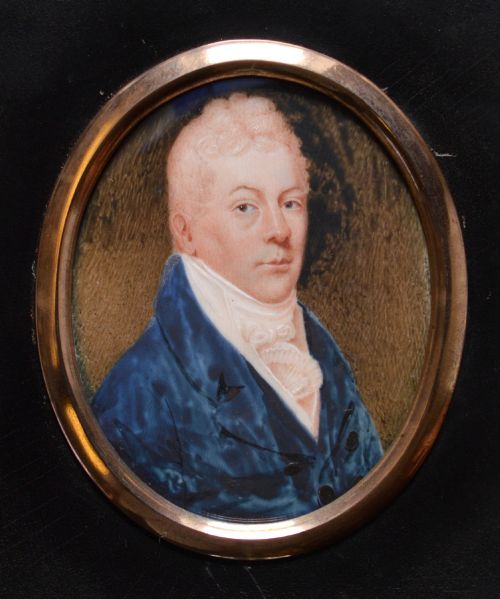
Portrait miniatures form another distinct category within these listings, often preserved behind protective glass within delicate frames. Alongside these, buyers find genre scenes, floral still lifes, and illustrative works produced across the Edwardian era and into the mid-twentieth century.
Materials and Techniques
Artists applied watercolour pigment and ink onto paper sheets, utilising the reflective white ground of the paper to impart luminosity to the washes. This water-based medium allowed for rapid sketching outdoors as well as meticulous studio work.
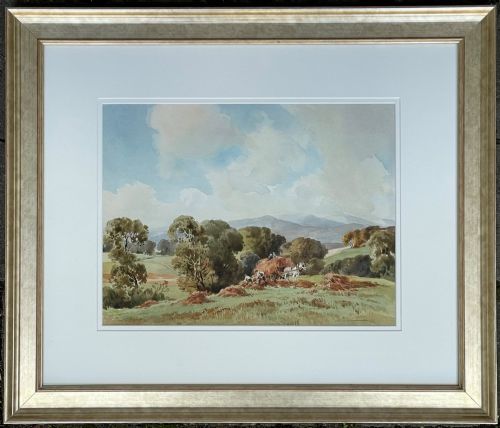
Protective framing involves wood mouldings, often finished with gold leaf or painted surfaces, fitted with glass to shield the fragile paper surface from atmospheric moisture and dust.
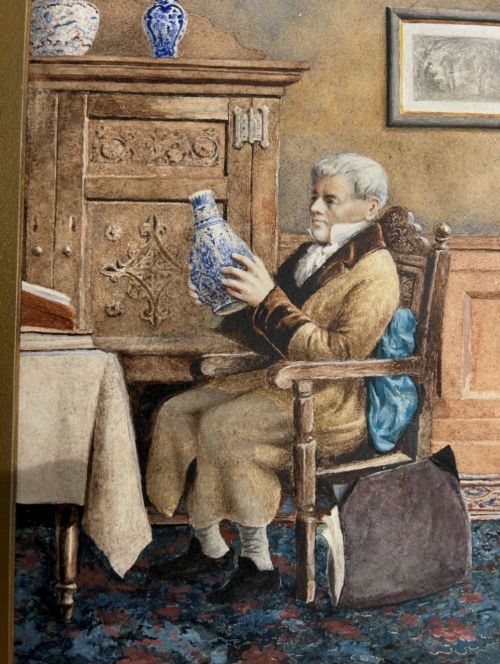
Several artists captured ordinary ducks, naval battles, and gentlemen examining blue vases with equal amounts of earnest brushwork.
Distinctions in Quality
Condition matters significantly, as exposure to light alters fugitive pigments and causes paper to discolour over decades. Works that retain their original vibrancy and structural integrity stand apart from those bearing heavy foxing or fading.
Thomas Miles Richardson Jnr·James Orrock·William Henry Earp·Percy Lancaster·John Hassall·Charles Shirreff·Robert Leslie Howey·Charles Edward Dixon·Richard Cosway·Frank Watson Wood·TB Hardy·George Stanfield Walters
The Blue Framed Watercolour Glossary
- Watercolour
- A painting method where finely ground pigments are suspended in a water-soluble binder. Artists apply these mixtures in translucent washes onto paper.
- Portrait miniature
- A small-scale painted likeness, frequently executed on vellum, card, or paper during the eighteenth and nineteenth centuries. These intimate works were often housed in pendant or pocket frames.
- Gouache
- An opaque water-based medium that incorporates white pigment to achieve solid, matte coverage. It frequently appears alongside transparent watercolour in nineteenth-century works.
- Foxing
- Brown spots and discolouration that develop on older paper due to chemical reactions involving iron impurities and humidity. This occurrence is common in works dating from the nineteenth century.
- Provenance
- The documented history of ownership surrounding an artwork. Establishing provenance aids in confirming attribution and dating.
Blue Framed Watercolour: Frequently Asked Questions
How should I hang a watercolour?
Watercolours require placement away from direct sunlight to prevent the fading of delicate pigments on paper. Indirect light preserves the vibrancy of nineteenth-century washes.
Maintaining stable room humidity protects both the paper support and the wooden frame from warping or moisture damage.
Are these paintings original works?
The listings consist of hand-painted original works rather than modern mass-produced reproductions. Artists applied pigment directly to paper using traditional brushes.
Brushstroke texture and the absorbency of the paper confirm the hand-executed nature of each piece.
What periods do these artworks represent?
The selection spans from the eighteenth century through the Georgian and Victorian eras into the mid-twentieth century. Nineteenth-century British landscape and maritime traditions are particularly well represented.
Later pieces extend into Edwardian illustration and mid-century impressionism.
How do I identify the age of a frame?
Period frames exhibit traditional construction methods, such as hand-carved wooden mouldings, pinned corner joints, and aged gilding or paint layers. Backings often feature historic papers or hand-written labels.
Subtle wear patterns across the wooden surfaces reflect decades of handling and environment.