


Blue Floral Watercolour Art
Blue floral watercolour art brings botanical study and country gardens onto the wall through delicate pigment washes on paper.
Blue Floral Watercolour Art
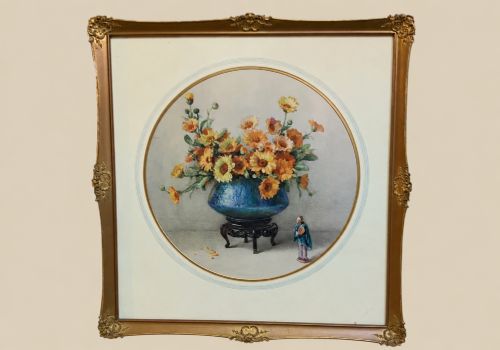
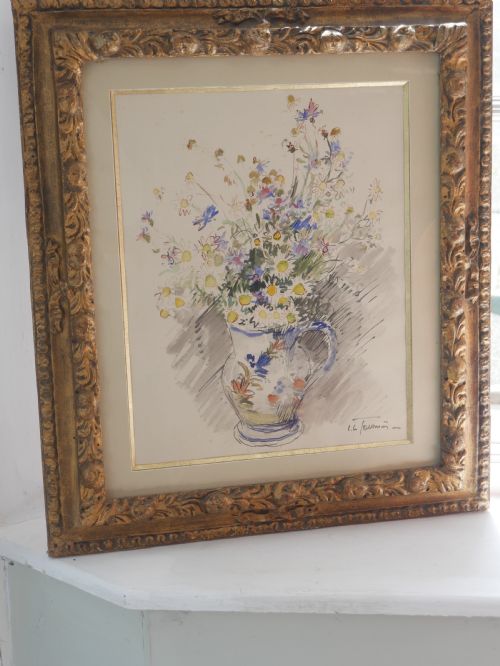
Blue floral watercolour art encompasses paintings executed in watercolour pigment upon paper, focusing primarily on garden blooms, still lifes, and landscape views. These works capture specific botanical subjects like marigolds, pansies, azaleas, gladioli, and roses within framed presentations.
The pieces available span from the Victorian era through the Edwardian period and into the mid-century, reflecting shifting tastes in botanical illustration and landscape painting. Traditional still lifes and impressionist studies predominate, offering a glimpse into British artistic output across several decades.
How they were made
These works rely on watercolour paint applied to paper surfaces, sometimes enhanced with gold leaf and housed within wood or giltwood frames under glass. Artists utilised fluid pigment washes to create the translucent petal structures and leafy backgrounds characteristic of the medium.
Framing materials range from simple wooden surrounds to ornate giltwood frames, protecting the delicate paper supports from atmospheric damage while complementing the aesthetic of the period in which the painting was produced.
A painted jug of flowers brings perpetual summer indoors, requiring neither water nor sunlight to maintain its vibrant petals.
What varies in quality
Quality rests upon the confidence of the brushwork and the precision with which the artist controls the pigment on paper. Stronger examples display a sure hand in rendering botanical details, such as the petals of roses or the architecture of a garden view.
The harmony of the composition and the preservation of the paper and pigments also dictate distinction. Works that retain their fresh colour values without excessive fading or paper discolouration stand out above more muted or compromised examples.
Edith Barrow·Grace Hastie·Phyllis I Hibbert·Marion Broom·Beatrice Parsons·Theresa Sylvester Stannard·George Frederick Nicholls·Amy Reeve-Fowkes
The Blue Floral Watercolour Art Glossary
- Watercolour
- A painting method in which the paints are made of pigments suspended in a water-soluble vehicle. This technique allows for transparent washes of colour that reveal the texture of the underlying paper.
- Giltwood
- Wood that has been treated with gold leaf or gold paint for decorative effect. It frequently appears on the frames enclosing these works.
- Impressionist
- A style of painting that focuses on capturing the visual impression of the moment, especially regarding shifting light and colour. Works in this manner often prioritise mood over minute botanical precision.
- Still Life
- A work of art depicting mostly inanimate subject matter, typically commonplace objects or natural items such as cut flowers in a jug or vase. These compositions allow artists to study light, form, and colour arrangement in a controlled setting.
Blue Floral Watercolour Art: Frequently Asked Questions
What periods do these paintings come from?
The works date from the Victorian era through the Edwardian period and across various decades of the twentieth century. Examples span from Victorian botanical studies up to mid-century modern British pieces.
This broad chronological spread demonstrates the enduring popularity of floral and garden watercolours among British artists over many generations.
How should I frame and hang these watercolours?
These works on paper require protection behind glass to shield them from dust, moisture, and handling. Many retain their original wood or giltwood frames, which suit the period of creation.
Keep them away from direct sunlight to prevent the watercolour pigments and paper from fading over time.
What subjects do the artists depict?
The primary subjects include still lifes of flowers such as marigolds, pansies, azaleas, gladioli, wallflowers, and roses arranged in jugs, baskets, or vases. Some compositions incorporate Chinese objects alongside the botanical elements.
Other works expand into garden views, country houses, and specific locations like St James's Park in London.
What materials make up these artworks?
The core materials consist of watercolour paint applied to paper supports, occasionally incorporating gold leaf for decorative highlights. These are then mounted behind glass within wood or giltwood frames.
The combination of paper, pigment, and framing preserves the delicate nature of the paintings.